
Data-driven workforce allocation optimizes staffing by using analytics and machine learning, replacing guesswork with precise, actionable insights. This approach helps industries like construction and manufacturing address challenges such as rising costs, inefficiencies, and labor shortages.
Key Takeaways:
- Improved Efficiency: Reduces overtime, overstaffing, and idle resources, cutting costs by up to 15%.
- Cost Management: Real-time data helps control labor budgets and avoid delays, boosting profit growth by 58%.
- Enhanced Safety: IoT and AI tools lower workplace injuries and improve compliance.
- Technology Integration: Mobile and cloud systems streamline operations and ensure compliance with regulations.
Quick Overview:
- Industries Impacted: Construction, manufacturing, energy.
- Benefits: 30% fewer project delays, 12–18% higher productivity, safer workplaces.
- Tools: Platforms like ABLEMKR simplify workforce management with real-time data and verified worker profiles.
Why it matters: With labor costs rising and inefficiencies rampant, adopting data-driven strategies is essential for staying competitive while improving productivity and safety.
Benefits of Data-Driven Workforce Allocation
Better Efficiency and Productivity
Moving away from outdated spreadsheets and manual processes, data-driven workforce allocation centralizes the tracking of resources, labor, and equipment. This streamlined approach allows contractors to make informed decisions on-site, eliminating the guesswork and improving overall operations.
Companies that embrace data intelligence report 58% higher profit growth rates compared to those still in the early stages of adopting data-driven strategies. This growth comes from analyzing project timelines, resource use, and workflow patterns to identify and address inefficiencies.
"Data analytics is our secret weapon to tackle these challenges head-on."
– Gunjan Titiya, Founder, Bytes & Bayes
Real-world examples highlight these advantages. For instance, the Crossrail project effectively used predictive analytics to identify risks and optimize scheduling by analyzing historical data and market trends. Similarly, the HS2 high-speed rail project utilized IoT sensors to monitor equipment usage and materials, enabling managers to reduce downtime and improve efficiency.
Real-time dashboards further enhance team communication, ensuring everyone has access to up-to-date information. AI-powered tools also refine construction estimates by analyzing blueprints and building models, while predictive maintenance reduces costly delays. These improvements not only boost productivity but also help establish clearer cost controls, as discussed next.
Cost Transparency and Control
Data-driven workforce allocation offers real-time insights into spending, enabling companies to act quickly to prevent budget overruns. This level of transparency is essential in an industry where projects often exceed budgets and timelines.
Organizations with optimized labor budgets typically reduce labor costs by 15–20% while maintaining or improving service levels. Additionally, companies that rely on data for workforce decisions see 12–18% higher productivity compared to those using traditional managerial judgment.
These systems also help set benchmarks and monitor progress toward financial goals. By tracking salary expenses, overtime, and other costs, businesses can improve resource planning. Historical data analysis aids in making accurate future estimates and avoiding past budgeting errors.
"We use data to drive improvement, and we saw opportunities in labor management to improve our performance. We wanted to be nimbler and rely on real-time data versus retrospective data to make decisions. We’ve established a culture that empowers everyone to be good stewards of our resources, and our management embraces tools that help them do that."
– Art Gladstone, RN, MBA, FACHE, Chief Executive Officer, Straub Medical Center and Pali Momi Medical Center, Chief Nursing Officer, Hawai’i Pacific Health
Platforms like ABLEMKR contribute to this financial transparency by offering tools that provide detailed insights into labor costs and evolving project expenses. Beyond cost savings, data-driven strategies also play a crucial role in improving workforce safety.
Better Workforce Safety and Risk Management
Data-driven workforce allocation significantly enhances safety measures. According to OSHA, the construction industry experiences over 72,000 workplace injuries annually, with nearly 20% of workplace fatalities occurring in this sector.
"Data-driven construction safety bases safety decision-making on insights from data analytics."
– Emily Newton, Editor-in-Chief, Revolutionized
IoT technologies play a vital role in real-time hazard recognition, alerting employees to emerging risks and supporting longer-term prevention strategies. These tools help companies adapt safety measures to evolving project conditions.
Workplace injuries come with steep costs. In 2018, employers spent over $1 billion per week on workers’ compensation, while accidents in 2022 led to $13 billion in lost production, fines, and settlements.
Examples of success abound. A leading U.S. construction company used wearable technology with proximity sensors, reducing near-miss incidents by 35% in just one year. In Europe, AI-powered cameras on an infrastructure project identified over 200 safety violations in six months by monitoring for mishandled equipment and unstable scaffolding. Meanwhile, an Australian construction firm used IoT-enabled smart helmets to track temperature, noise, and air quality, allowing for timely evacuations when safety thresholds were exceeded.
AI systems and predictive analytics take safety a step further by identifying risks and unsafe practices in real time, enabling immediate corrective actions. These measures not only protect workers but also reduce costs associated with delays, insurance, and liability.
"Improvements will require a paradigm shift towards a more nuanced, data-driven strategy that strives to identify and fix the root causes of both accidents and observed exposures."
– David Tibbetts, Certified Safety Professional and Chief Safety Officer, Highwire
Despite these advancements, challenges remain. The fatality rate in construction rose from 12.3 deaths per 100,000 full-time workers in 2021 to 13.0 in 2022. Additionally, fall protection violations remain the most cited OSHA safety standard. By analyzing incidents and near misses, companies can uncover patterns and implement preventive measures, reducing the likelihood of serious injuries.
Data Sources and Components for Workforce Allocation
Types of Workforce Data
Understanding the types of data that drive workforce allocation is essential for effective management. Workforce allocation relies on four key data categories: worker profiles, job site conditions, project schedules, and cost data. Research shows that leveraging people analytics can improve productivity by 25% and recruiting efficiency by 80%.
Worker profile data plays a central role in allocation decisions. This data includes basic personal details as well as specialized skills and certifications. Industries such as construction and energy benefit greatly from tracking qualifications like licenses, permits, safety certifications, and credentials for operating heavy equipment.
Job site data offers real-time updates on project conditions, equipment availability, and safety requirements. These insights allow managers to align worker assignments with the specific needs of each site.
Project schedule data helps with predictive planning by analyzing deadlines, milestones, and resource needs. Combined with historical performance data, it can help pinpoint potential bottlenecks before they disrupt progress.
Cost data focuses on tracking labor expenses, overtime trends, and overall budget usage. This information helps organizations allocate resources wisely while maintaining profitability.
Despite the potential of workforce data, collecting and integrating it remains a challenge. Many companies use tools like applicant tracking systems (ATS), HR management systems (HRMS), and HR information systems (HRIS), along with interviews and surveys, to gather this information. However, 83% of companies globally report low workforce analytics maturity, signaling significant room for improvement in how data is collected and utilized.
Verified Worker Credentials and Compliance
In industries like construction and energy, verified worker credentials are not just important – they’re legally required. Navigating federal, state, and local regulations demands advanced verification systems that can adapt to changing compliance requirements. For example, OSHA mandates specific certifications for tasks like fall protection and hazardous material handling.
Streamlined verification processes can save time by reducing the need to re-check credentials when workers transition between projects or return after breaks. Beyond basic certifications, digital systems also manage background checks, drug testing results, and safety training records. These systems simplify audits by maintaining comprehensive digital records that regulators can access quickly, minimizing the risk of fines or project delays.
Modern verification platforms often integrate with state licensing boards and certification authorities to provide real-time updates on credential statuses. This automation ensures accuracy and keeps projects on schedule by making sure qualified workers are available when needed. Many of these systems are now part of broader digital tools that enhance workforce management.
Using Mobile and Cloud-Based Systems
Mobile and cloud-based technologies are transforming workforce management. The global workforce management market was valued at $55.06 billion in 2024 and is expected to grow to $119.74 billion by 2032.
Real-world examples demonstrate the impact of these tools. Procter & Gamble, for instance, used cloud-based systems to cut labor costs by 15% and boost productivity by 30%, while Kaiser Permanente improved resource allocation by 25%.
Mobile apps have become indispensable in field-based industries. Workers can clock in securely from job sites, update their availability in real time, and receive instant notifications about new assignments. Meanwhile, managers gain better visibility into workforce distribution, enabling quicker and more informed decisions.
"We determined that over 70 percent of our employees were looking at the ADP mobile app on a regular basis, and so we’ve used this to stay in contact with them, to put out information that’s meaningful to them and make sure that we’ve got that solid connection."
– Laura Sorensen, Chief People Officer, First Watch Restaurants Inc.
Cloud-based systems offer additional benefits, including automatic regulatory updates, easy scalability as businesses grow, and strong disaster recovery features. Companies using these platforms can see productivity gains of up to 30%. Platforms like ABLEMKR highlight how mobile and cloud technologies can work together, allowing workers to access job opportunities through mobile apps while employers use cloud dashboards to analyze workforce patterns and optimize allocation strategies.
Security remains a top priority. Incidents like Capital One‘s 2021 data breach, which resulted in $80 million in fines, emphasize the need for robust protections. Companies are responding with measures like end-to-end encryption, strict access controls, and regular security audits.
Looking ahead, advancements in technology will further enhance workforce management. 5G networks promise faster data transfer, while augmented reality tools could enable real-time, on-site assistance. Platforms such as ABLEMKR are already laying the groundwork for these innovations, making workforce allocation more efficient and seamless than ever before.
Implementation Strategies and Best Practices
Moving from Manual to Data-Driven Models
Transitioning from manual processes to data-driven workforce allocation isn’t just a technical upgrade – it’s a shift in mindset and operations. Manual systems can drain resources, with teams losing up to 13% of their time and spending over 11.5 hours weekly just searching for data. Clearly, embracing data-driven methods can reclaim this lost productivity.
Leadership plays a critical role here. Leaders need to set the tone by insisting on decisions backed by accurate, updated data. This shift requires buy-in at every organizational level, with teams consistently updating and consolidating information.
On the technical front, organizations should evaluate existing ETL (Extract, Transform, Load) processes and consider upgrading to scalable, cloud-based platforms. These platforms enable real-time data processing, which is crucial in today’s fast-paced environment.
Training is another cornerstone of success. Employees must be equipped to use new systems effectively. As Aiko Müller, Director Implementation & Support at MMT, explains:
"Designing a roll-out plan including training, assessment, and iteration phase at each step of the process will secure higher efficiency and company take-up."
To further ease the transition, organizations can use interactive dashboards and clear data visualizations. These tools not only make data more accessible but also help build trust in new systems. Differentiated access levels ensure sensitive data remains secure while allowing broader usability.
Setting Success Metrics
To measure the success of workforce management strategies, organizations must align their metrics with overarching business goals. While 71% of HR executives see people analytics as vital to their strategy, only 22% feel their organizations are effectively leveraging its potential. This gap underscores the importance of setting clear, actionable metrics.
A proven approach is using SMART goals – Specific, Measurable, Achievable, Relevant, and Time-bound. For example, if boosting customer satisfaction is a top priority, tracking metrics like employee engagement and the effectiveness of training programs becomes critical.
Dieter Veldsman, Chief Scientist (HR and OD) at AIHR, highlights the importance of these metrics:
"WFM metrics help the organization deliver on expectations. Organizations that do this well can deal with unforeseen circumstances and drive expected outcomes and outputs."
Real-time monitoring is another game-changer. Although 83% of organizations generate workforce data, only 11% do so in real time. Effective metrics should cover multiple aspects of workforce performance. For instance, turnover analysis can help predict staffing needs and build stronger talent pipelines. Predictive models can even flag potential turnover risks, enabling preemptive action.
Career development metrics, such as tracking internal promotions and mobility, show a commitment to employee growth, which can boost loyalty and cut recruitment costs. Regularly revisiting these metrics ensures they stay relevant as workforce needs evolve.
Meeting U.S. Regulations
Beyond operational efficiency, compliance with U.S. labor laws is critical for maintaining trust and safeguarding the workforce. In 2024, wages and salaries for private industry workers accounted for 70.3% of employer costs, underscoring the need for precise tracking to manage both costs and compliance.
Automated systems are key to ensuring adherence to regulations like the Fair Labor Standards Act (FLSA). Manual tracking can lead to errors that result in penalties, while automated scheduling tools can flag potential issues before they escalate.
Data privacy is another pressing concern. In 2023 alone, the U.S. experienced over 3,200 data breaches, nearly half of which involved sensitive employee information. Strengthening data governance is non-negotiable. As Ramesh Nyathani, HR digital transformation architect at US Foods, explains:
"HR departments, traditionally seen as the custodians of sensitive employee information, have been rapidly transformed by the adoption of advanced technologies."
For federal contractors, workforce analytics are essential for maintaining transparency, equity, and accountability. Compliance is not just about avoiding penalties – it’s about fostering trust. Cross-departmental collaboration among HR, legal, and IT teams ensures robust reporting protocols and helps prevent regulatory lapses.
Trust is the foundation of effective compliance. Organizations must provide clear privacy policies and keep employees informed about how their data is used. Minimizing unnecessary data collection reduces risks and simplifies compliance. Tim Pasto, director of HR advisory at Gartner, emphasizes:
"The foundation of all of this is trust. Do your employees trust you with their data? One of the key issues is making sure you don’t undermine employee trust in the ethical use of their data. There needs to be open communication from HR around what employers are doing with people data."
A strong breach response plan, coupled with regular training on data handling and privacy regulations, fosters a culture of compliance that protects both the organization and its workforce.
Tools and Technologies for Workforce Allocation
Overview of Main Platforms
Workforce allocation technology has come a long way, offering tools that seamlessly integrate scheduling, payroll, compliance tracking, and real-time analytics. These modern systems go beyond the basics, handling tasks like worker verification and predictive analytics. What sets the top platforms apart is their ability to integrate processes smoothly. Companies using project management solutions report a 15–20% drop in administrative time and up to a 25% boost in schedule adherence. Fully integrated workforce management systems also help organizations cut administrative overhead by 20–30% and reduce data errors significantly when compared to disconnected systems.
Industries like construction and energy face unique workforce challenges that demand tailored solutions. For example, 72% of construction firms expect labor shortages in the coming year, while temporary workers in the U.S. clock 20 million hours annually. Adding to this, 20% of construction workers are hired through staffing agencies, underscoring the critical need for efficient allocation tools. Platforms like ABLEMKR are stepping in to meet these specific needs with advanced, industry-focused technologies.
ABLEMKR: Features and Benefits
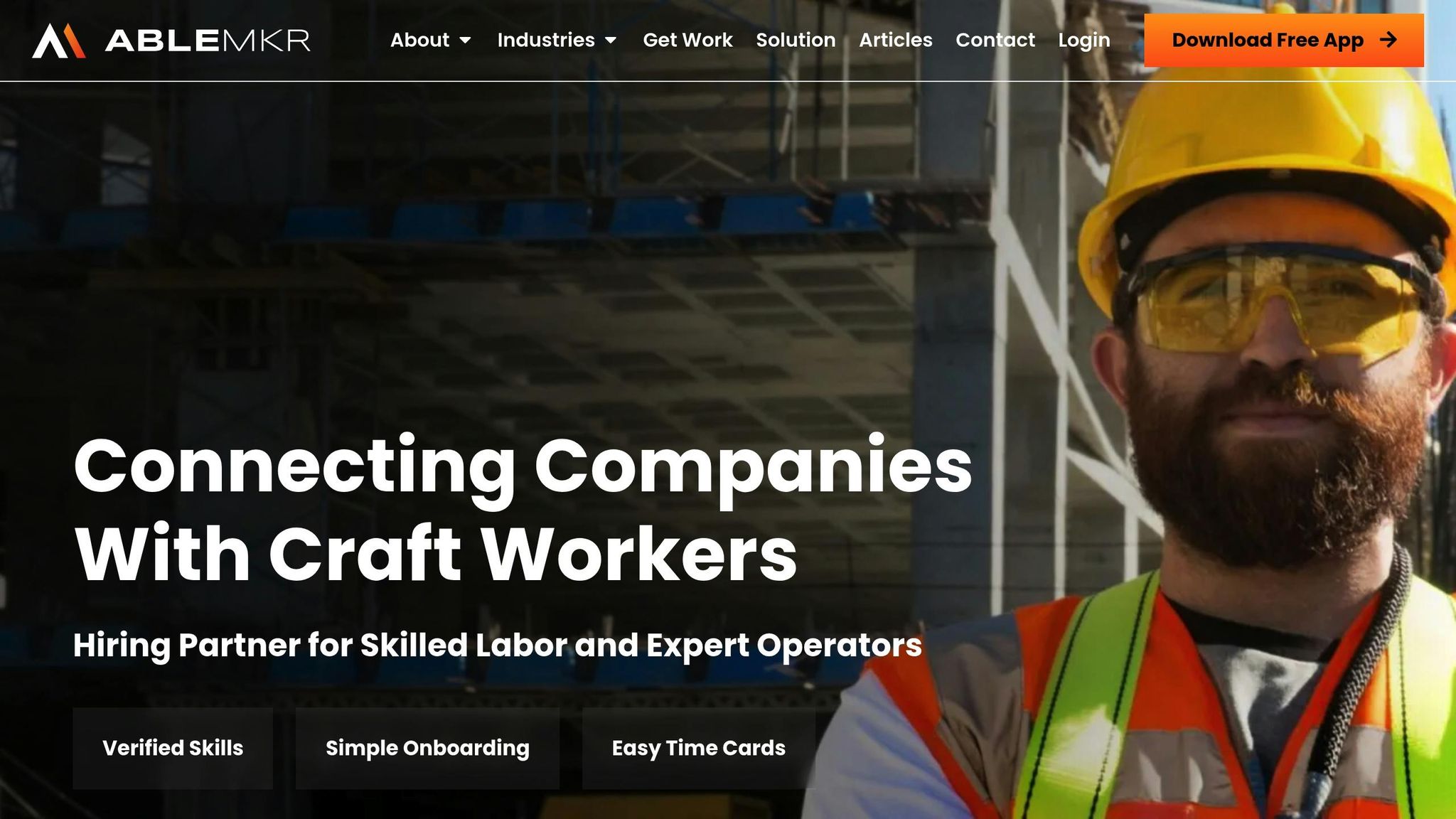
ABLEMKR, founded in 2018 and based in Tempe, Arizona, specializes in workforce solutions for industries like construction, oil & gas, and mining. The platform offers a comprehensive approach to skilled craft worker allocation, combining vetting, cost transparency, and mobile-first capabilities.
ABLEMKR ensures that companies get workers who meet their exact project needs by vetting and interviewing candidates based on customer specifications. It provides flexible hiring options such as flex workers, flex-to-hire, fractional hiring, and direct placement, allowing companies to scale their workforce as projects demand.
What sets ABLEMKR apart is its transparent approach to costs. The platform manages backend operations like onboarding, Workers’ Compensation and Commercial General Liability insurance, payroll, supplemental benefits, and payroll taxes – all while offering clear customer rates. Workers log their hours directly in the app, giving employers real-time visibility into workforce deployment.
The mobile app enhances the experience for both workers and employers. Employers can handle appointments, messaging, and access profiles, ratings, and real-time worker locations. Workers, on the other hand, can find jobs that match their skills and schedules while benefiting from timely payments. ABLEMKR demonstrates how industry-specific technology can streamline operations and provide cost clarity.
Analytics and Predictive Modeling
Advanced analytics are reshaping workforce planning, turning it into a precise and proactive process. Predictive modeling, a key feature of integrated platforms, helps forecast workforce needs and reduce turnover. The global workforce analytics market, valued at $2.07 billion in 2024, is expected to grow to $5.94 billion by 2032 at a CAGR of 14.0%. By analyzing historical data and using algorithms, predictive tools can anticipate workforce demands. Companies adopting these technologies have seen up to a 35% drop in employee turnover, with one major retailer saving $30 million through predictive scheduling.
IBM‘s HR team has developed a model that predicts employee turnover with 95% accuracy by analyzing factors like skills, performance, and tenure. This has allowed them to implement targeted retention strategies, significantly cutting recruitment and training costs.
Real-time data processing adds another layer of efficiency. By analyzing current queue status, agent availability, and unexpected absences, companies can make more informed decisions about workforce allocation. For instance, Walmart uses predictive analytics to align staffing levels with sales data and weather conditions, balancing customer satisfaction with cost savings.
The growing alternative data market, projected to reach $135.8 billion by 2030, is driving further advancements in workforce analytics. Businesses are merging internal HR data with external workforce insights to enhance recruiting, succession planning, and financial modeling. Consolidating these data sources into a single platform enables real-time analysis and dynamic scenario modeling. Companies that align their workforce strategies with broader business goals are 4.4 times more likely to see revenue growth. Predictive analytics is shifting workforce management from a reactive approach to a strategy-driven function, delivering measurable business results.
sbb-itb-aa28329
Conclusion
Main Takeaways
Using data to guide workforce allocation has become a critical strategy for U.S. industries, especially in construction and energy. The statistics are clear: 70% of projects exceed budget and schedule estimates. However, companies leveraging data-driven strategies are seeing measurable improvements in efficiency, cost management, and decision-making.
For instance, construction firms utilizing predictive analytics and real-time data monitoring have achieved a 30% reduction in project delays and cut costs by 15%. Meanwhile, in manufacturing, 73% of executives identify attracting and retaining skilled workers as their biggest challenge, emphasizing the need for tools that optimize workforce allocation.
Data isn’t just numbers – it’s changing how decisions are made. 78% of CHROs rely on talent data to make faster, more confident choices, while also increasing accountability by linking decisions back to their data sources. This approach allows businesses to adapt to market trends, stay competitive, and boost operational efficiency.
"Data is a company’s senses, illuminating the path ahead like a flashlight." – Forbes Writer
The right technology is driving these changes. Predictive tools have helped companies lower attrition rates by 15%, saving around $1,500 per employee in rehiring costs. Real-time staffing data has led to a 20% productivity boost by improving resource allocation. Additionally, organizations using AI for workforce planning have shortened planning cycles by 30%.
Still, there’s work to do. While 46% of employers use data to identify skills gaps, only 31% gather data on future skills needs. Even more concerning, 67% of leaders admit struggling to use data effectively for workforce planning, and only 26% feel confident interpreting data to assess talent risks.
With these challenges and opportunities in mind, both employers and workers need to take decisive action to fully realize the benefits of data-driven workforce strategies.
Next Steps for Employers and Workers
To build on these insights, companies and employees must adopt actionable strategies. Organizations that manage change effectively are three times more likely to meet their objectives, underscoring the importance of thoughtful implementation through initiatives that resonate both logically and emotionally.
For employers, investing in analytics tools is a must. These tools can track performance, generate actionable insights, and help teams better interpret HR data. Setting clear goals, such as improving employee retention or streamlining hiring processes, can help create a culture where decisions are grounded in evidence.
Overcoming resistance to change is another key factor. Leaders should model enthusiasm to inspire buy-in and identify early adopters who can champion new initiatives. Moving beyond traditional headcount forecasting to skills forecasting is also essential, especially as 44% of current skills are expected to be disrupted within the next five years.
When implementing new systems, simplicity is critical. Opt for user-friendly platforms that don’t require extensive technical knowledge and consider a phased rollout to avoid overwhelming your workforce. For example, tools like ABLEMKR cater specifically to industries like construction and energy, offering verified worker profiles, transparent cost tracking, and mobile-first solutions.
On the employee side, embracing new technologies and processes is vital. With six in 10 workers needing skills training in the near future, taking advantage of reskilling and upskilling opportunities will be crucial.
The construction industry offers a striking example of untapped potential, with 96% of its data going unused. Companies that fully integrate data strategies report a 92% improvement in productivity, showing what’s possible when data is put to work.
Ultimately, success depends on ongoing monitoring and adaptation. Employers can use tools like surveys and sentiment analysis to gather feedback and make informed decisions based on hiring and exit trends. The goal isn’t just to adopt new technology – it’s to create systems that evolve with workforce needs and market demands.
Data-driven workforce allocation isn’t just a nice-to-have; it’s a necessity in today’s competitive landscape. Companies that act now will not only improve efficiency and cut costs but also enhance workforce satisfaction. On the other hand, those that hesitate risk falling behind in an increasingly data-oriented world.
Data-Driven Workforce Planning | Ensuring Talent Alignment with Business Goals
FAQs
How does data-driven workforce allocation boost efficiency and productivity in industries like construction and manufacturing?
How Data-Driven Workforce Allocation Boosts Efficiency
Using data to guide workforce allocation can transform how businesses manage resources, leading to greater efficiency and productivity. By leveraging analytics, companies can fine-tune resource management and make smarter decisions.
Take the construction industry, for example. Analytics ensures the right number of workers and equipment are deployed exactly when they’re needed. This minimizes delays, reduces waste, and helps projects wrap up faster. The result? Time saved and costs lowered.
In manufacturing, data insights play a crucial role in reducing machine downtime, optimizing labor schedules, and improving overall operations. With real-time data and predictive analytics, businesses can make informed decisions that drive better performance and deliver tangible results.
What technologies and tools are essential for implementing a data-driven workforce allocation strategy?
Implementing a data-driven workforce allocation strategy relies on a combination of modern technologies and tools. Core components include advanced analytics platforms, predictive analytics, and machine learning – all of which help forecast staffing requirements and optimize how labor is distributed.
Real-time dashboards play a key role too, offering immediate insights into workforce performance and enabling quick, informed decision-making when adjustments are needed.
On top of that, workforce management software brings added precision to operations. Tools for automated scheduling, attendance tracking, and performance monitoring streamline processes and boost overall efficiency. By integrating these technologies, organizations can improve productivity, cut costs, and build a workforce that’s better equipped to adapt to their specific demands.
How can companies stay compliant with safety and labor laws when using data-driven workforce allocation?
Balancing Safety, Legal Compliance, and Data-Driven Workforce Allocation
To align workforce allocation strategies with safety and labor laws, businesses need a thoughtful blend of legal expertise, technology, and ongoing oversight. Partnering with legal professionals familiar with local labor regulations is a smart first step to ensure your practices stay within the bounds of the law.
Beyond legal consultation, companies should adopt clear, well-documented policies and keep meticulous records. Regular internal audits can help spot compliance gaps before they become serious issues. Leveraging data analytics tools adds another layer of protection by monitoring workforce activities, highlighting risks, and flagging potential violations in real time.
This proactive combination of legal insight, technology, and continuous monitoring ensures that your data-driven workforce strategies not only meet safety and legal requirements but also contribute to a well-organized and compliant workplace.


