
Every year, construction companies face a recurring problem: finding skilled workers during peak seasons. As demand spikes in spring and summer, traditional hiring methods often fall short – slowing projects, inflating costs, and creating compliance risks.
On-demand staffing platforms solve this. These platforms connect contractors with pre-screened workers in real time, cutting hiring delays and reducing administrative burdens. Features like automated worker matching, real-time tracking, and compliance tools make staffing faster, more efficient, and cost-effective.
Key Takeaways:
- Faster hiring: Workers can be deployed in hours, not weeks.
- Lower costs: Pay-as-you-go pricing eliminates fixed overhead.
- Better compliance: Certifications and safety records are pre-verified.
- Flexible scheduling: Adjust staffing levels as project needs change.
Platforms like ABLEMKR specialize in construction and energy industries, offering tools to manage seasonal surges effortlessly. By streamlining hiring and workforce management, these platforms help contractors stay on schedule and on budget.
Unveiling the Power of Contractual Staffing: Your Path to Efficiency – Himanshu Bansal
Problems with Traditional Hiring During Peak Seasons
The construction industry often faces significant hurdles when relying on traditional hiring methods during peak seasons. These outdated approaches struggle to keep up with the fast-paced demands of modern construction projects, leading to delays, inefficiencies, and a host of other challenges. From sluggish hiring timelines to soaring administrative costs and compliance headaches, the cracks in these systems become glaringly obvious during busy periods.
Slow Hiring Processes
Traditional hiring methods are notoriously time-consuming, often dragging on for weeks. The process typically involves posting job ads, sifting through resumes, conducting interviews, checking references, and completing background checks. While this might work during slower seasons, it’s far from ideal when construction companies need workers immediately to meet high seasonal demand.
The problem is further compounded when multiple contractors are vying for a limited pool of skilled candidates. HR teams often get bogged down by a flood of applications, adding to the delays. Even worse, some companies still rely on outdated methods like newspaper ads, which can’t match the speed and efficiency of digital recruitment platforms.
High Administrative and Labor Costs
Traditional hiring isn’t just slow – it’s expensive. The costs of advertising, onboarding, and managing overtime for existing staff can quickly eat into profits during busy periods. Overtime pay, in particular, tends to spike during peak seasons, significantly impacting project margins. On top of that, companies often maintain larger HR teams year-round just to handle these seasonal surges, leading to unnecessary overhead during quieter times.
Poor Worker Quality and Compliance Issues
When time is tight, vetting often takes a backseat, resulting in unqualified workers slipping through the cracks. This can lead to higher turnover rates, project disruptions, and even liability risks. For instance, candidates may exaggerate their skills or certifications, and without thorough screening, these issues may go unnoticed until it’s too late.
Compliance adds another layer of complexity. Tasks like coordinating drug tests or verifying certifications can introduce delays, making it even harder to staff projects effectively during critical periods. Without robust vetting processes in place, companies risk hiring workers who may not meet safety or quality standards, jeopardizing both timelines and outcomes.
How On-Demand Staffing Platforms Fix Seasonal Needs
On-demand staffing platforms have revolutionized how contractors handle seasonal construction demands, cutting through the delays and inefficiencies of traditional hiring methods. These platforms give contractors the flexibility and speed they need to navigate peak construction seasons effectively.
The process is straightforward: pre-screened workers are ready to step in when needed, making it possible to meet tight deadlines or seize narrow weather windows. This streamlined approach simplifies staffing, ensuring projects stay on track.
Fast Deployment and Flexible Scheduling
With on-demand platforms, the days of lengthy job postings and drawn-out interview processes are over. Employers can connect with pre-qualified workers in real time, significantly speeding up the hiring process.
Workers maintain active profiles that include their certifications, availability, and location preferences. So, when a construction company needs extra hands for a seasonal project, the platform quickly identifies workers who meet the requirements and are available to start immediately.
This flexibility extends to scheduling. Contractors can adjust staffing plans as needed, whether to address delays or unexpected changes, without getting bogged down in admin work. For workers, this adaptability means they can take on multiple projects and maximize their earnings during busy periods.
Additionally, the platforms make geographic mobility easier. Contractors can source local talent for various job sites, cutting down on travel and lodging expenses.
Technology Features for Better Efficiency
Advanced technology is at the heart of these platforms, making the staffing process not only faster but also more transparent and compliant. Mobile-first tools let both employers and workers manage staffing needs directly from the job site, avoiding unnecessary office delays.
Automated matching systems take the guesswork out of hiring. By using algorithms to pair workers with projects based on certifications, experience, location, and availability, these platforms ensure a quicker and more accurate hiring process. This precision helps contractors find the right person for the job, every time.
Real-time workforce tracking is another game-changer. Project managers can use a single dashboard to monitor who’s on site, track hours worked, and oversee project progress. This level of visibility reduces miscommunications and scheduling conflicts – common issues in seasonal construction work.
Compliance tracking is also built into the system. Safety certifications and other required documents are stored and updated digitally, ensuring all workers meet project requirements without the need for manual checks. This feature lightens the administrative load while keeping everything above board.
Clear Costs and Real-Time Invoicing
Financial transparency is another major advantage of on-demand staffing platforms. Contractors know upfront what they’ll pay for labor, including any platform fees, eliminating the hidden costs that often come with traditional hiring methods.
Real-time invoicing further simplifies financial management. Instead of waiting weeks for payroll processing, invoices are generated as hours are logged. This helps contractors maintain steady cash flow and makes budgeting easier.
Integrated payment systems also benefit workers. Guaranteed on-time payments attract skilled tradespeople, encouraging them to stay active on the platform and respond quickly to job opportunities. This creates a win-win situation where both contractors and workers benefit.
Lastly, many platforms provide detailed post-project reports that break down labor costs by category. These insights help contractors better estimate costs for future seasonal projects and identify areas where spending can be optimized.
sbb-itb-aa28329
ABLEMKR: Changing Seasonal Staffing in Construction
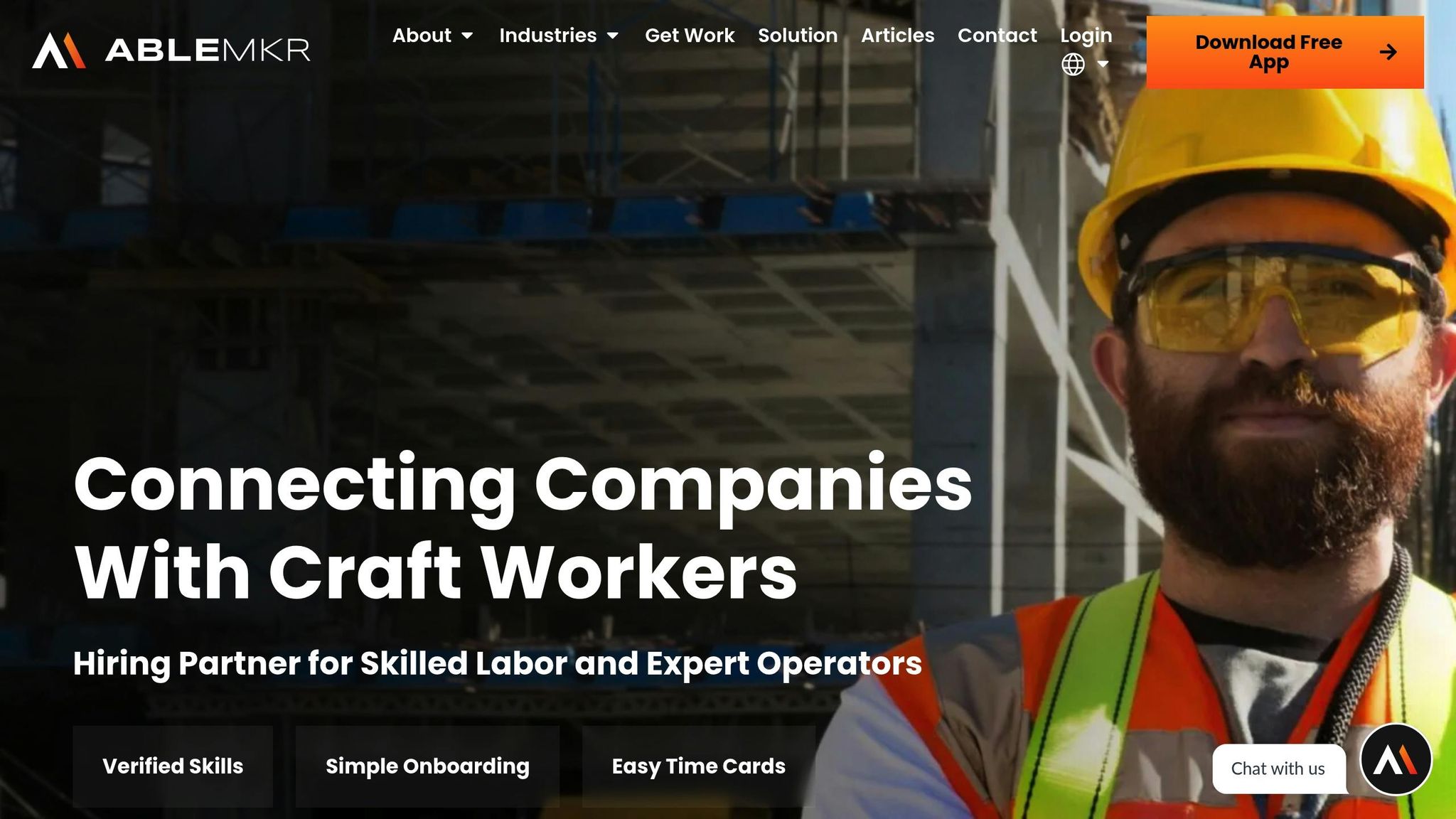
ABLEMKR is a purpose-built platform tailored for the construction, energy, and related industries. It recognizes the unique hurdles of seasonal construction work and offers tools specifically designed to address these challenges.
Operating in key U.S. cities and energy corridors, ABLEMKR functions as a robust labor operations engine for critical projects. Whether it’s an emergency shutdown or a planned initiative, the platform empowers contractors to assemble crews swiftly and effectively.
What makes ABLEMKR stand out is its focus on industries where precision and compliance aren’t optional – they’re mandatory. By connecting pre-vetted workers with projects in sectors like oil & gas, mining, utilities, and heavy infrastructure, ABLEMKR helps contractors scale their workforce exactly when seasonal demand spikes. With its industry know-how, the platform streamlines seasonal hiring, providing quick access to skilled and compliant workers.
Verified Worker Profiles and Compliance Tools
ABLEMKR takes the guesswork out of hiring by thoroughly verifying worker credentials. Candidates are vetted and interviewed based on specific project needs, ensuring contractors get workers with the right skills for the job.
The platform maintains detailed worker profiles, including certifications, safety training records, and specialized skills tailored to construction and energy jobs. This is especially critical during seasonal surges when contractors need to evaluate qualifications quickly while maintaining high standards for safety and quality.
To simplify compliance, ABLEMKR digitally stores and updates safety certifications, ensuring that workers meet regulatory requirements, which can vary depending on the location or project type. This feature ensures that all workers are ready to hit the ground running without delays.
Additionally, ABLEMKR handles workers’ compensation coverage and W2 employment status, easing the administrative load for contractors. This ensures legal compliance and smooth workforce management throughout seasonal employment periods.
Automated Job Matching and Workforce Management
The platform’s automated system takes staffing efficiency to the next level by instantly matching pre-vetted workers to projects. Through an integrated dashboard, project managers can track on-site personnel, monitor hours worked, and oversee project progress in real time. This centralized system helps eliminate common issues like scheduling conflicts and miscommunications during busy seasons.
ABLEMKR also acts as a Fractional HR Partner, stepping in to support internal HR teams or fill gaps when seasonal demand stretches resources thin. Features like Easy Time Cards make hour tracking straightforward, reducing the administrative burden for both contractors and workers.
Mobile-First Access and Transparent Costs
ABLEMKR’s free mobile app allows contractors to post jobs, review candidates, and manage expenses with real-time invoicing. By prioritizing mobile access, the platform removes delays tied to traditional office setups, enabling contractors to respond immediately to shifting seasonal demands.
With its mobile-friendly design and transparent cost structure, ABLEMKR removes common roadblocks in seasonal staffing. It simplifies labor deployment, making it easier for contractors to scale their workforce as project requirements evolve.
On-Demand Staffing vs Traditional Methods
Seasonal peaks in construction often expose the limitations of traditional hiring methods. As projects demand more flexibility and less permanence, these older approaches can struggle to keep up.
Traditional hiring involves lengthy recruitment and onboarding processes, making it difficult to quickly scale up or down for seasonal needs. This creates delays and inefficiencies, especially when workforce demands shift unexpectedly due to factors like weather, project timelines, or client requirements.
On-demand staffing platforms, such as ABLEMKR, offer a faster, more adaptable solution. These platforms can deploy pre-vetted professionals in a matter of hours or days, aligning perfectly with the construction industry’s project-based nature. In a post-pandemic world, where unpredictability has become the norm, construction companies are increasingly recognizing the value of flexible workforces that can adjust on the fly.
Cost is another major differentiator. Traditional hiring methods come with high fixed costs, including recruitment, onboarding, and employee benefits. In contrast, on-demand platforms operate on a pay-as-you-go model, reducing overhead by providing workers only when they’re needed.
Comparison Table: Key Factors
| Factor | Traditional Hiring Methods | On-Demand Staffing Platforms |
|---|---|---|
| Deployment Speed | Weeks to months for hiring and onboarding | Hours to days for worker placement |
| Cost Structure | High recruitment and fixed employee costs | Variable costs tailored to project needs |
| Workforce Flexibility | Limited ability to scale quickly | Rapid scaling to meet seasonal demands |
| Administrative Burden | Handled internally by HR teams | Managed by the platform, including payroll |
| Risk Management | Employer assumes liability for injuries | Workers’ compensation covered by the platform |
| Skill Verification | Manual credential checks | Automated matching with pre-verified skills |
These differences highlight why on-demand staffing is better suited for the dynamic and seasonal nature of construction projects.
Traditional hiring often places significant administrative responsibilities on internal HR teams. Tasks like payroll, benefits management, and compliance tracking can become overwhelming, especially when trying to quickly expand a workforce. On-demand platforms take on these burdens, freeing contractors to focus on project execution.
Another advantage of on-demand staffing is its adaptability. Workers from these platforms are pre-verified and ready to step into temporary roles, understanding the short-term nature of their assignments. They also bring flexibility and are accustomed to working on a variety of projects and locations.
That said, traditional hiring still has its place. For companies with steady workloads, maintaining a permanent team can foster strong client relationships and ensure consistency across projects. These long-term crews provide stability and cohesion, which can be invaluable for certain types of operations.
Ultimately, the decision between traditional and on-demand staffing depends on the unique needs of each contractor. For those dealing with seasonal fluctuations and unpredictable workloads, on-demand staffing offers a practical solution to long-standing challenges. As the construction industry continues its shift toward project-based work, the demand for flexible staffing solutions is only growing.
Conclusion: The Future of Seasonal Construction Staffing
The construction industry is entering a new era of workforce management. On-demand staffing platforms are reshaping how companies address seasonal labor needs, moving away from outdated practices to embrace technology that emphasizes speed, adaptability, and efficiency.
Take ABLEMKR’s mobile app, for example – it enables real-time adjustments to staffing needs. Beyond just mobile convenience, these platforms use automated workforce matching powered by algorithms that consider factors like certifications, safety training, availability, and location. This ensures that the right workers, with the right skills, are deployed exactly when and where they’re needed, eliminating much of the guesswork that traditionally plagued seasonal staffing.
Cost transparency is another major advantage, with pay-as-you-go pricing simplifying budgeting. These platforms also handle worker classification, payroll, and compliance with regulations, relieving construction companies of time-consuming administrative burdens. This is especially valuable during peak seasons when HR resources are often stretched thin, allowing teams to focus on project delivery.
As the industry increasingly shifts to project-based work models, the need for flexible staffing solutions will only grow. Companies that embrace these technology-driven methods will be better equipped to manage the unpredictable nature of seasonal demands, gaining a competitive edge in a rapidly changing market. These advancements directly address the challenges of seasonal staffing, creating a more agile and efficient approach to workforce management.
The future of seasonal construction staffing goes beyond simply filling positions quickly – it’s about building a workforce system that can keep up with the industry’s evolving demands.
FAQs
How do on-demand staffing platforms maintain worker quality and ensure compliance in construction?
On-demand staffing platforms play a key role in maintaining worker quality and ensuring compliance by carefully verifying credentials, certifications, and safety training. Every worker undergoes detailed background checks, and their qualifications are thoroughly validated to align with industry standards.
These platforms also keep track of safety certifications and offer tools to ensure compliance with OSHA and other regulatory guidelines. By making sure workers are fully trained and certified before they step onto a construction site, these platforms help maintain both safety and quality standards in the field.
What are the benefits of using on-demand staffing for seasonal construction projects?
On-demand staffing platforms offer a quick, flexible, and budget-friendly way to handle seasonal construction demands. These platforms let companies hire skilled or unskilled workers on short notice, making it easy to adjust the workforce based on the specific needs of each project.
By cutting down on long-term commitments and minimizing administrative tasks, these platforms help save both time and money. They also enhance project efficiency, allowing construction businesses to navigate seasonal peaks without sacrificing quality or deadlines.
How does pay-as-you-go pricing help construction companies manage seasonal labor needs?
The pay-as-you-go pricing model allows construction companies to pay solely for the labor they actually use. It combines worker wages with a service fee, making it a practical solution for handling seasonal spikes in demand. This approach helps businesses avoid the hassle of long-term hiring commitments and keeps overhead costs in check.
With its clear pricing structure and flexible workforce options, this model makes it easier for companies to adjust to changing project needs while maintaining control over their expenses.


