
Construction staffing requires more than just hiring workers. Ensuring every employee has verified certifications, safety training, and licenses is critical for maintaining compliance, avoiding costly delays, and ensuring job site safety. However, many companies still rely on outdated manual processes, which lead to errors, inefficiencies, and risks like fines, project halts, and safety incidents.
This case study highlights how a large Midwest contractor with 1,500 employees transitioned from manual credentialing to an automated system. The result? Reduced administrative work, faster hiring, and improved compliance tracking. Key takeaways include:
- Challenges of Manual Credentialing: Errors, delays, and compliance risks due to spreadsheets and paper files.
- Automation Benefits: 60% less admin work, 30% cost reduction, and onboarding time cut from days to hours.
- Technology Solutions: Mobile apps, real-time credential verification, and integration with HR/payroll systems.
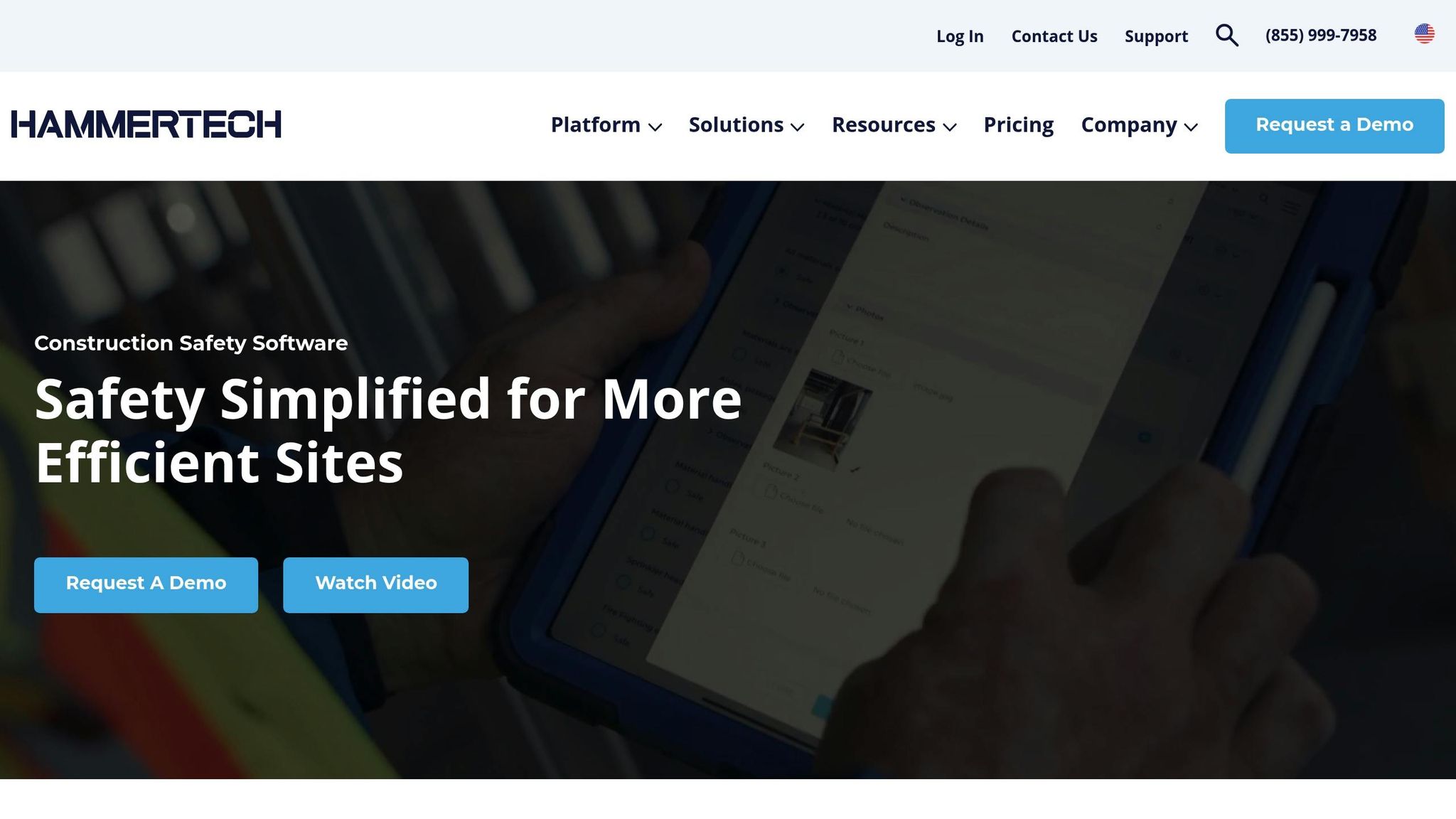
Seamless Construction Site Access Control with HammerTech powered by Irongate
The Construction Company’s Credentialing Problems
This case study dives into the challenges faced by a large Midwest contractor managing a workforce of 1,500 employees across 15 different sites. The company struggled with operational inefficiencies and compliance headaches, all stemming from outdated credentialing processes.
Managing Credentials for Multiple Job Sites
One of the biggest hurdles was keeping track of certifications, safety training, and compliance requirements for employees spread across multiple locations. Each job site had its own unique compliance standards, and workers frequently moved between them. This made maintaining accurate records nearly impossible with the company’s existing systems.
Tasks like tracking OSHA certifications, equipment licenses, and site-specific training – each with different renewal dates – became a logistical nightmare. For instance, HR staff spent 5 minutes per candidate just renewing Motor Vehicle Records, which added up to over 100 hours annually for that single task. When you factor in all the other certifications, the time spent on administrative work became overwhelming.
The company relied on paper files and spreadsheets spread across multiple locations, which created a breeding ground for errors. Expired or missing certifications often led to work delays or workers being sent home. To complicate matters further, differing state requirements meant that credentials valid in one location didn’t always meet the standards in another.
Risks of Non-Compliance
These credentialing gaps didn’t just disrupt operations – they also exposed the company to serious compliance risks. Failing to meet credentialing standards could result in hefty OSHA fines, legal troubles, and even project shutdowns.
For example, fines for unqualified workers operating heavy machinery could run into the thousands of dollars per violation. In one particularly costly incident, an equipment operator’s expired certification went unnoticed, causing a project to stall for several days while a qualified replacement was found. This not only led to financial penalties but also damaged the company’s reputation with the client.
Last-minute credential issues were a recurring problem. Workers were often barred from job sites due to expired or missing documentation, creating workforce shortages and delaying projects. Supervisors also struggled to verify new hires’ certifications quickly, leaving crews idle while paperwork was sorted out. These delays ate into project margins and caused a domino effect of setbacks across multiple sites.
The challenges faced by this contractor highlighted the urgent need for a streamlined, automated credentialing system – one that could eliminate errors, save time, and reduce compliance risks. This set the stage for a much-needed transformation.
Implementing an Integrated Verification System
Faced with growing challenges in managing credentials, a Midwest contractor decided it was time for a major overhaul. Their goal? To move away from error-prone manual processes and create a scalable system that could keep up with their expanding workforce. This transformation paved the way for integrating credentialing data with HR and payroll systems, ensuring smoother operations.
Moving to Automated Credential Tracking
The first step was a deep dive into their existing credential records. A thorough audit revealed outdated and incomplete paper files, making it clear that change was overdue. To address this, the company chose a credential management platform that could handle document collection, verification, and renewal reminders automatically.
Over the course of three months, HR teams worked diligently to scan and digitize documents from all locations. Automated workflows were introduced to send renewal alerts well before certifications expired. This gave workers and supervisors plenty of time to update credentials without last-minute scrambles.
To ensure everyone was on board, the company provided training for supervisors and workers on using a mobile app for real-time verification.
Connecting with Existing HR and Payroll Systems
Integrating the new system with their existing HR and payroll platforms was a critical, though complex, task. The company partnered with IT and platform support teams to ensure smooth data flow. They selected a solution with open APIs, enabling direct communication between the credentialing platform, HRIS, and payroll software.
This integration brought immediate benefits. For example, when a worker’s certification was verified, their HR profile updated automatically, eliminating duplicate data entry. Payroll processes also became more efficient. New hires could complete their credentialing requirements, and their information would flow directly into the payroll system, cutting onboarding time from three days to just four hours.
The system also flagged workers with expired credentials, ensuring they weren’t scheduled until their documentation was up to date. Rigorous data mapping and parallel testing ensured the integration worked seamlessly.
Using Mobile Technology for Real-Time Verification
With automated tracking in place and systems connected, the company turned to mobile technology to improve real-time oversight. Supervisors could now use smartphones or tablets to check credential statuses, verify qualifications, and receive instant notifications – all from the job site. This eliminated delays caused by overlooked expirations.
The mobile app made verification quick and easy. Supervisors could scan worker IDs to confirm certifications, safety training, and renewal dates instantly. Workers could also upload new certificates directly through the app, speeding up the verification process and reducing paperwork.
Real-time verification became especially useful during emergency situations. For instance, when an urgent repair required certified welders, supervisors used the system to quickly find qualified workers. Geo-location features further streamlined operations by matching workers to nearby projects based on their certifications and availability, cutting travel time and costs.
During audits and inspections, mobile check-ins allowed supervisors to track compliance on the spot. They could generate reports showing that all workers met certification requirements, reinforcing the company’s commitment to safety and regulatory standards.
Results and Benefits of Automated Credentialing
Shifting from manual to automated credentialing brought noticeable improvements, streamlining operations and ensuring better compliance. These changes didn’t just enhance efficiency – they also opened doors for smoother administrative processes.
Less Administrative Work, Fewer Mistakes
One of the first wins was in the administrative department. HR teams reported a 60% reduction in time spent managing credentials, while associated costs dropped by 30%. This freed up staff to focus on more strategic priorities instead of drowning in paperwork. Tasks that previously took hours were now handled automatically through integrated workflows.
Another major perk? Fewer errors. Before automation, expired certifications, missing documents, and data entry mistakes were frequent headaches, often leading to compliance issues. Built-in validation checks and real-time alerts solved these problems, cutting compliance-related incidents by 50%.
Speedier Crew Deployment
One of the standout benefits was faster hiring and deployment. Manual credentialing often slowed down the onboarding process, taking days to verify qualifications and complete paperwork. With automation in place, onboarding time dropped to under 24 hours, giving the company a competitive edge in responding to urgent needs.
A great example of this was during an emergency pipeline repair. Thanks to the automated system, the company deployed a fully qualified crew within 12 hours – far quicker than the previous 2–3 day timeline. Supervisors used mobile apps to confirm worker credentials instantly on-site, ensuring no time was wasted.
Geo-location features added another layer of efficiency. When urgent projects came up, the system identified qualified workers nearby, cutting down on travel time and costs while ensuring the right skills were matched to the job.
Smarter Compliance Tracking and Monitoring
Compliance management moved from being a reactive hassle to a proactive, streamlined process. Real-time dashboards now provide a clear view of workforce compliance across multiple locations, giving managers an easy way to monitor readiness. Automated alerts notify supervisors before credentials expire, ensuring renewals happen seamlessly without disrupting work.
Regulatory inspections became less stressful too. Instead of scrambling to gather paper records, managers can now generate detailed compliance reports instantly, reducing the risk of fines and easing the inspection process.
Oversight has also improved on-site. Mobile check-ins allow supervisors to track compliance in real time and generate immediate reports confirming that all workers meet certification requirements. This not only reinforces safety standards but also demonstrates a strong commitment to regulatory adherence.
sbb-itb-aa28329
How ABLEMKR Solved Construction Credentialing Problems
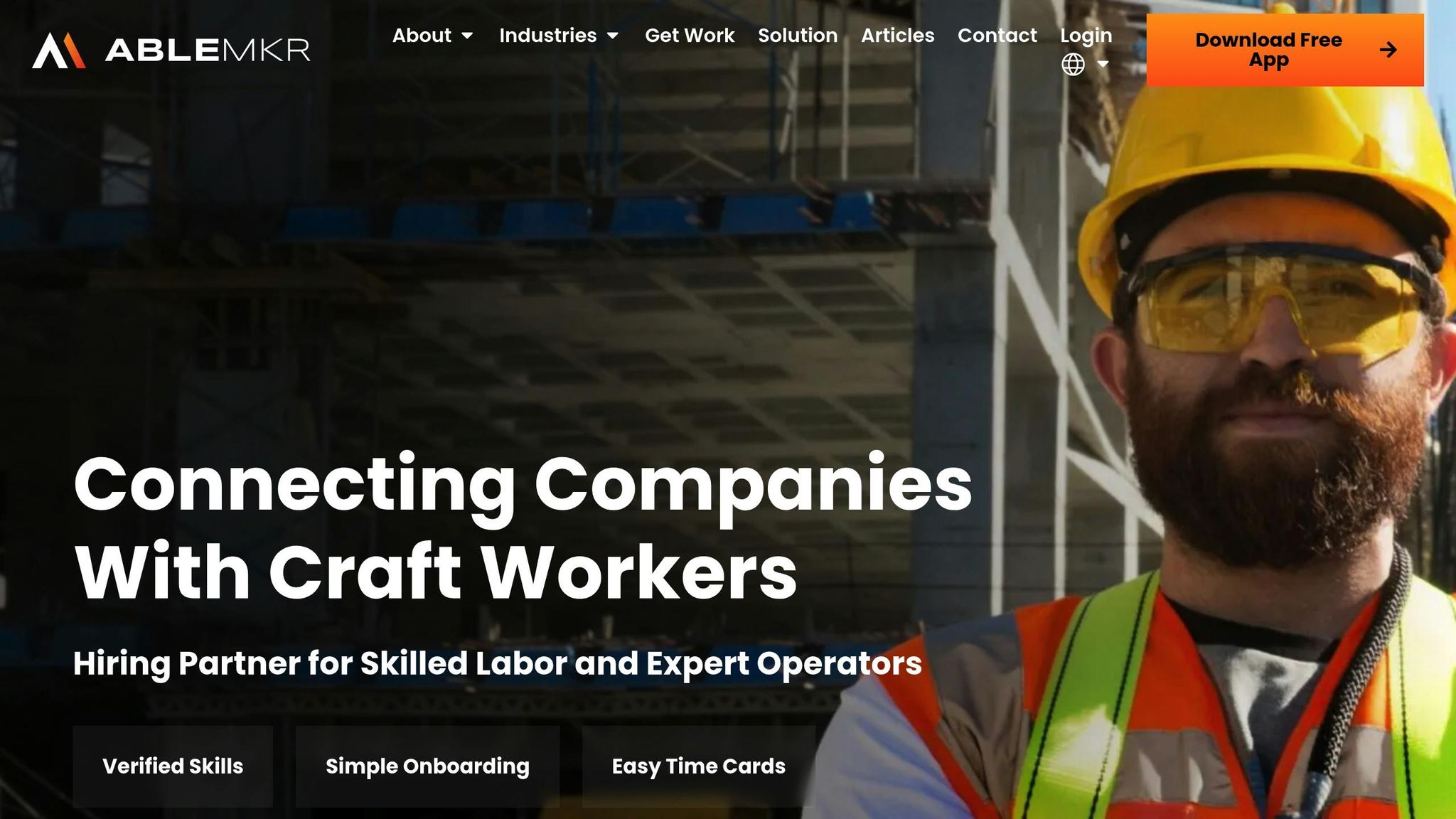
ABLEMKR‘s mobile-first platform tackled the challenges of credentialing by seamlessly connecting qualified workers to critical projects across multiple locations. Here’s how ABLEMKR addressed these issues with its innovative features.
Real-Time Credential Verification and Worker Matching
ABLEMKR’s centralized digital database makes credential management a breeze. It stores and verifies key worker credentials – like OSHA certifications, trade licenses, drug test results, and background checks – in real time. This eliminates the delays that come with manual processes.
When a project needs urgent staffing, the platform automatically matches pre-vetted workers whose credentials are up-to-date and meet the job’s requirements. Its geo-location feature even pinpoints nearby qualified workers, cutting down travel time and costs. This efficiency has led to a 30% faster deployment of crews.
Compliance and Payroll Made Simple
ABLEMKR combines compliance tracking with payroll in a way that streamlines administrative tasks. The platform keeps a watchful eye on credential expiration dates, required safety training, and regulatory documentation. It sends timely alerts for renewals or potential compliance issues, helping companies avoid penalties and project delays.
The "Easy Time Cards" feature simplifies payroll by accurately tracking worker hours, ensuring precise payment calculations. By integrating with existing HR and payroll systems, ABLEMKR automatically syncs worker data, credential statuses, and payroll information. Companies using the platform have reported a 40% reduction in administrative hours spent on credential management, along with fewer errors from expired certifications or missing paperwork.
Mobile-First Technology for Faster Operations
ABLEMKR’s mobile app takes efficiency to the next level by enabling quick access to the platform from anywhere. Employers and workers can communicate instantly and verify credentials on the go. Supervisors can review professional profiles, track worker locations in real time, and manage deployments directly from the field.
The app allows companies to post job requirements and instantly see available, qualified workers. Workers, in turn, receive immediate notifications about new opportunities. This rapid communication system helps mobilize crews quickly, especially for remote or emergency projects, minimizing downtime.
Features like direct messaging and real-time location tracking improve on-site coordination and deployment. Plus, the platform’s scalable design ensures it can adapt to new credential types and changing compliance needs, making it a reliable tool as the company expands into industries like energy and utilities.
Key Takeaways and Recommendations
The construction industry’s move toward automated credentialing isn’t just about adopting new technology – it’s a shift in how companies handle risk, manage their workforce, and remain competitive. By examining successful implementations, it’s clear that automation can redefine workforce management for companies ready to embrace modernization.
Why Automation and System Integration Matter
Manual processes often lead to inefficiencies and errors. Automation removes these roadblocks, significantly reducing the workload for HR teams.
Integrating credentialing systems with existing HR and payroll platforms centralizes worker data, reducing manual mistakes and streamlining operations. For example, Mill Steel’s adoption of an integrated credentialing system in 2022 doubled their operational capacity while maintaining compliance and training standards. Additionally, real-time data sharing across systems ensures automatic updates when certifications expire, eliminating the need for manual intervention.
Building Systems That Scale with Project Demands
Construction projects vary widely in scope and requirements, and credentialing systems must be flexible enough to handle these changes. Scalable platforms can manage fluctuating workforce sizes, multiple job sites, and diverse credential needs without constant reconfiguration.
A great example is ABLEMKR’s mobile platform, which connects pre-vetted workers to project needs based on their certifications and location. This allows companies to quickly adjust their workforce as project demands shift, all while maintaining compliance and efficiency. Scalable systems also support expansion into new markets or industries, such as energy or utilities, by adapting to different regulatory requirements across states or sectors.
Staying Ahead of Compliance Requirements
Compliance in construction is ever-changing, with new regulations, expiring certifications, and updated safety standards. Automated systems can transform these challenges into manageable routines. Features like real-time alerts and automated notifications ensure companies are notified of upcoming renewals well in advance, helping to avoid project delays and regulatory penalties.
Non-compliance can be costly, as seen with CityBuild’s enforcement of contractor credentialing policies, which led to financial penalties for violations. Implementing a robust compliance tracking system not only avoids these penalties but also strengthens relationships with clients and regulators. The best solutions offer detailed audit trails and customizable checklists tailored to specific projects or jurisdictions. By tracking metrics like credential error rates and compliance incidents, companies can refine their processes and use compliance as a strategic advantage.
These insights highlight how integrated and scalable systems enable construction companies to stay ahead of regulatory challenges while improving efficiency and reliability.
Conclusion
Switching from manual to integrated credentialing reshapes workforce management in profound ways. This case study highlights that automated credentialing isn’t just about adopting new tools – it’s about ensuring consistency, meeting compliance standards, and responding quickly to project demands. This shift paves the way for more reliable and agile operations in construction.
The challenges faced by the construction company – like administrative delays, compliance risks, and slow crew deployment – are common across industries reliant on manual processes. By adopting an integrated system, they overcame these hurdles and gained real-time insights into their workforce’s qualifications.
ABLEMKR’s platform enables rapid matching of certified workers, a critical feature during emergencies or tight deadlines. This capability proves invaluable during unexpected shutdowns, urgent repairs, or shifting project timelines.
The integration with HR and payroll systems further streamlined workflows, connecting verification to payment seamlessly. By eliminating data silos, the company reduced errors and sped up operations.
These improvements aren’t limited to a single project. Industries like energy, mining, and utilities face similar credentialing challenges, making mobile-first, scalable solutions crucial for staying competitive. The ability to deploy qualified workers quickly while adhering to compliance standards becomes a key advantage in high-stakes environments.
Automated credentialing systems significantly cut down on administrative tasks and expedite crew mobilization, leading to noticeable savings in both time and costs. They also enhance safety and ensure projects start on schedule. As regulations grow more complex and projects become increasingly intricate, these systems offer a reliable foundation for sustainable growth and efficient operations.
For construction companies still relying on manual processes, this case study serves as a roadmap for transformation. By combining real-time verification, mobile access, and integrated workflows, businesses can scale workforce management to meet evolving demands while maintaining top-notch compliance and safety standards. It’s a clear example of how integrated credentialing systems can redefine the way construction staffing is managed.
FAQs
How does automated credentialing help construction companies stay compliant and reduce administrative tasks?
Automated credentialing takes the hassle out of compliance and lightens the administrative load by ensuring that only qualified, pre-screened workers are sent to job sites. ABLEMKR leverages mobile-first technology to verify certifications, safety training, and worker availability, making it easier for construction companies to meet regulatory standards without breaking a sweat.
For employers, it provides real-time updates on worker compliance and status, offering a clear view of their workforce. On the other hand, workers enjoy a faster onboarding process and access to high-paying job opportunities. This system cuts down on the manual work typically tied to hiring and ensures teams are ready to hit the ground running.
What makes a credential management platform effective for construction companies?
An efficient credential management platform transforms how construction companies handle hiring, onboarding, and compliance. By using mobile-first technology, it connects skilled workers to job sites based on their certifications, safety training, availability, and location.
This system allows companies to assemble crews quickly for important projects, boosting productivity while staying aligned with industry regulations. Plus, it offers real-time access to worker credentials, simplifying workforce management and minimizing potential delays.
What are the benefits of integrating credentialing systems with HR and payroll platforms for construction companies?
Integrating credentialing systems with HR and payroll platforms can make hiring, onboarding, and managing compliance much easier for construction companies. With mobile-first technology, pre-qualified workers can be matched to job sites based on their certifications, safety training, availability, and location. This ensures crews are assembled swiftly and ready to get to work without delays.
For employers, this integration provides real-time updates on worker status, simplifies payroll processes, and automates compliance tracking. The result? Less time spent on paperwork, smoother operations, and projects that stay on track – all while ensuring every worker meets the necessary qualifications for the job.


