
Managing visa compliance is a major pain point for industries like construction and energy, where talent shortages and complex immigration laws create ongoing challenges. Manual systems – like spreadsheets and email reminders – are prone to errors, missed deadlines, and high administrative costs. Digital platforms, such as ABLEMKR, offer a better solution by automating processes, reducing errors, and ensuring compliance with up-to-date documentation.
Key takeaways:
- Manual methods: Time-consuming, error-prone, and costly as teams grow.
- ABLEMKR platform: Automates visa tracking, sends expiration alerts, centralizes documents, and ensures audit readiness.
- Scalability: Ideal for companies managing large, mobile workforces across multiple locations.
For businesses aiming to streamline visa compliance and avoid costly mistakes, switching to automated platforms can save time, reduce risks, and improve efficiency.
Compliance-first, Mobile Workforce Management Tool
1. Manual Visa Compliance Methods
Many construction and energy companies still rely on traditional tools like spreadsheets, email reminders, and physical paperwork to manage visa compliance. While this might work for very small teams, it quickly becomes unmanageable as the organization grows. Here’s a closer look at how manual methods measure up in five key areas.
Time to Process Renewals
Renewing visas manually requires a lead time of four to six months. HR teams must juggle tracking expiration dates, gathering required documents, verifying eligibility, and filing petitions. To stay on top of it, reminders often need to be set six to seven months in advance.
With around 50 visa types in the U.S. – about 25% of which are employment-based – each comes with its own set of requirements. For example, the H-1B visa alone involves a two-page USCIS checklist. Managing these overlapping timelines manually can lead to delays and missed deadlines.
Error Rates
Shared spreadsheets are prone to errors when multiple users edit them. Issues like outdated information, incorrect dates, or overlooked changes can disrupt projects significantly.
Additionally, when an HR team member managing these records leaves the company, their knowledge often leaves with them. Even minor mistakes, like a missed calendar alert or a typo, can sideline key workers, delay projects, and result in financial penalties.
Cost Per Worker
At first glance, manual methods might seem cost-effective. But hidden expenses, such as external legal counsel, increased HR workloads, and emergency fixes, quickly add up when managing more than 20 to 25 foreign employees.
"When an employer has more than 20 to 25 foreign national employees who require immigration sponsorship, using a more sophisticated system can help to prevent issues, such as missed deadlines or a mix-up between individual expiration dates."
- Attorney Yova Borovska of Buchanan, Ingersoll & Rooney
As companies scale, the costs per worker rise due to the need for additional HR staff, higher legal fees, and last-minute problem-solving.
Compliance Audit Readiness
Manual systems often fall short in compliance audits. They lack audit trails and secure storage for personally identifiable information (PII), leaving them vulnerable.
"The software must have a built-in audit trail to track who touched the digital I-9, when and what was done."
- Attorney Greg Berk of Sheppard Mullin
Spreadsheets, by contrast, offer no such audit capabilities and often store sensitive PII without sufficient access controls, posing security risks.
Scalability
Manual tracking systems struggle as companies grow. Single-user spreadsheets and staff turnover create knowledge gaps, increasing the likelihood of missed deadlines and operational hiccups. These challenges are magnified for companies managing workforces across multiple states or remote sites, where local requirements vary.
For construction and energy companies, this can mean disrupted operations, lost talent, and compliance failures – all of which could be avoided with a more efficient tracking system.
The limitations of manual methods underscore the pressing need for integrated digital solutions.
2. ABLEMKR Workforce Platform
ABLEMKR simplifies visa compliance by weaving it directly into the hiring and onboarding process, eliminating the inefficiencies and risks of manual systems. With features like real-time tracking and centralized documentation, it provides an efficient way to manage worker deployment for industries like construction, energy, and extractives. This approach replaces outdated methods with a streamlined, automated system.
Time to Process Renewals
The platform’s single dashboard combines visa management with automated workflows, cutting application processing time in half. Features like one-click renewals and automated reminders before expiration dates remove the need for manual tracking.
Error Rates
To ensure accuracy, ABLEMKR relies on 100% lawyer validation for all visa applications. Intelligent document verification and automated processes reduce human errors, offering precise compliance through real-time updates and detailed audit trails.
Compliance Audit Readiness
With robust tracking and up-to-date compliance documentation, the platform eliminates the risks tied to fragmented, spreadsheet-based systems. It ensures audit readiness by maintaining clear and accessible records.
Scalability
Designed with mobile-first technology, ABLEMKR enables quick workforce mobilization across states and remote locations. It matches pre-vetted workers based on certifications, safety training, availability, and location. This adaptability is ideal for urgent needs like last-minute shutdowns, pipeline repairs, or planned mine developments.
sbb-itb-aa28329
Pros and Cons
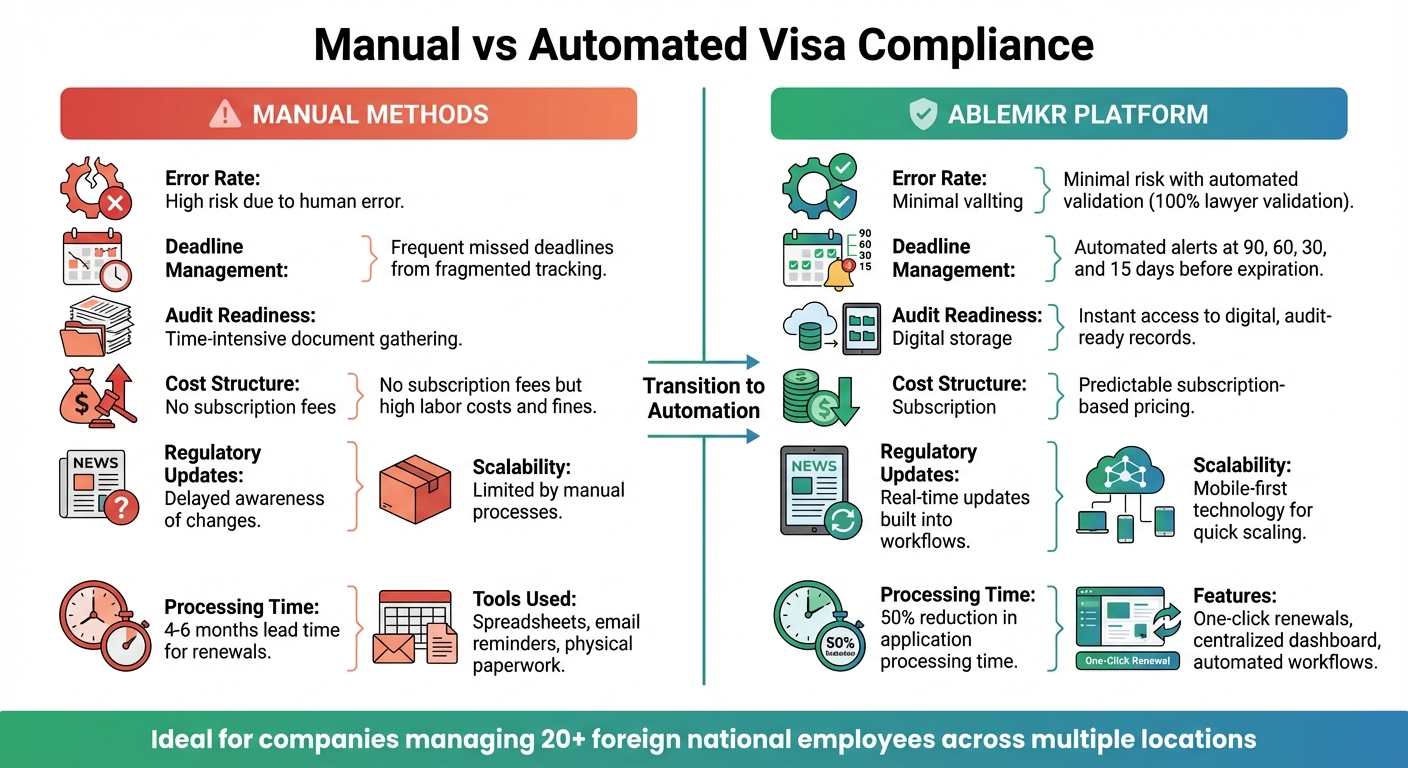
Manual vs Automated Visa Compliance: Key Differences for Workforce Management
When it comes to managing visa compliance and workforce platforms, both manual methods and automated systems offer their own sets of benefits and challenges. Here’s a closer look at how they stack up against each other.
Manual approaches might seem like a cheaper option at first glance, but they often come with hidden costs, like high internal labor expenses and the risk of hefty fines. These methods are prone to errors, missed deadlines, and slow responses to regulatory changes, largely due to scattered and inefficient record-keeping systems.
On the other hand, automated platforms like ABLEMKR simplify the process significantly. They provide proactive alerts (90, 60, 30, and 15 days before a visa expires), centralized data storage, and real-time updates on regulatory changes. Teams across HR, legal, and finance departments can instantly access complete immigration records. The platform also enforces compliance rules, such as ensuring F-1 student visa holders don’t exceed the 20-hour-per-week work limit. These features not only reduce errors but also streamline operations, as shown in the comparison table below.
However, these platforms aren’t without drawbacks. They come with recurring costs, often charged per employee or as a percentage of salaries. Setting them up requires integration with existing systems like HRIS and E-Verify. Additionally, centralizing sensitive immigration data introduces potential risks, such as GDPR violations, which can result in fines of up to €20 million or 4% of global annual revenue.
Here’s a quick breakdown of the differences between manual methods and the ABLEMKR platform:
| Factor | Manual Methods | ABLEMKR Platform |
|---|---|---|
| Error Rate | High risk due to human error | Minimal risk with automated validation |
| Deadline Management | Frequent missed deadlines from fragmented tracking | Automated alerts at multiple stages |
| Audit Readiness | Time-intensive document gathering | Instant access to digital, audit-ready records |
| Cost Structure | No subscription fees but high labor costs and fines | Predictable subscription-based pricing |
| Regulatory Updates | Delayed awareness of changes | Real-time updates built into workflows |
| Scalability | Limited by manual processes | Mobile-first technology for quick scaling |
While manual methods may work for smaller operations, automated platforms like ABLEMKR clearly offer a more efficient and reliable solution for managing visa compliance, especially as organizations grow.
Conclusion
Relying on manual methods for visa compliance can be a risky game for construction and energy companies. Issues like fragmented data, missed deadlines, and the lack of real-time monitoring for work hour limits can lead to costly mistakes. Imagine a field manager unknowingly scheduling a worker beyond their permitted eligibility – this isn’t just a paperwork problem. It could result in hefty fines and even derail critical project timelines.
This is where automation becomes essential. ABLEMKR steps in to tackle these challenges by centralizing visa documentation and automating compliance tracking. Whether it’s a pipeline repair in a remote location or a mining project, field managers can instantly verify worker authorization and get automated alerts 90, 60, and 30 days before a visa expires. This proactive approach ensures compliance issues are caught early, even when crews are spread across multiple energy corridors.
For industries that depend on quick crew mobilization – whether for emergency shutdowns or planned infrastructure work – ABLEMKR’s built-in compliance tracking simplifies labor deployment. By integrating compliance into workforce management, it shifts immigration tracking from a tedious task to a seamless process. With features like data integration to avoid manual entry and audit-ready digital repositories, ABLEMKR eliminates the chaos of last-minute document gathering and ensures everything runs smoothly.
FAQs
How does ABLEMKR make visa compliance easier for employers?
ABLEMKR takes the hassle out of visa compliance by automating credential tracking and sending real-time alerts for expiring documents and upcoming renewals. This means worker certifications and visas stay current without requiring constant manual oversight.
By embedding compliance management into workforce deployment, ABLEMKR cuts down on administrative mistakes and simplifies workflows. This not only saves time but also helps employers reduce potential risks. With automation handling the details, companies can concentrate on their operations while staying aligned with labor laws.
What challenges come with managing visa compliance manually?
Managing visa compliance manually comes with its fair share of headaches. For starters, it often leads to more mistakes, missed deadlines, and even falling out of step with legal requirements. And let’s face it – those errors can come with a hefty price tag, from fines and legal troubles to project delays that no one wants to deal with.
It’s also a time drain. Manual tracking usually means shuffling between spreadsheets, stacks of paperwork, and disjointed systems. When you’re handling large teams or intricate projects that demand accurate documentation and up-to-the-minute updates, this piecemeal approach makes oversights almost inevitable.
How does ABLEMKR ensure compliance with changing regulations and support audit preparation?
ABLEMKR makes staying compliant easier with its real-time tracking of regulatory updates, ensuring your team keeps up with the latest requirements. The platform sends automated alerts to notify employers about changes, so nothing slips through the cracks. Plus, its reporting tools simplify audit preparation, making the process hassle-free. By centralizing compliance management, ABLEMKR helps businesses stay organized and avoid unnecessary interruptions.


