
Wind and solar technicians face unique hazards that require tailored safety training. Wind technicians deal with high-voltage AC systems, extreme heights, and remote locations, while solar technicians handle energized DC systems, rooftop falls, and heat risks. Both roles share core safety practices, but their training diverges based on the specific challenges of each field.
Key Points:
- Wind Technicians: Work at heights over 300 feet, manage confined spaces, and handle multi-source energy systems. Certifications include GWO Basic Safety Training and CSA Z462.
- Solar Technicians: Face risks from live DC systems, rooftop falls, and heat exposure. Training focuses on OSHA 10/30 and NFPA 70E standards.
- Shared Skills: Both roles require lockout/tagout (LOTO) procedures, PPE use, and emergency response training.
- Cross-Training Opportunities: Shared skills allow technicians to transition between wind and solar roles, increasing job flexibility and filling workforce gaps.
Quick Comparison:
| Training Aspect | Wind Technician Training | Solar Technician Training |
|---|---|---|
| Primary Hazards | Extreme heights, confined spaces | Rooftop falls, heat exposure |
| Key Certifications | GWO BST, CSA Z462 | OSHA 10/30, NFPA 70E |
| Emergency Response | Remote rescue, first aid at heights | Rooftop rescue, urban emergency access |
| PPE | Fall arrest systems, insulated gloves | Sun protection, insulated gloves |
Wind training is more extensive, addressing high-altitude and remote work challenges, while solar training focuses on shorter, modular sessions for electrical and rooftop safety. Both roles share a foundation in electrical safety, but their training reflects the distinct environments they operate in.
Inside Look: Hands-On Sessions & Expert Guidance | System One Renewable Energy Training Center
Basic Electrical Safety Training Requirements
Before diving into the unique safety challenges of wind and solar energy systems, technicians must first master the essential electrical safety standards. Both wind and solar technicians undergo rigorous training that meets federal and industry requirements. These certifications are crucial, equipping them to handle high-voltage systems safely and respond to electrical emergencies across renewable energy installations.
Required Certifications and Standards
One key standard for renewable energy technicians is NFPA 70E (Standard for Electrical Safety in the Workplace). This standard focuses on managing arc flash and shock hazards, which are common risks in both wind and solar operations.
OSHA regulations, particularly OSHA 1910 Subpart S, outline federal electrical safety requirements. These cover critical areas like proper grounding techniques and safe practices when working near energized equipment.
The Global Wind Organisation (GWO) standard, initially designed for wind energy, is now being adopted in the solar sector as well. The GWO Basic Technical Training includes four core modules, plus an additional installation module. The current Version 9 is valid through November 2, 2025.
In some states, additional standards like CSA Z462 are used for electrical safety management. This standard categorizes personal protective equipment (PPE) into levels ranging from Category 1 (up to 4 cal/cm²) to Category 5 (up to 75 cal/cm²), helping technicians choose the right gear for different voltage scenarios.
Main Training Topics
A major focus of electrical safety training is arc flash protection. Technicians are taught to identify arc flash risks and calculate incident energy levels. Training highlights that the arc flash boundary begins at 1.2 cal/cm², where second-degree burns can occur.
Lockout/tagout (LOTO) procedures are another critical component. These ensure all energy sources are properly identified, isolated, and secured before work begins.
Most training programs follow a modular structure, starting with high-voltage safety awareness and progressing to advanced topics. This approach combines classroom learning, hands-on labs, and scenario-based assessments to ensure thorough preparation.
PPE training is also emphasized, covering the selection, inspection, and proper use of safety equipment such as insulated gloves, arc-rated clothing, face shields, safety glasses, hard hats, and insulated tools.
In addition, technicians receive training on emergency response protocols. This includes emergency shutdown procedures, CPR, first aid, and rescue techniques for confined spaces or elevated areas.
The curriculum also incorporates job planning, pre-job briefings, site evaluations, and communication protocols to support safe decision-making on-site.
| PPE Category | Incident Energy Protection Level |
|---|---|
| Category 1 | Up to 4 cal/cm² |
| Category 2 | Up to 8 cal/cm² |
| Category 3 | Up to 25 cal/cm² |
| Category 4 | Up to 40 cal/cm² |
| Category 5 | Up to 75 cal/cm² |
To keep up with evolving industry standards, technicians can enroll in gap training programs. These programs address updates or fill knowledge gaps, ensuring they remain compliant and prepared for any safety challenges.
This foundational training establishes the groundwork for tackling the specific safety demands of wind and solar energy systems.
Wind Energy Training Challenges
Wind energy brings its own set of challenges that go beyond basic electrical safety standards. Wind technicians face unique risks like working at dizzying heights, navigating confined spaces, and handling intricate electrical systems. These hazards demand specialized training to ensure safety and efficiency. Let’s break down what makes wind energy training so critical.
Wind Energy Hazards
Extreme heights are a significant risk for wind technicians. Modern wind turbines can tower over 300 feet, requiring maintenance and repairs in tight spaces like turbine towers and nacelles. These areas not only limit movement but also make emergency escapes incredibly difficult.
The electrical systems in wind turbines add another layer of complexity. High-voltage systems exceeding 600 volts, combined with mechanical and hydraulic energy, create a challenging environment. Unlike simpler setups, these systems can unexpectedly energize from multiple sources, making lockout procedures far more intricate.
Confined spaces pose additional dangers. Limited ventilation and restricted movement make emergencies even more perilous. Evacuating while managing electrical hazards in these tight quarters can be a daunting task.
Rotating machinery further complicates safety. Even when electrical systems are deactivated, technicians must work around massive components like generator rotors and gearboxes. A single misstep can trigger hazardous energy releases from these mechanical systems.
Specialized Safety Training for Wind Technicians
To address these hazards, wind energy training programs are designed to be rigorous and highly specific.
Fall protection and rescue-at-heights training is a cornerstone of wind technician preparation. This goes beyond standard construction safety, teaching the use of specialized harnesses, lanyards, and anchor systems tailored for turbine work. Self-rescue skills are also emphasized, enabling technicians to descend independently from heights of over 200 feet during emergencies.
High-voltage turbine system training focuses on the unique electrical setups in wind turbines. Unlike solar systems, turbines generate variable AC power that must be conditioned for transmission. Technicians learn to safely handle power electronics, transformers, and switchgear, often in the confined spaces of nacelles.
The Global Wind Organisation (GWO) standards set the industry benchmark for safety training. Their Basic Safety Training program covers essential modules like Working at Heights, Fire Awareness, First Aid, Manual Handling, and specialized Electrical Training. These standards ensure consistent practices across wind farms worldwide.
Emergency response training is especially critical given the remote and elevated nature of wind turbines. Technicians are trained in advanced first aid, CPR, and rescue operations, preparing them to act independently when professional responders are delayed. Scenario-based drills help build confidence for real-life incidents.
Advanced troubleshooting training equips technicians to diagnose and address complex electrical issues while adhering to strict safety protocols. This training highlights how electrical problems can cascade through interconnected systems and teaches technicians to spot early signs of equipment failure.
Site and Weather Factors
The remote locations of wind farms require technicians to be self-reliant, often waiting over 45 minutes for external rescue support.
Weather conditions add another layer of difficulty. Wind farms are typically situated in areas prone to high winds, storms, and extreme temperatures. Technicians are trained to pause work during hazardous conditions like ice buildup, lightning, or high winds to ensure their safety and protect equipment.
Logistical challenges also shape training needs. Accessing turbine sites often depends on weather conditions and transport logistics. Technicians must plan their tasks around these variables, as emergency evacuations can be delayed by adverse weather.
| Training Focus Area | Wind Energy Specific Requirements |
|---|---|
| Height Safety | Self-rescue from 200+ feet, confined tower evacuation |
| Electrical Systems | Multi-source energy isolation, variable AC power systems |
| Emergency Response | Extended self-sufficiency, weather-dependent evacuation |
| Weather Management | Ice conditions, lightning protocols, wind speed limits |
The combination of working at great heights, managing intricate electrical systems, and dealing with tough environmental conditions makes wind energy one of the most demanding industries for safety training. These challenges push the need for specialized programs that go far beyond typical electrical safety protocols.
Solar Energy Training Challenges
Working in the solar energy sector comes with its own set of safety challenges. Technicians face risks tied to electrical systems, fall hazards, and environmental conditions, all of which demand specialized training. From managing photovoltaic (PV) systems to navigating rooftop installations and high-voltage DC circuits, the job requires a deep understanding of safety protocols tailored to these unique environments.
Solar Energy Hazards
Solar installations introduce electrical risks that differ from those found in traditional systems. PV arrays generate continuous DC voltage whenever exposed to sunlight, meaning components often remain energized. This constant exposure increases the likelihood of electric shock, demanding specific safety measures and protocols.
Inverters, which convert DC power from solar panels into AC power for the grid, also pose dangers. These devices operate at high voltages, and improper handling can lead to arc flash incidents. Without proper lockout/tagout (LOTO) procedures or the right protective equipment, technicians are at significant risk.
Rooftop installations combine electrical dangers with the potential for serious falls. Technicians must maneuver around obstacles like vents, skylights, and HVAC units while working on sloped or unstable surfaces. Proximity to live PV systems further complicates these tasks.
Ground-mounted solar systems, while reducing fall risks, bring their own challenges. These large-scale installations span uneven terrain and involve complex electrical systems. Proper knowledge of isolation and grounding procedures is essential for safe operation in these settings.
Specialized Safety Training for Solar Technicians
To address the unique risks in solar energy, training programs must cover both electrical and fall safety in depth.
Safe installation practices are a cornerstone of solar safety training. Technicians learn how to handle live DC circuits safely, use insulated tools, and perform voltage testing while recognizing energized components.
Arc flash prevention is a critical focus. Training includes assessing arc flash risks specific to PV systems, selecting the right personal protective equipment, and following NFPA 70E guidelines. This also involves understanding how DC arc faults differ from their AC counterparts.
Fall protection training for rooftop work goes beyond general construction safety. Technicians are taught to identify proper anchorage points, use fall arrest systems tailored to solar installations, and navigate around PV equipment while maintaining safety. They also learn to evaluate roof integrity to ensure it can support both workers and solar equipment.
LOTO procedures in solar systems are more complex than in many other trades. Technicians must isolate DC circuits at the array level, AC circuits at inverters, and mechanical energy in tracking systems. Larger installations add complexity, requiring technicians to manage multiple isolation points effectively.
Emergency response training is another essential component. This includes handling DC electrical shocks, treating arc flash burns, and performing rooftop rescues. Special attention is given to providing first aid in remote or elevated locations, where access may be limited.
Technicians also learn rapid shutdown and grounding procedures, which have become critical with updated electrical codes. These systems help reduce DC voltage during emergencies, protecting both workers and first responders. Proper grounding techniques are emphasized, covering both equipment and system grounding.
Like wind energy, solar installations demand a tailored approach to safety, addressing the specific risks of the sector.
Site and Weather Factors
Beyond electrical and fall risks, environmental conditions add another layer of complexity to solar work.
Heat-related hazards are a significant concern. PV panels and mounting hardware can become extremely hot under the sun, increasing the risk of burns and heat stress. Training helps technicians recognize these risks and take steps to mitigate them.
Weather conditions also play a crucial role in safety. Rain can make rooftops slippery and heighten electrical hazards, while high winds can make material handling dangerous and increase fall risks. Lightning poses severe dangers, particularly on elevated or open installations, requiring technicians to monitor weather closely.
Roof integrity is another critical factor. Older buildings may have structural weaknesses or outdated electrical systems, and different roofing materials – like tile, metal, or membrane – present unique challenges for fall protection and anchorage.
The combination of energized PV systems, rooftop fall hazards, and environmental challenges makes solar safety training distinct from other trades. Comprehensive programs are necessary to prepare technicians for the wide range of risks they might encounter, whether working on residential rooftops, commercial buildings, or large utility-scale installations.
sbb-itb-aa28329
Wind vs. Solar Safety Training Comparison
When it comes to safety training, wind and solar technicians face distinct challenges that reflect the unique hazards of their respective fields. While both roles are part of the renewable energy sector, their training requirements diverge significantly. Understanding these differences is crucial for employers to assign the right workers with the proper certifications and ensure that training aligns with the specific risks of each environment.
The key difference lies in the hazards technicians encounter. Wind technicians deal with high-voltage AC systems, extreme heights, and remote locations. On the other hand, solar technicians must navigate energized DC systems, rooftop falls, and heat-related risks.
Wind technicians typically undergo GWO Basic Safety Training (BST) and CSA Z462 certifications, while solar technicians complete OSHA 10/30 and NFPA 70E training.
Safety Training Differences Table
| Training Aspect | Wind Technician Training | Solar Technician Training |
|---|---|---|
| Primary Hazards | Extreme heights, confined spaces, severe weather | Rooftop falls, heat stress, UV exposure |
| Key Certifications | GWO BST/BTT, CSA Z462, Qualified Electrical Worker | OSHA 10/30, NFPA 70E, Construction Industry Training |
| Personal Protective Equipment | Hard hat, insulated gloves, safety glasses, harness, fall arrest systems | Hard hat, insulated gloves, safety glasses, fall protection gear, sun protection |
| Training Duration | Multi-day comprehensive programs | Shorter modular sessions |
| Emergency Response Focus | First aid, CPR, rescue operations, remote location response, sea survival (offshore) | First aid, CPR, rooftop rescue, urban/suburban emergency access |
| Site Conditions | Remote locations, offshore platforms, extreme elevations, variable weather | Residential/commercial rooftops, ground-mounted arrays, urban/suburban settings |
| Regulatory Focus | CSA, GWO, OSHA | OSHA, NFPA |
Wind technician training is typically more extensive, requiring multi-day programs to cover the wide range of hazards they face. For example, GWO Basic Safety Training includes modules on fire awareness, first aid, working at heights, manual handling, and sea survival for those working offshore. These comprehensive sessions prepare technicians for the complex and often remote nature of wind energy work.
In contrast, solar technician training is designed for flexibility, with shorter, modular sessions that focus on specific skills. This makes it easier to schedule and deploy workers quickly while ensuring they are equipped to handle electrical safety, fall protection, and heat-related risks.
Emergency response training also differs between the two fields. Wind technicians receive advanced first aid, CPR, and rescue techniques tailored to remote and high-elevation scenarios. Solar technicians, meanwhile, focus on rooftop rescue procedures and navigating emergencies in urban or suburban settings.
While both roles share common protective gear like hard hats, insulated gloves, and safety glasses, their environments dictate additional requirements. Wind technicians rely on specialized fall arrest systems for working at extreme heights, while solar technicians often need extra sun protection for prolonged exposure to UV rays.
These differences underscore the importance of tailored safety training programs for each sector, ensuring technicians are well-prepared for the specific challenges they face.
Shared Skills and Cross-Training Options
Wind and solar technicians bring a lot to the table when it comes to electrical safety, thanks to shared knowledge that opens doors for cross-training in the growing renewable energy sector. These overlapping skills not only strengthen safety practices but also create opportunities for seamless transitions between roles in wind and solar energy.
Skills Both Wind and Solar Technicians Need
Both wind and solar technicians rely heavily on a solid foundation in electrical theory. Understanding principles like voltage, current, and resistance is crucial for safely operating and troubleshooting both high- and low-voltage systems.
Another shared skill is Lockout/Tagout (LOTO) procedures. Whether maintaining a wind turbine or servicing a solar inverter, technicians must follow strict LOTO protocols to ensure safety during maintenance tasks.
Personal Protective Equipment (PPE) is another area of overlap. Proper use of PPE is essential when working with energized equipment in both sectors, helping to safeguard technicians during potentially hazardous tasks.
First aid and CPR training are also critical. Electrical incidents can happen in either environment, so technicians must know how to recognize and treat electrical shock and burns. These emergency response skills are vital across the board.
Finally, risk assessment is a universal skill. Both wind and solar technicians must evaluate potential hazards, including electrical risks, weather conditions, and equipment status, before starting work. This methodical approach to safety is a cornerstone of both roles.
Benefits of Cross-Training in Renewable Energy
Cross-training based on these shared skills is a game-changer for workforce development. With the U.S. Bureau of Labor Statistics projecting a 60% increase in wind turbine technician jobs between 2023 and 2033, and similar growth in solar energy, the demand for versatile, multi-skilled technicians is higher than ever.
For employers, cross-training offers a practical solution to workforce challenges. It reduces training costs and improves scheduling flexibility. Cross-trained workers can shift between wind and solar projects based on demand, minimizing downtime and addressing labor shortages. By focusing on shared competencies like electrical theory, LOTO, and PPE usage, companies can create core training programs and then layer on specialized skills for wind or solar work.
Technicians, too, gain significant advantages. Cross-training boosts job security and earning potential by qualifying them for a broader range of assignments. A technician skilled in both wind and solar safety can move between projects throughout the year, maintaining steady work even during seasonal or economic fluctuations.
Some community colleges and technical institutes are already stepping up to meet this need. These schools offer integrated renewable energy programs that combine wind and solar safety modules with electrical theory and hands-on training. Typically, these programs include a shared core curriculum followed by specialized tracks, preparing graduates for roles in either field.
To make cross-training effective, careful planning is essential. Employers should perform skills gap analyses to pinpoint common and unique training needs. Modular training programs can then address both shared and specialized competencies. Regular refresher courses and joint safety drills help maintain high safety standards across both sectors.
Technology also plays a role in streamlining cross-training. Digital workforce management platforms can track certifications, safety training, and worker availability in real time. This allows employers to quickly deploy cross-trained crews for wind or solar projects while ensuring compliance with safety standards and reducing administrative burdens.
Digital Platforms for Compliance and Workforce Management
As the renewable energy sector grows, managing safety training and certifications for wind and solar projects has become more challenging. Digital workforce management platforms now offer streamlined ways to track credentials, ensure compliance, and quickly mobilize skilled technicians.
This complexity arises from the involvement of multiple industry stakeholders, each with their own requirements and standards. In the offshore wind safety training ecosystem, maintaining accurate training records is a critical need, highlighting the importance of systematic tracking for certifications and compliance. These digital tools help bridge the gap between rigorous training demands and efficient workforce deployment.
How ABLEMKR Helps Deploy Workers
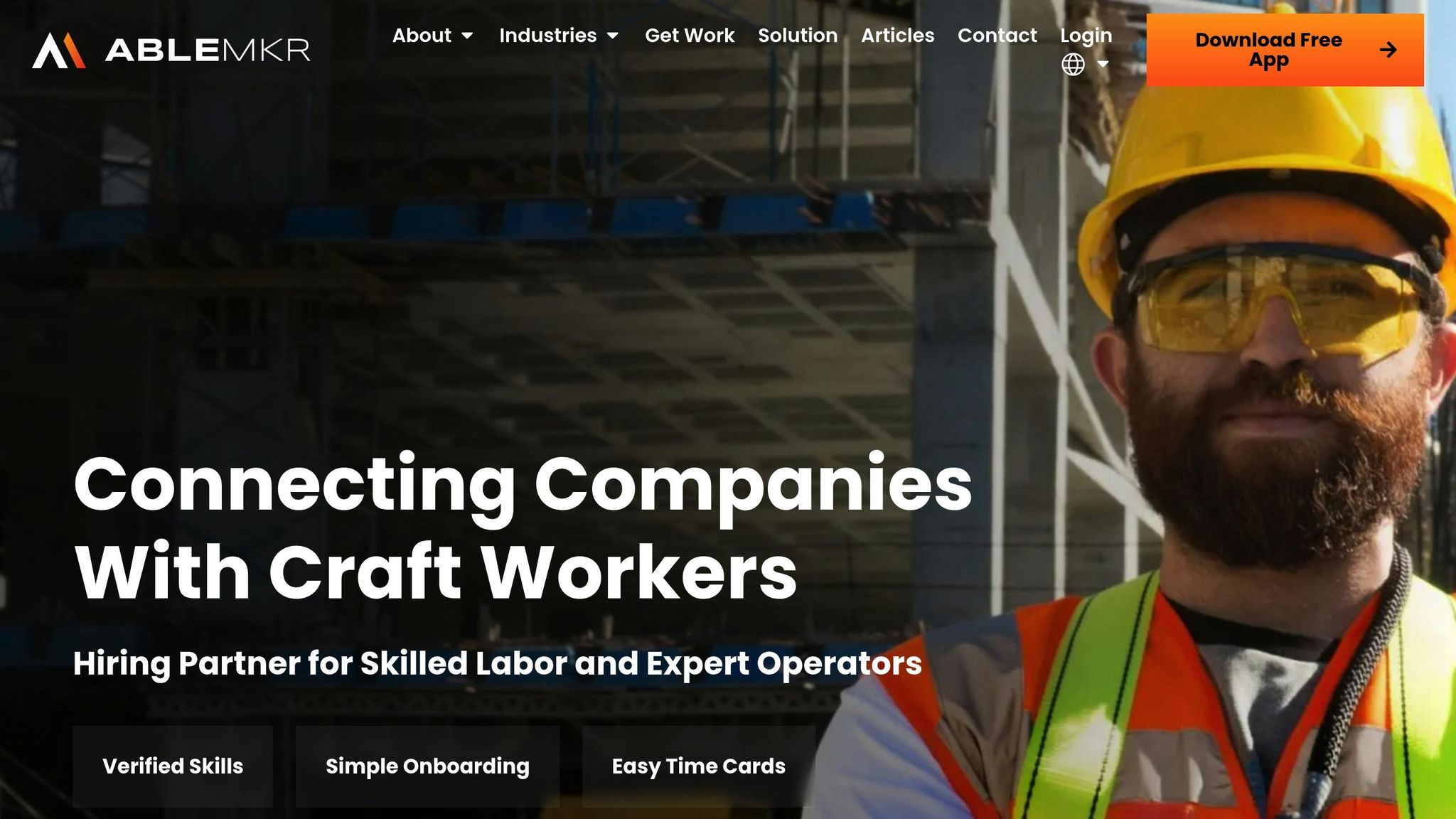
ABLEMKR steps in with a practical, mobile-first solution to meet the challenges of modern workforce deployment. Designed for the renewable energy sector, the platform connects pre-vetted workers with critical wind and solar projects across the United States. By matching technicians to job sites based on their certifications, safety training, availability, and location, ABLEMKR ensures crews can be deployed quickly for both routine maintenance and emergencies.
One standout feature is ABLEMKR’s "Verified Skills" system, which centralizes technician profiles and provides detailed records of safety certifications, such as GWO for wind energy and NABCEP for solar projects. This verification process is essential in an industry where technicians often need multiple certifications to meet diverse project requirements.
In urgent situations, the platform’s real-time matching system assigns technicians with the exact certifications needed for the job. Acting as a comprehensive workforce management tool, ABLEMKR ensures compliance and simplifies management. Its mobile app also allows project managers to verify that deployed technicians meet the required safety qualifications for specific projects.
Benefits for Employers and Workers
ABLEMKR’s benefits extend well beyond workforce deployment, offering tools for ongoing operational oversight. Employers managing wind and solar projects gain real-time visibility into worker status through integrated dashboards. These dashboards track compliance metrics, such as training completion rates and certification validity, enabling companies to address potential gaps before they become compliance risks.
The platform simplifies onboarding by digitizing paperwork, instantly verifying credentials, and guiding workers through required safety modules. This streamlined process allows technicians to start work faster while giving employers confidence that only qualified personnel are deployed.
Administrative tasks are further minimized with integrated payroll and compliance tracking. Automated alerts notify managers when certifications are nearing expiration, helping maintain continuous compliance with safety standards.
One of the industry’s biggest challenges – standardizing qualification records – is effectively addressed by ABLEMKR. The platform maintains comprehensive records of worker qualifications across various training standards, reducing the risk of mismatches between project requirements and workforce availability.
For workers, ABLEMKR offers flexible access to well-paying opportunities, along with guaranteed on-time payments. Its transparent job-matching system enables technicians to find projects that align with their skills and schedules, fostering stability in a competitive labor market.
Cross-trained technicians benefit significantly from ABLEMKR’s system. The platform tracks both wind-specific certifications, like GWO Basic Safety Training, and solar-specific qualifications, allowing these versatile workers to transition easily between project types based on demand and seasonal needs.
With a strong presence in major U.S. cities and energy hubs, ABLEMKR positions itself as a vital tool for the renewable energy transition. As projects grow more complex and safety standards tighten, platforms like ABLEMKR provide the technology needed to deploy the right workers with the right training to the right projects at the right time.
Conclusion
Electrical safety training for wind and solar technicians has distinct differences but is built on shared foundational principles within the U.S. renewable energy sector. While both roles demand strict adherence to safety protocols, wind technicians confront unique challenges such as working at high altitudes with high-voltage systems in remote areas. On the other hand, solar technicians face risks like DC arc flashes and hazards associated with rooftop installations, which require their own specialized precautions.
As the U.S. begins commissioning its first major offshore wind farms, the need for standardized safety training becomes even more pressing. Both wind and solar technicians rely on core safety practices like lockout/tagout procedures, proper use of personal protective equipment (PPE), and emergency response protocols. Addressing these training gaps will require forward-thinking solutions and advanced management tools.
Technology-driven workforce platforms are proving to be key in bridging these gaps. These tools ensure that safety training aligns with real-world demands by offering real-time compliance tracking and credential verification. Platforms like ABLEMKR play a pivotal role in ensuring that only properly trained professionals are dispatched to job sites. By matching workers to jobs based on their certifications – whether for GWO standards in wind energy or specialized solar training – these systems enhance safety and efficiency, particularly in environments where electrical hazards are significant.
Key Points
The rapid growth of the renewable energy sector highlights the critical importance of robust safety training. In 2022, the industry employed over 120,000 wind energy workers and more than 250,000 solar energy workers. Wind technicians require advanced training in high-voltage systems, troubleshooting, and emergency response in isolated areas. Solar technicians, meanwhile, focus on DC electrical systems and rooftop safety measures.
Cross-training offers substantial advantages for both workers and employers. Many skills, such as electrical safety awareness, are transferable between wind and solar sectors. Workers who earn certifications in both wind-specific training, like GWO Basic Safety Training, and solar safety qualifications gain access to broader job opportunities and greater career flexibility.
Implementing risk control strategies and fostering open communication are essential for maintaining a strong safety culture. For wind technicians, this is particularly crucial in remote locations where immediate emergency support may not be available. Encouraging technicians to proactively identify and address hazards can significantly reduce risks.
As the renewable energy industry evolves, its success will hinge on three factors: developing comprehensive safety standards, cultivating proactive safety cultures, and leveraging technology to ensure that training translates into on-site expertise. By combining rigorous, role-specific training with advanced digital tools, the industry can meet the dynamic demands of wind and solar projects, driving progress across America’s renewable energy landscape.
FAQs
How do electrical safety training requirements differ for wind and solar energy technicians?
Electrical safety training for wind and solar technicians is tailored to meet the distinct challenges of each field.
Wind energy technicians often operate at dizzying heights on turbines, making fall protection and rescue techniques essential parts of their training. They also need to be adept at working in confined spaces and must follow strict protocols for handling high-voltage systems, often in remote and isolated locations.
Solar energy technicians, by contrast, usually work closer to the ground, whether on rooftops or ground-mounted systems. Their training emphasizes electrical safety for photovoltaic (PV) systems, including managing direct current (DC) circuits, ensuring proper grounding, and implementing fire prevention strategies. Although safety remains a top priority in both roles, the risks and skills required vary significantly depending on the environment and the systems being handled.
What shared skills between wind and solar technicians make cross-training possible?
Technicians in wind and solar energy share a solid foundation of skills, making cross-training between these fields a logical step. Both roles demand a strong grasp of electrical systems, adherence to safety protocols, and effective troubleshooting abilities. On top of that, working at heights and being comfortable in outdoor settings are crucial for success in either profession.
By cross-training, technicians can broaden their career options while addressing the growing need for skilled workers in renewable energy. This approach builds on their shared knowledge while preparing them to tackle the specific demands of each field – whether it’s navigating the towering structures of wind turbines or managing the expansive layouts of solar installations.
How do digital workforce management platforms improve compliance and streamline technician deployment in renewable energy?
Digital workforce management platforms, such as ABLEMKR, are transforming how workforce operations are handled in the renewable energy sector. These platforms streamline the process by pairing technicians with projects based on their certifications, safety training, and proximity. The result? Only the most qualified workers are assigned, ensuring tasks are completed both efficiently and safely.
For employers, the advantages are clear. They gain access to real-time updates on worker status, simplified compliance management, and quicker crew mobilization. This combination not only keeps operations running smoothly but also minimizes downtime, helping projects stay on track while adhering to safety protocols.


