
Construction sites are risky environments. In 2023, they accounted for 20% of worker deaths in the U.S., with over 174,000 injuries. Theft and vandalism are also major problems, costing the industry $1 billion annually, with only 7% of stolen equipment recovered.
Video surveillance is changing this landscape. Advanced systems with AI-powered features can reduce accidents by up to 95%, cut theft-related losses, and improve compliance with safety regulations. These systems provide real-time monitoring, detect hazards, prevent theft, and even help with workforce accountability.
Key Benefits of Video Surveillance:
- Accident Prevention: Detects missing PPE, unsafe behaviors, and hazards in real-time.
- Theft Deterrence: Visible cameras and active deterrents (e.g., alarms, strobe lights) reduce crime by up to 65%.
- Compliance Assistance: Logs safety violations and aids in OSHA audits.
- Cost Savings: Fewer accidents mean lower insurance costs and faster project completion.
- Workforce Oversight: Tracks productivity, resolves disputes, and supports training.
With the right technology, such as solar-powered cameras and AI analytics, construction sites can improve safety, reduce losses, and stay on schedule. For companies managing high-risk projects, surveillance is no longer optional – it’s essential to success.
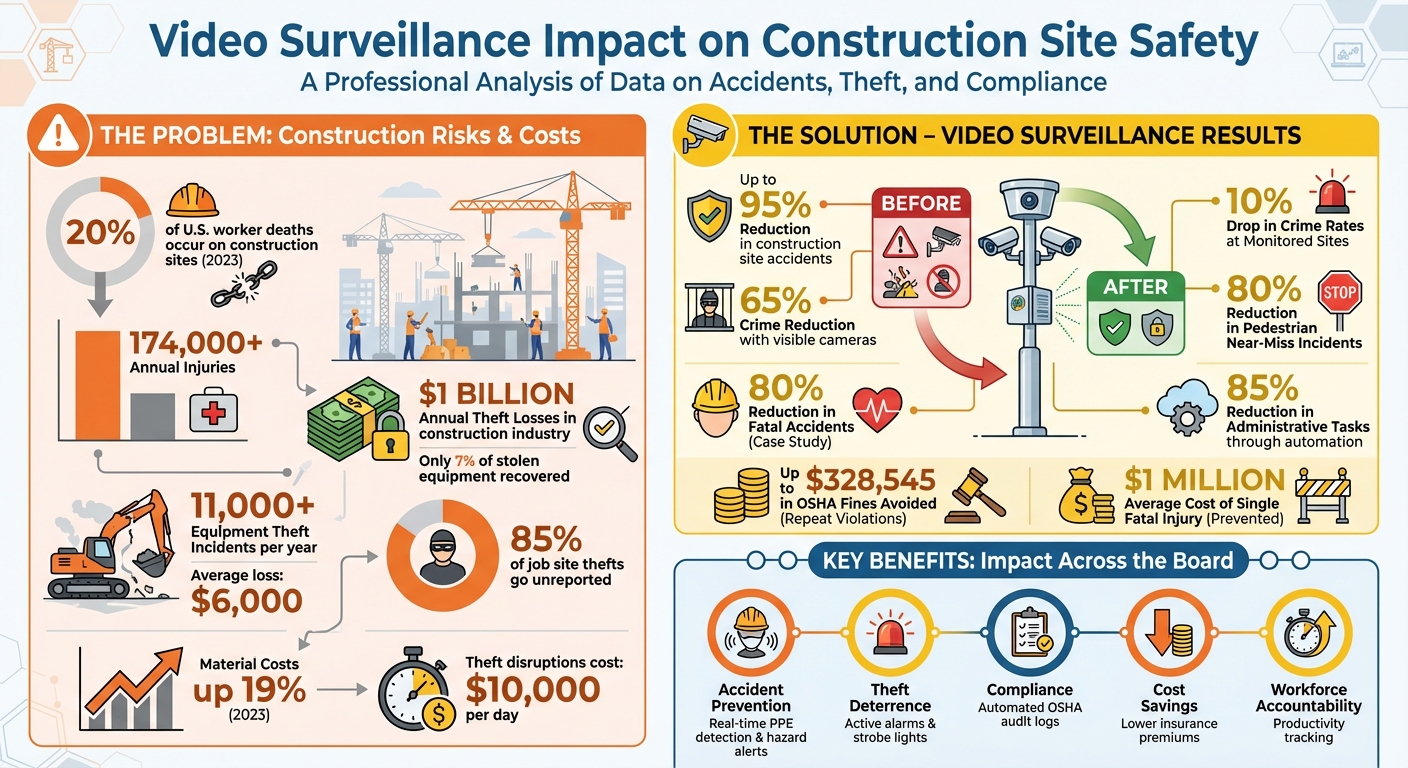
Construction Site Safety Statistics: Impact of Video Surveillance
Surveillance tech disrupting construction site safety and workers comp claims
sbb-itb-aa28329
Common Safety Problems on Construction Sites
Construction sites face several safety challenges that can disrupt progress and drive up costs. The most pressing issues include workplace accidents, theft and vandalism, and unauthorized access. Tackling these problems requires effective safety measures, such as implementing advanced video surveillance systems.
Workplace Accidents and Unsafe Behavior
Accidents on construction sites are often caused by falls, mishandling of equipment, and failing to follow safety protocols. These risks are particularly high when workers lack proper Personal Protective Equipment (PPE), such as hard hats or high-visibility vests. The constant activity on-site – like deliveries and heavy machinery operations – further increases the chances of coordination-related accidents. On top of that, poorly maintained equipment can lead to mechanical failures, downtime, and injuries.
Theft and Vandalism
Theft is a massive problem for construction sites, costing the U.S. industry an estimated $1 billion annually. More than 11,000 equipment theft incidents are reported each year, with an average loss of $6,000 per theft. The rising cost of materials – up 19% on average in 2023 – makes valuable items like copper wire and lumber prime targets for thieves. Unfortunately, the recovery rate for stolen equipment is less than 7%, and disruptions caused by theft can cost owners around $10,000 per day. Alarmingly, about 85% of job site thefts go unreported, making recovery efforts even more challenging.
Trespassing and Unauthorized Entry
Unauthorized access to construction sites is another significant concern, increasing liability risks for contractors. Under the attractive nuisance doctrine, contractors can be held responsible for injuries to trespassers if reasonable security measures aren’t in place. Kevin Chen from Connextivity explains:
Construction sites are legally considered attractive nuisances. … When injuries occur, the focus shifts immediately to whether reasonable security measures were in place.
Trespassers can also tamper with equipment, creating hidden dangers for workers who use it later. Traditional security measures, like 6–8-foot fencing, are often inadequate as they can be easily bypassed. Without proper video surveillance, contractors may also struggle to defend against fraudulent injury claims.
How Video Surveillance Improves Site Safety
Video surveillance has transformed construction site safety, shifting the focus from after-the-fact footage reviews to real-time prevention of hazards.
Live Monitoring and Hazard Detection
With AI-powered cameras, live footage is constantly analyzed to identify safety risks. These systems can detect missing PPE like hard hats or vests, set up virtual safety zones around high-risk areas such as crane operations, and send instant mobile alerts if workers enter restricted zones. Remote operators can respond immediately by issuing audible warnings or activating strobe lights to halt unsafe actions. Advanced sensors also play a crucial role by spotting early signs of smoke, fire, or gas leaks faster than manual inspections ever could.
Raymond Ko, Director and General Manager at Shui On Construction Co Ltd, highlights the impact of such systems:
viAct‘s AI Construction Management Software solution provide instant alerts to anticipate real-time on-site risk, helping contractor to reduce hundreds of man hours on monitoring plus notify all stakeholders at once.
The results are striking. Automated AI monitoring has been shown to reduce construction site accidents by up to 95%. A Project Safety Officer at Bouygues Travaux Publics shared:
After deploying viAct’s smart AI monitoring solution, we are certainly seeing 80% less fatal accidents in the jobsite.
The financial implications are just as compelling – a single fatal injury can cost a company around $1 million. This proactive approach not only saves lives but also helps deter crime on-site.
Preventing Theft and Unauthorized Access
In addition to improving safety, video surveillance plays a key role in preventing theft and unauthorized access. The mere presence of visible cameras can discourage criminal activity. Dmitry Beliayev, CEO of Forbel Alarms, explains:
Criminals usually look for security cameras before they break in or steal anything. If they can clearly see the security system on the job site, they won’t want to risk the danger of getting caught.
Research supports this, showing that visible cameras can reduce crime by as much as 65%.
Modern systems go beyond simple recording. AI technology enables real-time responses, such as activating bright strobe lights and loud alarms to confront intruders. Brian Bradsher, COO of TrueLook, describes the effectiveness of this approach:
This immediate, automated confrontation is a powerful tool for construction site theft prevention. It turns the camera from a passive witness into an active guard.
When remote monitoring agents confirm an intrusion, law enforcement often prioritizes the response, increasing the chances of apprehending suspects quickly. Advanced AI analytics minimize false alarms by distinguishing between genuine threats and harmless environmental movements. High-definition footage also serves as critical evidence for both authorities and insurance claims, which is important given that less than 7% of stolen construction equipment is ever recovered.
Better Compliance and Training
Video surveillance systems excel at identifying safety violations as they happen. Whether it’s missing PPE, improper ladder use, unauthorized crane climbing, or entering restricted zones, these systems log incidents with time-stamped reports, aiding both OSHA audits and internal reviews.
Beyond enforcement, recorded footage becomes a powerful training tool. Managers can review close calls and violations to prevent similar incidents in the future. Safety officers can also monitor multiple sites at once through live feeds, ensuring compliance with OSHA standards without needing to be physically present at every location. Starting June 2024, Singapore’s Ministry of Manpower will require all construction sites valued at $5 million or more to use video surveillance to monitor high-risk activities.
Jean-Simon Leduc, VP of Business Development at Sirix, underscores the importance of these measures:
Compliance isn’t optional; in fact, it’s essential.
The stakes are high, as OSHA fines for repeat fall protection violations can reach up to $328,545. By addressing safety, theft, and compliance issues, surveillance systems create safer and more secure construction environments.
Cost Savings and Efficiency Gains from Video Surveillance
Video surveillance doesn’t just enhance safety – it can also have a noticeable impact on project finances by reducing risks and improving operational efficiency.
Fewer Accidents and Lower Insurance Costs
With real-time monitoring, managers can quickly identify unsafe practices – like improper equipment handling or unstable scaffolding – and step in before accidents happen. And when incidents do occur, video footage serves as undeniable evidence, helping distinguish genuine injuries from false claims. As Sirix Monitoring explains:
Video surveillance demonstrates that proper safety precautions were in place. This is crucial if your organization is sued for negligence.
Insurance companies often reward such proactive measures with premium discounts for sites using 24/7 video monitoring. The financial benefits are clear: preventing just one serious accident can save thousands in legal and medical expenses. Plus, strong risk management practices often lead to better insurance rates, creating a ripple effect of savings that supports faster project completion.
Faster Project Completion
Surveillance systems do more than just improve safety – they help keep projects on schedule. Theft prevention is a prime example. Construction site theft costs U.S. contractors about $1 billion annually, with each incident averaging $30,000 in losses. By deterring theft, surveillance avoids delays that could stretch project timelines by weeks.
Additionally, automated documentation through video monitoring reduces administrative tasks by up to 85%, thanks to features like milestone tracking. Remote access to cloud-based footage allows managers to monitor progress without needing to visit the site physically, saving time and resources. Continuous monitoring also helps teams catch and resolve issues early, preventing minor problems from snowballing into major delays.
Greater Workforce Accountability
Surveillance creates transparency, naturally boosting productivity and reducing inefficiencies. AI-powered tools can track subcontractor activity, equipment use, and peak productivity times, helping identify operational bottlenecks. Knowing they’re being monitored encourages workers to follow safety protocols and maintain consistent performance.
Managers can also use remote access to verify project timelines and coordinate teams without being on-site. Timestamped, cloud-based video footage provides a reliable record, which can be invaluable for resolving disputes with subcontractors over work quality or progress. This constant oversight not only reinforces safety measures but also ensures teams stay focused and efficient throughout the project.
How to Implement Video Surveillance on Construction Sites
Selecting the Right Surveillance Technology
Standard cameras just don’t cut it on construction sites. Brian Bradsher, COO of TrueLook, puts it plainly:
Construction sites face high theft risks and lack power, internet, and secure mounting, making traditional cameras ineffective.
To address these challenges, opt for solar-powered, battery-backed cameras with 4G/5G LTE connectivity. Look for models with an IP66 rating to handle tough weather conditions. Advanced features like AI analytics can also make a big difference. These systems minimize false alarms and can even detect safety issues like missing PPE or the presence of weapons. Some cameras go a step further, activating strobe lights or audible warnings to deter threats.
Placement is key. Install cameras 10–15 feet off the ground, ensuring overlapping fields of view to prevent tampering and guarantee full coverage. Fixed cameras are ideal for monitoring specific high-value areas, such as tool storage, while PTZ (pan-tilt-zoom) cameras are better for larger, multi-acre sites. For remote or temporary locations, mobile trailers equipped with self-contained surveillance units can be deployed quickly.
When it comes to storing footage, cloud storage is a safer bet than local DVRs. If a camera is damaged or stolen, cloud-based footage remains secure and accessible.
Finally, integrating surveillance systems with workforce management platforms can further boost safety and operational efficiency.
Connecting Surveillance with Workforce Management
The benefits of video surveillance multiply when combined with workforce management tools. These systems analyze site traffic, identify idle time, and flag overcrowding – all insights that help managers fine-tune crew schedules and equipment use.
Take ABLEMKR‘s platform, for example. It works alongside video monitoring to streamline workforce deployment and compliance tracking. By combining real-time worker updates with video footage, ABLEMKR ensures smooth operations on critical projects.
Mobile app integration gives supervisors 24/7 access to site conditions and instant alerts for unsafe behaviors. Instead of sifting through hours of footage after an incident, managers can act immediately, turning surveillance into a proactive safety tool.
Recorded footage also doubles as a training resource. Workers can learn from real examples of unsafe practices, making safety training more impactful. To maintain trust, it’s important to communicate openly about the purpose of cameras, emphasizing their role in safety and security rather than micromanagement.
While integration improves oversight, staying compliant with privacy and legal standards is just as critical.
Protecting Privacy and Meeting Legal Requirements
Cameras should never be placed in areas where privacy is expected, like restrooms or break rooms. This helps meet legal requirements and avoid ethical concerns.
Transparency is just as important. Post clear warning signs at security gates, around the site perimeter, and in visible locations inside the site to inform everyone about surveillance.
Keep in mind that local regulations can vary. For example, in New York City, surveillance systems must follow specific Department of Buildings codes for wiring and placement. Consulting a safety professional before installation ensures compliance with local laws.
Regular maintenance is essential to keep your system reliable. Schedule bi-weekly tasks like cleaning camera lenses, checking alignment, and verifying the chain-of-custody for stored footage. These simple steps protect your investment and ensure your surveillance system is ready when you need it most.
Conclusion
Video surveillance has evolved into a proactive tool that not only prevents hazards but also deters theft and improves compliance on construction sites. Today’s systems, equipped with AI-powered detection, real-time alerts, and active deterrence features like strobe lights and voice warnings, tackle challenges such as construction site theft – a problem costing the industry around $1 billion annually – while also delivering operational savings.
The numbers speak for themselves. Sites utilizing video surveillance report a 10% drop in crime rates, and AI-enhanced systems have been shown to cut pedestrian near-miss incidents by as much as 80%. Beyond security, these systems contribute to lower insurance premiums, offer legal protection against fraudulent claims, and promote accountability by encouraging adherence to safety protocols.
As Tony Matesi, Site Security Expert at Sound Surveillance, aptly states:
Surveillance shouldn’t feel like someone breathing down your neck. It should feel like someone has your back.
When integrated with ABLEMKR, surveillance systems not only protect personnel but also help reduce costs, emphasizing their role in boosting both safety and operational efficiency.
With effective safety measures in place, companies can avoid devastating losses and maintain steady project progress. Video surveillance offers a proven, cost-conscious way to minimize risks, safeguard assets, and keep projects on track. For businesses managing high-risk sites, the real question isn’t whether to invest in surveillance – it’s whether they can afford not to.
FAQs
How much does construction site video surveillance cost?
Construction site video surveillance systems generally cost between $500 and $1,500 for basic setups. These typically include 2–4 cameras and a DVR for recording. However, if you’re looking for more advanced systems with additional cameras, enhanced features, or larger coverage areas, the price can increase significantly.
What camera features matter most for remote job sites?
Durable cameras designed for high-resolution imagery, weather resistance, and off-grid power options like solar are a must-have for remote job sites. On top of that, remote access features play a key role in allowing teams to monitor and manage these sites efficiently, no matter where they are.
Is job site video surveillance legal for workers?
Yes, using video surveillance on job sites is generally permitted, but it must align with OSHA regulations and privacy laws. Employers can monitor for safety and security reasons, but it’s crucial to inform workers beforehand. Always stay within the boundaries of relevant laws to prevent any legal complications.


