
Video calls are transforming how remote teams in industries like construction, energy, and mining work together. They address key challenges like miscommunication, project delays, and oversight issues by providing real-time visual updates, enabling faster decisions, and improving team collaboration. Here’s why video calls are a must-have for remote job coordination:
- Reduce Miscommunication: Visual cues and live demonstrations ensure clarity, minimizing errors in complex tasks.
- Enable Real-Time Updates: Field teams can share live visuals to help supervisors and engineers make quicker, informed decisions.
- Faster Emergency Response: Technicians can troubleshoot issues instantly with remote experts, saving time and reducing costs.
- Improved Oversight: Managers can inspect sites, verify certifications, and ensure compliance remotely, cutting down on travel and delays.
- Boost Team Productivity: Workers report higher focus and stronger connections during video meetings, reducing turnover and improving efficiency.
How Video Calls Reduce Miscommunication
Clear communication is the backbone of effective remote job coordination. Yet, traditional methods like phone calls and emails often fall short, leaving room for misunderstanding. Imagine a supervisor trying to explain a complex repair over the phone or describing a safety procedure via text – key details can easily get lost in translation. In industries like construction and energy in the U.S., this kind of miscommunication often results in unclear instructions, misinterpreted designs, and delayed safety updates. Video calls bridge this gap by allowing teams to discuss plans face-to-face, share live visuals of the worksite, and confirm understanding in real time. Instead of relying on long email chains or radio calls, visual communication provides the clarity needed for accurate execution.
Visual Demonstrations and Body Language
Video calls bring a whole new level of clarity to remote communication. For example, a foreman can demonstrate the proper use of personal protective equipment, zoom in to show a weld that needs inspection, or walk the camera around a trench to highlight specific work areas. Screen sharing amplifies this benefit, enabling teams to collaboratively review construction drawings, piping diagrams, or work packs. They can even mark up details live, ensuring everyone leaves the discussion with the same understanding. Research indicates that 93% of nonverbal cues are missed in phone, text, or email communication, but video captures these crucial elements. Supervisors can spot if a crew lead looks confused or hesitant and adjust their explanation accordingly, asking for verbal confirmation to ensure comprehension. This level of visual and verbal interaction eliminates ambiguity and prevents costly mistakes, creating a foundation for seamless collaboration during complex tasks.
Real-Time Collaboration for Complex Work
Video collaboration is a game-changer for tackling complicated projects. Remote engineers, equipment reps, and project managers can join field teams virtually during planning or execution phases. This allows them to identify and address potential issues – like incorrect parts, improper routing, or unsafe setups – before small errors escalate into larger, more expensive problems. Studies show that businesses using video conferencing save up to 30 minutes per meeting and achieve up to 30% ROI through quicker decisions and fewer errors. In high-stakes projects, where rework can cost tens of thousands of dollars daily, even minor improvements in alignment can lead to significant savings. For instance, during a remote pipeline repair, a field technician unsure about the correct tie-in point can video call a pipeline engineer. The engineer can share the as-built drawings, mark the exact location, and ask the technician to pan the camera around the ditch to confirm orientation – avoiding a costly mis-cut or re-weld. By combining live video, shared documents, and real-time Q&A, video calls replace guesswork with a clear, shared understanding, ensuring smoother operations and fewer errors.
How Video Calls Enable Real-Time Updates
In industries where things can change in an instant – like construction, oil & gas, mining, and utilities – supervisors overseeing remote repairs or development projects need to act quickly. Video calls make this possible by providing instant visual updates. Field teams can use their cameras to show exactly what’s happening on-site, allowing decision-makers to respond without delay. For example, a worker can point their camera at a piece of faulty equipment, and office-based engineers or project managers can see and assess the issue in real time. This eliminates guesswork and speeds up decision-making. The clarity provided by live visuals ensures better coordination, especially across job sites spread over multiple states and time zones. In industries where every hour of downtime can cost tens of thousands of dollars in lost production or equipment rentals, these real-time updates are invaluable. They also play a crucial role in enabling rapid responses during emergencies.
Faster Response During Emergencies
When equipment breaks down or an unexpected shutdown occurs, time is money. Video calls allow technicians to visually show failures – like a leaking valve or a damaged part – so experts can diagnose the issue without relying on verbal descriptions. This kind of visual troubleshooting dramatically reduces the time it takes to resolve problems. For instance, if a pressure anomaly occurs at a remote compressor station, a technician can join a video call with central control to visually confirm gauge readings and valve settings. What might otherwise take hours to diagnose can now be resolved in as little as 30 minutes, keeping production on track and cutting overtime costs. Video calls also allow for instant group discussions between operations, safety, maintenance, and management teams. This means everyone can align on a response plan within minutes, which is critical when dealing with regulatory, safety, or production risks.
Faster Crew Deployment
Video calls aren’t just for emergencies – they also make routine crew mobilizations more efficient. Coordinators can use live video to verify the scope of work and on-site conditions before sending out a team. This ensures the right number of workers with the correct skills, tools, and safety gear are dispatched the first time. Supervisors can confirm what’s needed in real time, reducing delays and avoiding unnecessary downtime. On projects where labor, crane time, and equipment rentals are billed by the hour, this kind of precision can save significant costs.
When integrated with workforce platforms like ABLEMKR, video calls can be launched directly from job or incident records. Site leads can show real-time conditions while dispatchers simultaneously check worker availability, certifications, and locations within the same system. This live visual confirmation helps coordinators match the right workers to the job, avoiding delays caused by mismatched skills or missing equipment. By streamlining crew deployment, video calls help keep projects running smoothly and on budget.
Better Visual Oversight Through Video Calls
Video calls offer managers and supervisors a way to gain immediate visual access to remote job sites without the hassle of traveling. In industries like construction, oil & gas, mining, and utilities, this means decision-makers can monitor site conditions, check equipment status, and observe worker activities from virtually anywhere. For example, a supervisor can hop on a video call with a field worker to inspect scaffolding, confirm safety barriers are in place, or ensure equipment is in proper working condition before a shift begins. Unlike written reports or phone descriptions, which might miss critical details, video calls provide a clear, real-time picture. This level of visual oversight is also invaluable for live inspections and compliance checks.
Remote Site Inspections
Video calls allow managers to perform live walkthroughs of job sites without being physically present. Workers on-site can use a smartphone or tablet to scan the area, showcasing progress, pinpointing hazards, or demonstrating how equipment operates. This real-time feedback helps supervisors spot issues like misplaced tools, missing safety signs, or maintenance needs right away and guide immediate corrections. Companies using video for remote inspections have reported cutting on-site visits by 20-30% while still maintaining the same level of oversight. This not only saves time and travel expenses but also enables managers to oversee multiple projects in a single day. Additionally, many video platforms include recording options, allowing inspections to be saved for later review, quality assurance, or regulatory audits.
Compliance and Certification Verification
Video calls are a practical way to confirm that workers have the required credentials and safety gear before starting their tasks. During a video session, workers can display OSHA cards, certifications, or training documents, while supervisors visually verify that they’re wearing the necessary personal protective equipment – like harnesses, steel-toed boots, or flame-resistant clothing. This process ensures compliance with safety protocols, which is especially vital in high-risk industries like energy and mining. Research shows that 88% of workers using video conferencing report increased productivity, partly because visual collaboration minimizes misunderstandings about safety rules and job expectations.
Platforms like ABLEMKR take this a step further by allowing video calls to be launched directly from worker profiles during crew mobilization. This enables coordinators to perform last-minute compliance checks while confirming certifications already stored in the system. These proactive measures build trust and ensure every team member is prepared to meet site requirements. Plus, the ability to archive these sessions provides an extra layer of documentation for audits and quality control.
sbb-itb-aa28329
Using Video Calls with ABLEMKR‘s Workforce Platform
When video conferencing is built directly into a workforce management platform like ABLEMKR, it transforms how teams communicate and operate. Coordinators can handle face-to-face check-ins, toolbox talks, and shift handovers from the same dashboard they use for crew assignments, job details, and compliance records. This eliminates the hassle of switching between multiple apps, cutting down on miscommunication and inefficiencies. With ABLEMKR, dispatchers can monitor worker status, launch live video meetings to share updates, and adjust assignments instantly – speeding up decision-making and minimizing delays.
For U.S.-based operators managing projects across different time zones, this centralized approach simplifies clarifying scope changes, reduces the need for back-and-forth calls, and ensures agreements are clearly documented – all within one auditable system. Instead of juggling a scheduling tool, a video app, and a compliance tracker, everything happens in one place. This integration not only simplifies scheduling but also accelerates crew mobilization.
Scheduling and Job Matching
ABLEMKR’s matching engine uses structured data like trade skills, certifications, orientations, and safety training, combined with geo-location and availability, to create a shortlist of qualified workers. Coordinators can then use brief video interviews to confirm workers’ understanding of tasks, awareness of site hazards, and credentials. This visual interaction adds an extra layer of quality control before finalizing assignments.
If a shift gap arises – say, due to a no-show on a shutdown crew – supervisors can immediately open a video huddle within ABLEMKR. They can quickly identify and connect with available workers who meet the required trade and certification criteria using real-time availability and geo-location filters. During the call, supervisors can confirm who can reach the site within a set travel time (e.g., under 60 minutes), align on start times, and visually verify workers’ readiness, including PPE, tools, and transport. Once confirmed, the updated schedule is locked into the platform, minimizing costly delays and idle time for equipment and specialist crews.
Real-Time Invoicing and Payment
Beyond scheduling, ABLEMKR streamlines operations further with real-time invoicing and payment features. At the end of a shift or task, foremen can initiate a completion video call directly from the work order to review the finished work and capture visual evidence. Once the work is marked "substantially complete", invoicing workflows kick in automatically. This reduces email back-and-forth over scope, shortens approval times from days to hours, and creates a visual audit trail that ensures smoother billing processes for both operators and workers.
For time-and-materials projects, supervisors can conduct quick end-of-day video reviews to verify hours worked and activities completed using shared ABLEMKR logs. This speeds up payroll processing and minimizes disputes. Once both parties agree on the hours and scope during the video call, the supervisor can sign off in the platform, automatically queuing the hours for payroll. Depending on the configuration, workers can even receive same-week or same-day pay. If disputes arise later, operators can refer to the recorded calls and synchronized logs, reducing resolution time and chargebacks. This process gives workers greater assurance that approved hours will translate into timely and accurate payments.
Main Benefits of Video Calls for Remote Job Coordination
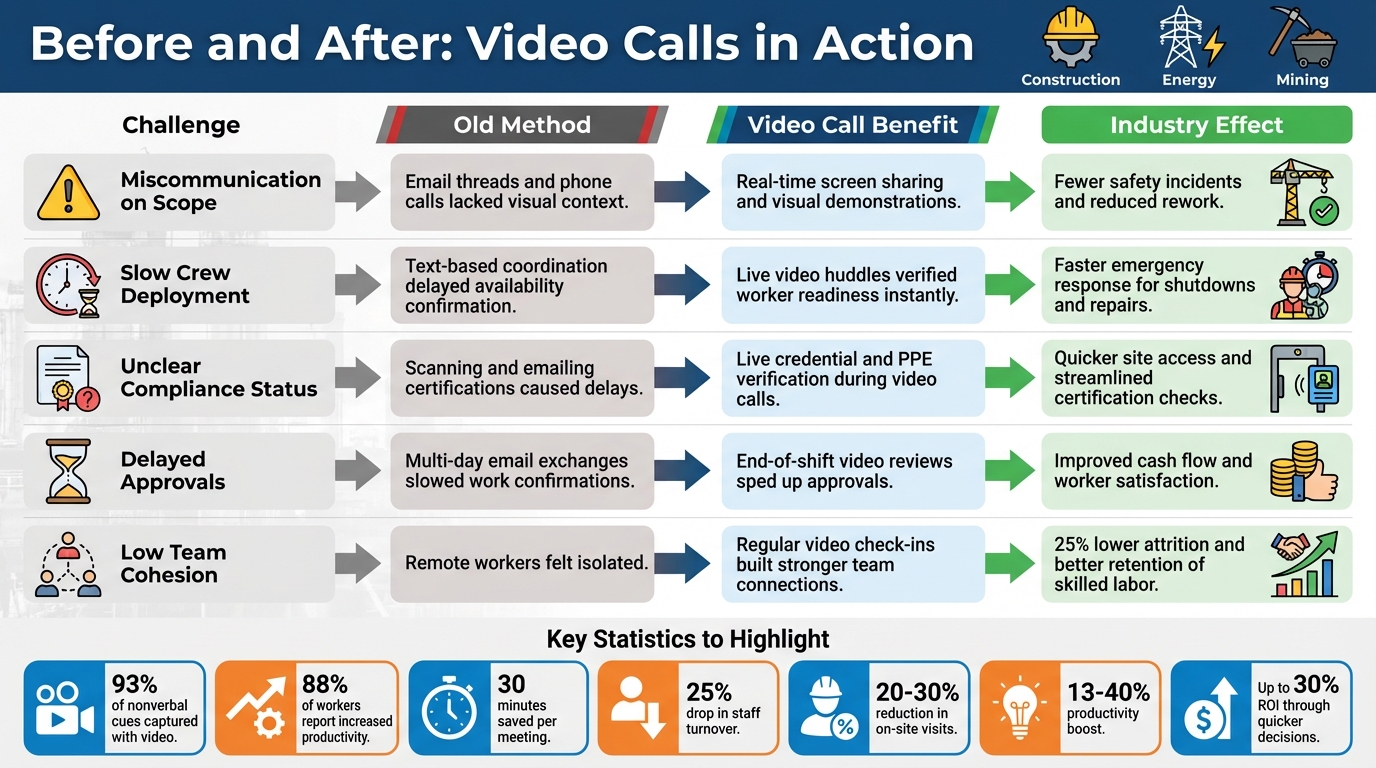
Before and After Video Calls Transform Remote Job Coordination
Video calls bring a new level of accuracy, speed, and control to remote work. They capture 93% of nonverbal cues, significantly reducing misunderstandings – especially critical in industries like construction and energy, where even minor miscommunications can lead to safety hazards or expensive rework. Research shows that 88% of workers feel more productive when video is part of their workflow, and some companies have seen a 25% drop in staff turnover because employees feel more connected and supported.
The time savings are just as impressive. On average, video meetings shave off 30 minutes per session compared to traditional conference calls, cutting down on billable labor hours in time-sensitive projects. Remote workers using video report productivity boosts ranging from 13% to 40%. With live video, supervisors can address problems instantly, work through challenges visually, and make decisions in real time. In high-stakes scenarios like pipeline repairs or mine shutdowns, this quick response minimizes downtime and lowers labor costs.
Video calls also enhance oversight. Managers can visually confirm crew readiness, inspect site conditions, and verify compliance documentation during live calls. Foremen can conduct end-of-shift reviews with visual evidence, while compliance officers can confirm certifications in real time before crews head to job sites. These capabilities make decision-making faster and more precise, streamlining approval processes. In high-risk industries, these improvements in clarity, efficiency, and oversight are essential for effective job coordination.
Before and After: Video Calls in Action
The table below illustrates how video calls have transformed traditional communication methods across key operational areas:
| Challenge | Old Method | Video Call Benefit | Industry Effect |
|---|---|---|---|
| Miscommunication on scope | Email threads and phone calls lacked visual context | Real-time screen sharing and visual demonstrations | Fewer safety incidents and reduced rework |
| Slow crew deployment | Text-based coordination delayed availability confirmation | Live video huddles verified worker readiness instantly | Faster emergency response for shutdowns and repairs |
| Unclear compliance status | Scanning and emailing certifications caused delays | Live credential and PPE verification during video calls | Quicker site access and streamlined certification checks |
| Delayed approvals | Multi-day email exchanges slowed work confirmations | End-of-shift video reviews sped up approvals | Improved cash flow and worker satisfaction |
| Low team cohesion | Remote workers felt isolated | Regular video check-ins built stronger team connections | 25% lower attrition and better retention of skilled labor |
For project managers overseeing operations across multiple states or remote energy corridors, these benefits translate to significant cost savings and greater operational efficiency. Video calls don’t just improve communication – they revolutionize how teams coordinate under pressure, ensuring faster and more accurate results.
Conclusion: The Future of Remote Job Coordination
Video calls have reshaped how remote job coordination works, replacing slow, document-heavy processes with real-time, visual collaboration. Instead of relying on unclear phone calls or endless email chains, supervisors, coordinators, and field crews can now tackle issues together, resolve problems in minutes, and make informed decisions on the spot. For U.S. construction, energy, and extractives operators managing projects across multiple states or remote areas, this means fewer misunderstandings, quicker approvals, and tighter control over project schedules. This transformation doesn’t just streamline daily operations – it sets the stage for fully integrated digital workflows.
As remote and hybrid work continue to dominate American industries, video has become a key tool. It speeds up decisions, strengthens team connections, and minimizes delays, all while contributing to better worker retention.
Platforms like ABLEMKR take this a step further by connecting pre-vetted workers and enabling on-demand visual briefings and compliance checks. Supervisors can stay in constant contact with field leads via live video, allowing for quick decisions on crew movements, task sequencing, and issue escalation.
This evolution has paved the way for a unified labor network, where every critical moment – from crew deployment and safety briefings to site inspections and client updates – can happen remotely through video. For operators managing projects across diverse U.S. regions or dealing with fluctuating workloads, video-enabled coordination isn’t just a convenience – it’s a strategic advantage. It enhances responsiveness, minimizes risks, and supports a more adaptable and engaged workforce.
The future of remote job coordination lies in integrated ecosystems that combine workforce platforms, video, real-time data, and mobile apps. By standardizing these tools, companies can respond faster, coordinate smarter, and consistently deliver results, even under pressure.
FAQs
How do video calls help prevent miscommunication in remote work?
Video calls play a key role in reducing miscommunication in remote work by enabling real-time discussions. They allow participants to address questions or clarify details immediately, avoiding the delays often associated with emails or text messages.
What sets video calls apart is the ability to pick up on visual cues – like facial expressions and gestures – that provide important context for tone and intent. This added layer of communication helps ensure everyone understands each other clearly, making it easier to collaborate effectively, especially during complex projects or when quick updates are needed.
How do video calls help teams respond faster in emergencies?
Video calls are a game-changer for emergency responses, offering real-time communication and instant coordination that can make all the difference in critical situations. They help cut down delays, keep everyone aligned, and reduce the chances of miscommunication when every second counts.
With the ability to provide immediate updates and enable visual collaboration, video calls empower teams to quickly evaluate situations, make well-informed decisions, and allocate resources effectively – saving precious time when it’s needed most.
How do video calls help verify compliance and certifications for remote teams?
Video calls simplify the process of verifying compliance and certifications for remote teams. They allow for real-time visual checks of important documents like credentials, safety training records, and certifications, ensuring that team members meet all required standards before they begin work.
This approach minimizes miscommunication and avoids unnecessary delays, helping employers uphold strict compliance standards while making the onboarding process smoother for remote or distributed teams.


