
The construction industry in 2025 is seeing a shift in workforce dynamics. Union membership has dropped to 10.3%, while 89.7% of workers are non-union. This decline from 39.5% in earlier decades has reshaped hiring practices, wages, and project outcomes. Here’s what you need to know:
- Union workers: Earn 12.8% more on average, benefit from structured training, stronger job protections, and standardized safety measures. However, they come with higher costs for employers and less flexibility for workers.
- Non-union workers: Offer flexibility, lower costs, and faster hiring processes but face lower wages, fewer benefits, and inconsistent skill levels.
- Regional differences: Union labor is more common in the Northeast and Midwest, while non-union dominates in states like Texas and Florida.
- Labor shortages: With 439,000 new workers needed, both sectors are investing in training and recruitment to fill gaps.
The choice between union and non-union labor impacts wages, safety, and project efficiency, with technology like workforce deployment platforms playing a growing role in bridging gaps.
UNION vs NON-UNION: The Construction Showdown | Who Builds Better? The Debate – Ep 1 –
Construction Hiring Trends for 2025
The construction industry is undergoing significant shifts in hiring practices as labor shortages and retirements reshape the workforce. These changes are influencing how employers in both union and non-union sectors approach recruitment and workforce planning.
Current Union and Non-Union Workforce Numbers
Union membership has dropped to 10.3% in 2025, leaving the vast majority – 89.7% – of workers in the non-union category. This marks a historic decline from 10.7% in 2023.
Today, only 30% of construction firms primarily employ union workers, while 57% operate exclusively as open-shop or rely on union labor occasionally. Even in traditionally union-friendly states like California, over 87% of the private construction workforce is now non-union.
Regional Differences in Hiring Practices
Regional variations highlight how union and non-union hiring trends differ across the country. Unionized labor remains more prevalent in the Northeast, Midwest, and certain urban centers, where long-standing relationships between unions, contractors, and public agencies sustain demand for union workers on major infrastructure projects. Cities like New York and Chicago exemplify this trend.
Meanwhile, states such as Texas and Florida are dominated by non-union workforces. In the West, the picture is mixed. While some metropolitan areas maintain a strong union presence, other parts of the region have shifted toward non-union models due to growing construction demand that exceeds traditional union capacity. Right-to-work laws and local political climates in the South and West also contribute to the preference for open-shop hiring models.
How Labor Shortages and Retirements Affect Hiring
The construction industry faces a daunting need for 439,000 new workers. This labor gap is prompting both union and non-union employers to rethink how they hire and train their workforce.
Labor shortages and retirements are driving wages higher and intensifying competition for skilled workers. Unions are using collective bargaining to secure better wages and benefits, while non-union employers are being forced to offer competitive compensation to attract talent.
The wave of retirements poses additional challenges. As seasoned workers exit the field, companies are racing to replace decades of expertise. This has led to increased investment in training programs and apprenticeships across both union and non-union sectors. Younger workers under 45 are showing a growing interest in union jobs, drawn by better pay, benefits, and job protections. This trend suggests that unions may still find opportunities to grow by appealing to the next generation of construction professionals, even as overall membership declines.
Economic pressures such as rising material costs, fluctuating interest rates, and general uncertainty are also impacting hiring decisions. Many employers are balancing the urgent need for skilled labor with budget constraints, leading to more strategic workforce planning and project scheduling.
In response to these challenges, companies are increasingly adopting technology to streamline workforce management. Digital platforms are helping employers improve hiring processes, optimize worker deployment, and ensure compliance across job sites. These trends pave the way for a deeper examination of how wages, benefits, and job security differ between union and non-union labor, which will be explored in the next section.
Wages, Benefits, and Job Security Comparison
As hiring trends evolve and regional differences come into play, the contrast between union and non-union compensation becomes increasingly pronounced. Differences in wages, benefits, and job security significantly influence worker preferences and hiring strategies. These distinctions also shed light on the growing competition for skilled labor across both sectors.
Union vs. Non-Union Pay Rates
Union workers typically earn 12.8% more than their non-union counterparts, with annual pay increases averaging 4.5% compared to 3.2% for non-union employees between March 2024 and March 2025. This growing gap highlights the financial advantage of union membership.
Regional variations further amplify these differences. In areas with higher union density, such as the Northeast and Midwest, union workers often earn 20–42% more than non-union employees. Meanwhile, states with right-to-work laws tend to show smaller wage gaps, though union workers still maintain a pay edge. Labor shortages and the retirement of seasoned workers have strengthened unions’ bargaining power, enabling them to negotiate better wages and improved working conditions.
Benefits and Job Security Differences
The benefits disparity between union and non-union workers extends well beyond wages. For example, union workers are 34% more likely to have health insurance compared to non-union employees.
Retirement options also differ significantly. Union members often benefit from defined-benefit pension plans, which guarantee a specific monthly income upon retirement. In contrast, non-union workers typically rely on 401(k) plans with limited employer contributions.
Overtime pay is another area where union workers have an advantage. Through collective bargaining agreements, union employees are guaranteed overtime compensation, whereas non-union workers’ overtime policies often depend on individual employers and state regulations.
Job security is typically stronger for union workers. They benefit from seniority protections, grievance procedures, and just-cause termination policies, which provide a stable employment framework. On the other hand, non-union workers are usually subject to at-will employment, where job continuity depends on project timelines and employer discretion. These differences not only affect worker satisfaction but also shape how employers approach staffing decisions.
Safety standards also favor unionized workplaces. Union workers experience 40% fewer safety violations on job sites, thanks to stricter safety protocols, the right to refuse unsafe tasks, and the presence of joint safety committees.
Wages and Benefits Comparison Table
| Category | Union Workers | Non-Union Workers |
|---|---|---|
| Average Pay Premium | 12.8% higher than non-union | Baseline comparison |
| 2024–2025 Pay Increase | 4.5% annual increase | 3.2% annual increase |
| Health Insurance | 34% more likely to have coverage | Often less comprehensive, higher costs |
| Retirement Plans | Defined-benefit pension plans | Typically rely on 401(k) plans |
| Overtime Pay | Guaranteed through collective bargaining | Variable, based on employer policies |
| Job Security | Seniority rules, just-cause termination | Generally at-will employment |
| Safety Record | 40% fewer safety violations | Higher rate of safety violations |
| Training Programs | Employer-funded apprenticeships | Often limited and inconsistent |
| Work Flexibility | Less flexible due to union rules | More flexible scheduling |
These differences in pay and benefits help explain why union jobs continue to attract younger workers, even as overall union membership declines. The combination of financial perks and stronger job protections becomes especially appealing during periods of economic uncertainty, offering a sense of stability and long-term planning.
For employers, these disparities also play a role in hiring strategies. While union workers may come with higher upfront costs, their standardized training, specialized skills, and lower turnover rates can lead to greater productivity and reduced recruitment expenses over time.
These contrasts in compensation and security set the stage for understanding how training and safety practices further distinguish union and non-union work environments.
Training, Skills, and Safety in Construction
The strength of a construction workforce hinges on how workers are trained, developed, and safeguarded on the job. Union and non-union organizations take different approaches in these areas, and these differences shape hiring patterns, worker retention, and project success.
Union Training and Apprenticeship Programs
Union training programs follow a well-defined structure, blending classroom education with paid, on-the-job training. These multi-year programs operate under joint labor-management oversight, ensuring consistent standards across regions and trades. In 2024 and 2025, unions boosted funding for such initiatives to tackle labor shortages and incorporate new technologies. Many training centers now offer courses in areas like renewable energy and digital project management, reflecting the evolving needs of the industry.
Union apprenticeships also provide clear career paths. Over three to four years, apprentices steadily advance in their trade, earning higher wages as they gain expertise. On the other hand, non-union training programs can vary significantly from one employer to another, often lacking the same level of standardization or long-term career planning.
Safety Records and Injury Rates
The gap in training approaches also extends to safety. Union job sites typically report fewer OSHA violations and lower injury rates than non-union sites. This is largely due to the emphasis unions place on safety training. Workers are taught to recognize hazards, properly use protective equipment, and exercise their right to refuse unsafe work conditions. Regular safety meetings and strict adherence to OSHA guidelines further reinforce a culture of safety.
Non-union sites, particularly those managed by smaller contractors with fewer resources, often struggle to maintain consistent safety protocols. This inconsistency can lead to higher risks for workers, highlighting the importance of comprehensive training in reducing workplace injuries.
Ongoing Professional Development Needs
As construction projects become more complex, staying competitive requires continuous learning. Unions have adapted by expanding their training programs to include modern skills like building information modeling (BIM), sustainable construction techniques, and advanced safety technologies. These programs, supported by collective bargaining agreements, ensure workers remain up-to-date with the latest industry advancements.
Non-union employers, however, face a less unified approach to workforce development. While some collaborate with trade schools or invest in digital training platforms, the strategies vary widely. This fragmented approach can make it harder to consistently prepare workers for the industry’s increasing focus on specialization and technology. These differences in professional development play a significant role in shaping workforce capabilities and project outcomes.
sbb-itb-aa28329
Union vs Non-Union Hiring: Pros and Cons
Deciding between union and non-union workers is a critical choice for construction projects, impacting everything from labor stability to overall project success. This decision often hinges on factors like project requirements, budget constraints, and long-term workforce planning. Understanding the pros and cons of each approach helps employers and workers navigate the trade-offs involved.
Benefits and Drawbacks for Employers
Union hiring provides employers with predictable labor costs through collective bargaining agreements. These agreements standardize wages and benefits, making it easier to bid accurately on projects and avoid surprise expenses. Additionally, union workers often bring a certified skill set, and studies show they can be up to 14% more productive than their non-union counterparts. This increased efficiency can help offset higher labor costs by reducing delays and turnover.
However, union hiring isn’t without challenges. Higher wages and comprehensive benefits can significantly increase project expenses. Employers also face less flexibility due to strict work rules that dictate job assignments and limit cross-training among trades. Furthermore, union contracts may lead to work stoppages during negotiations, disrupting project timelines.
Non-union hiring, on the other hand, offers more flexibility. Employers can quickly adjust crew sizes based on project needs, negotiate pay directly with workers, and onboard staff without union approval processes. This agility is especially useful for fast-paced projects or smaller contractors working with tight budgets. But there are trade-offs: non-union workers often have higher turnover rates and inconsistent skill levels. Employers also shoulder more responsibility for compliance with wage, hour, and safety regulations, which can become a challenge in regions with strong union influence.
These employer considerations reflect the distinct advantages and challenges experienced by workers themselves.
Benefits and Drawbacks for Workers
For workers, union membership offers clear financial and career benefits. Unionized workers typically earn higher wages – averaging a 4.5% annual raise compared to 3.2% for non-union workers. They also benefit from comprehensive packages that include health insurance, retirement plans, and structured grievance procedures, all of which contribute to greater job security. Union members often have access to apprenticeship programs that provide valuable training and career development opportunities.
However, union membership comes with limitations. Workers have less flexibility in choosing assignments and negotiating individual pay rates. Mandatory union dues can also be a drawback, and advancement opportunities are often dictated by seniority rather than merit.
Non-union workers enjoy greater autonomy. They can negotiate pay directly with employers, choose projects based on personal preferences, and advance more quickly based on performance rather than seniority. The hiring process is typically faster without the need for union approval. On the downside, non-union positions tend to offer lower pay and fewer benefits. Workers may face weaker job security without formal grievance procedures, and access to structured training programs is often limited.
Pros and Cons Summary Table
Below is a summary of the key advantages and disadvantages for both employers and workers:
| Aspect | Union Advantages | Union Disadvantages | Non-Union Advantages | Non-Union Disadvantages |
|---|---|---|---|---|
| For Employers | Predictable costs, skilled workforce, 14% higher productivity, better compliance | Higher labor costs, less flexibility, strike risks, complex procedures | Lower costs, greater flexibility, quicker onboarding, direct negotiations | Higher turnover, skill variability, compliance risks, labor shortages |
| For Workers | Higher wages, comprehensive benefits, job security, structured training | Less flexibility, mandatory dues, seniority-based advancement | Greater autonomy, merit-based advancement, faster hiring, direct negotiations | Lower pay/benefits, weaker job security, limited training, fewer protections |
This breakdown helps explain why 30% of construction firms hire union workers most or all of the time, while 57% operate primarily as open-shop employers. The choice often reflects project size, regional labor dynamics, and whether cost savings or workforce stability takes priority.
Using Technology to Improve Workforce Deployment
The construction industry is undergoing a major shift, driven by digital tools that are transforming how hiring and workforce deployment are managed. With an estimated 439,000 new jobs expected to be created in the sector by 2025, the need for efficient hiring processes has never been more urgent. Digital solutions are stepping in to streamline operations, making it easier to connect skilled workers with the right projects.
Traditional hiring methods in construction often rely on time-consuming paperwork, manual reviews, and disjointed communication, which can delay the start of critical projects. Modern workforce deployment platforms address these inefficiencies by automating and simplifying the process, ensuring that qualified workers are matched to projects quickly and effectively.
ABLEMKR: A Game-Changer for Workforce Deployment
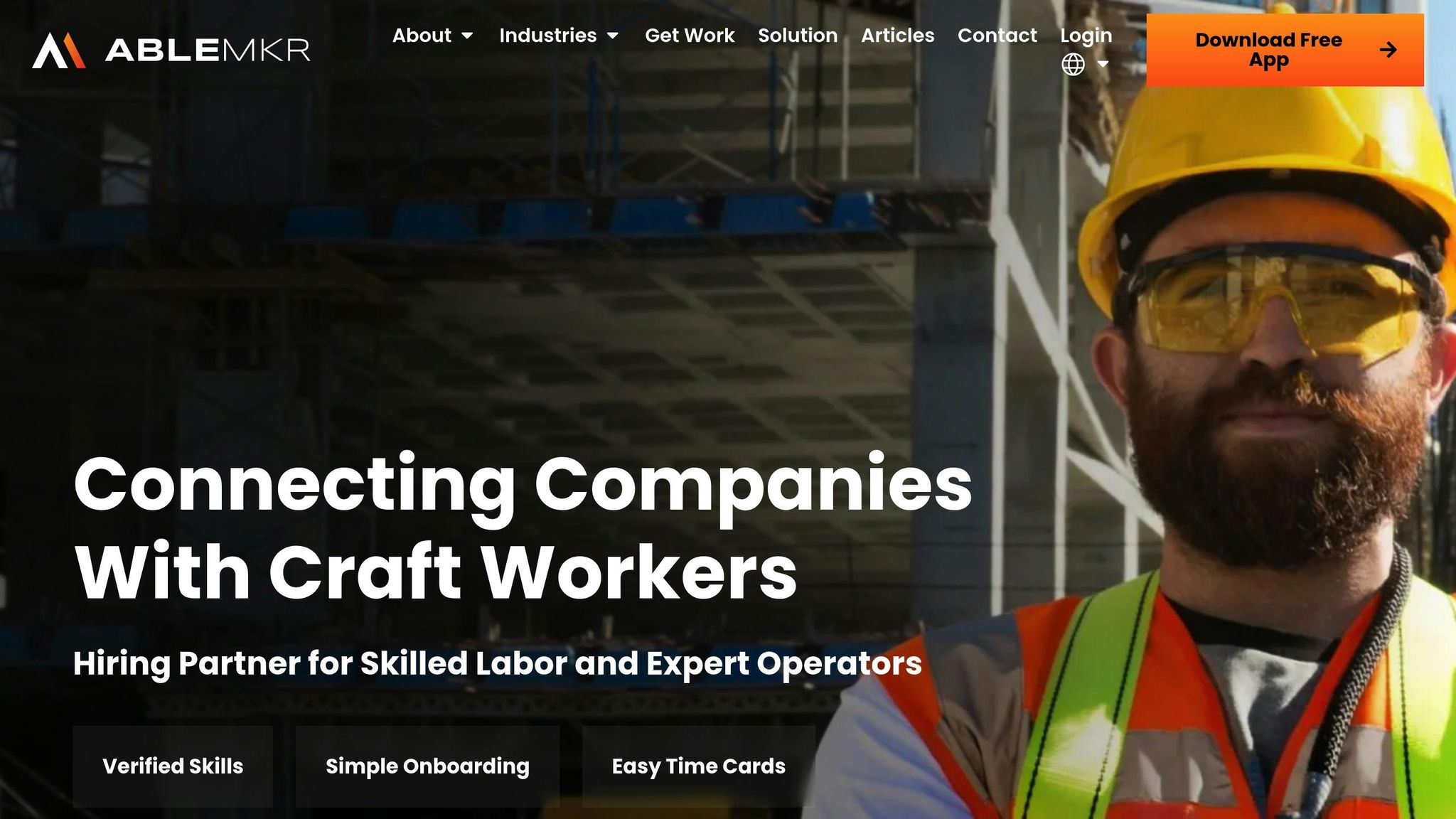
One standout example of this new wave of technology is ABLEMKR, a workforce deployment platform designed for industries like construction, oil and gas, mining, and utilities. This mobile-first platform connects pre-vetted workers to job sites by considering factors like certifications, safety training, availability, and location. It’s especially valuable in time-sensitive situations, where rapid crew mobilization is essential.
The platform’s focus on verified skills and detailed worker profiles ensures that candidates meet specific requirements before they’re deployed. By validating certifications, safety records, and other qualifications upfront, ABLEMKR removes much of the guesswork that traditionally bogs down hiring in high-risk industries.
This efficiency can be a game-changer. For example, companies can assemble crews for emergencies in hours rather than days – a critical advantage when project delays can cost thousands of dollars per day. The platform also offers various engagement models, including flex workers, flex-to-hire arrangements, fractional hiring, and direct placements. This flexibility allows businesses to scale their workforce based on seasonal needs, project demands, or long-term goals.
Tackling Labor Shortages with Digital Solutions
Technology like ABLEMKR doesn’t just speed up hiring – it also addresses the construction industry’s labor shortages. With the demand for skilled workers outpacing supply, digital platforms expand access to talent pools by maintaining databases of pre-qualified workers across different trades and regions. This approach helps uncover skilled professionals who might otherwise go unnoticed in traditional hiring networks.
Real-time availability tracking is another critical feature, allowing companies to identify workers who are ready to start immediately. This reduces the lag between job postings and crew mobilization, which is especially helpful for emergency repairs or unexpected project expansions. Additionally, compliance monitoring is built into the system, automatically flagging certifications that are about to expire or identifying workers who need additional training for specific job sites. Geo-location capabilities further enhance efficiency by matching nearby workers to local projects, cutting down on travel time and costs.
Benefits for Employers and Workers
Digital workforce deployment platforms offer clear advantages for both employers and workers.
For employers, these tools provide real-time insights into worker status, certifications, and project progress. Integrated payroll systems reduce administrative burdens, cutting payroll processing times from days to hours. Digital dashboards allow employers to plan resources more effectively, minimizing delays and ensuring compliance with safety standards.
For workers, the benefits are equally compelling. Mobile-first platforms give them the flexibility to browse jobs, apply, and manage schedules from anywhere. Transparent job descriptions and pay details help workers make informed choices that align with their skills and career goals. Plus, on-time payments and access to a wider range of opportunities improve both job satisfaction and financial stability.
| Feature | Traditional Hiring | Technology-Enabled Hiring |
|---|---|---|
| Speed of Deployment | Slow/manual | Fast/automated |
| Worker Vetting | Inconsistent | Pre-vetted, certified |
| Compliance Tracking | Paper-based/manual | Embedded, real-time |
| Payroll & Scheduling | Fragmented/manual | Integrated, transparent |
| Worker Flexibility | Limited | High (mobile access, flexible jobs) |
| Employer Visibility | Low | High (real-time dashboards) |
As the construction industry evolves, contractors are increasingly offering flexible schedules and performance-based pay to retain skilled workers in a competitive labor market. Digital platforms make this shift easier by enabling variable scheduling, tracking performance metrics, and ensuring fair compensation. By streamlining these processes, technology is helping to build a more adaptable and efficient workforce while maintaining high standards for safety and compliance.
The Future of Construction Hiring
The construction industry is facing a turning point where old-school hiring methods need to adapt to new challenges. With a projected need for 439,000 additional workers by 2025 and historically low union participation rates, the sector has to rethink how it attracts and retains talent. This shift is not just necessary – it’s inevitable.
A major factor driving this change is the evolving workforce demographic. For the first time since 2011, the median age of construction workers is now under 42. Younger workers are showing a growing interest in union jobs, drawn by better pay and benefits. While union membership has been on the decline for decades, this trend suggests that younger generations could stabilize or even boost union participation in certain areas.
At the same time, digital tools are transforming how the industry connects labor supply with demand. Platforms designed for workforce management are becoming indispensable, offering features like rapid crew mobilization, real-time compliance checks, and simplified payroll systems. These tools also allow contractors to assign pre-vetted workers to job sites based on certifications, safety training, and location. This level of precision is critical for both union and non-union contractors trying to meet tight deadlines and maintain project standards.
The wage gap between union and non-union sectors is another key factor shaping hiring strategies. Union contractors often enjoy up to 14% higher productivity rates and better safety records. Additionally, federal and state policies requiring project labor agreements for large-scale projects ensure that unions remain relevant, even as overall membership numbers stay relatively low.
Ultimately, the firms that succeed will be those that embrace these changes. Adapting to shifting project requirements, evolving regulations, and worker expectations – while using digital tools to enhance hiring and workforce management – will be crucial. The lines between union and non-union hiring are becoming more blurred as the industry focuses on efficiency, safety, and competitive compensation to attract and retain talent in this dynamic environment.
FAQs
What are the main differences in pay and benefits between union and non-union construction workers in 2025?
Union construction workers tend to earn higher wages, enjoy better benefits, and have stronger job security compared to non-union workers. This advantage comes from collective bargaining agreements, which establish standardized pay, provide access to healthcare and retirement plans, and promote safer working conditions on job sites.
In contrast, non-union workers might have more freedom to negotiate their own terms and schedules. However, they often miss out on the comprehensive benefits and protections unions provide. These differences can depend on factors like location, the type of project, and the employer. As the construction industry continues to adapt, platforms like ABLEMKR are stepping in to streamline workforce deployment, connecting skilled workers with essential projects quickly and equitably.
How do hiring trends for union and non-union workers vary across different regions in the construction industry?
Regional differences significantly influence hiring trends for both union and non-union workers in the construction industry. Local labor laws, the types of projects underway, and the availability of skilled workers often dictate whether companies favor unionized labor or opt for non-union employees.
For instance, areas with a strong history of union activity are more likely to see higher rates of union hiring. On the other hand, regions with fewer unionized workers or more flexible labor markets often lean toward non-union hiring. Tools like ABLEMKR play a crucial role in addressing these regional disparities by connecting businesses with qualified workers. This ensures staffing needs are met effectively, even in industries like construction, energy, and mining, where labor demands can vary widely depending on the location.
How is technology helping to solve labor shortages and streamline workforce management in construction?
Technology is reshaping how the construction industry addresses labor shortages and manages its workforce. Tools like ABLEMKR, which rely on mobile-first technology, are bridging the gap by connecting pre-vetted workers to job sites based on key factors such as certifications, safety training, availability, and location.
This streamlined approach makes hiring, onboarding, and compliance processes much easier. Companies can quickly assemble skilled teams for their projects, while also benefiting from real-time updates on worker status, efficient payroll management, and compliance tracking. On the flip side, workers gain access to flexible, well-paying job opportunities and can count on receiving their payments on time. It’s a win-win for both employers and workers.


