
Virtual workforce coordination tools are transforming how industries like construction and energy manage remote teams. These tools solve common challenges such as scheduling, compliance, and worker deployment across multiple locations. Here’s what they offer:
- Real-Time Scheduling: Quickly adjust shifts and deploy workers based on certifications, availability, and location.
- Compliance Tracking: Automate processes to ensure workers meet safety and certification requirements.
- Mobile Accessibility: Enable team members to manage tasks, communicate, and track progress from anywhere.
- AI-Driven Job Matching: Match workers to projects faster, reducing onboarding time and ensuring qualified personnel.
Platforms like ABLEMKR lead the way with features like GPS timecards, automated onboarding, and compliance management, making workforce coordination more efficient and transparent. These tools are essential for industries dealing with high-risk environments and tight deadlines.
11 Best Workforce Management Software Tools [Full Software Demo]
Key Features of Virtual Workforce Coordination Tools
Virtual workforce coordination tools bridge the gap between skilled workers and projects while prioritizing safety and compliance. These tools simplify workforce management and deployment, ensuring efficiency and reliability.
Real-Time Scheduling and Deployment
Modern platforms make resource allocation a breeze. With real-time scheduling, managers can quickly adjust shifts, respond to project changes, and deploy workers based on immediate needs. A perfect example is ABLEMKR’s mobile-first technology, which pairs pre-vetted workers with job sites by considering factors like certifications, availability, and location. This capability allows companies to mobilize teams swiftly, even during last-minute shutdowns or emergency repairs. For instance, in 2025, ABLEMKR helped a major pipeline contractor scale its workforce from 6 to 100 in just six weeks. This was achieved using AI-driven job matching and automated onboarding, which cut down manual job posting and screening time by over 80%.
Additionally, ABLEMKR’s GPS timecard and real-time project management features tackle common staffing headaches, such as no-shows or unqualified workers. Platforms with robust scheduling systems like this can reduce coordination gaps and enhance project efficiency by as much as 35%.
Compliance and Safety Tracking
Beyond scheduling, keeping tabs on compliance is essential – especially in high-risk industries. Compliance tracking ensures that workers meet regulatory standards and maintain up-to-date certifications. Effective tools automate these processes, offering features like certification tracking, real-time safety monitoring, and expiration alerts. ABLEMKR addresses this need by enabling employers to set specific certification and safety criteria, ensuring that only qualified workers are assigned to projects.
Some advanced platforms go a step further, integrating biometric and wearable technologies to verify worker presence and monitor safety compliance in real time. These systems track safety metrics, identify risks, and ensure adherence to OSHA and other industry standards. Automating these tasks not only reduces the administrative workload for project managers but also simplifies regulatory documentation.
Mobile-First Platforms for Field and Office Staff
The rise of mobile-first platforms has transformed workforce coordination. With mobile accessibility, team members can view schedules, receive updates, and communicate instantly – no matter where they are. This supports real-time task management, immediate notifications, and on-the-go compliance checks, all of which improve coordination and speed up decision-making. ABLEMKR’s mobile app, for example, lets users book and manage appointments, track the real-time location of professionals, and message field workers directly.
Field workers can update their status, confirm assignments, and report task completions using their mobile devices, minimizing communication delays. This mobile-first approach boosts accountability and transparency. GPS tracking further empowers managers to verify worker presence at designated sites and monitor task progress. This feature is especially useful for projects spread across multiple locations or those requiring quick mobilization during emergencies.
Top Virtual Workforce Coordination Tools in Construction and Energy
ABLEMKR: Revolutionizing Workforce Coordination
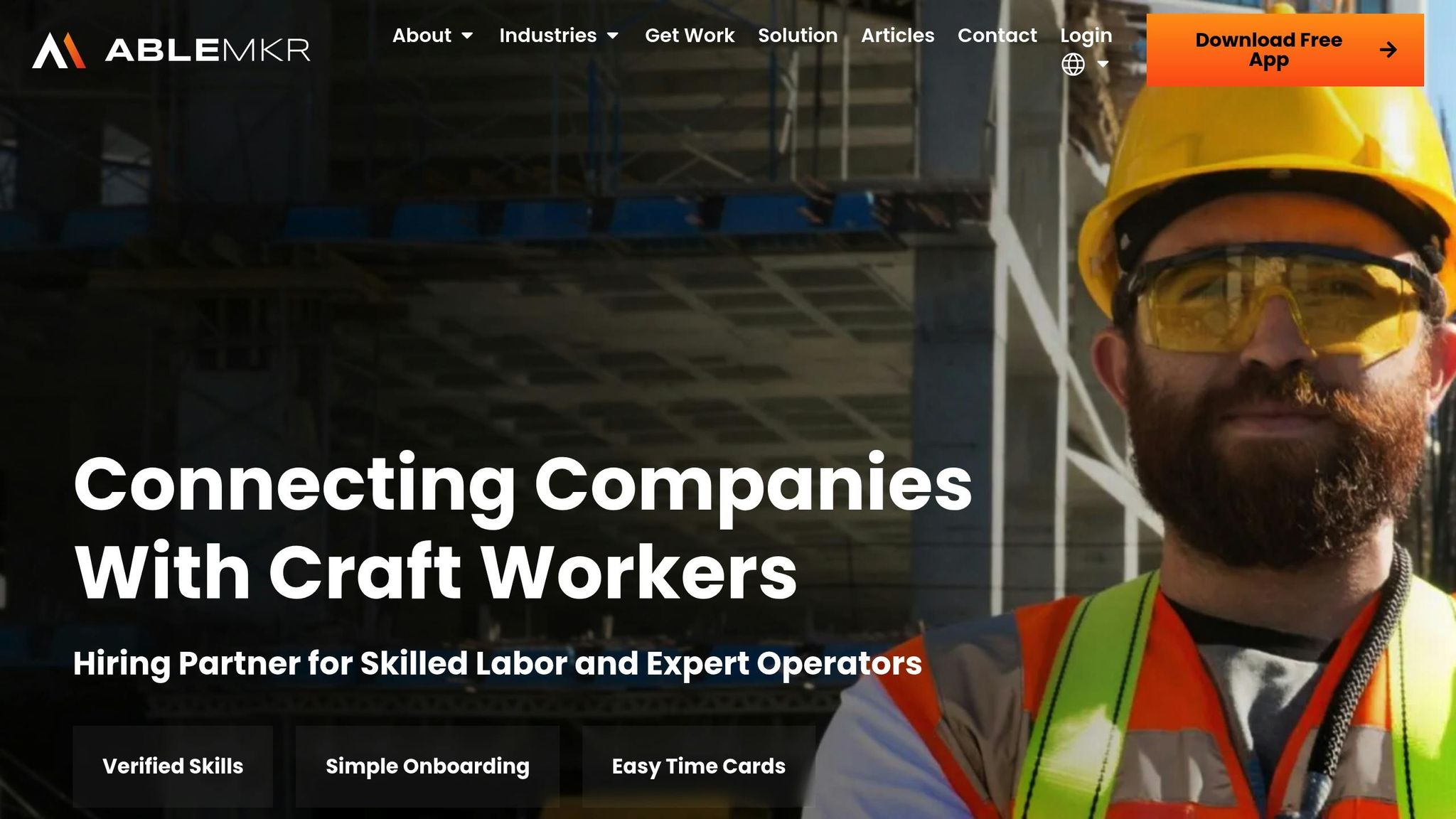
In industries like construction, oil & gas, mining, utilities, and heavy infrastructure, where risks are high and timelines are tight, effective workforce coordination can make or break a project. ABLEMKR has emerged as a standout solution, offering a workforce deployment platform powered by AI-driven job matching. This tool is designed to quickly scale skilled labor for critical projects, tackling challenges like sudden workforce ramp-ups and ongoing shortages of qualified workers.
The platform’s mobile-first app simplifies real-time coordination with features such as appointment booking, direct messaging, profile ratings, and location tracking. This mobile accessibility ensures seamless communication across job sites, even during emergency situations or complex deployments.
What makes ABLEMKR particularly useful is its automated matching system. It takes into account certifications, safety training, availability, and location to connect the right workers with the right projects. Employers can post jobs with specific skill and certification requirements, ensuring only qualified candidates are matched. This reduces delays, boosts compliance, and keeps projects on track. Additionally, the platform’s pre-vetting process and geo-location tools make it easier to quickly assemble crews for urgent tasks like last-minute shutdowns or remote repairs.
Beyond workforce matching, ABLEMKR also offers compliance tracking and payroll integration. Employers gain real-time insights into worker status, while workers benefit from guaranteed on-time payments. Features like GPS timecards and automated payroll address common industry pain points, such as communication gaps and unclear cost tracking. These capabilities highlight how ABLEMKR is setting a high standard for workforce coordination, paving the way for other tools to build on these advancements.
sbb-itb-aa28329
Best Practices for Remote Workforce Coordination
Coordinating a remote workforce in construction and energy industries comes with its challenges, but with the right mix of technology and processes, companies can boost productivity while ensuring safety standards are upheld across dispersed teams.
Implementing Automated Scheduling
Automated scheduling simplifies workforce management by tackling one of the biggest hurdles: manual coordination. When delays or absences happen, these systems can instantly reassign qualified workers, ensuring critical tasks remain on track. This quick response minimizes disruptions that often cause slowdowns in high-risk industries.
For example, automated scheduling can cut idle time by as much as 20% by reallocating available and certified workers immediately. If someone calls in sick, the system identifies a suitable replacement and notifies them right away, keeping the project moving without a hitch.
To make the most of these systems, look for platforms that match workers based on certifications, availability, and location. Set up clear protocols, such as automatic replacement rules and notification hierarchies, to handle workforce changes seamlessly. These tools not only improve scheduling but also create opportunities for real-time team oversight.
Using Real-Time Visibility
Pairing automated scheduling with real-time visibility creates a powerful system for managing remote teams. With tools like GPS apps and cloud-based dashboards, managers can access up-to-the-minute data on workforce deployment and project status.
This level of visibility is crucial for maintaining both safety and productivity. Managers can track worker locations, monitor compliance, and address any issues as they arise. It also helps hold teams accountable across multiple job sites.
Key metrics to monitor include crew utilization, project completion times, safety incidents, compliance rates, and payroll accuracy. Dashboards that display these metrics allow managers to spot trends, resolve bottlenecks, and fine-tune processes. For example, tracking completed tasks or compliance violations can guide necessary operational changes.
A well-rounded tech stack should include mobile apps for real-time location tracking. This feature not only improves oversight but also enhances safety, especially in remote or hazardous areas. Workers benefit from transparent communication, while managers gain the tools they need for effective project oversight.
Ensuring Safety and Compliance
Safety and compliance are non-negotiable in high-risk industries, and robust verification systems play a key role in maintaining both. These systems check that remote workers have the necessary skills and certifications for their tasks and meet all relevant regulations.
Wearable and biometric tools further enhance safety by monitoring worker location, physical activity, and identity. These tools help prevent accidents and limit unauthorized access to restricted areas.
Onboarding procedures should include thorough compliance checks and safety training. Every worker must complete a detailed verification process before being deployed, ensuring they are fully qualified for high-risk environments. Platforms with features like professional profiles and performance ratings add transparency, making it easier to assess worker capabilities and past performance.
To meet U.S. labor and privacy regulations, use secure, encrypted platforms and establish clear data policies. These measures not only protect worker information but also strengthen overall workforce coordination. Combined with automated scheduling and real-time visibility, these practices create a safer and more efficient working environment for remote teams.
Conclusion
Virtual workforce coordination tools are reshaping how construction and energy companies manage their remote teams. These platforms have evolved far beyond simple scheduling, offering integrated systems that handle real-time deployment, compliance tracking, and safety management. By replacing manual processes with automated, data-driven solutions, companies can adapt more quickly to project demands while maintaining high safety standards.
The most effective platforms excel in scalability and efficiency. They go a step further by enabling precise job matching – factoring in certifications, availability, and location. This approach is setting a new standard for workforce deployment in high-risk industries.
Selecting a solution that prioritizes scalability, compliance, and real-time visibility is no longer optional – it’s critical. ABLEMKR’s mobile-first, compliance-focused platform is a solid example, providing the tools needed for smooth workforce deployment and management.
Companies adopting these advanced coordination tools now will be better equipped to meet the growing demands of construction and energy projects. With features like integrated payroll workflows, clear communication channels, and automated matching, these platforms eliminate the usual headaches of labor deployment, paving the way for a more efficient future.
FAQs
How can virtual workforce coordination tools enhance safety and ensure compliance in high-risk industries?
Virtual workforce coordination tools, like ABLEMKR, play a key role in boosting safety and ensuring compliance in industries such as construction, oil and gas, mining, utilities, and heavy infrastructure. These tools streamline essential processes by matching pre-screened workers to job sites based on factors like certifications, safety training, availability, and proximity.
For employers, these tools provide real-time updates on worker status, making it easier to meet safety and regulatory requirements. Compliance tracking is built-in, simplifying audits and minimizing risks. Workers, on the other hand, gain access to clear job expectations and well-paying opportunities. By cutting out inefficiencies, these tools help create safer and more productive environments in industries where demand and risk are both high.
What features are essential in a mobile-first workforce coordination platform?
When selecting a mobile-first workforce coordination platform, prioritize features that streamline operations and boost productivity. Key functionalities to look for include real-time updates on worker status, integrated payroll management, and compliance tracking. These tools are essential for keeping labor management smooth and effective.
Opt for platforms that can assign pre-screened workers to job sites based on factors like certifications, safety training, availability, and location data. This ensures projects stay on track while adhering to safety and regulatory standards – especially critical in industries such as construction, energy, and infrastructure.
How does ABLEMKR’s AI-driven platform speed up onboarding and ensure the right workers are matched to projects?
ABLEMKR’s mobile-first platform leverages advanced AI to connect pre-screened workers with job sites based on essential criteria like certifications, safety training, availability, and proximity. This approach helps companies quickly assemble skilled crews for important projects without delays.
By rigorously evaluating candidates to align with the needs of each project, ABLEMKR ensures that the right team members are placed every time. This not only saves time but also minimizes mistakes in the hiring process.


