
Managing many tasks all at once is tough, mainly when they use the same workers, tools, and times. This is key in jobs like building and energy, where delays and fights over resources can mess up the work and cost more money. The main part is to keep tasks in line, stop clashes, and keep work flowing well.
Key Points:
- Why It’s Big: Fields like building and energy need tight plans because they share resources, follow strict rules, and have lots at risk. Bad teamwork can cause delays, danger, and loss of money.
- Hard Parts: Fights over resources, stacked times, safety worries, and rule issues are usual troubles.
- Tools to Think About: Known plans like Procore, Smartsheet, and ABLEMKR help in making plans smoother, keeping track of resources, and better talking.
- Best Ways:
- Put tasks in order of time limits and payback.
- Use steps like Critical Path to spot key needs.
- Keep giving news and talk clearly to avoid delays.
- Be ready to change plans as needed to keep on track.
Good planning uses strong tools, up-to-date news, and clear talks to make sure tasks keep moving right and stay in budget. Whether you’re handling a few tasks or big jobs, the right moves can change a lot.
Scheduling Resources on Multiple Projects
Good Ways to Plan Many Projects at Once
Working on many projects at the same time can be hard, like in building or energy, where being late can cost a lot. This is why having strong plan tools is key – they make sure things run on time, cut risks, and make for smooth work.
Top Plan Tools for Project Leaders
Below are some well-liked planning tools that project leaders use to stay neat and do well:
- Procore: Rating at 4.5/5, Procore is top in the building world. It brings all – from plans to papers – in one place, making it easy to watch many sites.
- Autodesk Construction Cloud: With scores of 4.3/5 on Capterra and 4.2/5 on G2, this tool fits well with design apps. It’s great for tricky tech work, letting teams move from plans to 3D models while keeping data the same.
- Smartsheet: Smartsheet is easy like a sheet but has cool stuff like Gantt charts and set flows. It has strong scores (4.5/5 on Capterra and 4.4/5 on G2) and eases the shift from planning to doing.
- TeamGantt: Known for easy-to-see plans, TeamGantt has high marks of 4.8/5 on G2 and 4.6/5 on Capterra. Its clear layout helps spot clashes in projects and stops issue with resources.
- Monday: For big teams and hard tasks, Monday gives updates and tools to work together. It shines in giving out work and keeping all on the same page, with 4.6/5 on Capterra and 4.7/5 on G2.
"The right software isn’t about fancy features. It’s about solving these core challenges without creating new ones." (Construction Project Management Software Comparison Guide 2025)
When picking a schedule tool, look for key parts like task and resource control, clear Gantt chart views to spot task clashing, and time tracking to find clogs fast. Mobile use, linking with other company systems, and automatic alerts also keep all in the loop.
These tools help with putting project info in order. Yet, ABLEMKR goes one step more by dealing with staff coordination in real time.
How ABLEMKR Helps With Cross-Project Scheduling
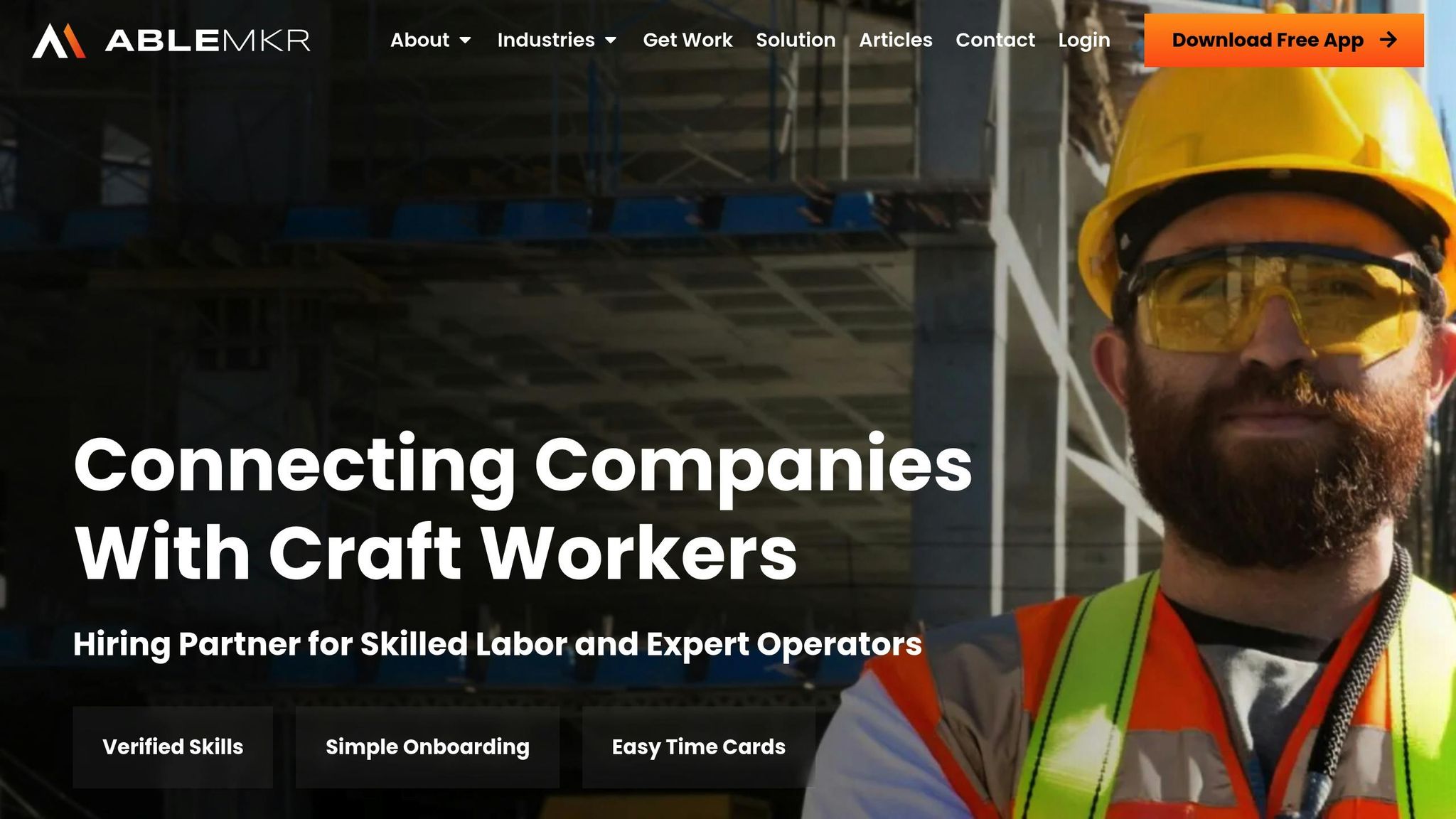
ABLEMKR aims to ease staff management, making it a big deal for fields like building, energy, and mining. It hooks up firms with many checked workers, meeting the need for staff good and fast even if project plans change.
A key part is real-time staff seeing. Workers note their time on a mobile app, giving leaders a quick view at labor costs and staff free. This helps keep work even across many spots.
Another help is ABLEMKR’s checked worker profiles, cutting the work of checking new staff. If project dates move, firms can get skilled people fast without waiting.
The site also lets firms set flexible pay rates, factoring in things like spot, project needs, or worker skills. Beyond just setting schedules, ABLEMKR deals with joining, insurance, payroll, and taxes, letting leaders focus on big tasks.
"ABLEMKR delivers an experience for workers and employers to deliver accountability and transparency in the skilled workforce employment process." (ABLEMKR)
With its phone-first setup, ABLEMKR lets both workers and bosses get to the schedule info from anywhere. Workers can see tasks, record hours, and talk to bosses right from the app, cutting down on the miscommunication that often leads to delays.
Mixing Scheduling Tools with Work Groups
Merging old scheduling tools with work platforms like ABLEMKR makes a smooth scheduling system. This mix gives bosses a clear view of both project plans and worker free time.
Data sync is a big plus. For instance, when a worker logs hours in ABLEMKR, that info updates right away in your scheduling tool. This cuts down on repeat entries and keeps alerts fresh, helping bosses make better choices about using resources.
Another plus is better cost clarity. Instead of just going by first guesses, bosses can watch actual work costs as they happen. Mixing also sharpens resource clash spotting, sending warnings when workers are double-booked or set for tasks that clash.
"With the right overview software, we’re not just putting out fires anymore. We’re preventing them." (Construction Project Management Software Comparison Guide 2025)
This method makes it easy to track rules by putting worker papers, safety lessons, and job needs in one place. Full report tools let you look at everything from how the job is going to work trends, making work plans based on clear facts.
Tips for Good Cross-Project Timing
Handling many tasks at once can be hard, more so when you have to manage resources well. In fact, 59% of those who run two to five tasks say they run into problems with resources. Smart plans for timing and smooth talking are key to keep all moving right.
Best Ways to Share Resources
First, look close at what resources and task needs you have. Put tasks in order by when they are due, what clients expect, how important they are, and what they will return (ROI). This makes sure your best team members are put where they will do the most good.
It’s key to know your team’s skills, when they can work, how much work they have, and costs. Like in building or energy work, track not just how many people but also what they can do and their special skills. A welder who knows high-pressure pipes, for instance, should be put on tasks where this is a must.
Plan early to see where you might run low on resources. This gives you time to change times, train people, or get more help. Use plans like spreading skills and rotating jobs to keep skilled people well-used across tasks, not letting them be used too little or too much. Also, training in many skills lets your team change as task needs do.
Using Tested Timing Plans
The Critical Path Method (CPM) is still a main tool for handling tasks with many linked steps. By seeing which tasks must not be late to stop delays, you can work to keep those key paths clear.
To manage your task paths well, work out task links and use old data to set real time frames. If past tasks often ran late, use that info now. Aim for about 85% use of resources to mix well work and rest, and leave some space for surprises.
While clever timing plans are key, they are best when used with updates as they happen.
Quick Updates and Talks
Bad talks are often why tasks fail, hitting 30% of tasks. Set clear ways to talk so all who have a stake can keep up with resources and task progress. For example, ABLEMKR’s app lets workers share their status right then, giving bosses fast facts that help with task timing.
Regular, quick meetings can track how things are going and show any timing fights. You might find out a key team member has too much at once, letting you fix it before it messes up the plan.
Watch how tasks link and change plans for your force as needed. Talk meetings with action teams can spot what resources you will need soon and deal with blocks before they grow big.
"Good fortune is what happens when opportunity meets planning." – Thomas Edison
At last, create a free space where team people can speak up about time problems. This clear way, mixed with live work data, makes sure each job has the right help at the right time.
sbb-itb-aa28329
Top Tips for Handling Many Projects
Handling many projects at once calls for good plans and smart ways to work. Even skilled bosses can face hard times with deadlines that clash and not enough help, if they don’t use the right ways. Here are some methods that can keep you in order, let you hit deadlines, and keep up good work in all your tasks.
Making Basic Timelines
A basic timeline is your project’s key guide – it offers you a clear path and acts as a mark for seeing how far you’ve come. The Project Management Group calls it:
"A baseline is the approved version of a schedule model that can be changed using formal change control procedures and is used as the basis for comparison to actual results".
To set a basic plan, start by splitting your big task into smaller jobs using a Work Breakdown Structure (WBS). Next, draw a network diagram to map out links and spot big blockages. Make sure to rightly guess the resources you need, counting any special skills, to keep plans running well.
Once your data is set, put it into a planning tool and check it with people who care to make sure everyone agrees. When all are on the same page, set this plan as your main guide. If big changes happen – like a big task change or huge delays – think about making a new main plan. This lets you keep track of changes while still keeping the first plan for checks.
Keeping Good Work in All Projects
It is key to keep good work the same in all projects to save your good name and stop costly fixes. Andreas Trommer said it well:
"Quality control in project management is like the safety net beneath a tightrope walker – it’s what prevents your project from falling apart at crucial moments".
Start by setting clear quality rules with everyone in the early plan stage. This makes sure we all know what we expect. Make a quality plan that shows standards, who does what, steps, and measures. Having regular checks in your plan can find problems early, saving time and money.
Using tools for managing projects that have quality control can help you keep track and keep standards high. When you find mistakes or errors, fix them fast to stop the same issues in the future. Writing down checks, fixes, and what you learn not only makes future projects better but also builds trust by showing you are open in how you manage quality.
Adopting Flexible Scheduling Policies
Being able to change plans is important when handling many projects, as 72% of projects worldwide are late, and they often miss their first plan by 38%. Areas like building and energy often see changes from weather, supply problems, or new rules, so being able to adapt is even more key.
One way to add change room in your plans is by adding extra time. These extras help you handle delays without ruining the whole plan. Talking openly in your team is also key – telling of possible issues early makes it easier to change plans fast. Agile ways of managing projects, which focus on step-by-step progress and constant feedback, also help you handle changes.
Teaching your team to do different tasks adds more change room, as it lets you move resources easier when things change. Planning in short 15-30 minute blocks also makes changing plans quicker and smoother without breaking promises.
Tech has a big role in flexible planning. Tools with updates in real-time let you react fast to new needs, and backup plans make sure you’re ready for surprises. This way of thinking turns change into a chance, not a problem, helping your team stay strong and on track.
Comparison of Scheduling Tools and Methods
Picking the right tools to plan for many projects and sort out overlap in resources calls for good tools. The best fit often changes with how big your project is. For example, big project managers working with hundreds of small firms on huge tasks will need better tools than a house builder with just a few jobs at a time. This shows why it’s key to find tools that can match different needs.
Old ways of planning, like Gantt charts, PERT, and CPM, have been huge for many years. These ways mostly depend on what you know and feel to set up project times. They are okay for smaller or easy tasks but get too much when you have lots of big tasks.
AI tools, in turn, use smart tech to make planning smoother. These tools drop the need for hands-on work by 90% and are 95% more correct. They can cut the time to make a schedule by 30%, lower delays by up to 30%, and better the whole job outcome by 25%. Firms that pick AI planning see huge gains, with up to 300% ROI in two years. Plus, 71% of project leaders think AI will be key in their work soon.
When looking at tools for fields like building or energy, think about features that help with handling many tasks. Key things are:
- Gantt charts: Show times, steps that rely on each other, and how the task moves along.
- Resource management: Sort out workers, gear, and goods well.
- Real-time mobile updates: Let site teams share updates and issues right away.
- Collaboration tools: Make talking among teams and firms better.
- Reports and analytics: Make deep reports to watch how things go and see new trends.
- Integration: Make sure it works well with other systems like accounting or BIM.
- CPM analysis: Find key steps to keep the project on time.
These points help to look at different tools and pick the best one for what you need.
Let’s look over some well-used planning tools:
| Tool | Key Features | Works Well With | Simple to Use | Price Clarity |
|---|---|---|---|---|
| Oracle Primavera Cloud | Top skill and time line tools | BIM and GIS | Okay | High |
| Microsoft Project | Set tasks, track needs | Not many | Great | Okay |
| ABLEMKR | Live job timing, track costs | Works with crew and work | Best | Very High |
Oracle Primavera Cloud works best for big, hard projects with its top tools for managing people and time. But, users may need more learning to use it well. Microsoft Project is easy for planning tasks and watching their ties but falls short in working with other tools. ABLEMKR, aiming at live work planning and cost checks, is great for building and energy jobs. Its phone-first build and smooth fit make it simple to run and clear on costs.
When picking a tool, think about things like your team’s skill, how hard your projects are, and if you need to mix tools. Tools that help plans like pull planning, weekly setting, and field prep can line up work teams and cut work jams. Also, look for options that give live updates on project health with clear numbers and future sights. Lastly, check how the maker helps you start, learn, and get help to make sure the tool can fit your growth without big costs.
Conclusion
Cross-project scheduling is key in handling big building and energy tasks. Given that more than half of all tasks come in late, and most big projects meet delays, good scheduling can be the line between winning and expensive problems.
The building and energy fields face one-of-a-kind blocks, making this even more key. Look at the 2006–2008 oil time as an case: project costs went up two times, timelines got 20–30% longer, and safety cases went up. These facts show how bad team work in busy times can throw off tasks and put workers at risk. Fixing these points needs top tech fixes.
Tools like ABLEMKR are making new moves in cross-project team work. By linking skilled work in real time, noting hours right away, and taking care of jobs like joining, insurance, payroll, and taxes, ABLEMKR makes work smooth. When put with other tools, it gives clear updates and makes the best use of resource use.
"The future of construction scheduling is now. The future is a collaboration between different groups that are making it easier for the construction industry to collaborate." – Hamzah Shanbari, Director of Innovation at Haskell
The ideas we talked about before really show why good planning matters. For example, keeping the use of resources at 75–80% makes sure things run well and keeps workers happy too. Making a plan with the most important tasks first helps, and having teams work together helps avoid fights and mix-ups.
Look at the green power area for a good case of this. From 2011 to 2016, this field tried to add 750,000 MW of green power. This included over 550 firms in more than 1,300 wind efforts and 290 firms in more than 540 sun efforts. To reach such big aims, they had to plan well across many projects to keep things on time and within money limits.
Doing well in this kind of planning rests on three main things: strong plans, new tech, and clear talks. Keeping track of resources in one place, using common ways, and open team work make sure all jobs are done on time, don’t go over budget, and meet the top standards. By mixing tried ways with new tools, groups can keep giving top-notch results.


