
Retention in blue-collar industries is harder than ever. Workers are leaving jobs due to low pay, poor benefits, unpredictable schedules, limited career growth, and safety concerns. Companies in sectors like construction, energy, and manufacturing are struggling to keep skilled employees, and the costs of turnover – like delays, lost expertise, and higher recruitment expenses – are rising.
Here’s what workers want in 2025:
- Better pay and benefits: Competitive wages, health insurance, retirement plans, and paid time off.
- Predictable schedules: Flexibility and stability to balance work and personal life.
- Career growth: Clear paths for advancement, training, and certifications.
- Safe workplaces: Strong safety programs and leadership that values employee well-being.
- Modern tools: Digital platforms for schedules, payments, and communication.
Companies that address these needs can reduce turnover, save costs, and build a loyal workforce. The key is aligning pay, benefits, growth opportunities, safety, and technology to meet worker expectations.
7 Proven Strategies for Retaining Blue Collar Employees – Blue Collar Employee Retention Tips
Pay and Benefits Issues
Pay continues to be the number one factor influencing whether blue-collar workers stick around in industries like construction, energy, and mining. If workers find better pay or benefits elsewhere, they’re quick to move on. This churn doesn’t just affect individual roles – it ripples across projects, delaying timelines and forcing companies to spend heavily on recruiting replacements.
But retention isn’t just about the hourly wage printed on a paycheck. Workers look at the bigger picture: health insurance, retirement plans, paid time off, and other benefits. When these areas fall short, companies face higher turnover and struggle to bring in skilled, experienced workers.
How Pay Affects Turnover Rates
Stagnant wages are a major reason workers leave. In industries like construction and mining, employees often compare pay rates across employers and projects. If they realize they’re earning less than the industry standard, they don’t hesitate to jump ship for higher-paying roles. On top of that, inconsistent or delayed paychecks only add to the frustration, pushing workers to find employers who can guarantee on-time payments.
The fallout from pay-related departures can snowball. When one key worker leaves for better pay, it often sets off a chain reaction. Others on the team start looking around and, before long, multiple resignations follow. This is especially true in specialized roles – think welders, heavy equipment operators, and certified technicians – where losing even one person can disrupt entire projects.
Benefits also play a crucial role in retention. Workers expect comprehensive packages that include health, dental, vision, and retirement options like 401(k) matching. Companies that fail to meet these expectations often find themselves losing workers to competitors who offer more attractive packages.
What Workers Expect in 2025
Today’s workers don’t just care about hourly wages – they’re looking at the whole compensation package. From health insurance to retirement plans and work-life balance perks, employees are weighing long-term financial security alongside their immediate pay.
Health insurance remains a top priority. Workers want employers who cover a significant portion of premiums and provide access to high-quality healthcare networks. For those with families, the focus sharpens on family coverage options and out-of-pocket costs for dependents.
Time off is another area where expectations have shifted. The old model of minimal vacation days and sick leave no longer cuts it. Workers now value flexible PTO policies that let them handle personal or family emergencies and take care of their mental health without worrying about financial repercussions.
Retirement benefits are gaining more importance as well. Many workers prioritize 401(k) matching, even if it means accepting a slightly lower hourly wage. They see these contributions as a sign that their employer is invested in their future financial stability.
Performance-based bonuses and overtime opportunities are also key factors. Workers want clear pathways to boost their earnings, whether that’s through gaining new certifications, meeting project deadlines, or hitting performance targets. Companies that offer these incentives tend to keep employees engaged for longer periods.
Finally, with the rise of digital payment technologies, workers now expect faster and more transparent payment processes. Employers who can provide real-time updates on earnings, deductions, and payment status are far more appealing than those relying on outdated, paper-based payroll systems. Delayed payments are a major red flag that often drives workers to seek out more tech-savvy employers.
Work-Life Balance and Schedule Flexibility
Strict and unpredictable scheduling practices are driving workers to seek jobs that better respect their personal time and family needs. In industries like food service or manufacturing, where schedules can be erratic, employees are increasingly opting for roles that provide stability and flexibility.
At its core, this issue comes down to recognizing that workers have responsibilities and lives outside their job. When scheduling becomes a barrier to managing personal commitments, employees often look elsewhere for opportunities that offer more predictability.
How Scheduling Impacts Worker Retention
Unpredictable schedules don’t just inconvenience employees – they can trigger a chain reaction that leads to higher turnover. For instance, nearly half of workers aged 26–32 receive their work schedules with just one week’s notice or less. This makes planning ahead for personal or family obligations a constant struggle.
Take food service workers as an example: their hours can fluctuate by as much as 68% over the course of a month. Such inconsistency makes it hard to budget for expenses, adding financial stress to an already demanding job.
The challenge becomes even greater for working parents. Around 40% of young workers have children under the age of 12, and many of these parents experience work-hour variations of up to 40% compared to their regular schedules. Faced with this uncertainty, many parents choose to leave for jobs that offer more predictable hours, even if it means taking a pay cut.
These frustrations have fueled a growing demand among younger workers for more flexible and reliable scheduling options.
Younger Workers Are Prioritizing Flexibility
Younger employees, particularly those from Generation Z and younger millennials, are leading the charge for better work-life balance in traditionally rigid industries. Having seen the toll of unpredictable schedules – burnout, anxiety, and limited personal time – they are more willing to switch jobs to find employers who prioritize their well-being and respect their time.
Technology is playing a pivotal role in meeting these demands. Younger workers expect real-time updates on schedule changes, shift openings, and project timelines. Mobile apps that allow them to check schedules, request time off, or adjust availability are becoming standard expectations. Companies that still rely on outdated methods like paper schedules or last-minute calls risk losing these tech-savvy workers to competitors who offer more modern solutions.
Another key factor is the desire for structured flexibility. Many workers prefer consistent work patterns – such as four 10-hour days or fixed start times – while still having the option to swap shifts or make adjustments when needed. This combination of predictability and adaptability allows them to better balance their professional and personal lives, giving them a sense of control over their time.
Career Growth and Skills Training
For blue-collar workers, career growth is about more than just a paycheck. Without meaningful opportunities and targeted development, even highly skilled employees may leave, taking their valuable experience and institutional knowledge with them.
Occasional training sessions aren’t enough. Workers need to see a clear connection between their current role and future opportunities. Without that, they’re likely to seek employment elsewhere.
Training and Upskilling Programs
To bridge this gap, companies need to implement targeted training and upskilling initiatives that resonate with their workforce.
Effective training programs do more than teach skills – they boost retention by increasing earning potential and job security. Generic, one-size-fits-all courses often fall flat because they lack relevance to workers’ daily responsibilities. Instead, offering industry-recognized certifications – like OSHA compliance, welding, or equipment operation – enhances workers’ value in the job market while demonstrating the company’s commitment to their professional growth.
Pairing seasoned employees with newcomers through on-the-job mentorship programs is another powerful strategy. This approach accelerates skill-building and creates stronger workplace relationships. Senior employees feel appreciated for their expertise, while newer workers gain hands-on knowledge that classroom settings simply can’t replicate. This is especially effective in trades where practical experience is indispensable.
Cross-training initiatives can also make a big difference. When workers learn multiple skills within their department or across different areas of the operation, it keeps their roles engaging and helps reduce monotony. This added variety not only makes workers more versatile but also deepens their connection to the company, reducing the likelihood of job searching out of boredom.
Clear Career Advancement Paths
Skill-building is only part of the equation – workers also need to see a clear path forward in their careers.
One of the main reasons blue-collar employees leave is the lack of visible advancement opportunities. Companies that establish transparent promotion pathways and communicate them effectively tend to experience much lower turnover rates.
Structured progression plans are particularly effective when they clearly define what’s required for advancement. Instead of vague promises about “growth opportunities,” successful companies outline specific steps – such as completing training programs, gaining certifications, or demonstrating proficiency in certain tasks – that employees need to take to move up.
Internal promotion policies that prioritize current employees over external hires further reinforce the company’s dedication to worker advancement. When team members see their peers being promoted, it sends a strong message that loyalty and hard work are rewarded. This not only boosts morale but also preserves institutional knowledge and fosters team cohesion.
Regular career development discussions, ideally conducted quarterly, help employees identify their goals and address skill gaps. These conversations keep advancement plans on track and show workers that their growth is a priority.
For those with leadership potential, specialized development programs can be a game-changer. These programs teach skills like team management, project coordination, and business fundamentals while allowing participants to stay in their current roles. Investing in future leaders not only strengthens retention but also builds a dependable internal pipeline for management positions.
sbb-itb-aa28329
Workplace Culture, Safety, and Management
When it comes to retaining workers in blue-collar industries, there’s more to the equation than just wages and benefits. Employee loyalty is deeply rooted in workplace culture and the trust they place in leadership – especially in high-risk sectors like construction, energy, and manufacturing.
Recent data from early 2025 reveals some concerning trends: organizational confidence dropped by 4.5 points, while culture ratings declined by 3.1 points. These shifts have contributed to a higher risk of employee turnover. Workers in these industries are particularly attuned to how safe and valued they feel. When trust in leadership falters or safety concerns are overlooked, employees are far more likely to look for opportunities elsewhere. This underscores the importance of fostering trust and prioritizing safety as key pillars of management strategies.
Management Engagement and Trust
Beyond competitive pay and benefits, trust in leadership plays a pivotal role in keeping blue-collar employees on board. Transparent and inclusive leadership that prioritizes worker well-being can make all the difference. For instance, while 57% of CEOs in 2025 identified employee retention and engagement as top priorities, many still struggled to build the trust necessary to achieve these goals.
Simple yet effective practices, like regular town halls, open-door policies, and clear performance updates, help employees feel valued and connected. Involving workers in safety-related decisions further strengthens mutual respect and collaboration. Policies that ensure fairness in promotions, disciplinary actions, and recognition also reinforce trust. However, challenges remain – particularly for women in the workforce. Retention scores for women dropped by 8.5 points in 2025, compared to a 2.4-point decline for men, highlighting the need for more targeted retention strategies.
Safety Programs and Worker Retention
Strong management engagement sets the stage, but robust safety programs solidify worker loyalty. In high-risk industries, safety isn’t just about compliance – it’s about demonstrating a genuine commitment to employee well-being. Effective safety programs should include more than the basics, such as regular audits, updated protocols for new equipment, and recognition for safe practices. Acknowledging safe behavior and addressing issues promptly make workers feel both valued and secure.
Mental health is another critical piece of the puzzle. A staggering 83% of Gen Z frontline employees report experiencing burnout, and 72% feel that workplace interactions negatively impact their mental well-being. Companies that invest in mental health resources – like employee assistance programs, stress management tools, and supportive supervision – tend to see improved retention. Recognition programs tied to safety milestones, such as celebrating accident-free periods or acknowledging employees who identify hazards, further enhance morale and reinforce a positive safety culture.
Technology also plays a role in bolstering safety and retention. Modern workforce management platforms help ensure that only certified workers are assigned to tasks, streamline safety compliance, and provide real-time visibility across job sites. When leadership actively participates in safety meetings and promptly addresses concerns, it sends a powerful message of commitment. This visible dedication builds trust and loyalty, creating a workplace where employees feel both valued and protected.
Technology Solutions for Better Retention
As the expectations of blue-collar workers shift, digital solutions have become central to tackling long-standing retention challenges. Modern workforce management platforms are reshaping how companies approach retention. In January 2024, there were 8.9 million job openings in the U.S., highlighting the growing difficulty in retaining workers as retention scores took a significant hit. To address these issues, companies are increasingly using technology to pinpoint and resolve the root causes of worker dissatisfaction.
Digital Tools for Workforce Management
Mobile-first platforms have revolutionized workforce management by allowing workers to access available shifts, accept assignments, and communicate in real time. These tools are especially vital for workers on job sites where traditional computer access is impractical.
Geo-location matching technology tackles a key but often overlooked factor – commute stress. By connecting workers to job opportunities closer to home, these systems cut down travel time and transportation costs, leading to better work-life balance.
Real-time compliance tracking automates the process of monitoring certifications. This system alerts both workers and employers when renewals are approaching, reducing administrative tasks while ensuring qualifications are always up to date. It’s a proactive way to prevent missed opportunities and shows the employer’s commitment to their workforce.
Integrated payroll workflows address one of the most critical concerns: reliable compensation. Over the past two years, concerns about pay reliability have surged by 7.9 points. By ensuring on-time payments, these systems eliminate cash flow uncertainties that might otherwise push workers to look for additional income elsewhere.
These digital tools are at the core of ABLEMKR’s approach to improving worker retention.
How ABLEMKR Improves Worker Retention
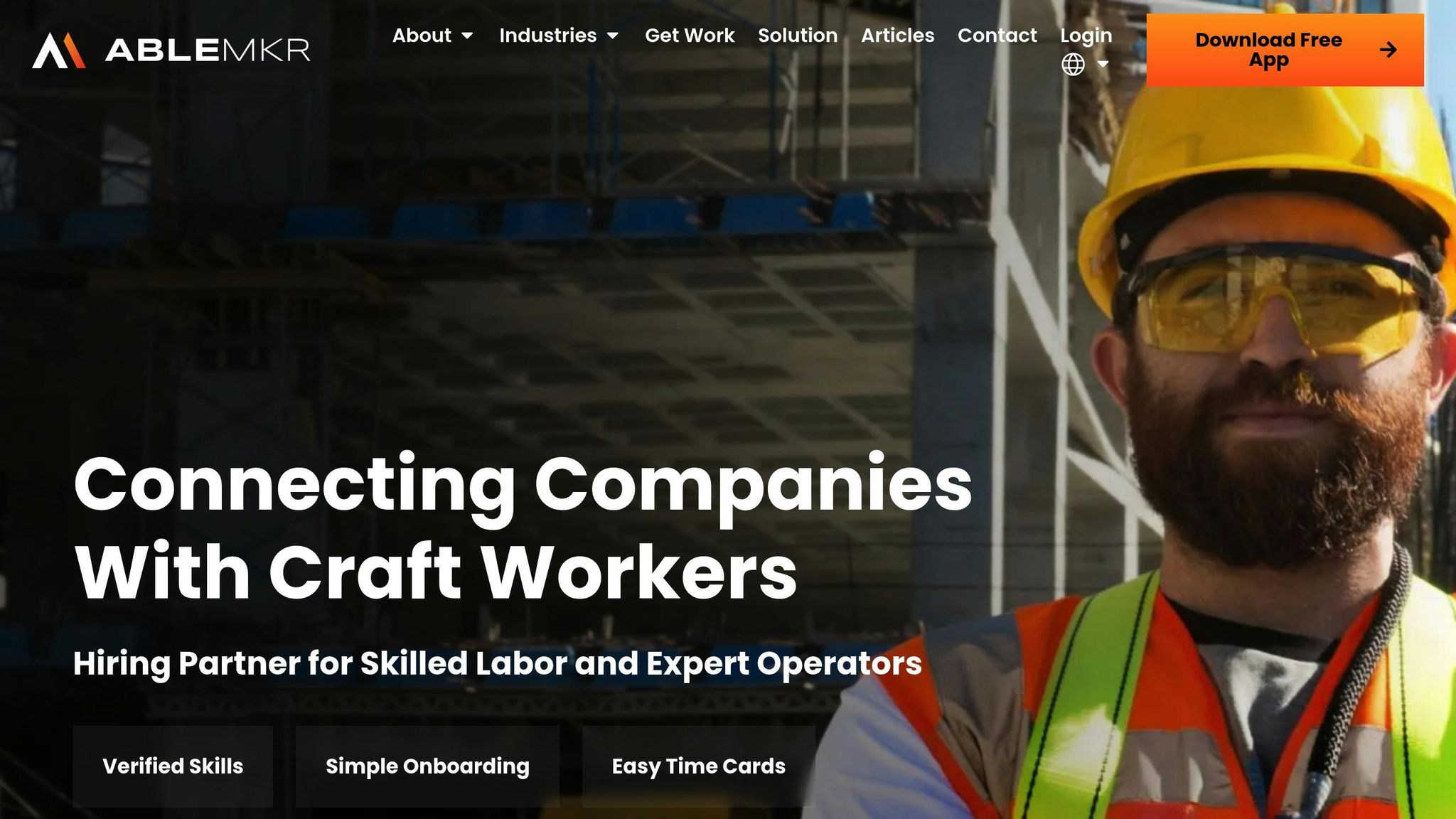
ABLEMKR builds on these technological advancements to tackle retention challenges head-on. Its dependable payment system removes the stress of compensation delays, while its geo-location matching feature minimizes commute-related frustrations by linking workers to nearby jobs in industries like construction, energy, and extractives.
With its mobile-first design, ABLEMKR simplifies job searches, schedule updates, and payment tracking. This is particularly important given that 83% of Gen Z frontline workers report burnout, and 72% feel that workplace interactions negatively affect their mental well-being. By reducing administrative hurdles and offering instant access to critical information, ABLEMKR helps ease workplace stress.
The platform also streamlines the tracking of certifications and safety training, ensuring workers remain qualified for higher-paying roles. This not only opens pathways for career growth but also demonstrates that employers are invested in their employees’ professional development.
ABLEMKR’s real-time visibility into worker status enhances transparency and trust. Workers can easily track their contributions and career progress, while employers gain immediate insights into crew availability, certification updates, and project milestones. This level of transparency addresses confidence issues within organizations, which have contributed to a 4.5-point drop in retention scores.
Retention Challenges and Solutions Comparison
Here’s a quick breakdown of key retention challenges and practical solutions to address them:
| Challenge | Impact on Retention | Potential Solutions |
|---|---|---|
| Low Pay & Benefits | High turnover and difficulty recruiting | Offer competitive wages and comprehensive benefits |
| Poor Work-Life Balance | Burnout and stress-related departures | Implement flexible scheduling and varied shift options |
| Limited Career Growth | Stagnation that drives workers to seek other opportunities | Provide training, upskilling programs, and clear career advancement paths |
| Safety Concerns | Increased absences and apprehension about workplace hazards | Develop effective safety programs and enforce proper equipment and safety protocols |
| Ineffective Management | Low morale and eroded trust | Invest in leadership training and improve communication practices |
| Administrative Friction | Frustration from delays in processes like payments | Use digital workforce management platforms to streamline tasks |
These solutions reflect strategies discussed earlier, emphasizing workforce management and safety improvements.
For example, strong safety measures not only create a secure workplace but also build trust and loyalty among employees. As highlighted by Insurance Relief, prioritizing safety can significantly enhance retention: “When employees perceive that their health and safety are a priority, they are more likely to feel loyalty and commitment to the company”.
Additionally, digital platforms like ABLEMKR simplify hiring, onboarding, and compliance, cutting down on administrative delays and ensuring timely payments. By combining competitive pay, flexible work options, robust safety measures, clear career paths, and streamlined processes, companies can build and maintain a dedicated blue-collar workforce.
Complete Strategy for Worker Retention
Keeping a blue-collar workforce intact takes more than just addressing individual issues – it requires a well-rounded approach that tackles all the challenges employees face. Successful companies focus on blending factors like competitive pay, flexible scheduling, career growth opportunities, a strong safety culture, and modern technology to create an environment where workers want to stay.
The foundation of retention starts with fair pay and benefits that match today’s standards. Beyond compensation, work-life balance plays a huge role in reducing turnover, especially for younger workers who value flexibility in their schedules.
Offering clear career growth opportunities is another key piece. When employees see a path to advance their roles and earn more over time, they’re far less likely to look elsewhere for better opportunities. This sense of progress keeps them engaged and loyal.
Creating a culture of trust and safety is also crucial. Workers need to feel respected, heard, and protected at work. This means going beyond basic safety compliance, investing in supervisor training, and keeping communication channels open so employees feel valued and secure.
Technology plays a supporting role in making the work experience smoother and more efficient. Tools like ABLEMKR simplify processes like payments, onboarding, and shift scheduling, giving workers more control and reducing administrative headaches.
None of these elements can work in isolation. Competitive pay, benefits, safety, and career growth must come together as part of a seamless employee experience. When these factors are treated as interconnected, companies can build a retention strategy that truly works.
FAQs
How can companies enhance work-life balance and provide more flexible schedules for blue-collar workers?
To help blue-collar workers achieve a better balance between their jobs and personal lives, companies can implement flexible scheduling options. This might include allowing employees to trade shifts, offering variable shift lengths, or letting workers adjust their start and end times. These strategies make it easier for employees to handle personal responsibilities without sacrificing productivity.
On top of that, providing predictable and fair schedules can make a big difference. Options like compressed workweeks or consistent hours can lower stress levels and boost overall job satisfaction. By focusing on flexibility and fairness, businesses can create a workplace where employees feel more engaged and committed.
How can technology help retain blue-collar workers in industries like construction and manufacturing?
Technology is transforming how companies retain blue-collar workers by making jobs safer, more efficient, and more satisfying. Tools like automation and AI are reducing physical demands and minimizing workplace hazards, creating safer environments that prioritize worker well-being. On top of that, tech-powered training programs allow employees to quickly get up to speed with new tools and processes, which can boost both their confidence and engagement.
Another game-changer is the flexibility technology brings to scheduling and communication. These tools are especially appealing to younger workers, giving them more control over their work-life balance. By meeting these expectations, businesses can strengthen employee loyalty, lower turnover rates, and build a more content and committed workforce.
How do career growth opportunities impact the retention of skilled blue-collar workers, and what are the best ways for companies to communicate these opportunities?
Career growth opportunities play a key role in keeping skilled blue-collar workers engaged and committed. They give employees a sense of achievement, direction, and worth. When workers can clearly see how they can advance within a company, they’re more inclined to stay motivated and loyal.
To communicate these opportunities effectively, companies can focus on a few key strategies: offering regular skill-building programs, laying out clear and transparent career progression plans, and maintaining open, honest conversations about growth possibilities. Demonstrating a real investment in employees’ development builds trust and helps create a more dedicated and engaged workforce.


