
Wireless surveillance systems are transforming construction site security. With annual theft losses in the U.S. construction industry ranging from $300 million to $1 billion, these tools are becoming indispensable. They provide flexible, cable-free monitoring, safeguard equipment, and even enhance worker safety by ensuring compliance with safety protocols. Here’s a quick breakdown of the top wireless surveillance tools for job sites:
- WCCTV Solar-Powered Surveillance Trailers: Solar-powered with 10-day battery backup, cellular connectivity, and quick setup for remote sites.
- Birdseye Surveillance Camera Systems: AI-driven, cellular-connected cameras with real-time alerts and deterrent measures.
- Lorex Outdoor Wireless Cameras: Hybrid power options (battery or wired), Wi-Fi connectivity, and durable design for evolving projects.
- SimpliSafe Outdoor Wireless Cameras: Affordable, battery-powered cameras with color night vision and real-time monitoring.
- Verkada Wireless Security Cameras: Premium AI-powered cameras with cloud storage and advanced analytics for multi-site management.
- Sensera Systems Site Cameras: Solar-powered, cellular-connected systems for remote monitoring and time-lapse capabilities.
- Rhombus Systems Wireless Cameras: Flexible power options, dual-band Wi-Fi, and easy deployment for temporary setups.
These tools address theft, vandalism, and safety concerns, while also reducing costs like insurance premiums and unnecessary site visits. Whether your site is remote or connected, there’s a solution to fit your needs.
Quick Comparison
| Tool | Power Source | Connectivity | Key Features | Best Use Cases | Price Range |
|---|---|---|---|---|---|
| WCCTV Solar Trailers | Solar + battery backup | Cellular (4G/5G) | Mobile trailers, remote monitoring | Large, remote sites | $200–$400/month rental |
| Birdseye Systems | Solar + battery backup | Cellular | AI alerts, deterrents, real-time responses | Theft prevention, remote sites | $200–$400/month rental |
| Lorex Wireless Cameras | Battery or wired | Wi-Fi | Night vision, weatherproof, hybrid setup | Evolving site needs | $125–$300 per camera |
| SimpliSafe Outdoor Cameras | Rechargeable battery | Wi-Fi | Color night vision, built-in siren, AI detection | Immediate, affordable security | $79.99–$149.99 per unit |
| Verkada Security Cameras | PoE, battery options | Wi-Fi, cellular backup | AI analytics, cloud storage, multi-site management | Compliance, multi-site setups | $300–$500 per camera |
| Sensera Systems Cameras | Solar + battery backup | Cellular | Time-lapse, rugged design | Remote monitoring, progress docs | $200–$400/month rental |
| Rhombus Wireless Cameras | PoE, solar options | Dual-band Wi-Fi | Quick deployment, browser/mobile management | Temporary setups, flexible use | $200–$400 per camera |
Choose based on your site’s power access, connectivity needs, and budget to secure your job site effectively.
Wire Hassle: Streamlining Construction Site Surveillance with Wireless Solutions
1. WCCTV Solar-Powered Surveillance Trailers
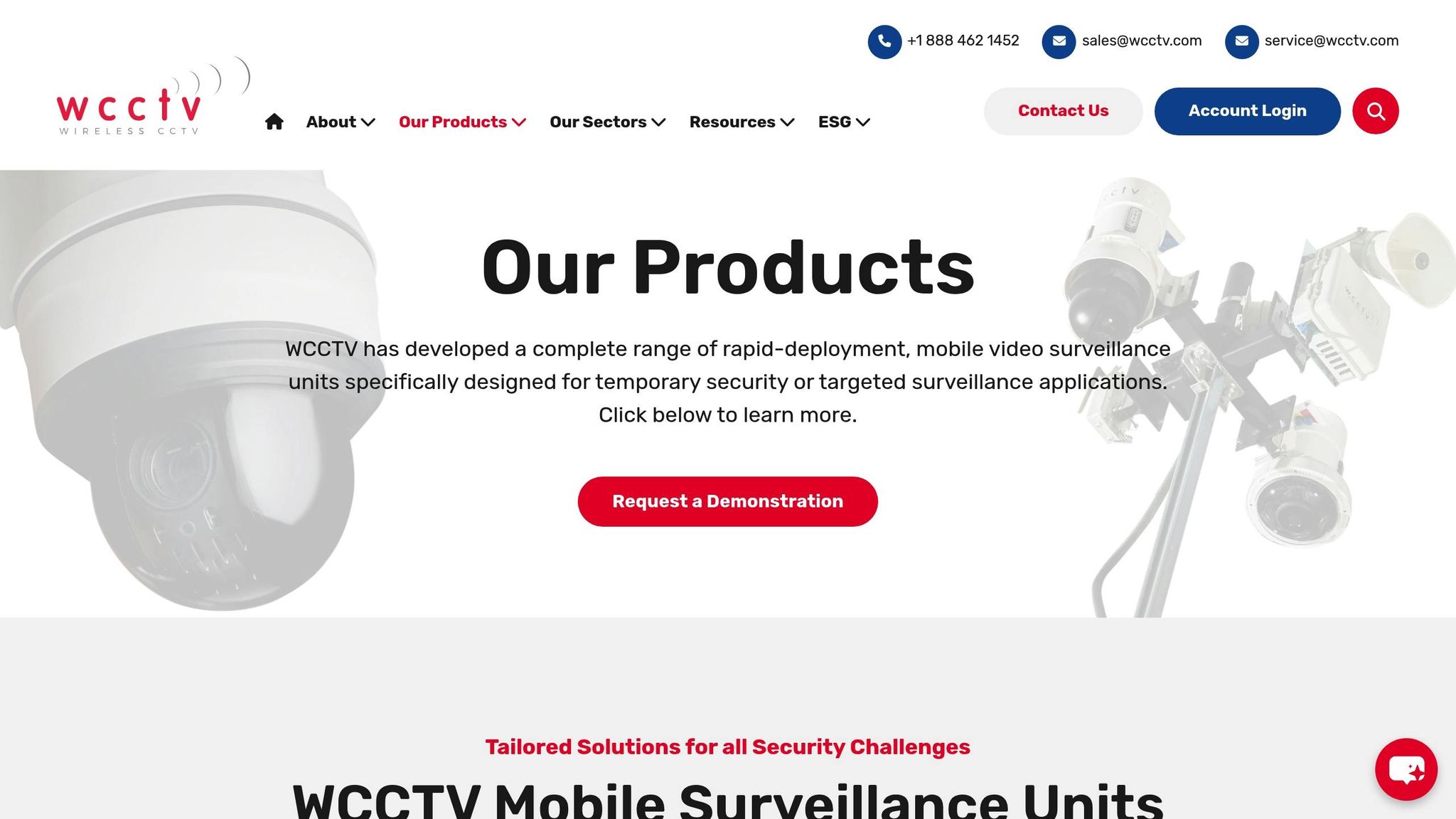
WCCTV Solar-Powered Surveillance Trailers offer a practical solution for securing remote job sites that lack access to fixed power sources and permanent internet connectivity. With more than two decades of expertise in mobile video surveillance, WCCTV has crafted these trailers specifically for locations without established infrastructure.
Power Source
These trailers operate independently, thanks to their efficient solar panel arrays combined with deep-cycle battery storage. This setup ensures at least 10 days of power autonomy, even during periods with limited sunlight. An advanced energy management system keeps the trailers running smoothly, even in challenging weather. To maximize solar energy capture, the panels should ideally face south.
Connectivity
"Our cellular video transmission technology makes them truly wireless, meaning no internet connectivity is needed, as this is built into the trailers." – WCCTV
The trailers rely on 4G/5G cellular technology for connectivity, eliminating the need for Wi-Fi or hardwired connections. This built-in cellular feature ensures quick deployment and efficient operation.
Key Features
WCCTV trailers can be set up and fully operational in less than 20 minutes. They come equipped with high-efficiency solar panels, durable battery systems, and intelligent energy management that adjusts power usage based on available solar energy. This quick setup means surveillance coverage can begin almost immediately upon arrival.
Use Cases
These capabilities provide instant security for a wide range of applications. Construction companies, for instance, use these trailers to safeguard critical facilities while reducing the need for on-site personnel and frequent visits. One notable example is the Harlingen Waterworks System, which successfully deployed WCCTV’s mobile surveillance trailers to secure their facilities, significantly cutting down on manned operations and site visits.
2. Birdseye Surveillance Camera Systems
Birdseye Security Solutions takes security up a notch by combining artificial intelligence with live monitoring agents to actively address potential threats. Their surveillance systems are specifically tailored for construction sites, which are often vulnerable to theft and vandalism.
Connectivity
Birdseye cameras are built to operate in remote and challenging locations, thanks to their use of wireless, cellular, or satellite connections. By incorporating edge computing, these systems process data directly on-site, minimizing the need for large data transfers. This ensures the cameras work efficiently even when network conditions are less than ideal. Such robust connectivity is crucial to maintaining the system’s ability to respond to threats in real time.
Key Features
The cameras are equipped with advanced human and vehicle detection capabilities. When a threat is detected, the system activates deterrent measures like flashing lights, alarms, and two-way communication. These tools enable live intervention while reducing the chances of false alarms. This combination of features helps secure the site and protect valuable assets.
Use Cases
Birdseye systems tackle multiple challenges on construction sites, from preventing theft and vandalism to ensuring safety compliance and offering real-time documentation. The cameras provide high-quality video footage of individuals on-site, which can serve as critical evidence if an incident occurs. Additionally, they help monitor safety practices, ensuring workers follow proper protocols. By actively deterring criminal activity, these systems not only protect equipment and materials but also encourage potential thieves to look elsewhere.
3. Lorex Outdoor Wireless Cameras
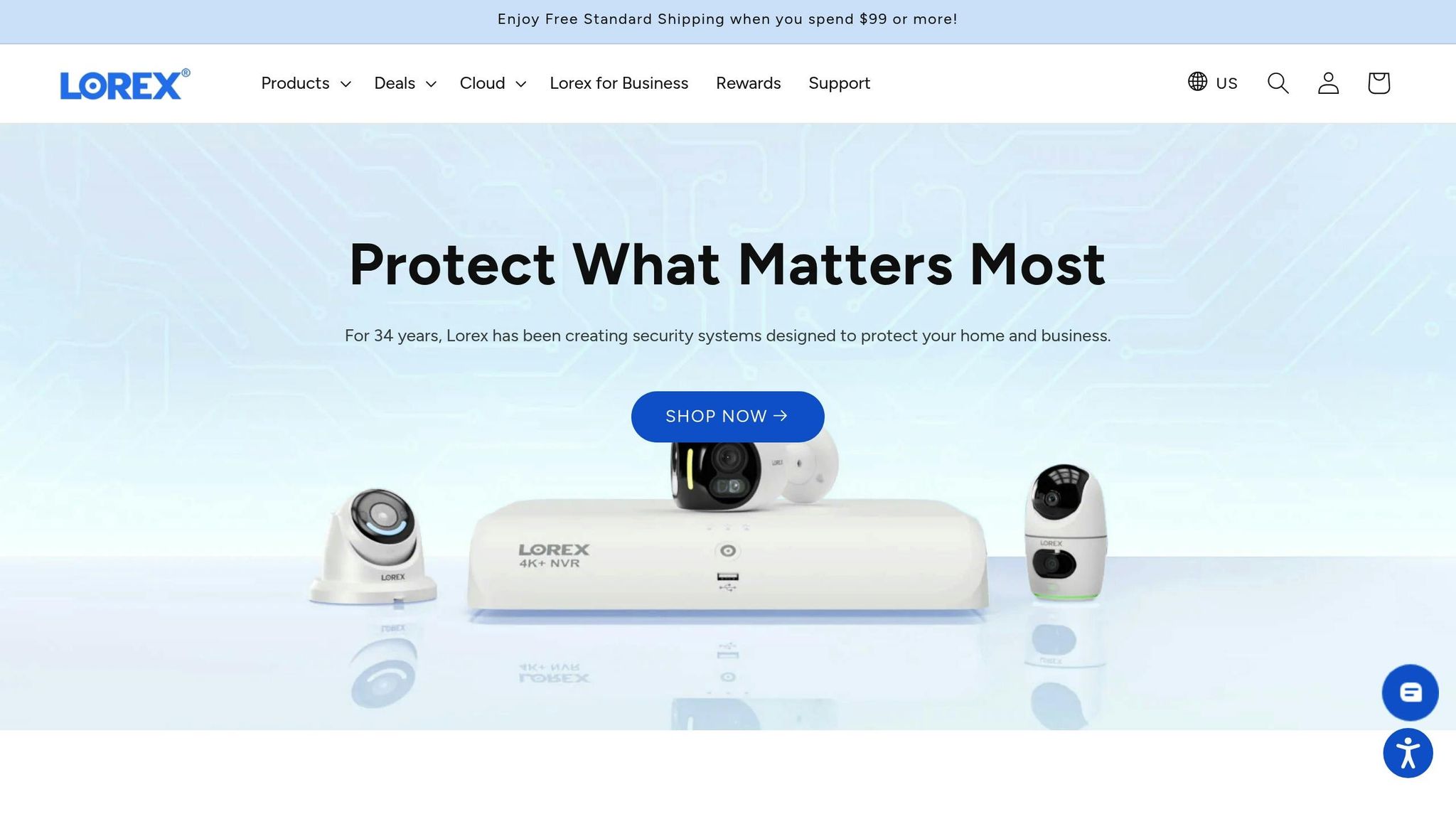
Lorex’s outdoor wireless camera systems are a smart choice for monitoring construction sites, offering flexible solutions that adapt to changing power availability during different project stages.
Power Source
These cameras come with two power options: battery-operated and wired models. The battery-powered versions are rechargeable and provide a cord-free setup, making them ideal for sites without power infrastructure in place. On the other hand, wired models connect to standard or hardwired electrical systems, ensuring uninterrupted operation without the hassle of recharging batteries. For early-stage construction sites where electricity isn’t yet available, battery and solar-powered options can secure the area until permanent power is installed. Once the site is powered, wired models take over, offering continuous surveillance with minimal upkeep.
Connectivity
The Lorex Fusion system enables construction managers to seamlessly integrate wired and wireless cameras into a single network. This hybrid approach allows for strategic placement: battery-powered cameras can cover areas with limited or no power access, while wired cameras handle locations with reliable electricity. This setup creates a versatile and efficient surveillance network that adapts to the evolving needs of a construction site.
Key Features
Designed to handle outdoor conditions, these cameras don’t rely on constant power connections, making them perfect for tough-to-reach locations. The Fusion system also supports gradual expansion, allowing sites to increase their surveillance coverage as power infrastructure develops over time.
Use Cases
These cameras excel in projects with multiple phases. During the early stages of construction – such as site preparation and foundation work – battery-operated models can monitor equipment and materials before power systems are operational. As the project advances and electricity becomes available, wired cameras can be deployed in high-activity areas, providing continuous, low-maintenance monitoring. This flexibility ensures that every phase of the construction process is covered, from start to finish.
4. SimpliSafe Outdoor Wireless Cameras

SimpliSafe’s outdoor wireless cameras stand out for their affordability and ease of use, offering a practical solution for quick and effective job site security. Priced at $199.99 per unit, these cameras deliver professional-grade surveillance without breaking the bank, making them a smart choice for immediate site protection needs.
Power Source
These cameras rely on rechargeable batteries and offer an optional solar charging panel, which is especially handy for construction sites with limited or no access to power. The battery system eliminates the hassle of running cables through active work zones, while the solar option ensures continuous operation in sunny conditions, reducing the need for frequent recharging.
Connectivity
Equipped with dual internal antennas, the cameras connect to a 2.4GHz Wi-Fi network (WPA2/WPA2/3 Mixed Mode), allowing for a quick, wire-free setup in just five minutes. The straightforward SSID and password configuration make it easy to get started. This reliable connectivity supports advanced features designed to enhance site security.
Key Features
SimpliSafe’s cameras offer 1080p HD resolution and a 140-degree field of view, providing clear, wide-angle footage that reduces the number of cameras needed to cover a site. With color night vision, they capture detailed images even in low light, addressing the fact that 39% of burglaries occur at night. Additional features include:
- Built-in siren: Helps deter intruders.
- Two-way audio: Allows real-time communication.
- AI-powered detection: Differentiates between people, vehicles, and animals, cutting down on false alarms.
"The SimpliSafe Outdoor Camera is an important piece of a SimpliSafe security system. It enables Active Guard Outdoor Protection on the Pro and Pro Plus monitoring plans. On top of that, it features 1080p HD resolution, color night vision, an IP65 weather rating, and a built-in siren."
These cameras are built to withstand tough conditions, boasting an IP65 weather rating and operating in temperatures ranging from -4°F to 122°F, making them well-suited for the often harsh environments of construction sites. Security.org has given them a high rating of 9.9/10, highlighting the effectiveness of features like the built-in siren, color night vision, and person detection.
Use Cases
The Active Guard Outdoor Protection feature enables remote security agents to intervene in real time, making these cameras ideal for safeguarding equipment storage areas, site perimeters, and vehicle parking zones. Their wide field of view efficiently monitors walkways, material storage spaces, and access points, while the AI detection system minimizes false alarms caused by animals or passing vehicles.
sbb-itb-aa28329
5. Verkada Wireless Security Cameras

Verkada offers a premium solution for those needing top-tier surveillance. Their wireless security cameras combine advanced AI features with industrial-grade solid-state storage, capable of holding up to 365 days of footage.
Connectivity
Verkada cameras rely on PoE-enabled gateways for their wireless functionality. For remote locations without traditional network access, the GC31 Cellular Gateway is available at $899 for indoor use and $1,299 for outdoor setups. This gateway simplifies deployment in areas where cellular connectivity is the only option. For locations with existing wireless networks, the GW31-E Wi-Fi Gateway, priced at $999, provides seamless integration. Software licensing starts at $299 annually, with an unlimited data plan available for $999 per year per video device.
"The GC31 makes cellular deployments truly plug-and-play. Feed it any power input and it will send both power and data to any Verkada device via PoE. And like all Verkada products, the GC31 is cloud-managed and natively integrates with other devices in our ecosystem. With the GC31, customers can effortlessly deploy Verkada wherever they need." – Verkada
These connectivity options ensure that Verkada cameras function reliably, no matter the environment.
Key Features
Verkada cameras are loaded with AI-driven tools and advanced monitoring capabilities. Their Bullet camera models, for instance, feature License Plate Recognition (LPR) to automatically detect and record vehicle license plates, making them ideal for monitoring site access. Other standout features include:
- Cross Camera Tracking to follow individuals of interest across multiple cameras and locations.
- Face Search for locating individuals by uploading a photo or searching existing records.
- Person History for reviewing high-resolution snapshots linked to video footage.
- Smart Filters to narrow down searches for specific people, vehicles, or objects.
- Tamper Detection that notifies administrators if cameras are obstructed, moved, or disabled.
The CB62-TE Telescopic Bullet Camera stands out with its night vision capabilities, offering an IR range of up to 164 feet. It’s also equipped with built-in heaters, allowing it to function in extreme temperatures as low as –40°F. With over 48 camera models available, Verkada’s systems integrate seamlessly with their other products, such as access control systems, sensors, and intercoms [39,40].
Use Cases
Verkada’s cameras have proven their effectiveness in real-world scenarios, particularly on construction sites. For example, W.T. Rich, a construction company, uses Verkada cameras to monitor high-risk areas like gates and trailers. Gene Massie, Director of IT at W.T. Rich, shared:
"We’ve had people hop fences, break into trailers, and even steal smaller items like brooms. With Verkada, we know the cameras are positioned strategically to catch everything."
These cameras don’t just prevent theft – they also capture critical evidence. In one instance, W.T. Rich used Verkada footage to document an accident near a job site, providing evidence that helped avoid a potential lawsuit. Features like Person of Interest alerts and motion notifications ensure real-time monitoring, enabling swift responses to suspicious activity across multiple locations [38,46].
6. Sensera Systems Site Cameras

Sensera Systems provides a practical solution for construction site surveillance, especially in remote areas. By combining solar power and cellular connectivity, their cameras are designed for locations without existing infrastructure. This makes them a solid choice for job sites that need reliable security without the hassle of extensive setup.
Power Source
Sensera cameras run primarily on solar power, which means they don’t need to rely on the electrical grid for energy. This self-sufficient setup is perfect for remote locations where access to electricity is limited.
Connectivity
The cameras transmit data using cellular networks, allowing site managers to monitor activity from virtually anywhere. This wireless feature ensures seamless remote access without the need for hardwired connections.
Key Features
Sensera’s cameras are designed with a plug-and-play approach. They operate independently, giving users the flexibility to place them wherever they’re needed – no power outlets or network cables required.
Use Cases
Construction sites are often targets for theft, with only about 25% of stolen materials ever recovered. Sensera cameras play a crucial role in addressing this issue.
Take HE Homes in Indiana, for example. By using a strong security system, they’ve managed to capture 80% of individuals attempting theft on their sites. Their theft-related losses are estimated at $10,000 to $15,000 per year – far lower than the $75,000 to $100,000 annual losses reported by some other builders.
"We have an excellent capture rate because of our cameras… If you look at the more reputable and professional builders, they use cameras and alarms because they want to catch people and discourage thievery." – Project Manager for HE Homes
Sensera’s solar-powered and cellular-connected cameras are a practical choice for preventing theft and collecting evidence, especially in remote locations where traditional security measures are hard to implement.
7. Rhombus Systems Wireless Cameras

Rhombus Systems provides adaptable wireless surveillance solutions tailored for the ever-changing needs of construction sites.
Power Source
Rhombus cameras offer multiple power options to suit different site conditions. They can run on traditional wired power through PoE connections or operate using solar power, making them ideal for locations without access to electricity.
Connectivity
The R230 Mini Dome camera takes connectivity to the next level with dual-band Wi-Fi. It uses WPA2-PSK authentication for secure access and automatically configures an IP address via DHCP [54,56]. Bandwidth usage is efficient – during regular operation, it consumes just 10–30 kbps, while active streaming requires between 120 and 1,400 kbps, depending on the camera’s resolution and type.
Key Features
These cameras are designed for quick deployment, eliminating the need for network cabling. They can be managed remotely through both browser and mobile platforms, adding flexibility for users.
Use Cases
Rhombus cameras are a practical choice for tackling challenges like theft, compliance monitoring, and safety on construction sites. Their wireless design makes them especially suitable for temporary setups.
A great example of their effectiveness comes from Torcon, a construction management company. Within a month, they installed over 15 Rhombus cameras across multiple locations. At one site where PoE cabling wasn’t feasible, they used a completely wireless camera powered by solar energy. This setup allowed Torcon to share live video streams with clients and remotely manage their entire security system.
"Rhombus Systems gave us visibility over areas we didn’t have before. Their system isn’t a nice to have, but a must have for any business." – Shawn Winters, Director of IT, Torcon
The ease of removing these cameras after project completion eliminates the costs and complications of temporary network cabling, making Rhombus an efficient and hassle-free solution for projects with defined timelines.
Tool Comparison Chart
When it comes to picking the best wireless surveillance tool for your construction site, several factors come into play. Here’s a breakdown of how different systems measure up across essential criteria for construction projects:
| Tool | Power Source | Connectivity | Key Features | Best Use Cases | Price Range |
|---|---|---|---|---|---|
| WCCTV Solar-Powered Surveillance Trailers | Solar with battery backup | 4G LTE cellular | Mobile trailers, weatherproof housing, remote monitoring | Large construction sites, temporary projects | $200–$400/month rental |
| Birdseye Surveillance Camera Systems | Solar with battery backup | Cellular connectivity | Real-time alerts, theft prevention, quick deployment | Equipment theft prevention, remote sites | $200–$400/month rental |
| Lorex Outdoor Wireless Cameras | AC power adapter, battery options | Wi‑Fi, some cellular models | Night vision, weather resistance, local storage | Established sites with power access | $125–$300 per camera |
| SimpliSafe Outdoor Wireless Cameras | Rechargeable battery | Wi‑Fi connectivity | Active monitoring by agents, real‑time alerts | Sites requiring immediate response | $79.99–$149.99 per camera |
| Verkada Wireless Security Cameras | PoE, battery backup options | Wi‑Fi, cellular backup | Cloud‑based management, AI analytics | Multi‑site management, compliance monitoring | $300–$500 per camera |
| Sensera Systems Site Cameras | Solar with battery backup | Cellular connectivity | Time‑lapse capabilities, rugged construction | Progress monitoring, remote locations | $200–$400/month rental |
| Rhombus Systems Wireless Cameras | PoE, solar options available | Dual‑band Wi‑Fi, DHCP configuration | Quick deployment, browser/mobile management | Temporary setups, flexible installations | $200–$400 per camera |
Key Considerations for Choosing a System
Power Supply
Power options can significantly influence your choice. Solar-powered systems like WCCTV and Birdseye are perfect for remote sites, offering flexibility where traditional power sources are unavailable. Battery-powered cameras, such as SimpliSafe, allow for easy placement without worrying about wiring. For sites with consistent power access, PoE (Power over Ethernet) systems like Verkada and Rhombus make setup easier by combining power and data in one cable.
Connectivity
Connectivity is another critical factor. Cellular-based systems, such as WCCTV, Birdseye, and Sensera, operate independently of local Wi-Fi, making them ideal for remote or temporary job sites. On the other hand, Wi-Fi-enabled systems like Lorex and SimpliSafe work best in areas with strong and reliable network coverage.
Costs
Costs can vary depending on whether you rent or buy. Rental options typically range between $200–$400 per month, while purchasing cameras can cost anywhere from $125 to $500 each. Don’t forget to budget for professional installation ($80–$200 per camera) and ongoing cloud storage fees, which can add $10–$30 per camera monthly.
Bandwidth Usage
Keep in mind that higher-resolution video or continuous streaming will consume more data. This can be a concern for sites on limited data plans, so make sure to factor this into your decision.
Tailored Solutions for Specific Needs
For construction managers juggling multiple job sites, cloud-based systems like Verkada are a great fit. These systems offer centralized management, making it easier to oversee operations across locations. For example, when paired with platforms like ABLEMKR, which simplifies workforce coordination, these tools become even more effective. If theft prevention is a priority, systems with active monitoring are ideal. For projects requiring compliance documentation, cameras with time-lapse capabilities, like those from Sensera, are a smart choice. Temporary installations, meanwhile, benefit from systems designed for quick deployment.
Conclusion
Construction sites face a staggering $1 billion in annual theft losses, with each incident averaging around $30,000 in damages. That’s why having the right wireless surveillance tools isn’t just a precaution – it’s a necessity to protect your budget and ensure projects stay on track.
Different tools cater to different needs: solar-powered systems are great for remote locations, Wi-Fi cameras excel where power is readily available, and cloud-based solutions make centralized monitoring a breeze. Understanding these options can help you make the best choice for your site.
When choosing a system, focus on three key factors: power supply compatibility with your site, dependable connectivity, and features tailored to your specific security concerns. Look for weather-resistant systems with an IP65 rating. Placing cameras strategically – like at entrances, exits, and equipment storage areas – can further enhance your site’s security coverage.
For even greater efficiency, consider integrating your surveillance tools with ABLEMKR. This allows you to oversee workers and assets in one place, helping improve timelines, safety measures, and resource management.
Whether your project is short-term or long-term, the right surveillance system can make all the difference. By evaluating your site’s needs, budget, and security priorities, you can invest in a solution that not only safeguards your site today but also sets the stage for smoother project execution tomorrow.
FAQs
How can wireless surveillance tools help cut security costs on construction sites?
Wireless surveillance tools are a game-changer for cutting construction site security expenses. By allowing remote monitoring, they reduce the reliance on on-site security staff, which can translate into major savings on labor costs. Beyond that, these systems act as a strong deterrent against theft and vandalism, helping to prevent losses and even lower insurance premiums. In fact, some setups have been reported to reduce security costs by up to 88%, making them a smart and efficient choice for safeguarding job sites.
What should I look for in a wireless surveillance system for a construction site?
When choosing a wireless surveillance system for a construction site, it’s essential to prioritize durability and weather resistance to withstand harsh outdoor environments. These features help protect the equipment from damage and ensure consistent performance.
You’ll also want a system with high-definition video quality and night vision to capture clear footage at any time of day or night. Features like remote access are invaluable, allowing you to monitor the site from anywhere. Tamper-resistant designs can help deter vandalism, while ample storage capacity with backup options ensures your footage is secure.
Finally, opt for systems that are easy to install and scalable, so they can adapt as your needs grow. Compatibility with other security tools is another key factor, making it easier to integrate the system into your overall security setup.
How do wireless surveillance systems enhance safety and compliance on construction sites?
Wireless surveillance systems are a game-changer for boosting safety and ensuring compliance on construction sites. With real-time monitoring, they keep a close eye on daily activities, making it easier to spot hazards, violations of safety gear requirements, and risky behaviors. This allows for quick action to address issues and stay aligned with OSHA regulations.
Beyond live monitoring, these systems also record everything. This footage becomes incredibly useful for investigating incidents and providing hands-on training for employees. By capturing site activities, they help lower the chances of accidents, promote accountability, and contribute to a safer environment for everyone on the job site.


