
The construction workforce landscape varies greatly across the U.S., with Texas leading the way in job growth and demand. Key drivers include rapid population growth, urbanization, and business-friendly policies. In contrast, states like California and Florida face unique challenges such as high labor costs, regulatory hurdles, and disaster recovery needs. Here’s why Texas stands out:
- Texas: Added 28,700 construction jobs (Mar 2024–Mar 2025). Growth fueled by housing, infrastructure, and energy projects. Challenges include skilled labor shortages and rising wages.
- Florida: Added 11,400 jobs. Demand driven by urban growth and climate-related projects. Labor supply imbalances persist.
- California: Reported job losses despite focus on housing and green building. High costs and strict regulations impact workforce needs.
Quick Comparison:
| Metric | Texas | Florida | California |
|---|---|---|---|
| Job Growth (Mar 2024–2025) | +28,700 | +11,400 | Job losses reported |
| Key Drivers | Housing, infrastructure, energy | Urbanization, climate recovery | Housing, green building |
Texas’ ability to attract projects and workers highlights the importance of efficient hiring practices and digital tools. Platforms like ABLEMKR are reshaping workforce management by connecting employers with skilled workers faster, addressing labor shortages, and improving project timelines. These solutions are critical as states compete for talent in a challenging market.
Worker shortage threatens pace of North Texas construction boom | NBCDFW

Construction Workforce Demand in Texas
Texas stands out as a leader in construction workforce growth, driven by factors like its booming population, business-friendly regulations, and major infrastructure projects. This rapid expansion opens up opportunities but also brings unique challenges for both employers and workers in the industry.
Texas Employment Numbers and Trends
Over the past few years, Texas has outpaced national averages in growing its construction workforce. Key metropolitan areas like Houston, Dallas-Fort Worth, Austin, and San Antonio have become the epicenters of this growth, thanks to rapid urbanization. Residential construction takes the lead, followed by commercial and heavy civil projects. These trends highlight the factors fueling the state’s construction boom.
What Drives Demand in Texas
Population growth is a key driver of construction demand in Texas. As more people move to the state, there’s an increasing need for housing, schools, and healthcare facilities. Additionally, Texas’ business-friendly policies have attracted major companies, sparking large-scale development projects. The state’s pro-business regulatory environment and investments in the energy sector, including renewable energy, further amplify the demand for skilled construction workers.
Challenges for Texas Employers
While the growth is promising, it comes with its share of hurdles. One of the biggest challenges is the shortage of skilled workers in specialized trades, leaving many job openings unfilled. Rising wages, while helpful in attracting talent, can increase project costs and squeeze contractor margins. Urban areas face intense competition for workers, while rural regions struggle with smaller labor pools, creating a workforce imbalance. On top of that, many experienced workers are nearing retirement, emphasizing the need for better training programs and apprenticeships. Seasonal fluctuations and severe weather events also pose risks, disrupting project schedules and workforce stability.
Construction Workforce Demand in Other Major States
California: Green Building and High Labor Costs
In California, the demand for construction workers is heavily influenced by the state’s focus on environmentally-friendly building practices and higher labor costs. With stringent environmental regulations in place, there’s a growing need for professionals skilled in areas like solar panel installation and energy-efficient construction techniques.
At the same time, higher labor costs significantly impact project budgets and hiring decisions. These unique factors shape California’s construction market differently from states like Texas, offering a glimpse into how workforce demands vary across the country.
What Creates Regional Differences
The construction workforce across the United States is anything but uniform. Each state faces its own mix of challenges and opportunities, which directly shape the demand for labor. To understand why states like Texas stand out in attracting both workers and construction projects, it’s essential to examine these regional differences.
State Policies and Regulations
Tax structures play a significant role in where construction companies choose to operate. Texas, for example, has no state income tax, making it an attractive option for both businesses and workers compared to states with higher tax burdens. This allows companies in Texas to offer competitive wages while keeping their profit margins intact.
Regulatory environments also create stark contrasts between states. Take California, where extensive environmental impact studies and lengthy permitting processes can delay projects for months. In contrast, Texas has a more streamlined approval process, enabling companies to start projects faster and hire workers more efficiently.
Building codes and safety requirements further highlight regional differences. States with complex building standards require workers to have specialized training and certifications, which can shrink the labor pool. Additionally, incentive programs – like tax credits for hiring local workers or funding for training initiatives – can shape workforce needs. Some states even focus on attracting specific types of projects, such as renewable energy installations or affordable housing, which influence labor demands in unique ways.
Economic and Population Changes
Population shifts are a major driver of construction demand. States like Texas and Florida, which offer more affordable living costs, are seeing an influx of people relocating from high-cost areas. This migration fuels the need for more housing, schools, shopping centers, and office buildings, creating a steady demand for construction workers.
The technology sector’s growth has also reshaped construction needs in certain areas. Regions with booming tech industries require specialized projects, such as data centers, research labs, and modern office spaces. These projects often pay higher wages, pulling skilled workers away from more traditional construction jobs.
The energy sector adds another layer of complexity. States investing in renewable energy need workers skilled in solar panel and wind turbine installation, while traditional energy hubs require expertise in oil and gas infrastructure. These energy-driven demands further shape the regional construction workforce landscape.
Labor Supply Problems
Labor supply issues vary widely between states, and Texas’ relatively balanced approach offers a stark contrast to the struggles seen elsewhere.
Skills gaps remain a persistent challenge. Some states benefit from strong vocational training programs that consistently produce skilled workers, while others face shortages due to aging workforces and limited access to trade schools or apprenticeships.
Demographic shifts exacerbate these problems. States with older populations are losing experienced workers to retirement and often have difficulty attracting younger replacements. This demographic imbalance forces many regions to compete aggressively for the available workforce.
Housing affordability is another pressing issue. In areas where rising construction costs have driven up housing prices, workers often find it difficult to live near their job sites. This can lead to long commutes or workers seeking opportunities in more affordable regions.
Finally, competition from other industries adds to the strain. In regions with thriving tech or energy sectors, construction workers may be lured away by higher-paying jobs in those fields. Additionally, different certification requirements between states can limit worker mobility, making it harder for states to address shortages by bringing in labor from other areas.
sbb-itb-aa28329
Texas vs. Other States: Side-by-Side Comparison
Let’s take a closer look at how key U.S. markets stack up when it comes to construction workforce demand. Texas, Florida, and California each reveal distinct patterns in job growth and the factors fueling that demand.
State Comparison Table
Here’s a snapshot of the numbers:
| Metric | Texas | Florida | California |
|---|---|---|---|
| Job Growth (Mar 2024 – Mar 2025) | +28,700 positions | +11,400 positions | Job losses reported |
| Primary Demand Drivers | Infrastructure, housing, tech | Rapid urban growth, population influx, disaster recovery and climate resilience projects | Demand for housing and green building initiatives |
Texas is leading the pack with 28,700 new jobs added, thanks to a combination of infrastructure projects, tech sector growth, and housing needs.
Florida, while adding a smaller but still notable 11,400 positions, sees its demand fueled by rapid urbanization, an influx of new residents, and projects tied to disaster recovery and climate resilience.
California, despite having a sizable workforce of 672,280 construction workers as of early 2025, faces job losses. However, there’s still activity in housing and green building initiatives, which continue to drive specific areas of demand.
This comparison highlights how regional factors shape workforce dynamics, offering a clearer picture of what’s driving growth – or setbacks – in these pivotal markets. These insights also open the door to exploring digital tools that can improve workforce management across such diverse landscapes.
Technology and Workforce Solutions
Traditional hiring methods just can’t keep up with the fast pace of today’s construction market. Workforce challenges in the construction industry have sparked a wave of digital innovation, creating tools that tackle key issues in workforce management across the country.
Digital staffing platforms are stepping in to bridge the gap, connecting skilled workers with employers almost instantly. By using mobile technology, data analytics, and streamlined workflows, these platforms are reshaping how the industry addresses workforce needs. This shift is especially critical in states with unique challenges, like Texas with its booming market or California where high costs dominate the landscape.
How Digital Platforms Transform Workforce Management
Workforce management platforms are changing the game for construction companies, making hiring and staffing projects faster and more efficient. Employers can now fill essential roles in just hours, thanks to pre-vetted candidates who meet industry standards. Whether a construction company in Houston is looking for an experienced electrician or a contractor in Florida needs heavy equipment operators, these platforms provide immediate access to a pool of qualified professionals.
Real-time tracking is another game-changer. It allows project managers to monitor worker hours instantly, helping them spot discrepancies right away. This level of oversight improves control over labor costs and keeps project timelines on track.
Beyond staffing, digital platforms simplify operations by automating tasks like onboarding, insurance, payroll, and taxes. This efficiency lets employers focus on what they do best – building and managing construction projects.
How ABLEMKR Supports Employers and Workers
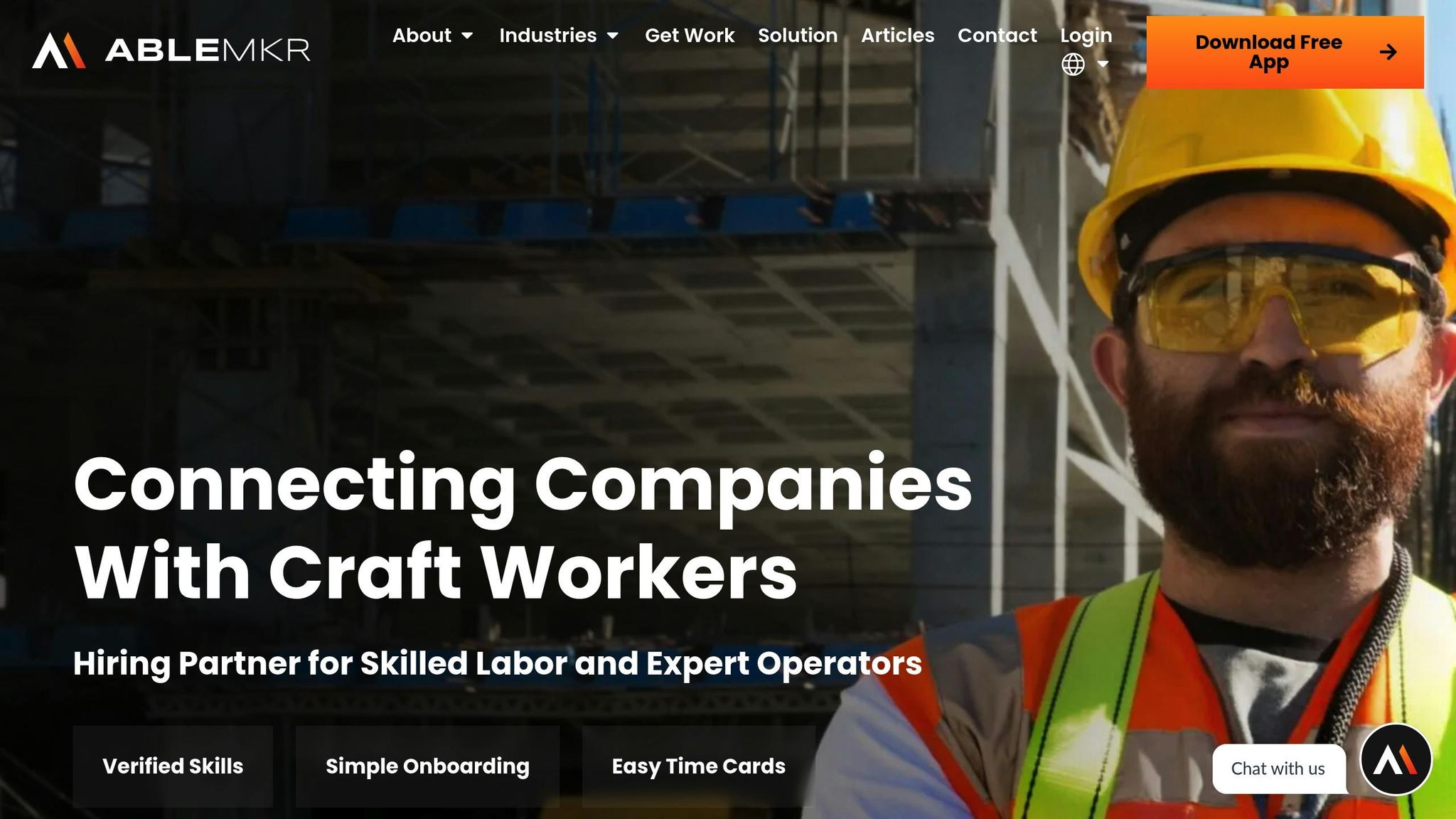
ABLEMKR builds on these digital advancements by addressing the construction industry’s specific needs, as highlighted in workforce comparisons across different states. The platform offers flexible staffing options, including flex workers, flex-to-hire, fractional hiring, and direct placement. Whether a company needs carpenters, masons, electricians, or heavy equipment operators, ABLEMKR delivers qualified tradespeople quickly.
Employers also gain more control over costs. Real-time market guidance eliminates the drawn-out negotiations typical of traditional hiring methods, which is especially useful in high-cost areas like California.
For workers, ABLEMKR simplifies the process. The platform’s mobile app streamlines onboarding and allows direct time card logging. It supports a wide range of construction trades, helping to address skilled labor shortages head-on. Workers can also manage their schedules, communicate directly with project contacts, and access detailed project information through the app, ensuring transparency and better decision-making.
ABLEMKR’s verified profile system adds another layer of accountability. Workers can showcase their skills and experience, while employers can review detailed profiles, ratings, and even the real-time location of their workforce.
This tech-driven approach is a major departure from traditional hiring practices. As workforce demands shift across regions, platforms like ABLEMKR offer the flexibility and efficiency needed to connect skilled workers with the right opportunities at the right time.
Conclusion: Future Construction Workforce Demand
The construction workforce in the United States is undergoing significant changes, with Texas standing out as a key player in both opportunities and challenges. While each region faces its own mix of demand drivers, costs, and regulations, one issue remains universal: the struggle to secure skilled labor in an increasingly competitive market.
Texas as a National Leader
Texas has emerged as a leader in construction workforce demand, fueled by rapid population growth, large-scale infrastructure projects, and industrial expansion. However, this growth has also highlighted an urgent shortage of skilled workers. The state’s booming construction sector has become a testing ground for creative workforce strategies, drawing attention from companies across the country looking to address similar challenges. This environment is pushing businesses to rethink hiring practices to meet the growing demand for skilled labor.
In addition to its economic growth, Texas offers a business-friendly climate that attracts both employers and workers. This environment allows companies to scale up their workforce quickly to keep pace with large-scale projects. The state’s success in attracting corporate relocations and infrastructure investments has had a ripple effect nationwide, encouraging broader adoption of digital tools for workforce management.
What This Means for Businesses and Workers
The challenges seen in Texas mirror those across the broader U.S. construction market. The nationwide shortage of skilled workers, especially in high-demand regions, is forcing businesses to rethink traditional hiring strategies. Employers are shifting toward real-time solutions, enabling them to quickly access experienced professionals and train new workers, rather than relying solely on local talent pools or lengthy recruitment processes.
This shift has led to the adoption of digital platforms that simplify workforce deployment, verify credentials, and ensure compliance. These tools help companies adapt to regional demands while maintaining consistent quality and efficiency.
For workers, the industry is moving away from informal hiring methods like word-of-mouth. Instead, structured training programs are becoming more common, offering a clear path to develop essential skills and pursue rewarding careers in high-demand trades. Digital platforms like ABLEMKR are also playing a crucial role, making it easier for workers to find opportunities across different markets. Whether it’s Texas’s industrial projects, Florida’s urban development, or California’s focus on sustainable construction, these platforms enable workers to follow demand and expand their career options.
Mobile-first technology is becoming a game-changer. Workers with verified skills and digital profiles are better positioned to seize opportunities, while companies that can quickly mobilize teams for urgent or remote projects are gaining a competitive edge.
As workforce needs continue to evolve, platforms that connect skilled talent with growing industry demands are proving essential. Tools like ABLEMKR’s mobile-first platform are bridging the gap, offering real-time matching and deployment solutions that address both employer and worker needs. States that embrace digital innovation while tackling regional workforce challenges will lead the next wave of growth in the construction industry.
FAQs
Why is Texas seeing faster growth in its construction workforce compared to states like California and Florida?
Texas is seeing a booming construction workforce, fueled by several key factors. The state continues to welcome a steady stream of new residents, along with companies relocating their operations. Big names like Tesla, Oracle, and Hewlett Packard have expanded their presence in Texas, creating a surge in demand for large-scale commercial and infrastructure projects.
On top of that, Texas’s strong focus on industries such as energy, technology, and logistics has ramped up construction activity across the state. With its lower cost of living, business-friendly environment, and thriving economy, Texas has become a hotspot for construction opportunities, even surpassing states like California and Florida in workforce demand.
What challenges does Texas face in meeting the demand for construction workers, and how is the state addressing them?
Texas is seeing a boom in construction jobs, but there’s a pressing issue: the industry is struggling to keep up with the demand for skilled workers. This shortage is causing project delays and driving up costs. Several factors are at play here, including an aging workforce, a decline in younger workers joining the trades, and challenges in both training and retaining employees.
To tackle these problems, Texas is ramping up efforts on multiple fronts. Initiatives include expanding apprenticeship programs to bring in fresh talent, stepping up recruitment campaigns, offering more training opportunities to sharpen skills, and improving workplace conditions to retain workers. The goal? To create a well-trained and reliable workforce that can keep pace with the state’s growing construction needs.
How are tools like ABLEMKR changing workforce management in construction, especially in areas with high demand?
Platforms like ABLEMKR are changing the game for workforce management in the construction industry. They streamline the process of hiring and managing workers in high-demand areas, tackling tasks like verifying credentials, scheduling shifts, and tracking workforce availability – all in real time.
By cutting down on administrative work and improving transparency, ABLEMKR empowers contractors to adapt quickly to regional demand fluctuations. This means projects can stay on schedule with access to a dependable and skilled labor force, even during the busiest times.


