
Struggling with staffing decisions in construction or energy? Here’s a quick breakdown of temporary vs. long-term staffing to help you choose the right approach for your projects:
- Temporary Staffing: Ideal for short-term needs, seasonal work, or fluctuating demand. It offers flexibility, lower upfront costs, and faster hiring through agencies but may involve high turnover and less team cohesion.
- Long-Term Staffing: Best for roles requiring expertise, stability, and alignment with company culture. It ensures long-term growth and employee loyalty but comes with higher upfront costs and less flexibility.
Quick Comparison:
| Criteria | Temporary Staffing | Long-Term Staffing |
|---|---|---|
| Cost | Lower upfront, agency fees (25%-75%) | Higher upfront, benefits, 15%-30% fees |
| Flexibility | High, scalable for short-term needs | Low, requires consistent work |
| Training Needs | Frequent for new hires | Long-term investment, less frequent |
| Commitment | Short-term, no benefits obligations | Long-term, full benefits and salary |
| Best For | Short-term projects, seasonal peaks | Leadership roles, complex operations |
Key Takeaway: Temporary staffing is great for flexibility and cost control, while long-term staffing builds stability and expertise. Many companies find success by blending both approaches to match project demands and business goals.
Temporary Staffing: Features and Applications
What is Temporary Staffing?
Temporary staffing refers to hiring workers on a short-term or contractual basis to meet specific needs without committing to permanent employment arrangements. This approach allows businesses to quickly access skilled labor while avoiding the long-term obligations tied to traditional hiring.
"Temp construction staffing is essential for construction companies to meet project demands, fill temporary labor shortages, and complete projects on time and within budget." – MGR Workforce
The process is typically managed by staffing agencies, which handle tasks like recruitment, screening, hiring, payroll, benefits administration, and compliance. This setup removes much of the administrative burden from companies and enables them to have qualified workers ready to go in just a few days.
Temporary staffing can take various forms, including project-based, seasonal, and temp-to-perm arrangements. Its flexibility in terms of contract length, skill sets, and workforce size makes it well-suited for industries like construction and energy, where project demands are often unpredictable.
Common Applications in Construction and Energy
Temporary staffing plays a critical role in construction and energy sectors, particularly in situations where permanent hiring isn’t practical. A prime example is during plant shutdowns or turnaround projects. These are periods of intense maintenance work that require large, skilled crews for a few weeks or months. Since these needs are temporary, hiring permanent staff isn’t cost-effective.
Capital construction projects also benefit from temporary staffing. These projects often have tight timelines and changing skill requirements depending on the construction phase. Temporary workers allow companies to adjust their workforce size and expertise as needed.
Labor shortages further highlight the importance of temporary staffing. With 89% of construction firms struggling to fill positions and 72% identifying labor shortages as their biggest challenge, temporary staffing offers an effective solution. For example, in 2023, the construction industry added over half a million jobs to meet demand, but permanent hiring alone couldn’t fill these gaps quickly enough.
In the energy sector, temporary staffing supports various activities, such as designing, constructing, operating, maintaining, and upgrading power plants. This is especially important during the transition to renewable energy, which demands workers with specialized skills in emerging technologies. Temporary arrangements make it easier to access this expertise without committing to long-term hires.
Seasonal fluctuations also drive the need for temporary staffing. Construction projects often peak during favorable weather, while energy companies face higher demand during extreme temperature periods. Temporary workers help manage these predictable surges without burdening companies with excess labor costs during slower times.
Pros and Cons of Temporary Staffing
Temporary staffing offers clear benefits, but it’s not without its challenges. One of the biggest advantages is cost efficiency. Companies save on benefits, training, and long-term salaries for short-term needs. While staffing agencies typically charge a markup of 25% to 100% of the worker’s salary, they eliminate recruitment, administrative, and benefits-related expenses.
Flexibility is another major perk. Businesses can scale their workforce up or down based on project demands without dealing with layoffs or lengthy hiring processes. This adaptability is particularly useful for handling project changes, delays, or shifting client requirements.
"Using contingent (or variable/contract) skilled workers on your projects helps you complete them on time without taking on the added costs of a full-time employee." – Tradesmen International
Staffing agencies also provide access to a larger pool of skilled professionals. Their extensive networks make it easier to find qualified workers quickly, which is especially valuable when internal recruiting falls short.
However, temporary staffing does have its downsides. High turnover can disrupt project continuity, particularly in complex jobs where team cohesion is vital. Temporary workers might not have the same familiarity with your company’s processes and safety protocols as permanent employees, which can lead to inefficiencies.
Frequent training is another challenge. Each new temporary hire requires orientation on your procedures and safety standards, which can become repetitive and costly. If these workers only stay for a short period, the investment in training might not yield significant returns.
Reliability is also a concern. Temporary workers may not feel as invested in your project’s success as permanent employees, which can affect team dynamics and overall workflow. Established teams might face disruptions when temporary staff are introduced.
Ultimately, the decision to use temporary staffing depends on your project’s needs. For many construction and energy companies, the speed and flexibility it offers outweigh the drawbacks – especially when supported by clear expectations, thorough onboarding, and strategic management.
Long-Term Staffing: Features and Applications
What is Long-Term Staffing?
Unlike temporary staffing, long-term staffing focuses on stability and fostering growth over an extended period. This approach involves hiring employees on a permanent or extended contract basis, often lasting months or even years. It’s not just about filling roles – it’s about integrating individuals into the company’s processes and culture for the long haul.
Permanent hires are key to sustained growth, serving as the foundation for a company’s strategic goals and long-term vision. These employees are more than just workers; they become an integral part of the organization, contributing to its culture and evolving alongside it.
The main distinction lies in the level of commitment. Long-term staffing allows companies to invest in their workforce through career development programs and continuous training. Employees, in turn, gain specialized expertise in company-specific procedures, safety measures, and operational standards – knowledge that’s hard to replicate in short-term arrangements.
Long-term employees also play a crucial role in shaping and preserving organizational culture. They don’t just know how to get things done – they understand the reasoning behind specific approaches, which is invaluable in complex industries like construction and energy.
Common Scenarios for Long-Term Staffing
While temporary staffing is effective for short-term needs, long-term staffing is essential for roles requiring deep expertise and continuity. It’s particularly suited for leadership positions, technical roles, ongoing operations, and client-facing jobs where alignment with the company’s culture and long-term goals is critical.
In the energy sector, for instance, ongoing operations like power plant management, renewable energy maintenance, and utility infrastructure oversight benefit significantly from long-term staffing. These roles demand workers who can navigate complex systems and adapt as technologies change. Notably, 45% of the energy workforce requires some level of tertiary education, highlighting the sector’s need for skilled, long-term employees.
Safety-critical positions, such as environmental compliance officers, safety inspectors, and emergency response coordinators, also require long-term staffing. These roles involve extensive training and certifications to meet regulatory and company-specific standards, making long-term commitment essential.
Pros and Cons of Long-Term Staffing
Long-term staffing offers a range of benefits, particularly when it comes to building loyalty, improving productivity, and retaining talent.
Investing in training and certifications for long-term employees often delivers strong returns. For example, in the U.S. construction industry, recruiting a single worker can cost between $3,000 and $8,000. Retaining experienced staff can help companies save money while maintaining operational efficiency.
Another advantage is institutional knowledge. Long-term employees develop a deep understanding of company processes, client expectations, and operational nuances over time. This allows them to handle challenges effectively, anticipate potential issues, and mentor new team members.
"Keeping the right balance of long- and short-term staff is a key element of running a successful and cost-effective business in today’s market… With bottom lines rising and profit margins shrinking for all but the largest businesses, the careful management of each position on the payroll is essential to survival in many cases." – Robert Morello, Houston Chronicle
Long-term employees also strengthen organizational culture. A survey found that 77% of job seekers consider a company’s culture before applying, highlighting the role long-term staff play in maintaining a strong and appealing workplace environment.
However, there are challenges. Long-term staffing comes with higher upfront costs, including benefits, training, and ongoing salaries, which remain constant even during slower periods. This can strain budgets, particularly when project demands fluctuate. Additionally, long-term staffing reduces flexibility; while temporary workers can be let go after a project ends, permanent employees require consistent work, which may limit a company’s ability to adapt quickly to market changes.
Ultimately, the choice between temporary and long-term staffing depends on a company’s strategic goals. Organizations focused on building lasting client relationships, developing proprietary systems, or maintaining consistent quality often find that the benefits of long-term staffing outweigh the higher initial costs and reduced flexibility.
Temporary vs. Permanent Employees: Who Should You Hire?
sbb-itb-aa28329
Key Differences Between Temporary and Long-Term Staffing
When it comes to workforce strategies, construction and energy companies need to weigh the differences in cost, flexibility, and management between temporary and long-term staffing. Each approach has its advantages, depending on the specific needs of a project or organization.
Cost Comparison
Temporary and long-term staffing come with distinct financial considerations. Temporary staffing typically avoids the long-term commitments tied to salaries and benefits. Staffing agencies charge an hourly markup – usually between 25% and 75% of the worker’s base pay. This fee covers expenses like payroll taxes, workers’ compensation, and agency overhead.
Long-term staffing, however, involves higher upfront costs. These include full salaries, health benefits, retirement plans, and even severance packages if needed. Companies also face additional expenses – about 35% to 40% of an employee’s hourly wage – to account for payroll taxes, insurance, and administrative overhead. If hiring through an agency, permanent placements add a one-time fee of 15% to 30% of the employee’s annual salary. For example, hiring a project manager with a $75,000 salary could mean paying placement fees between $11,250 and $22,500.
| Cost Factor | Temporary Staffing | Long-Term Staffing |
|---|---|---|
| Upfront Investment | Lower initial costs | Higher upfront investment |
| Agency Fees | 25%-75% hourly markup | 15%-30% of annual salary (one-time) |
| Benefits & Insurance | Handled by agency | Company responsibility |
| Long-term Commitment | None required | Ongoing salary obligations |
| Administrative Costs | Minimal | 35%-40% additional employer costs |
Beyond cost, companies must also consider how staffing models align with project demands and timelines.
Flexibility and Scalability
Temporary staffing shines when quick adjustments to workforce size are needed. This is especially useful in industries with fluctuating project timelines. For example, energy companies often need to rapidly build solar installation teams for new projects, scaling back once the work is complete. Temporary staffing offers the agility to meet these short-term needs without overcommitting resources.
On the other hand, long-term staffing provides stability. Consistent teams can build institutional knowledge and foster loyalty over time. In construction, where labor needs vary across project phases, choosing the right mix of temporary and permanent workers can ensure smooth project execution.
Workforce Management and Compliance
Workforce management is another area where temporary and long-term staffing differ significantly. Staffing agencies often take on the responsibility of navigating complex compliance requirements. This includes managing employment laws, tax obligations, workers’ compensation, and unemployment insurance. For temporary workers, agencies usually act as the employer of record, handling tasks like I-9 verification and ensuring compliance with hiring standards.
"Compliance is a shared responsibility between companies and their staffing partners. Contingent staffing should enhance compliance, not bypass it." – Eastridge
In contrast, companies hiring long-term staff must manage all employment-related obligations directly. This includes proper worker classification and staying up-to-date with regulatory requirements. Misclassifying employees as independent contractors can lead to audits and penalties from the IRS. Additionally, high turnover in a contingent workforce can point to compliance issues like delayed payments or inadequate safety measures. Working with staffing firms that prioritize compliance can help mitigate these risks.
With approximately 3 million temporary and contract employees working for staffing companies in the U.S. each week, the temporary staffing industry has developed robust systems to handle compliance and administrative tasks. This allows companies to access skilled workers without the need to build extensive HR infrastructure for short-term projects.
Choosing the Right Staffing Solution
Selecting the best staffing approach requires a careful look at your project’s needs and goals. Deciding between temporary and long-term staffing can seem challenging, but understanding the key factors involved can make the process much smoother.
Factors to Consider When Choosing a Staffing Model
The duration of your project is one of the first things to think about. Short-term projects often align better with temporary staffing, while long-term initiatives benefit from the consistency and reliability of permanent employees. For instance, a construction company working on a three-month bridge repair might find it more practical and cost-efficient to hire temporary workers rather than onboard permanent staff for such a short-term need.
Your budget is another crucial factor. Temporary staffing can help cut costs by avoiding expenses like health insurance and retirement benefits, making it a smart choice for companies with tight financial constraints. On the other hand, permanent employees may require a higher upfront investment but can deliver greater value over time through reduced turnover and higher productivity.
Skill requirements also play a big role. If your project demands highly specialized expertise – like installing advanced solar panels or operating unique drilling equipment – temporary staff with niche skills can be a highly effective solution. However, for roles that require deep institutional knowledge or company-specific expertise, permanent hires are often the better choice.
Think about your long-term business goals, too. Permanent staff are essential for building company culture and driving continuous growth, while temporary staffing provides the flexibility to adapt to shifting market conditions without long-term commitments.
Seasonal or fluctuating demands are another consideration. For example, energy companies may see a surge in demand for solar installations during spring and summer. Temporary staffing allows you to scale your workforce up during busy periods and scale down when things slow down.
In times of economic uncertainty, temporary staffing offers the agility to respond quickly to market changes. A balanced approach, combining both temporary and permanent staff, can provide stability while keeping your business flexible.
"Keeping the right balance of long- and short-term staff is a key element of running a successful and cost-effective business in today’s market… With bottom lines rising and profit margins shrinking for all but the largest businesses, the careful management of each position on the payroll is essential to survival in many cases." – Robert Morello, Houston Chronicle
Finally, technology adoption can influence staffing decisions. For example, when rolling out new construction management software or energy monitoring systems, temporary experts can bring immediate expertise, while long-term staff development ensures your team can manage these tools over time.
These considerations lay the groundwork for a more efficient staffing strategy, which is exactly where ABLEMKR comes in.
How ABLEMKR Simplifies Staffing Decisions
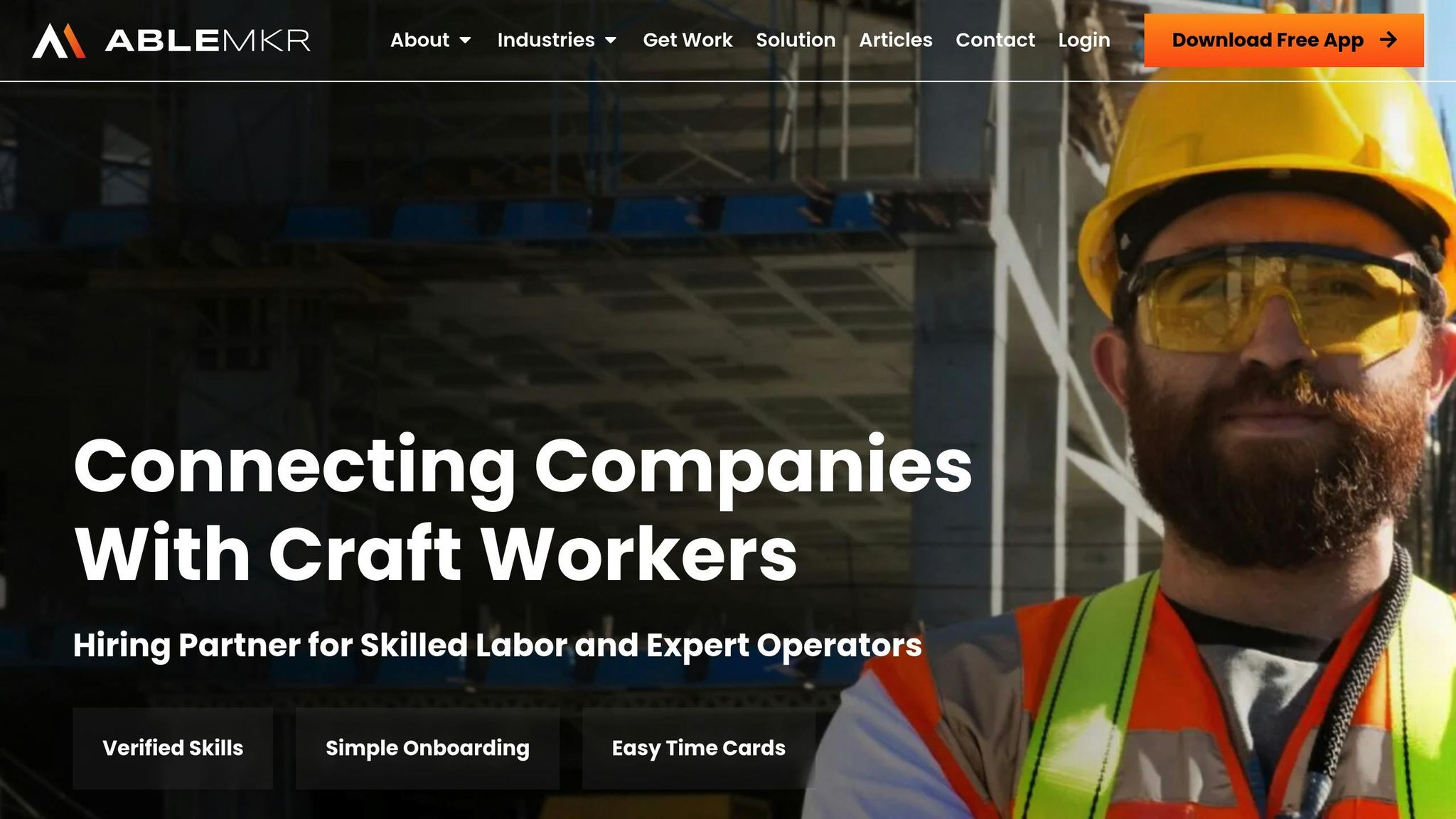
ABLEMKR makes staffing decisions easier by offering tailored solutions that fit your needs. Their services include flex workers, flex-to-hire options, fractional hiring, and direct placements, giving companies the flexibility to meet specific project demands.
The platform simplifies the hiring process by vetting and interviewing candidates based on your requirements, saving you the hassle of lengthy screenings. With a workforce management portal, you get clear visibility into candidate qualifications and project costs, ensuring transparency every step of the way.
One standout feature is ABLEMKR’s transparent pricing structure. You can set your own rates without the back-and-forth of rate sheet negotiations. Workers log their hours through the mobile app, giving you real-time updates on labor costs and project progress.
Administrative tasks like onboarding, payroll processing, supplemental benefits, and even payroll taxes are handled through ABLEMKR’s services, bundled into a straightforward service fee. This not only reduces administrative headaches but also includes access to workers’ compensation and optional general liability insurance.
For companies unsure about committing to permanent hires, ABLEMKR offers a flex-to-hire option, allowing you to evaluate workers on actual projects before extending a long-term offer. For ongoing staffing needs, their subscription hiring partner program provides a steady stream of candidates while potentially lowering costs.
Their mobile app further streamlines workforce management by enabling real-time communication, appointment scheduling, worker profile viewing (complete with ratings), and location tracking. These tools help project managers coordinate teams effectively, even across multiple job sites.
Focusing on skilled craft workers in industries like construction, oil and gas, and mining, ABLEMKR understands the unique challenges these sectors face. Their rigorous screening process ensures workers meet your standards, reducing the risk of hiring mismatches that could delay projects or increase costs.
Conclusion: Making the Right Choice
Deciding between temporary and long-term staffing requires careful consideration of your project’s unique demands and overall business objectives. As highlighted earlier, temporary staffing shines when flexibility and cost management are priorities, while permanent staffing supports long-term growth and helps build a cohesive company culture.
In industries like construction and energy, labor costs often make up over 50% of operational expenses. This means staffing decisions can significantly influence both project success and profitability. With cost overruns averaging 79% of initial budgets and schedule delays reaching 52%, having a well-thought-out workforce strategy is more important than ever.
Many successful companies strike a balance by combining temporary and permanent staffing. This hybrid approach offers the best of both worlds: the stability of a skilled core team alongside the adaptability of temporary workers to meet changing demands. This strategy is especially effective for managing projects with varying complexities, durations, and budgets. Additionally, factors like extreme environments – whether arctic, desert, or mountainous – and specific contract types can heavily influence how you structure your workforce.
To simplify these decisions, platforms like ABLEMKR provide tailored solutions. Whether you need short-term support, flex-to-hire options, or direct placement, ABLEMKR offers transparent pricing, advanced workforce management tools, and access to thousands of pre-vetted professionals. These resources take much of the uncertainty out of staffing, allowing you to focus on project execution.
As the construction and energy sectors continue to evolve, strategic workforce planning remains a critical factor in staying competitive. By understanding the differences between temporary and permanent staffing and utilizing efficient staffing platforms, you can craft a workforce strategy that meets today’s challenges while positioning your company for long-term success.
FAQs
What should I consider when choosing between temporary and long-term staffing for a construction or energy project?
When choosing between temporary and long-term staffing for construction or energy projects, it’s essential to weigh factors like project duration, cost, and flexibility. Temporary staffing works well for short-term needs, such as seasonal tasks or unexpected surges in demand. On the other hand, long-term staffing is better suited for ongoing operations or projects that require consistency and continuity.
Cost is another critical factor. Temporary staffing might save you money upfront since it avoids long-term commitments, but it often comes with higher hourly rates. Long-term staffing, while involving additional expenses like benefits and tax contributions, provides more stability over time.
Lastly, consider the scope and skill requirements of your project. Temporary staffing offers the flexibility to adjust your workforce as demands fluctuate, making it a great option for projects with variable workloads. Long-term staffing, however, is ideal for roles that need specialized skills or extensive training. Platforms like ABLEMKR can simplify the hiring process for both types of staffing, offering tools like verified worker profiles and clear cost breakdowns to help you make informed decisions.
What are the best ways to handle high turnover and frequent training challenges in temporary staffing?
To tackle the challenges of high turnover and constant training in temporary staffing, businesses can start by developing efficient onboarding processes and delivering straightforward, focused training right from the beginning. Creating a supportive workplace that encourages open communication and acknowledges employee achievements can also enhance engagement and loyalty.
Providing competitive wages, opportunities for career growth, and cross-training programs makes temporary staff feel appreciated and equipped to handle various tasks. These efforts not only help reduce turnover but also cut down on repetitive training, ultimately saving time and resources.
How can businesses effectively balance temporary and long-term staffing to ensure project success and control costs?
To manage the balance between temporary and long-term staffing effectively, businesses need a solid plan and the flexibility to adjust as needed. Start by analyzing project timelines and workload trends to predict staffing requirements. Temporary staff can fill gaps during busy periods or for short-term needs, while long-term positions should aim to keep skilled employees who provide stability and consistency.
It’s also important to focus on workforce development, maintain open communication about pay and benefits, and create a supportive work environment. These efforts can boost both retention and overall productivity. Using technology platforms like ABLEMKR can simplify the hiring process by matching the right workers to the right roles quickly and efficiently. Together, these strategies help keep projects on track, control costs, and respond to changing industry demands.


