
Staffing remote hydropower sites is challenging due to isolation, harsh conditions, and the need for specialized skills. Workers must handle technical tasks, maintain safety, and manage logistics like housing and transportation. Here’s a quick breakdown of how to tackle these challenges:
- Define Roles Clearly: Identify technical and operational needs, from engineers to maintenance staff. Small sites may need just a few workers, while large projects like BC Hydro‘s Site C employ thousands.
- Prioritize Safety: Workers need certifications (e.g., OSHA, NERC) and equipment for rugged terrain and extreme weather.
- Streamline Hiring: Use pre-vetted platforms like ABLEMKR to find skilled workers quickly and verify certifications.
- Plan Logistics: Arrange transport, housing (e.g., modular units), and emergency systems for remote locations.
- Use Technology: Real-time tracking tools simplify compliance, payroll, and workforce management.
Step 1: Identify Your Workforce Needs
List Required Roles and Responsibilities
Staffing for remote hydropower projects varies widely depending on the project’s size and complexity. For instance, the 11-MW Mystic Lake plant in Montana operates efficiently with just three team members: a foreman and two journeyman operator/maintenance workers. These individuals handle everything from plant operations and maintaining 14 miles of rugged mountain roads to managing a private camp water filtration system and serving as a National Weather Service reporting station.
In contrast, large-scale projects like BC Hydro’s Site C require significantly larger teams. As of May 2023, the project employed 5,985 workers, contributing about 13,000 person-years of direct employment. This workforce included engineers, hydrologists, technicians, and essential support staff like camp managers, kitchen crews, and on-site medical teams.
Remote locations often call for employees with diverse skill sets. At Mystic Lake, for example, staff must navigate extreme conditions, including a grueling 2.5-mile trek through 5-foot deep snow – a journey that can take up to four hours each way – while also managing emergency communications and fire reporting.
Once roles and responsibilities are outlined, it’s important to establish clear operational standards and safety protocols to address the unique demands of these environments.
Determine Safety and Compliance Requirements
For remote hydropower sites, physical fitness and proper certifications are non-negotiable. Workers must be prepared for rugged terrain and extreme conditions, equipped with personal protective equipment (PPE) such as waterproof hiking boots, Gore-Tex outerwear, and high-capacity backpacks. At Mystic Lake, for example, the camp sits at 6,500 feet above sea level, while the dam is at 7,600 feet – requiring workers to carry 50-lb packs through challenging, high-altitude terrain.
"Perhaps the most challenging aspect of working at a remote hydro facility is making sure your equipment orders are as complete as possible. It can take several days for deliveries to reach you."
- Ryan L. Olson, Hydro Foreman, PPL Montana
Safety measures should be tailored to the specific risks of the site. A thorough hazard audit can identify potential dangers like avalanches, hazardous wildlife, tree wells, and severe weather. Workers need specialized PPE, including waterproof hiking boots with air bob soles, Gore-Tex gear rated for extreme temperatures, and backpacks capable of carrying 35 to 100 lbs of equipment.
For larger projects, having dedicated health and safety personnel is critical. For instance, BC Hydro’s Site C project prioritized safety by employing safety coordinators and on-site medical staff to maintain a strong safety-first culture.
Step 2: Find Qualified Workers Using Pre-Vetted Platforms
Use Workforce Platforms to Speed Up Hiring
Hiring in-house can take one to two months per position, which is far too long during emergency shutdowns or planned outages. Pre-vetted platforms offer a faster alternative by providing access to skilled workers who already have verified certifications and relevant experience.
Platforms like ABLEMKR are designed to match workers with roles based on factors such as certifications, safety training, availability, and location. This level of precision is especially important for specialized roles, like those involving SCADA controls or high-voltage systems, where technical expertise and physical endurance are essential. ABLEMKR simplifies the entire process – hiring, onboarding, and ensuring compliance – making it an effective choice for critical energy projects throughout the U.S. This efficiency allows teams to focus on confirming technical credentials without delays.
Verify Worker Certifications and Experience
Speed is important, but it’s just as crucial to ensure that workers have the right qualifications. Every candidate should undergo thorough background checks, and their certifications – such as NERC, OSHA, and NEC – must be verified.
For hydrologic technicians, the American Institute of Hydrology (AIH) offers a tiered certification system that aligns with varying project needs. For example:
- Level I: Suitable for general data collection tasks, requiring 1 year of experience.
- Level II: Focused on technical work within specific disciplines, requiring 5 years of experience.
- Level III: Reserved for leadership roles and advanced technical work, requiring 12 years of experience.
Using platforms that specialize in technical recruitment ensures that workers meet the necessary certifications and have the expertise to handle the demands of hydropower projects, including the unique challenges of remote deployment.
Hydroelectric Facility Operator
Step 3: Plan Logistics for Remote Deployment
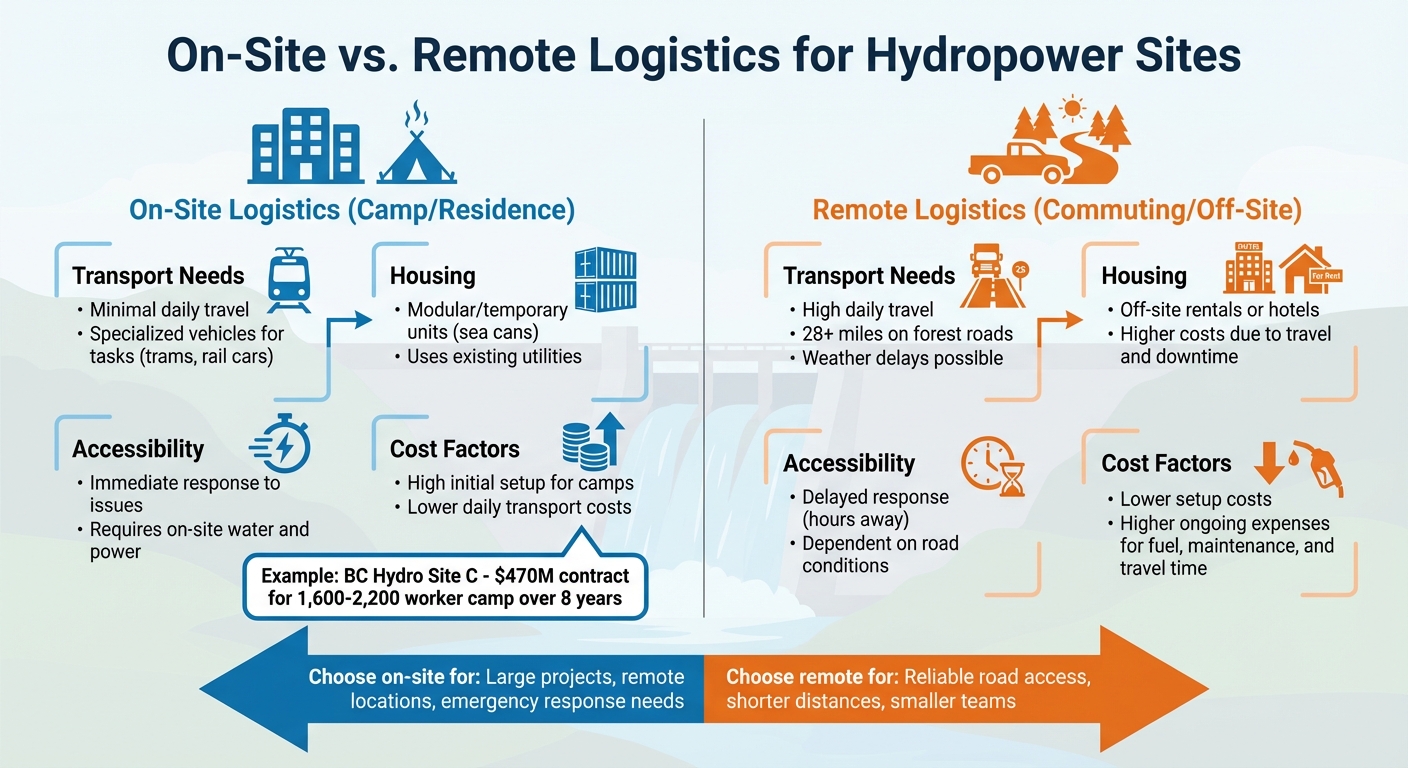
On-Site vs Remote Logistics Comparison for Hydropower Staffing
Arrange Transportation and Housing
Getting to and staying at remote facilities often requires creative solutions. Transportation can involve multiple modes, such as inclined railways, specialized trains, trams, cable cars, or rugged forest service roads. For example, at the Mystic Lake hydro plant, staff maintain 14 miles of mountain road year-round, dealing with challenges like snow plowing in winter and clearing debris after storms.
Housing is another key consideration that impacts both worker well-being and operational efficiency. In remote areas, modular buildings or repurposed shipping containers (commonly called "sea cans") are practical options, especially when local construction resources are limited. A great example of this is Innergex’s April 2024 proposal for housing at the Upper Lillooet River hydro facilities. Located roughly 47 miles from the nearest town and 28 miles down a forest service road, the project used six modular buildings. These buildings took advantage of existing water, electricity, and septic connections from an old construction camp, providing accommodations for up to 20 workers on a rotational basis while keeping costs under control.
Winter conditions add another layer of complexity. Snow-blocked primary routes may require secondary hiking paths, and workers should be equipped with snowshoes and ski poles. In remote canyons, where cell service is often unavailable, it’s essential to have reliable telephone or satellite communication systems for emergencies.
To keep morale high during extended deployments, amenities like satellite TV and fitness facilities can make a big difference – even if they’re set up in converted sea cans.
These logistical steps are critical for evaluating the most practical setup options.
Compare On-Site vs. Remote Logistics
Choosing between on-site housing and daily commuting involves balancing costs, accessibility, and safety. Each option comes with its own set of trade-offs. Here’s a closer look at how these two approaches stack up:
| Factor | On-Site Logistics (Camp/Residence) | Remote Logistics (Commuting/Off-Site) |
|---|---|---|
| Transport Needs | Minimal daily travel; specialized vehicles needed for tasks (trams, rail cars). | High daily travel; 28+ miles on forest roads; weather delays possible. |
| Housing | Modular/temporary units (sea cans); uses existing utilities. | Off-site rentals or hotels; higher costs due to travel and downtime. |
| Accessibility | Immediate response to issues; requires on-site water and power. | Delayed response (hours away); dependent on road conditions. |
| Cost Factors | High initial setup for camps; lower daily transport costs. | Lower setup costs; higher ongoing expenses for fuel, maintenance, and travel time. |
On-site camps demand a larger initial investment but offer quicker response times and fewer daily transportation risks. For large-scale projects, this can be a major commitment. For instance, BC Hydro awarded a $470 million contract to design, build, and operate a worker camp for the Site C project. This facility housed up to 1,600 workers, with the option to expand to 2,200, over an eight-year period.
On the other hand, remote commuting might be better for projects with reliable road access and shorter distances to nearby towns. However, this approach can lead to delays during emergencies and exposes workers to more weather-related risks.
sbb-itb-aa28329
Step 4: Maintain Compliance, Training, and Safety Standards
Set Up Safety and Training Programs
Operating remote hydropower sites means navigating a web of federal and state regulations. The Federal Energy Regulatory Commission (FERC) handles licensing, while the U.S. Army Corps of Engineers oversees permits for navigable waters. On top of that, OSHA standards (29 CFR 1910) ensure workplace safety.
It’s essential to check local OSHA-approved State Plans, which must meet or exceed federal requirements. As OSHA explains:
"State Plans are required to have standards and enforcement programs that are at least as effective as Federal OSHA and may have different or more stringent requirements."
Hydropower sites often involve high-risk tasks like working at heights, entering confined spaces, or managing energized systems. To reduce risks, confined spaces should be tested for hazards before entry, with a standby person ready to assist if needed. Statkraft, a global leader in hydropower, highlights the importance of proactive safety measures:
"We believe a safe working environment is a matter of choice, not chance."
Statkraft’s "safety bootcamps" in Albania are a great example of how targeted training can improve safety outcomes, underscoring that safety is a deliberate effort.
Once safety protocols are in place, keeping certifications up to date becomes the next priority.
Monitor and Update Worker Certifications
Effective safety programs rely on workers maintaining up-to-date certifications. Centralized digital platforms now make it easier to track certifications across remote sites. These cloud-based systems can flag expiring certifications, monitor training progress, and ensure compliance with FERC Division of Dam Safety and Inspections (D2SI) and NERC CIP standards.
For instance, Siemens Energy’s Remote O&M Support Center in Erlangen uses a centralized platform to manage certifications and provide operational support during emergencies. Andrew Robson, Product Owner for O&M at Siemens Energy, describes the benefits:
"A Remote Operations Center (ROC) is a centralized hub that enables 24/7 remote monitoring, diagnostics, and control of power generation assets – including conventional power plants, wind farms, grid interconnectors, and energy storage facilities."
This model allows project managers to oversee certifications across multiple sites without needing administrative staff on the ground at every location.
In the U.S., ABLEMKR simplifies hiring for remote hydropower projects by connecting employers with pre-vetted workers who have the required certifications and safety training. Their platform also tracks compliance in real time, giving employers visibility into worker status and ensuring regulatory standards are consistently met.
Step 5: Use Workforce Management Tools for Real-Time Tracking
Track Worker Status in Real Time
Once you’ve nailed down proper staffing and compliance, the next step is keeping everything running smoothly with real-time tracking. Managing remote hydropower sites – like the Mystic Lake example – requires constant operational awareness. When your team is small and spread across challenging terrain, knowing exactly where everyone is and what they’re doing becomes essential.
Cloud-based platforms make this possible by offering instant updates on worker locations, task progress, and safety compliance. Forget outdated methods like radio check-ins or end-of-day reports. With these tools, you can monitor productivity and performance metrics as they happen. This approach helps managers move away from micromanaging and instead focus on setting clear expectations for work hours, roles, and schedules – especially useful when dealing with teams across different time zones.
Real-time tracking also tackles the logistical hurdles unique to remote hydro operations. For example, when you can see task completion rates in real time, it’s easier to coordinate maintenance schedules and parts deliveries, reducing the risk of costly delays.
Take ABLEMKR’s mobile-first platform as an example. It offers geo-location tracking and real-time status updates, allowing project managers to confirm that workers are on-site and progressing on tasks – all without constant phone calls. This visibility is a game-changer, especially when workers take on additional responsibilities like weather reporting for the National Weather Service or fire reporting for local law enforcement. Just like staffing and training protocols, real-time tracking strengthens operational reliability. Plus, features like automated payroll and compliance tracking make managing remote teams even more efficient.
Automate Payroll and Compliance Tracking
Beyond monitoring day-to-day activities, automating administrative tasks like payroll is key to staying efficient. Manual payroll processing often leads to errors, particularly when you’re dealing with remote sites, varying shifts, and complex tax rules. Integrated payroll systems eliminate the hassle of paper timesheets and scattered spreadsheets, making the process smoother and more accurate.
Modern workforce platforms should include features like GPS verification and geofencing to ensure workers are at the correct location before clocking in. This prevents time theft and ensures accurate billing. Look for systems that directly integrate with your existing payroll software through APIs or automated exports, saving you from manual data entry. These platforms should also track certifications and flag expiring credentials automatically – vital for staying compliant with FERC and OSHA regulations.
ABLEMKR takes this a step further by embedding compliance tracking directly into its system. It provides real-time updates on certifications, safety training, and regulatory documents. The platform automatically monitors expiration dates and sends alerts, ensuring you’re always audit-ready. Workers also benefit from on-time payments, avoiding the usual delays or disputes.
For project managers juggling multiple remote sites, this level of automation is a game-changer. Instead of chasing down timesheets or manually verifying certifications, you can focus on the bigger picture. As NES Fircroft puts it:
"Understanding global regulations is an ongoing conversation and strategic consideration when managing a remote workforce across multiple regions."
With the right tools, these complexities are handled in the background, allowing you to prioritize safe and efficient hydropower operations.
Conclusion
Staffing remote hydropower sites requires individuals who bring both technical expertise and the physical stamina to thrive in rugged, isolated environments. These workers must possess journeyman-level skills, adaptability, and the ability to perform under challenging conditions.
Given that nearly 31% of new hires leave within their first three to six months due to inadequate onboarding, precision in the hiring and deployment process is critical. Workforce platforms that handle pre-vetting, certifications, and compliance help reduce administrative headaches, minimizing turnover and avoiding disruptions to operations.
Tools like ABLEMKR simplify this process by matching pre-vetted workers based on their certifications, location, and availability. With built-in compliance tracking and automated payroll, project managers gain real-time workforce insights without constant oversight. When paired with detailed logistical planning – covering transportation, housing, equipment management, and compliance monitoring – these platforms ensure your remote sites remain productive and safe.
The hydropower sector is expanding, partly because it complements renewable energy sources like solar and wind. This growth fuels the need for skilled workers. By combining precise staffing strategies, efficient logistics, and advanced technology, your operations can stay resilient. Platforms like ABLEMKR, which streamline onboarding and maintain compliance, help create a workforce equipped to meet the unique demands of remote hydropower projects.
FAQs
What roles are essential for staffing remote hydropower sites?
Staffing remote hydropower sites calls for a team of skilled professionals capable of managing operations in tough, isolated conditions. Essential positions include foremen, journeyman operators, and maintenance workers, who are responsible for running the plant and maintaining equipment. These roles demand specialized technical expertise and a strong commitment to safety.
In addition to these hands-on roles, positions like site managers, safety officers, and logistics coordinators play a crucial part in overseeing compliance, implementing safety measures, and addressing the logistical challenges that come with remote locations. Building a team with a wide range of skills is key to supporting every stage of hydropower projects, from initial construction to long-term operation.
Platforms such as ABLEMKR make the staffing process easier by matching pre-screened workers to job sites based on their certifications, safety qualifications, and proximity. This allows companies to quickly assemble the right team, even in the most hard-to-reach areas.
What are the best ways to ensure safety and compliance at remote hydropower sites?
Keeping remote hydropower sites safe and compliant means addressing their unique challenges with a focused strategy. Start by putting solid safety protocols in place. This includes identifying potential hazards, providing proper safety equipment, and ensuring clear communication systems are in use. Regular safety inspections and well-thought-out emergency response plans are also key to staying compliant.
For workers in these isolated areas, it’s important to establish check-in procedures, use real-time monitoring tools, and offer training programs that emphasize safety. Tools like ABLEMKR can make this process easier by streamlining workforce deployment and tracking compliance. These platforms help project managers confirm that workers are trained, equipped, and prepared for the demands of remote operations. Taking these steps can lead to a safer and more productive work environment.
What are the key logistical challenges of staffing remote hydropower sites, and how can they be managed effectively?
Remote hydropower sites come with their own set of hurdles, mainly due to their secluded and tough-to-access locations. Getting workers and equipment to these areas often demands specialized transportation – think helicopters, boats, or rugged off-road vehicles. On top of that, unpredictable weather, limited infrastructure, and high access costs can lead to delays and operational headaches.
To tackle these issues, meticulous logistical planning is key. This means scheduling work during periods of better weather, setting up temporary housing or camps near the site, and relying on dependable transport solutions. Tools like ABLEMKR can also make a big difference. By simplifying hiring, onboarding, and compliance, this workforce management technology helps deploy crews quickly and efficiently. Streamlining these steps not only reduces delays but also boosts safety and keeps operations running smoothly, even in the most challenging locations.


