
The solar industry is growing fast, with jobs for installers expected to increase by 22% between 2022 and 2032. Certifications are a cost-effective way to enter this booming field, with options under $1,000 that focus on key skills like safety, installation, and electrical standards. Certified installers can earn over $11,000 more annually than uncertified workers, making these programs a smart investment. Here’s a quick overview of seven affordable certifications:
- NABCEP PV Installation Professional: Industry-recognized, requires 58 hours of training, costs under $1,000.
- OSHA 10-Hour Construction Safety: Covers workplace safety basics, costs $60–$150.
- SEIA Solar 101 Online Course: Intro to solar technologies, discounted for SEIA members.
- 360training Solar Courses: Self-paced, beginner-friendly, priced under $1,000.
- Udemy Solar Installation Courses: Affordable basics, starting at $200.
- HeatSpring NABCEP Prep Courses: Advanced training for $895 (exam fee extra).
- GWO Basic Safety Training: Focused on utility-scale solar safety, costs under $1,000.
These certifications help you build skills and connect to job opportunities through platforms like ABLEMKR, which matches certified professionals to projects. Start your solar career with these affordable options today!
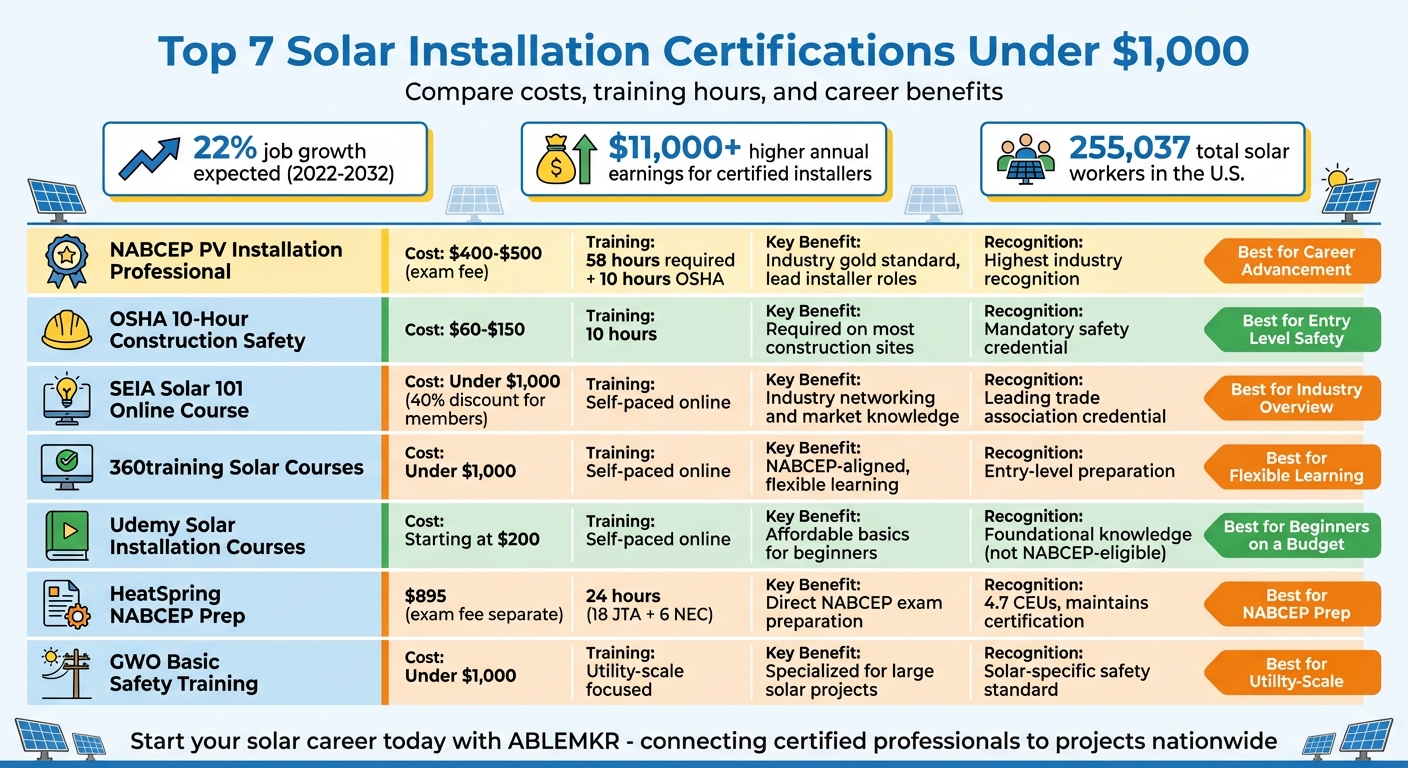
Top 7 Solar Installation Certifications Under $1000 Comparison Chart
1. NABCEP PV Installation Professional
Relevance to Solar Installation
The North American Board of Certified Energy Practitioners (NABCEP) certification is widely regarded as a top credential in renewable energy. It highlights expertise in areas such as array installation, commissioning, operations, maintenance, construction fundamentals, and safety practices. Between 2011 and 2021, the photovoltaic solar industry saw a 159% workforce increase, adding around 150,000 jobs and bringing the total to 255,037 solar workers across the U.S.. This growth underscores the value of certifications like NABCEP for advancing careers in this field.
Career Benefits and Industry Recognition
Earning a NABCEP certification boosts credibility and reassures employers about a candidate’s qualifications.
"With a NABCEP PV Associate credential, students enhance their employment opportunities with distinguished resumes. Employers have confidence they are hiring or promoting someone who is committed to the profession." – Pueblo Community College
This credential not only strengthens resumes but also signals a commitment to professional excellence.
Prerequisites and Requirements
To qualify for this certification, candidates need 58 hours of solar training: 18 hours focused on general solar energy and 40 hours on advanced installation techniques. Additionally, 10 hours of OSHA Construction Safety training is mandatory. Applicants must also submit documented proof of relevant solar experience through the NABCEP Candidate Eligibility Form. Many aspiring professionals complete programs like a 16-credit Solar Photovoltaic Technician certificate to gain the foundational skills required for success on the exam.
Cost (Under $1,000)
Programs such as GRID Alternatives‘ Installation Basics Training align closely with NABCEP’s job task analysis. Including exam fees, the total cost for certification stays below $1,000, making it an accessible investment for career growth.
sbb-itb-aa28329
2. OSHA 10-Hour Construction Safety
Relevance to Solar Installation
The OSHA 10-Hour Construction Safety certification plays a key role for anyone starting out in solar installation jobs across the U.S.. Solar installers regularly face risks like working at heights, dealing with electrical systems, and enduring tough weather conditions. This certification offers training in construction and electrical safety, addressing these common workplace hazards.
It also ties directly to the job task analysis for the NABCEP PV Installer Specialist, focusing on safety measures needed during array installation, commissioning, and maintenance. Many training programs bundle OSHA-10 with other certifications to ensure participants meet safety standards expected in the industry.
Career Benefits and Industry Recognition
Having an OSHA-10 card, which is often required on construction sites, shows employers that you understand workplace hazards and prioritize safety. With the solar industry adding roughly 150,000 jobs in the last decade, bringing the workforce to 255,037 people, showcasing safety knowledge can help you stand out in a competitive job market.
Prerequisites or Requirements
The OSHA 10-Hour certification is open to anyone, as it doesn’t require a specific educational background. The course includes 10 hours of training on construction safety, identifying hazards, and basic electrical practices. While the course itself is straightforward to access, solar installation jobs often demand physical fitness, stamina, and the ability to work at heights. This affordable certification provides a solid foundation for building a strong resume.
Cost (Under $1,000)
The cost of the OSHA 10-Hour certification typically ranges from $60 to $150, making it an economical option. Organizations like GRID Alternatives often include OSHA-10 in their training programs. Many programs also combine it with CPR/First Aid and NABCEP prep courses to further enhance your qualifications.
3. SEIA Solar 101 Online Course
Relevance to Solar Installation
The Solar Energy Industries Association (SEIA), the leading national trade group for the U.S. solar industry, offers the Solar 101 program to provide essential training on modern solar and energy storage technologies. This course tackles key industry challenges while giving both newcomers and experienced professionals a solid understanding of how the solar market functions. It’s designed to prepare participants for the technical demands of solar installation and boost their professional standing.
Career Benefits and Industry Recognition
By completing the Solar 101 program, you’ll gain the skills to effectively communicate with other industry professionals and develop a deeper understanding of the business side of solar installation. The course emphasizes practical challenges and current market trends, making it a strong addition to your professional development portfolio and signaling your commitment to staying ahead in the field.
Prerequisites or Requirements
The course is accessible to anyone, regardless of technical background, making it an excellent starting point for those new to the industry. Before signing up, confirm your employer’s SEIA membership status, as this affects pricing. To register, you’ll need to create an account on the SEIA Online Learning Center and verify membership for any applicable discounts.
Cost (Under $1,000)
For SEIA members, discounts of up to 40% bring the course cost to well below $1,000. This makes the Solar 101 program an affordable way to enhance your skills and knowledge in solar installation while taking advantage of membership benefits to reduce costs even further.
4. 360training Solar and Electrical Courses

Relevance to Solar Installation
If you’re looking to expand your knowledge in solar installation, 360training provides a variety of self-paced online courses. These include topics like electrical safety, renewable energy, and the fundamentals of array installation. The courses are designed to align with NABCEP’s PV Installer Specialist framework, ensuring they meet industry standards for solar professionals.
Career Benefits and Industry Recognition
By completing these courses, you’ll gain essential skills in commissioning and Operations & Maintenance (O&M). Beyond technical knowledge, these programs enhance your readiness for employment and open doors to networking opportunities with industry partners. These benefits can give you a competitive edge in the growing field of solar installation.
Prerequisites or Requirements
These courses are ideal for entry-level workers and require no prior experience in electrical work. However, basic math skills and computer literacy are recommended for success. While physical fitness and endurance can be helpful for the hands-on aspects of solar work, they are not mandatory for enrollment.
Cost (Under $1,000)
One of the highlights of 360training is affordability. Their courses and packages are priced under $1,000, making them accessible to many learners. Plus, the self-paced format allows you to study at your convenience, eliminating the need for travel or taking time off work. If you’re just starting in solar installation, these courses provide a budget-friendly way to kickstart your career.
5. Udemy Solar Installation Courses

Cost (Under $1,000)
Udemy stands out for its budget-friendly solar installation courses, with most priced under $200. Compared to professional programs that range from $1,999 to $2,545, this is a much more affordable option. Plus, Udemy often runs discounts, making these courses even more accessible. Despite the low cost, the courses cover key principles of solar installation.
Relevance to Solar Installation
These courses focus on the basics, such as PV system sizing, electricity fundamentals, and installation techniques for both grid-tied and off-grid systems. They are designed for beginners, offering the foundational knowledge needed to explore more advanced certifications later.
Career Benefits and Industry Recognition
While Udemy courses can help you develop skills for entry-level solar installation work, they don’t fulfill the educational requirements for NABCEP certification exams. That said, they are a great way to start learning about the field without a major financial commitment, serving as a stepping stone for further professional training.
Prerequisites or Requirements
You don’t need prior experience in solar or electrical work to get started. All you need are basic computer skills and a grasp of fundamental math to handle calculations and navigate the platform. The self-paced structure allows you to learn at your own speed, making it convenient for anyone looking to break into the solar industry.
6. HeatSpring NABCEP Prep Courses
Cost (Under $1,000)
The HeatSpring NABCEP PV Installer Specialist Prep bundle is priced at $895. This package includes 18 hours of Job Task Analysis (JTA) training, 6 hours of NEC training, and practice exams. Keep in mind, the NABCEP exam fee of $500 is not included and must be paid separately.
Relevance to Solar Installation
This course is tailored to meet the advanced training requirements for the NABCEP PV Installer Specialist (PVIS) certification. It covers key areas such as safety planning, conductor installation, grounding, bonding, and battery setup. You’ll also get hands-on preparation using the electronic version of the NEC, which is crucial for tackling the 4-hour, 70-question certification exam. By completing the program, you’ll earn 4.7 CEUs and a certificate that can be submitted with your NABCEP application. This training focuses on practical skills essential for excelling in solar installations.
Career Benefits and Industry Recognition
Holding NABCEP credentials demonstrates expertise and dedication to photovoltaic systems, making you stand out to employers. Additionally, HeatSpring courses fulfill the 30-hour advanced PV training requirement needed every three years to maintain your certification.
Prerequisites or Requirements
Before enrolling, you must complete the OSHA 10-Hour Construction Safety Training. You’ll also need to document 6 Project Credits from installations – 2 credits for systems between 1–999 kW and 3 credits for systems 1 MW or larger. Be prepared to submit system summaries, permits, and a signed letter from a supervisor verifying your hands-on experience.
Sources: [[10]](https://www.ccac.edu/workforce-and-community/workforce-development/solar-photovoltaic-technician .php)
7. GWO Basic Safety Training for Solar
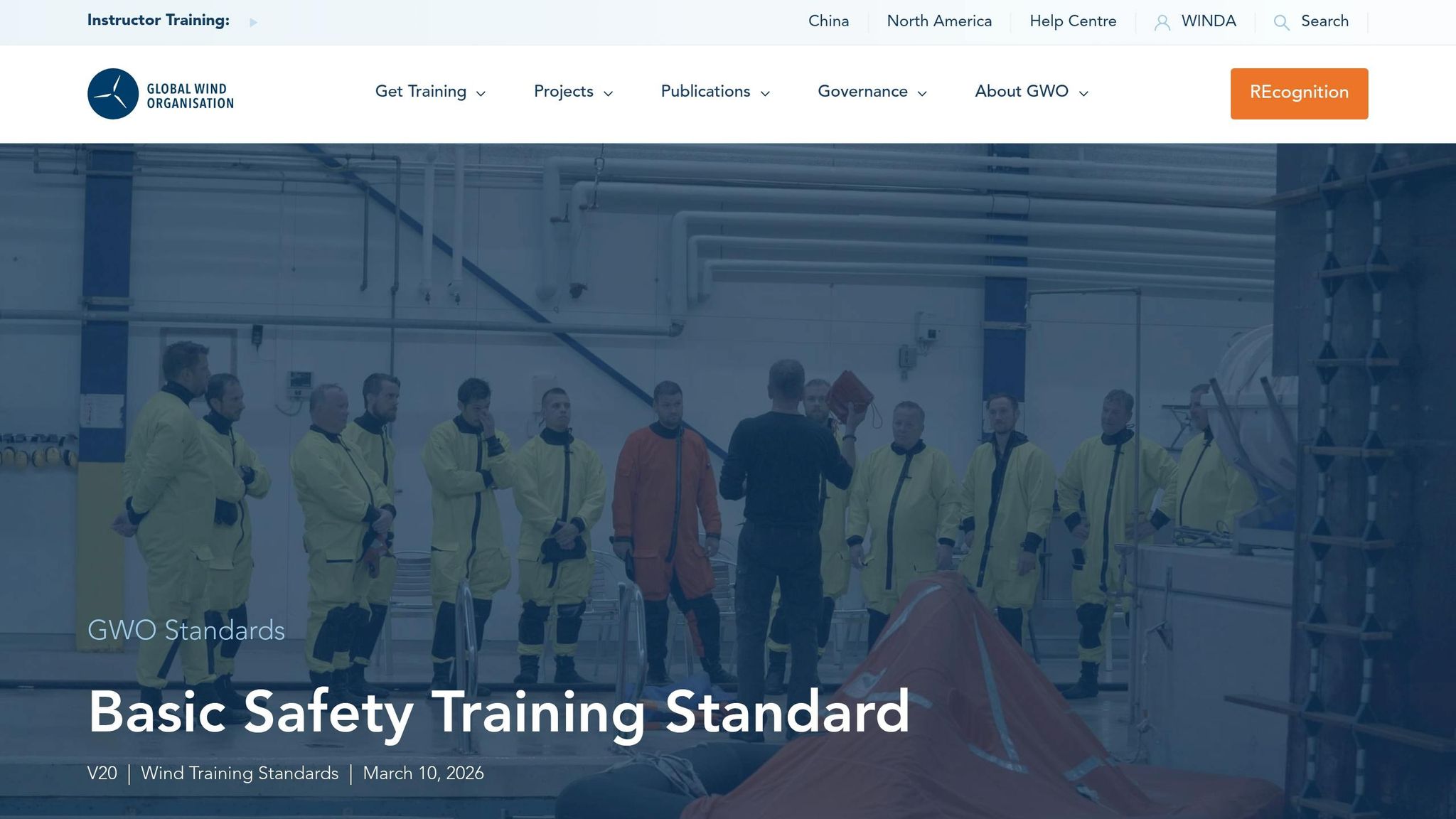
Cost (Under $1,000)
The Global Wind Organisation (GWO) offers Basic Safety Training tailored for solar applications, typically priced at under $1,000. This makes it an affordable choice for those working on utility-scale solar projects. Its focus on solar-specific safety challenges provides a practical and budget-friendly option alongside other safety certifications.
Relevance to Solar Installation
GWO training stands out by addressing the unique safety needs of solar installations. With its Solar Training Standard, GWO has expanded its safety framework to cover utility-scale solar PV projects. The program emphasizes essential safety practices, including managing electrical hazards, working safely at heights, and proper manual handling techniques. This ensures technicians are well-prepared to navigate the specific risks associated with large-scale solar installations.
Everything You Need To Know: NABCEP PV Installer Specialist (PVIS) Solar Certification
Certification Comparison Table
Choose a solar certification that aligns with your career aspirations, budget, and expertise. Below is a breakdown of the highly regarded NABCEP PV Installation Professional certification.
| Certification Name | Cost | Training Duration | Key Requirements | Primary Career Benefit |
|---|---|---|---|---|
| NABCEP PV Installation Professional | $400–$500 | 3-hour exam | 2 years of experience | Recognized as the industry standard; qualifies for lead installer and system designer roles |
This certification stands out for its balance of affordability and strong industry recognition. Known as the "gold standard", NABCEP certification not only enhances your professional credibility but can also make employers eligible for tax incentives. Keep in mind, it requires renewal every three years through continuing education. Be sure to account for these renewal costs when planning your certification path to support your long-term career growth.
Conclusion
Affordable certifications make it easier to step into the solar installation field. With programs costing less than $1,000, workers can meet industry standards, secure vital safety credentials, and prepare themselves for a rapidly growing sector. This reflects the industry’s push towards accessible, skill-focused training in renewable energy.
The right certification ensures you’re ready to work immediately. NABCEP-aligned programs help workers meet safety codes and simplify project approval processes. Plus, many manufacturers now require certified installers to maintain labor and product warranties, making certification a must to meet client demands.
Once certified, finding work becomes much simpler. ABLEMKR’s platform connects pre-vetted workers to solar and energy projects based on their certifications, safety training, and location, creating opportunities across the U.S. Certified workers gain access to flexible, well-paying jobs, while employers enjoy real-time insights into worker credentials and compliance, eliminating traditional hiring challenges.
The certifications highlighted in this guide offer an affordable way to start a career in solar installation. Paired with tools like ABLEMKR that link certified professionals to critical projects, you’ll be ready to take advantage of one of the fastest-growing career opportunities in renewable energy.
FAQs
What certification should I get first for solar installation?
The NABCEP PV Installation Professional certification is an excellent starting point for those in solar installation. Widely respected in the industry, it highlights your expertise, commitment to safety, and adherence to key industry standards. Earning this certification can set you apart from others in the field and open doors for career growth in the solar energy sector.
Do these courses qualify me to take a NABCEP exam?
Yes, finishing the CCAC Solar Photovoltaic Technician program makes you eligible to take the NABCEP Associate exam. This exam is a key milestone on the path to achieving NABCEP certification, which can help you grow your career in solar installation.
What extra costs should I plan for beyond the course price?
When calculating the total cost of a course, don’t forget to account for extra expenses. These might include certification exam fees, licensing costs, safety equipment, and any tools or materials you’ll need. On top of that, you might need to set aside funds for ongoing training or additional certifications to keep up with industry standards.


