
The transition to clean energy is creating millions of new jobs, but many workers need updated skills to qualify for these roles. Reskilling programs are stepping in to help, offering specialized training for careers in solar, wind, battery manufacturing, and energy efficiency. These programs also focus on making opportunities accessible to underrepresented groups. Here’s a quick look at some of the top options:
- ABLEMKR Workforce Platform: A mobile app connecting skilled workers to clean energy jobs, with a focus on construction, utilities, and heavy infrastructure.
- Energy Transition Academy (ETA): A hybrid program for mid-to-senior professionals, focusing on leadership and clean energy systems.
- Renewable Energy Institute (REI): Online and hands-on courses in solar, wind, and energy management, with industry-recognized certifications.
- Binghamton University‘s Battery Academy: Hybrid training in battery manufacturing and energy storage, with strong job placement rates.
- State Technical College Programs: Affordable, localized training in solar, wind, and HVAC systems, with hands-on learning and quick job placement.
- Clean Energy Leadership Institute (CELI): A leadership-focused program for professionals in policy, finance, and advocacy roles.
These programs vary in delivery format, cost, and focus areas, making it easier to find one that matches your career goals and schedule.
Quick Comparison
| Program | Focus Areas | Format | Certifications | Cost | Accessibility |
|---|---|---|---|---|---|
| ABLEMKR Workforce Platform | Construction, utilities, mining | Mobile-first platform | Verified skills and compliance | Free for workers | U.S.-based, energy corridors |
| Energy Transition Academy | Leadership, clean energy systems | Hybrid | Course certificates | Free/paid | Nationwide |
| Renewable Energy Institute | Solar, wind, energy management | Online and in-person | Industry-recognized | $500–$2,500 | Nationwide |
| Binghamton Battery Academy | Battery manufacturing, energy storage | Hybrid | Completion certificates | Tiered tuition | New York and online |
| State Technical Colleges | Solar, wind, HVAC, construction | Hybrid | NABCEP, OSHA, state diplomas | $1,500–$4,000 | Local state campuses |
| Clean Energy Leadership Institute | Policy, finance, advocacy | Hybrid | Leadership certificates | $1,000–$1,500 | U.S.-based |
These programs are helping workers transition into clean energy jobs while addressing growing industry demand. Whether you’re looking for hands-on training, leadership development, or flexible online options, there’s a program to suit your needs.
Building the Clean Energy Workforce of Tomorrow
1. ABLEMKR Workforce Deployment Platform
ABLEMKR is a digital platform connecting skilled workers with opportunities in the energy transition sector. Originally focused on construction, the company has broadened its reach to include energy and extractive industries, acting as a link between experienced tradespeople and the rapidly evolving energy landscape.
With operations in major U.S. cities and vital energy hubs, ABLEMKR is particularly suited for workers with transferable skills who want to explore roles in renewable energy, utilities, and heavy infrastructure projects. This digital solution facilitates job mobility across the country.
Delivery Format
ABLEMKR is a mobile-first platform, giving workers access to job opportunities nationwide through their smartphones. By using geo-location, availability, and credential data, the platform matches workers to job sites quickly and efficiently. This approach allows for flexible job access and rapid deployment, whether it’s for last-minute shutdowns, remote pipeline repairs, or scheduled development projects.
Industry Focus
The platform is designed to address the diverse demands of key energy sectors, including oil and gas, mining, utilities, construction, and heavy infrastructure. ABLEMKR’s construction expertise supports projects like solar farms and wind turbine foundations. Its mining capabilities focus on critical material extraction for battery production, while its oil and gas experience helps workers transition into a variety of clean energy roles.
Certification and Accreditation
ABLEMKR’s system prioritizes verified skills and compliance, ensuring smooth transitions for workers. By matching individuals to projects based on their certifications, safety training, and compliance records, the platform maintains high industry standards. Workers are pre-vetted to meet these requirements, and real-time credential tracking ensures that only qualified professionals are deployed to job sites.
Cost and Accessibility
The platform offers workers flexible access to well-paid jobs, with benefits like guaranteed on-time payments, W2 employment status, and workers’ compensation coverage. For employers, ABLEMKR provides integrated payroll systems and real-time insights into worker availability and status. Although pricing details are not publicly disclosed, the platform is designed to cater to both large energy companies and individual skilled workers, empowering them to navigate the energy transition effectively.
2. Energy Transition Academy
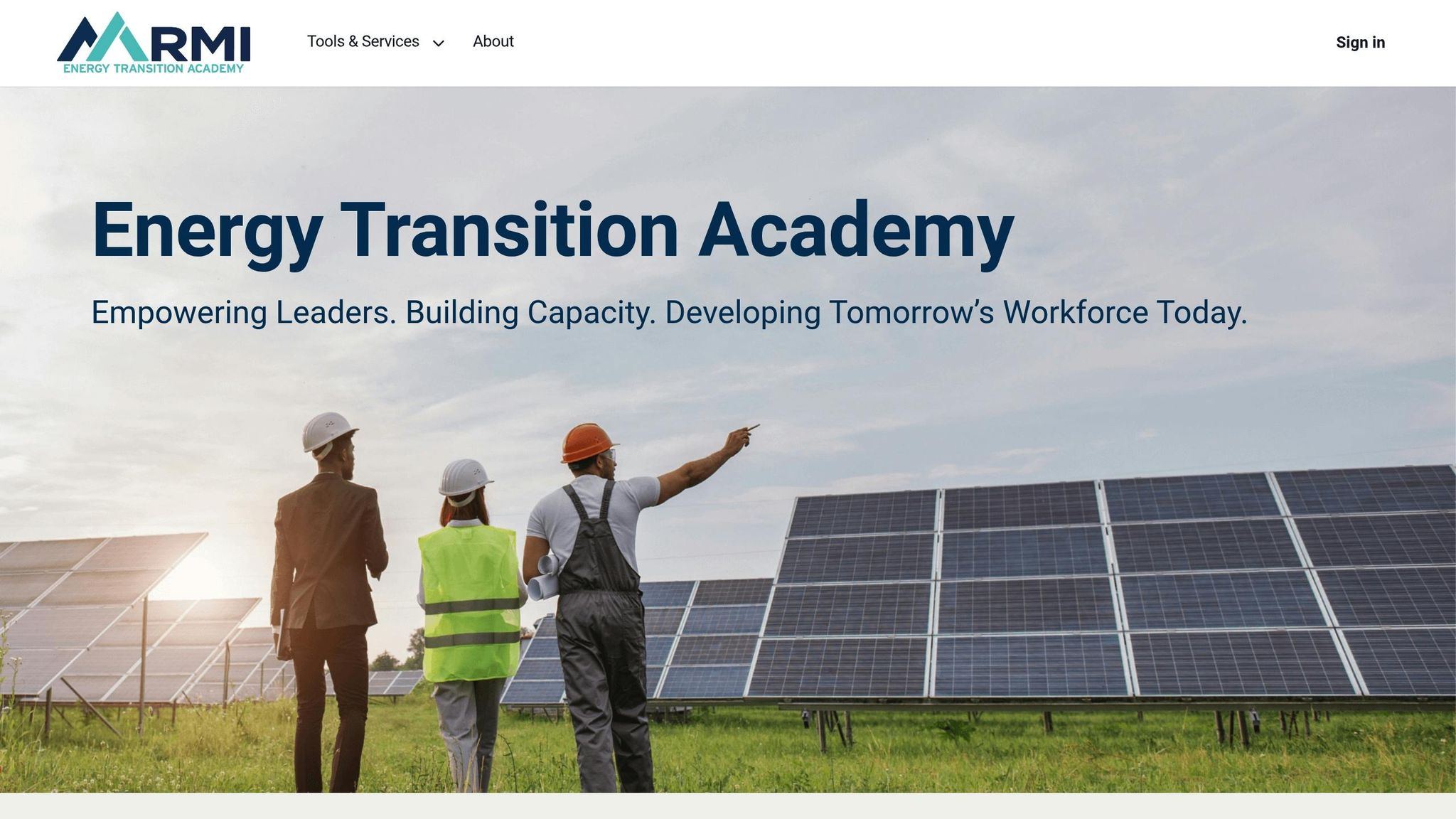
The Energy Transition Academy (ETA) is more than just a training program – it’s a bridge for professionals moving into clean energy roles. As the world races to meet the demand for an estimated 30 million clean energy jobs by 2030, ETA steps in to prepare the workforce with specialized skills and networking opportunities. The program primarily serves senior and mid-level professionals working in utilities, renewable energy companies, regulatory agencies, and related sectors like transportation and building systems.
Delivery Format
ETA uses a hybrid learning model that blends self-paced online modules with in-person summits and local workshops. This flexible approach allows participants to learn at their own speed while still benefiting from face-to-face networking opportunities and community-driven partnerships.
Industry Focus
ETA covers the entire clean energy ecosystem. From renewable energy systems and utilities to electrified transportation and building decarbonization, the program equips participants with the tools to plan, permit, construct, and regulate clean energy systems. It also emphasizes leadership and project management skills tailored to the latest clean energy technologies. Programs like the Global Women in Clean Energy Fellowship and the Energy Leadership Accelerator Program aim to promote diversity and strengthen local expertise, particularly in underserved or remote areas.
Certification and Accreditation
While ETA prioritizes hands-on skill-building and collaborative learning over formal accreditation, participants can earn course certificates. These certificates highlight practical competencies valued by employers in the clean energy sector.
Cost and Accessibility
ETA keeps its resources accessible and impactful by focusing on practical applications and industry connections. Many core materials, including interactive tutorials and expert consultations, are offered free of charge. Professional development courses and fellowship programs require applications, ensuring global reach while maintaining local relevance through strategic partnerships, including those within the United States.
3. Renewable Energy Institute
The Renewable Energy Institute (REI) offers hands-on, project-based courses designed for careers in renewable energy. These programs are developed and delivered by top international institutions, ensuring high-quality training.
Delivery Format
REI’s training programs are primarily available online, making it easier for participants to balance their studies with work and personal commitments.
Industry Focus
The institute’s curriculum focuses on key areas like solar energy systems, wind power technology, and energy management. These courses prepare participants for technical roles in rapidly expanding sectors such as solar installation and wind technology.
Certification and Accreditation
REI awards certificates that are widely recognized in the renewable energy industry, helping participants showcase their skills to potential employers. For example, a former manufacturing worker from Illinois earned a solar installation certificate through REI, landed a regional position, and was promoted to crew lead within six months. This role pays over $28 per hour and involves supervising new trainees. These certifications highlight the growing demand for skilled, certified professionals in renewable energy.
Cost and Accessibility
Course fees range from $500 to $2,500, with additional support services available to increase accessibility. REI offers career counseling and provides assistance like transportation stipends and childcare, making it easier for participants to complete their training. The institute also runs entry-level courses and pre-apprenticeship programs, specifically reaching out to women, BIPOC communities, veterans, and individuals impacted by the criminal justice system. These efforts align with national initiatives to promote equity in the clean energy workforce.
4. Binghamton University‘s New Energy New York Battery Academy
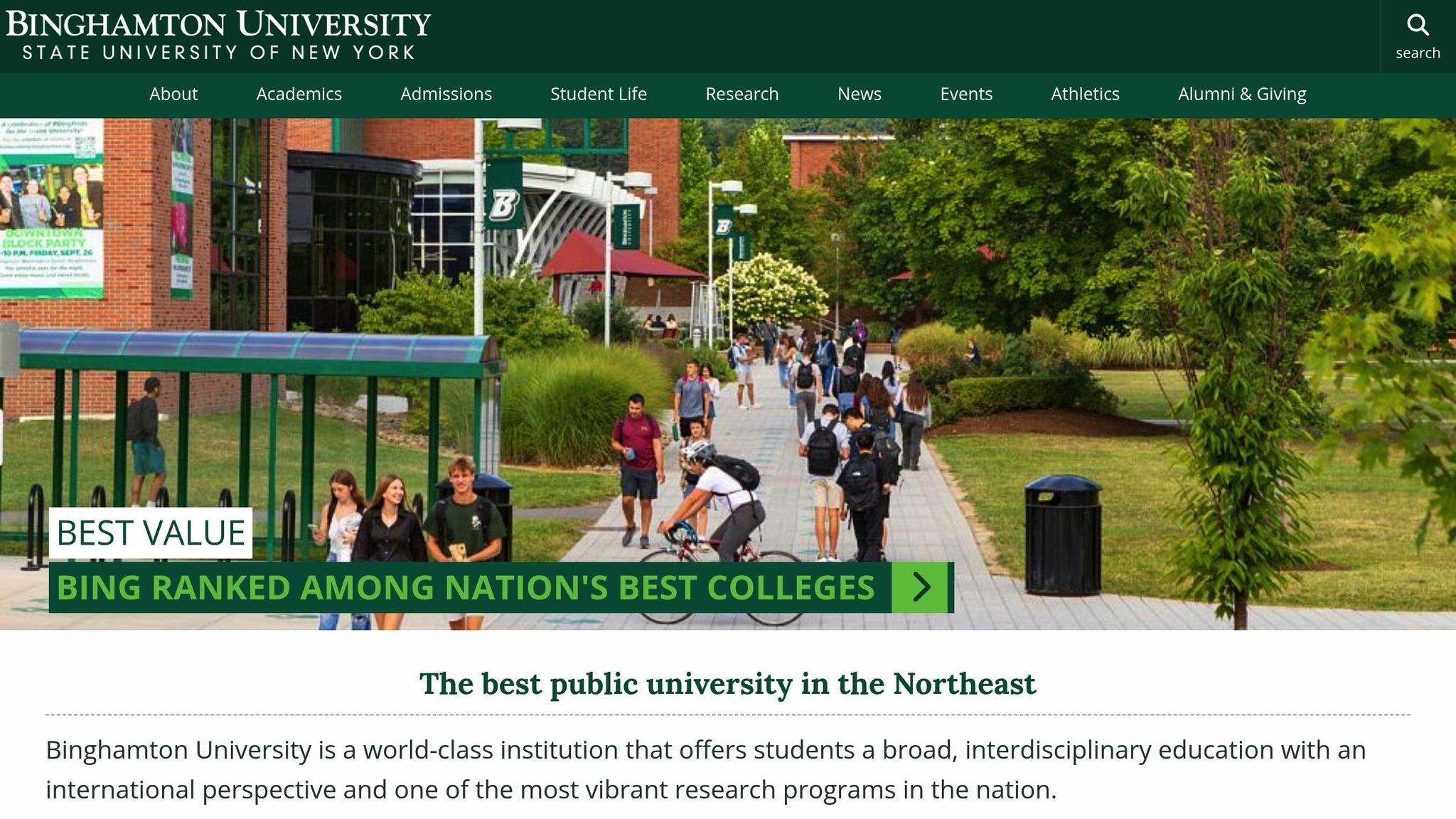
Binghamton University’s Battery Academy is stepping up to meet the growing demand for skilled workers in battery manufacturing and energy storage. As part of the larger New Energy New York initiative, this program aims to position New York’s Southern Tier as a national leader in battery innovation and production, backed by substantial federal funding.
Delivery Format
The program combines flexible online learning with hands-on lab sessions at Binghamton University. This hybrid approach ensures participants can access training conveniently while gaining the practical skills essential for roles in the battery manufacturing industry.
Industry Focus
The curriculum zeroes in on battery manufacturing and energy storage, addressing key areas such as battery chemistry, safety protocols, production processes, quality control, and recycling. With a strong emphasis on lithium-ion battery production and recycling, the program is designed to meet the needs of a fast-evolving industry. Regular input from industry partners ensures the courses stay relevant, reflecting the latest technologies and regulatory updates.
Certification and Accreditation
Graduates earn a certificate of completion from Binghamton University, a credential that holds value with employers in the battery sector. The program was developed in collaboration with industry stakeholders, aligning its training with current hiring needs and technical standards. Impressively, over 85% of participants graduate, and more than 75% secure jobs within six months of completing the program.
Cost and Accessibility
To make the program more accessible, the Academy offers a tiered tuition structure based on the track – entry-level, upskilling, or advanced. Financial support options include scholarships, workforce development grants, and employer-sponsored tuition reimbursement for those who qualify. Special efforts are made to reach displaced workers and underrepresented groups through partnerships with local workforce agencies and community organizations.
Beyond the classroom, the Academy provides career counseling and job placement assistance. Graduates often land starting salaries between $45,000 and $60,000 per year, depending on their experience and the roles they pursue. For example, former automotive workers have successfully transitioned into battery assembly technician positions, thanks to the Academy’s employer partnerships and direct hiring pipelines. This program is more than a training initiative – it’s a pathway to a promising career in a booming industry.
sbb-itb-aa28329
5. State Technical College Programs (e.g., Georgia Quick Start)
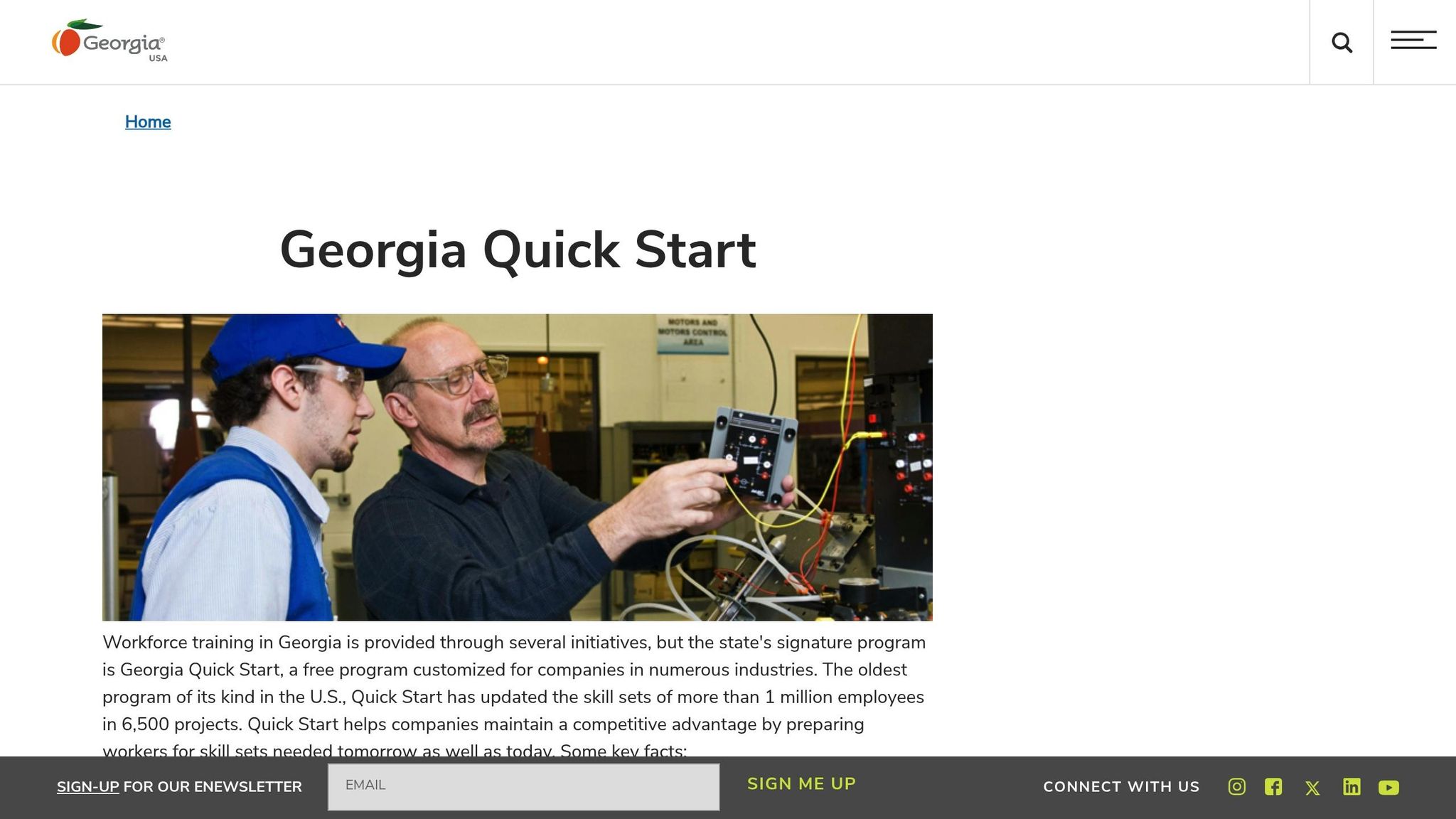
State technical colleges across the U.S. play a growing role in preparing workers for careers in the evolving energy sector. With accessible, employer-focused training, these programs connect workers with real job opportunities. They fill the gap between traditional education and industry demands, offering affordable or even free training tailored to local workforce needs. This hands-on approach sets the foundation for the specialized training methods discussed below.
Delivery Format
State technical colleges use a hybrid model that blends online learning with in-person, practical training. Georgia Quick Start is a prime example, offering customized training both on campuses and at job sites. The online portion focuses on theoretical and safety training, making it easier for working adults to participate without leaving their current jobs. Meanwhile, hands-on training ensures students gain the practical skills they’ll need in the field.
Industry Focus
These programs target key industries like solar, wind, battery manufacturing, HVAC systems, and sustainable construction. For instance, Farmingdale State College offers certificates in Wind Turbine Technology and Sustainable Energy. Similarly, Georgia Quick Start has partnered with SK Battery America to train thousands of workers in battery cell production and quality control, directly supporting job creation and industrial growth.
Certification and Accreditation
Participants can earn widely recognized certifications, including NABCEP credentials for solar work, OSHA safety certifications, and state-approved diplomas. These programs are accredited by state education boards and align with national standards, ensuring credentials are transferable and valued by employers nationwide.
Graduates benefit from high job placement rates, with certificate programs often completed in weeks or months. Apprenticeships typically last around 8 weeks, while diploma programs span 6 to 12 months, allowing for rapid entry into the workforce.
Cost and Accessibility
Affordability and support services make these programs accessible to a broad range of workers. Tuition for in-state residents typically ranges from $1,500 to $4,000 annually, with options like scholarships, grants, and employer-sponsored reimbursement. Georgia Quick Start takes it a step further by offering free training to eligible companies and their employees.
These programs are designed to support underrepresented and transitioning workers, offering services like childcare and transportation assistance to reduce barriers. With campuses in both urban and rural areas and minimal entry requirements, they open doors for individuals from diverse backgrounds.
Strong partnerships with local employers, unions, and industry groups ensure that training aligns with real-world job opportunities. Many programs include internships or apprenticeships, helping students transition seamlessly into the workforce. Graduates often start with competitive salaries, reflecting the demand for their newly acquired skills.
6. Clean Energy Leadership Institute (CELI)
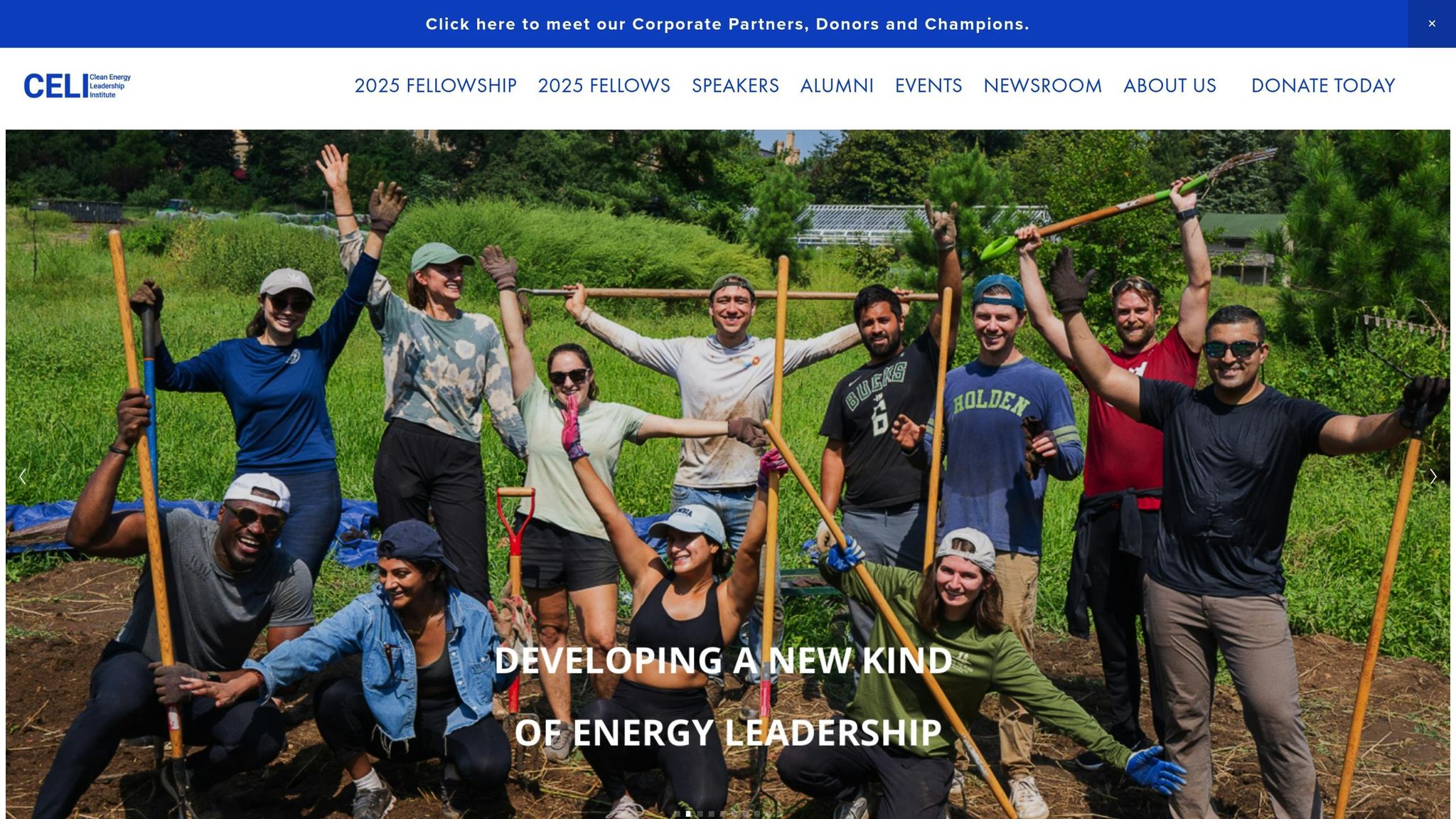
The Clean Energy Leadership Institute (CELI) is a nonprofit organization that focuses on equipping professionals with the leadership and policy expertise needed to excel in strategic roles within the clean energy sector. Unlike programs that emphasize technical or hands-on training, CELI is dedicated to preparing individuals to tackle the challenges of policy, finance, and advocacy in energy transition projects. Since its founding, CELI has graduated over 1,000 fellows from more than 500 organizations, creating a network of professionals driving change in the clean energy industry.
Delivery Format
CELI offers a hybrid program lasting 6 to 8 months, blending self-paced online learning with in-person workshops and networking events. These in-person sessions take place during evenings and weekends in key cities like Washington, D.C., San Francisco, and Chicago, making it possible for professionals across the country to participate without needing to relocate or take extended time off work.
The in-person component goes beyond lectures, emphasizing collaboration and networking. Fellows work on group projects and build connections that often develop into lasting professional relationships.
Industry Focus
The CELI curriculum dives into critical areas like renewable energy development, energy storage, and grid modernization. While it doesn’t offer hands-on technical training, it provides a broader perspective by incorporating systems thinking and leadership skills – essential for navigating the complexities of the energy transition.
The program stays ahead of the curve by regularly updating its content to reflect emerging trends, such as grid decarbonization, energy equity, and climate finance. Guest lectures from industry leaders and real-world policy projects give participants practical insights into the evolving energy landscape. This approach ensures that CELI fellows gain not just knowledge but also the leadership mindset required to address the sector’s pressing challenges.
Certification and Accreditation
CELI does not issue formal industry certifications. Instead, graduates receive a certificate of completion and gain access to an influential alumni network. This network has a strong track record of helping members advance their careers, with many securing leadership positions at organizations like the Department of Energy, Tesla, and NextEra Energy.
Cost and Accessibility
The CELI Fellowship program costs between $1,000 and $1,500, but the institute is committed to making it accessible to a diverse range of participants. Need-based scholarships, sliding scale tuition, and fee waivers help ensure that financial barriers don’t prevent qualified applicants from joining.
Diversity is a cornerstone of CELI’s mission, with fellowship cohorts typically comprising 50% women and 50% people of color. The program is designed for professionals with 2 to 10 years of experience who are eager to lead in the clean energy space.
One example of CELI’s impact comes from Jessica Matthews, a 2022 alumna from the Washington, D.C. cohort. After completing the program, she placed over 120 workers in clean energy jobs within a year, demonstrating how CELI’s leadership training can drive tangible results in the industry.
Program Comparison Table
Finding the right reskilling program depends on what you’re aiming for in your career, how you prefer to learn, and your budget. The table below highlights key features to help you compare options quickly.
| Program | Delivery Format | Industry Focus | Certifications | Cost | Accessibility |
|---|---|---|---|---|---|
| ABLEMKR Workforce Platform | Mobile-first platform | Oil & gas, mining, utilities, heavy infrastructure | Skills verification and compliance tracking | Free for workers | U.S. cities and energy corridors |
| Energy Transition Academy | Online and in-person | Clean energy leadership | Project-based certificates | Free/paid options | Accessible nationwide via online platforms |
| Renewable Energy Institute | Online and in-person | Solar, wind, and general renewables | Industry-recognized certifications | Varies by program | Nationwide with online flexibility |
| Binghamton Battery Academy | Hybrid (in-person and online) | Battery technology and storage | Battery technology certificates | Program-specific tuition | New York-based with online components |
| State Technical Colleges | In-person and hybrid | Construction and energy trades | Apprenticeship credentials | Often subsidized | Extensive state campus networks |
| Clean Energy Leadership Institute | Hybrid | Clean energy leadership | Leadership certificates | Varies | U.S.-based online and in-person options |
This table breaks down each program’s essentials. Costs vary significantly, with some programs offering free or subsidized options, while others charge tuition tailored to the specific training. Certification types also differ – some focus on industry-recognized credentials, while others emphasize skills verification or leadership development.
Flexibility is another key factor, with many programs offering online or hybrid formats to suit different schedules. Geographic reach ranges from nationwide online availability to region-specific, campus-based programs. For example, ABLEMKR Workforce Platform focuses on energy corridor workers, while Binghamton Battery Academy combines in-person and online learning for those in New York.
Diversity initiatives are also a priority, with many programs aiming to address the growing need for clean energy professionals. With an estimated 30 million clean energy jobs needed globally by 2030, these programs play a critical role in preparing workers for energy transition careers. When choosing a program, consider your current skills, career timeline, and learning preferences. Look for programs that offer strong industry connections and job placement support to streamline your path to employment.
Conclusion
The energy transition is opening up exciting opportunities for the workforce, with reskilling programs acting as a vital link between traditional industries and emerging clean energy careers. These programs provide workers with practical ways to step into high-demand roles while addressing the industry’s growing need for skilled professionals.
Investing in these initiatives is driving the growth of the clean energy workforce. Programs like the Clean Jobs Workforce Network and the Climate Works Pre-apprenticeship Program highlight a strong national focus on equipping workers with the skills needed for this shift.
The success stories from these efforts are hard to ignore. For instance, the Energy Coordinating Agency in Philadelphia trains 250 workers each year for clean energy jobs, concentrating on weatherization and home improvement projects that benefit both employees and the local community. Similarly, the Energy Transition Academy has awarded course certificates to over 200 participants, offering executive-style, project-based learning experiences.
Platforms like ABLEMKR are also making a difference by connecting workers with real job opportunities. Their verified skills system and job-matching tools help individuals transition smoothly from training programs into well-paying roles in sectors like oil & gas, mining, utilities, and infrastructure. By prioritizing diversity and inclusion, these programs ensure that women, BIPOC, and other underrepresented groups have access to these career pathways.
With a blend of comprehensive reskilling programs and efficient job placement platforms, the energy transition is paving the way for meaningful careers. Whether you prefer online learning, hands-on training, or direct job placement, this growing sector offers tangible opportunities for professional growth and financial security.
FAQs
How do reskilling programs support underrepresented groups in joining clean energy careers?
Reskilling programs, as highlighted in the article, aim to open doors for people from various walks of life to join the expanding clean energy sector. By providing flexible training options – whether through online courses or in-person sessions – they help address challenges like location constraints or scheduling difficulties.
Tools like ABLEMKR add another layer of support by matching pre-qualified workers with job opportunities tailored to their certifications, schedules, and locations. This efficient system not only allows employers to quickly assemble diverse teams but also guarantees workers access to well-paying jobs with dependable, timely payments. These efforts are paving the way for underrepresented communities to succeed in careers tied to the energy transition.
What should I look for in a reskilling program to start a career in energy transition?
When choosing a reskilling program for energy transition careers, it’s important to weigh factors like relevance, flexibility, and available support services. Focus on programs that teach skills in high demand, such as those related to renewable energy, energy efficiency, or sustainable infrastructure. Opting for courses that offer certifications recognized by industry employers can give you an edge in the job market.
Think about how well the program fits your schedule and preferred learning style. Options often include online, in-person, or hybrid formats, allowing you to manage training alongside other responsibilities. It’s also worth considering programs that provide career-oriented support, such as job placement services or networking opportunities, to make your transition into the workforce smoother.
How do reskilling programs help participants find jobs in energy transition industries?
Reskilling programs are designed to provide participants with the tools they need – both skills and certifications – to thrive in industries undergoing energy transitions, such as oil & gas, mining, and utilities. These programs typically offer hands-on training, safety protocols, and specialized industry knowledge, ensuring workers are well-prepared for roles that are in high demand.
Platforms like ABLEMKR enhance this process by linking workers to job opportunities that align with their certifications, schedules, and locations. This efficient system helps participants move seamlessly into well-paying, essential projects, while employers benefit from a dependable, skilled labor pool.


