
Managing a remote workforce in mining is tough. Workers often operate in isolated areas with poor internet, making real-time decisions and compliance tracking difficult. This article reviews three workforce tools designed to solve these challenges:
- ABLEMKR: Focuses on worker deployment with automated certification checks, geo-location-based scheduling, and real-time monitoring. Best for quick mobilization during emergencies or planned projects.
- Tool A: Offers AI-driven scheduling, fatigue monitoring, and offline functionality. Ideal for managing FIFO schedules and compliance in low-connectivity areas.
- SafetyCulture: Specializes in safety audits, digital inspections, and compliance tracking with real-time dashboards. Suited for improving safety and incident response.
Each tool addresses specific workforce needs, from compliance to scheduling and real-time visibility. Below is a quick comparison to help you decide which fits your operation.
Quick Comparison
| Tool | Compliance Tracking | Scheduling | Communication | Real-Time Visibility |
|---|---|---|---|---|
| ABLEMKR | High (Certification Matching) | High (Geo-Location Based) | Medium | High (Worker Status) |
| Tool A | High (Fatigue/Certs) | High (FIFO/Rosters) | Medium | High (Site-wide) |
| SafetyCulture | High (Audits/Incidents) | Moderate (Task-based) | High (Alert Features) | High (IoT/Sensors) |
Dive into the article to explore how these tools can help streamline remote mining operations.
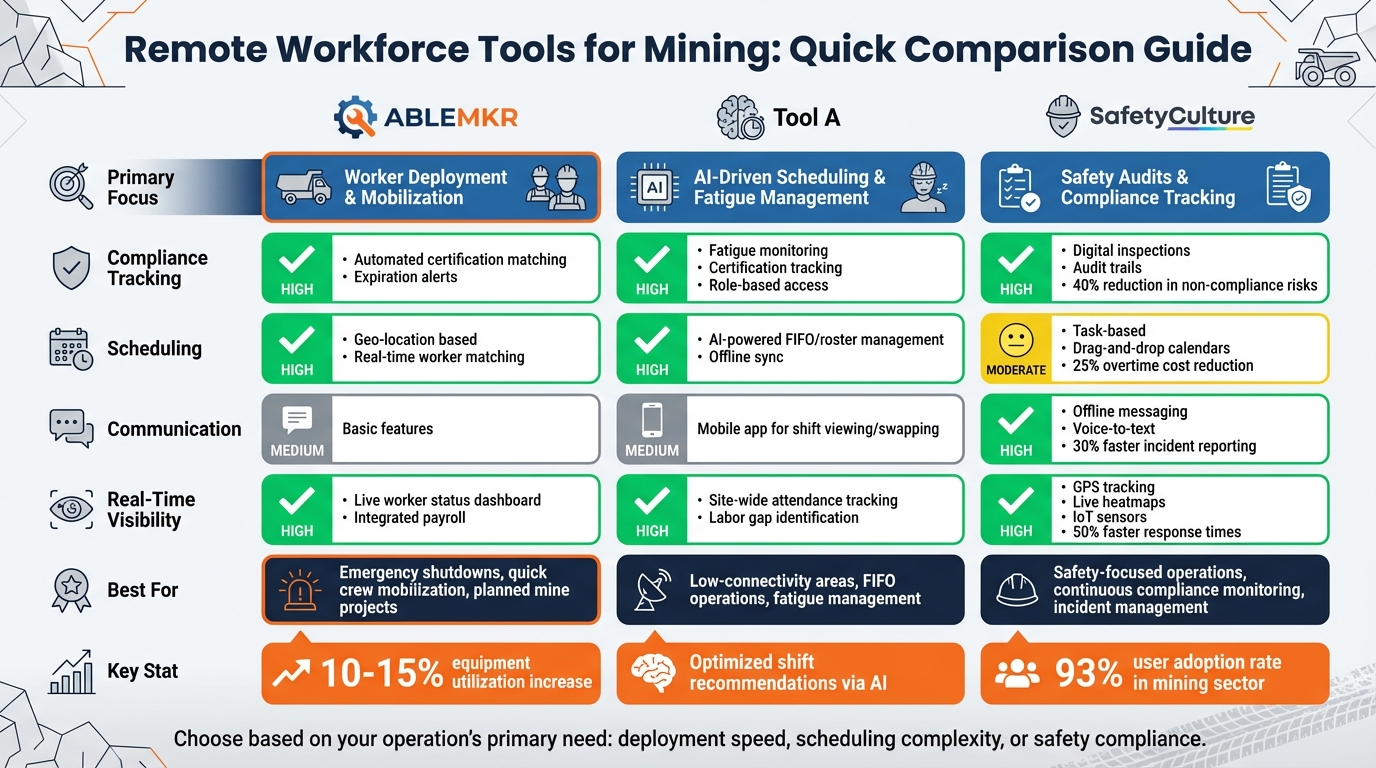
Remote Workforce Tools for Mining Operations: Feature Comparison
Mining Summit – Secure Mobile Worker – connecting mine workers to their systems from anywhere
sbb-itb-aa28329
1. ABLEMKR
ABLEMKR began as a solution in the construction industry and has since expanded into energy and mining operations. Its platform connects skilled workers with critical U.S. projects, simplifying the hiring process, onboarding, and compliance for high-risk industries.
Compliance Tracking
ABLEMKR integrates automated certification monitoring directly into its workflow. Workers are assigned to job sites only after their certifications, safety training, and qualifications are verified. This ensures that only properly trained personnel handle essential tasks. The system flags any upcoming certification expirations or potential compliance issues before they escalate into audit problems. Managers receive automated notifications, allowing them to reassign workers or renew certifications ahead of time. These compliance features are fully integrated with the platform’s scheduling tools.
Scheduling
Once compliance is confirmed, ABLEMKR makes scheduling more efficient. Its mobile-first platform matches workers based on their certifications, availability, and proximity to the job site. This allows operators to quickly mobilize teams, whether for an emergency shutdown or a planned mining project.
Managers also gain a clear view of worker attendance, shift coverage, and availability across various remote locations. This centralized system replaces outdated methods, offering real-time insights into workforce operations.
Real-Time Visibility
ABLEMKR further enhances operations with live monitoring through its dashboard. Employers can track worker status in real time and access integrated payroll workflows. This visibility helps leadership identify patterns and make adjustments before disruptions occur. For workers, the platform ensures reliable, on-time payments and access to high-paying opportunities, reducing common challenges in labor deployment.
2. Tool A
Tool A is designed to simplify compliance and scheduling for remote mining operations with an automated system that handles workforce management efficiently.
At its core, Tool A streamlines the tracking of certifications, work hours, and site access. By consolidating compliance data into one system, it ensures accuracy and easy access during audits.
Compliance Tracking
The platform automatically flags risks like expiring certifications and potential fatigue violations, helping to prevent safety incidents before they occur. It includes features like role-based access controls and fatigue monitoring, addressing the industry’s focus on reducing safety risks and staying compliant with regulations.
Scheduling
Tool A uses AI-powered scheduling to analyze historical data and apply specific rules, creating optimized shift recommendations for remote sites. Managers can tweak these schedules in real time to manage labor costs effectively. Workers, on the other hand, benefit from a mobile app where they can view their shifts, claim open slots, or even swap shifts with coworkers.
Real-Time Visibility
With live updates on attendance, shift coverage, and workforce availability, the platform replaces outdated, delayed reporting. This allows leaders to quickly identify labor gaps and make real-time adjustments to avoid disruptions in production. The system also acts as a decision-support tool, highlighting areas that need immediate attention to keep operations running smoothly.
3. Tool B
SafetyCulture, previously known as iAuditor, is a mobile-first platform designed for remote mining operations. It focuses on digital inspections and compliance audits, boasting a 93% user adoption rate in the mining sector. This makes it a strong option for managing compliance in demanding environments.
Compliance Tracking
SafetyCulture simplifies MSHA inspections with customizable digital checklists that track essential worker certifications like HAZWOPER and confined space entry. The platform flags certifications nearing expiration and creates audit trails that include photo evidence and e-signatures. This approach has helped reduce non-compliance risks by 40%. Additionally, it integrates compliance checks with tools for more efficient shift planning.
Scheduling
The platform’s scheduling tool uses drag-and-drop calendars and geo-fencing for seamless site check-ins. For example, at a Nevada gold mine, SafetyCulture improved 24/7 rotations for 200 remote workers by incorporating local weather data (in °F) to adjust schedules. This reduced overtime costs by 25% and helped address worker fatigue. While scheduling is essential, clear communication is equally critical for remote operations.
Communication
For locations with limited connectivity, SafetyCulture provides offline in-app messaging and push notifications that sync when reconnected. The voice-to-text feature speeds up incident reporting using measurements like feet and tons. At a U.S. coal operation, this functionality led to a 30% faster incident reporting rate. These tools enhance communication and contribute to an integrated operational framework.
Real-Time Visibility
Supervisors can access centralized dashboards that display GPS-tracked worker locations, task completion rates, and safety metrics, including hours worked and incidents per 200,000 man-hours. Live heatmaps provide real-time insights. For instance, an open-pit mine managing 500 workers saw a 50% improvement in response times after implementing these alerts. A 2024 case study at a Colorado copper mine also reported a 20% reduction in safety incidents after deploying the platform’s real-time tracking features.
Strengths and Weaknesses
Each tool brings something different to the table, with strengths tailored to specific needs and some limitations to consider. ABLEMKR stands out for its ability to quickly mobilize crews using pre-vetted worker matching and integrated payroll features. Its certification-based matching and geo-location tools make it an excellent choice for handling last-minute shutdowns or planned mine development projects. However, ABLEMKR focuses on workforce deployment rather than the ongoing management of daily operations. This means it works best when paired with other tools for tasks like detailed scheduling and safety audits.
On the other hand, Tool A offers features designed specifically for mining operations. It excels in managing FIFO (fly-in, fly-out) scheduling and monitoring worker fatigue, even in low-bandwidth environments thanks to offline synchronization. While its rotational schedule management is efficient, the custom pricing structure might be a hurdle for smaller operations.
SafetyCulture shines in compliance tracking and safety audits. Its real-time monitoring and incident management tools are highly effective for ensuring safety. However, its task-based scheduling may not be ideal for continuous 24/7 operations, and it lacks direct tools for workforce deployment. These distinctions highlight how each tool fits different aspects of managing remote mining sites.
Here’s a quick comparison of how the tools perform across key functions:
| Tool | Compliance Tracking | Scheduling | Communication | Real-Time Visibility |
|---|---|---|---|---|
| ABLEMKR | High (Certification Matching) | High (Geo-Location Based) | Medium | High (Worker Status) |
| Tool A | High (Fatigue/Certs) | High (FIFO/Rosters) | Medium | High (Site-wide) |
| SafetyCulture | High (Audits/Incidents) | Moderate (Task-based) | High (Alert Features) | High (IoT/Sensors) |
Conclusion
Managing a remote workforce effectively is critical for mining operations, and the right solution depends on the specific needs of your mine.
ABLEMKR simplifies workforce mobilization with tools like certification-based matching, geo-location, integrated payroll, and compliance tracking – perfect for handling both unexpected shutdowns and planned mine developments. Its real-time monitoring and automated compliance checks remove the uncertainty often associated with managing remote teams in mining environments.
The platform goes beyond basic deployment, offering optional features for safety audits and advanced scheduling. This approach not only improves operational efficiency but also ensures workforce deployment remains fast and compliance-focused.
Studies indicate that remote operation systems can increase equipment utilization by 10–15%. ABLEMKR supports these improvements by getting certified workers to job sites quickly and providing real-time visibility across multiple U.S. locations.
FAQs
How does ABLEMKR verify worker certifications before a site assignment?
ABLEMKR takes the guesswork out of staffing by pre-screening workers for site assignments. It verifies their certifications, safety training, and qualifications ahead of time. With its mobile-first platform, workers are matched to job site requirements based on their verified credentials, ensuring they meet compliance standards and are fully prepared.
Can ABLEMKR handle scheduling for remote sites with weak internet?
Yes, ABLEMKR offers scheduling support for remote sites, even in areas with weak internet connections. Designed for demanding environments like mining, the platform includes features such as real-time worker status updates, compliance tracking, and integrated payroll workflows. While offline functionality isn’t explicitly detailed, its emphasis on accuracy and scalability makes it a strong fit for industries where connectivity can be unreliable.
What real-time visibility does ABLEMKR provide to supervisors?
ABLEMKR gives supervisors a clear, real-time view of worker locations, schedules, and profiles. Using the app, supervisors can handle appointments, communicate directly with workers, and review their ratings and certifications. This setup simplifies workforce management while keeping compliance tracking on point.


