
Remote energy crews face challenges like safety risks, delayed responses, and compliance issues in isolated locations. Real-time monitoring offers solutions by providing instant alerts, automating compliance tracking, and improving operational efficiency. Here’s what you need to know:
- Safety: Alerts for hazardous conditions and faster emergency responses.
- Compliance: Automated tracking of certifications and safety protocols.
- Productivity: Live dashboards to monitor crew locations and task progress.
- Maintenance: Predictive tools to prevent equipment failures and reduce downtime.
- Workforce Management: Platforms like ABLEMKR streamline hiring, payroll, and worker deployment.
Adopting these systems enhances oversight, reduces costs, and ensures better safety and efficiency for energy operations.
Remote Monitoring of Critical Assets Webinar
Main Challenges of Monitoring Remote Energy Crews
Overseeing energy crews spread across vast and isolated locations presents a unique set of challenges. Traditional management methods often fall short, and small issues can quickly spiral into major disruptions, affecting both safety and operational efficiency.
Remote Locations and Delayed Emergency Response
Energy operations often take place in some of the most remote areas of the United States – think oil fields, offshore platforms, and wind farms. These isolated locations make consistent oversight difficult, especially when connectivity is weak. Poor communication with central operations hampers crew tracking and delays emergency responses. For example, in remote wind farms, even a short delay in addressing an incident can escalate a minor issue into a serious emergency.
Safety Risks in Hazardous Work Environments
Energy crews face multiple dangers on the job, from extreme weather and hazardous materials to heavy machinery. Offshore teams contend with unpredictable conditions, while onshore crews must navigate temperature extremes. Exposure to dangerous gases, electrical risks, and heavy equipment adds to the complexity. According to the U.S. Bureau of Labor Statistics, the energy sector experiences a higher-than-average rate of workplace injuries, emphasizing the importance of real-time safety monitoring to prevent accidents before they worsen.
Navigating Regulatory Compliance
Energy companies must adhere to strict OSHA and EPA regulations, which require detailed recordkeeping, regular safety audits, and timely incident reporting. Managing these requirements becomes even more difficult when crews operate in remote locations without direct oversight. Manual reporting systems are prone to errors and delays, complicating the collection of real-time data needed for compliance. A 2022 industry survey revealed that 67% of energy companies identified "difficulty in monitoring remote crews" as a key operational challenge.
Productivity Loss and Downtime Costs
Operational blind spots caused by a lack of real-time visibility into crew activities and equipment status can lead to inefficiencies and undetected equipment failures. These issues often result in costly unplanned downtime. For instance, in 2023, Aggreko introduced its Remote Operations Center for a major U.S. utility managing remote wind farms. By integrating real-time monitoring of equipment and crew activities, the utility reduced unplanned downtime by 28% and improved emergency response times by 40%, saving $1.2 million annually in operational costs.
Worker Shortages and Skills Gaps
The energy sector continues to grapple with a shortage of skilled workers, making it crucial to allocate available talent effectively. During emergencies or scheduled maintenance, delays in mobilizing qualified personnel can disrupt operations. Traditional staffing methods often struggle to match the right workers to critical tasks quickly, especially when specialized certifications are required. Without systems to verify qualifications and track worker availability, companies risk assigning unqualified personnel to high-risk roles. Over time, these challenges can lead to increased safety concerns, compliance issues, and higher operational costs. These hurdles highlight the growing need for real-time tracking solutions, which will be discussed in the next section.
How Real-Time Tracking Solves These Problems
Real-time tracking is changing the game for managing remote crews by offering constant visibility and proactive oversight. Instead of reacting to issues after they happen, these systems help teams stay ahead of potential problems.
Better Safety Monitoring and Faster Incident Response
With real-time tracking, geo-location and sensor data come together to keep tabs on crew locations and surrounding conditions. If a worker enters a risky area or an incident occurs, the system sends instant alerts, allowing emergency teams to respond quickly. Push notifications ensure round-the-clock monitoring, cutting down response times and lowering the chances of injuries.
But it doesn’t stop there – these systems also monitor environmental factors. Automated alerts can activate safety protocols before supervisors even realize there’s an issue, potentially saving lives.
Automated Compliance Management
Keeping up with certifications, safety training, and work hours can be a headache, but real-time tracking systems simplify it all. They automatically update records, create audit-ready reports, and verify qualifications on the spot. For example, the system can confirm if a worker is certified for a specific task, ensuring compliance without the paperwork hassle. Beyond compliance, these insights help streamline operations, making everything run more smoothly.
Improved Productivity with Real-Time Dashboards
Live dashboards bring together data on crew locations, task progress, and equipment status in one place. This gives supervisors a clear view of field operations, making it easier to allocate resources and cut down on wasted time. Mobile-enabled dashboards go a step further, letting managers track multiple sites, monitor key metrics, and get alerts about delays – all from their devices. Whether on-site or remote, managers can make quick, informed decisions to keep things on track.
Predictive Maintenance and Preventing Downtime
By combining equipment monitoring with advanced analytics, these systems can spot early signs of wear and tear, anomalies, or potential failures. This allows teams to schedule maintenance before problems escalate, avoiding unexpected outages and hefty repair bills. For instance, some systems send equipment data to experts who can analyze trends and step in before a breakdown happens, ensuring operations stay reliable. AI-powered tools go even further, detecting subtle patterns that might otherwise be missed, preventing small inefficiencies from turning into big, costly issues.
Data-Based Decision Making
Real-time tracking systems turn raw data into actionable insights, helping leaders make smarter decisions. Data on crew locations, task progress, equipment performance, energy use, and incident reports replaces guesswork with clear strategies. For example, some platforms provide detailed cost breakdowns that help organizations balance safety and profitability. They can even translate energy consumption into financial terms, pinpointing areas where costs can be trimmed. These insights also uncover trends in productivity and efficiency that traditional methods might overlook, paving the way for ongoing improvements.
ABLEMKR: Workforce Management for Remote Energy Crews
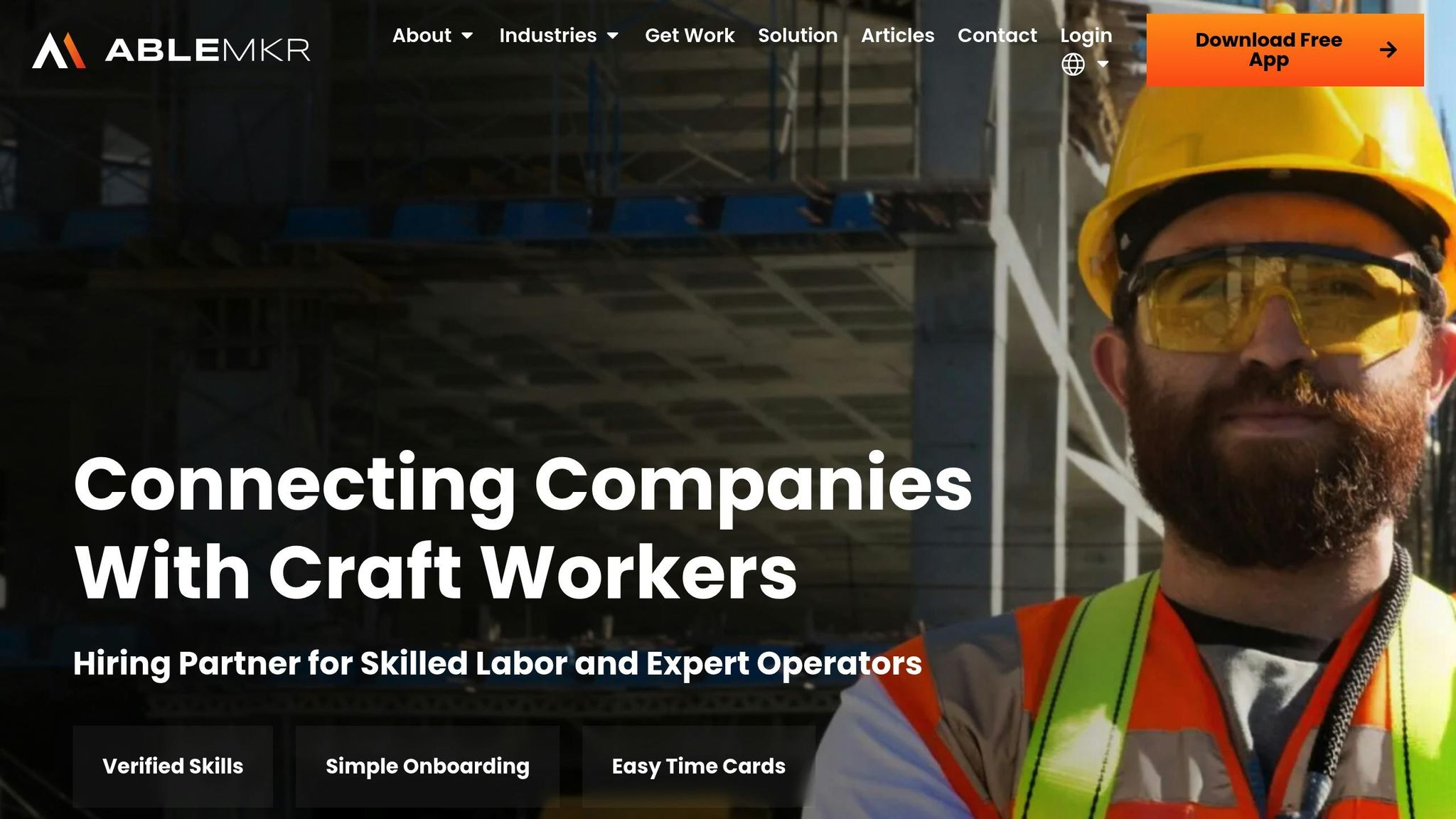
Real-time tracking systems might be the backbone of monitoring remote crews, but energy companies need more than just tracking – they need a way to connect skilled workers with critical jobs. That’s where ABLEMKR steps in. It’s a platform designed to combine workforce deployment with real-time monitoring, tailored specifically for the high-stakes world of energy operations.
ABLEMKR transforms how skilled labor is managed by simplifying hiring and compliance processes. Unlike outdated methods that rely on endless phone calls and paperwork, ABLEMKR integrates pre-vetted workers, live data, and automation to support essential energy projects across the U.S. It builds on real-time tracking technology but offers a comprehensive solution made specifically for the energy sector.
Mobile-First Technology That Adapts to Energy Needs
ABLEMKR is built with mobile technology at its core, addressing the unique challenges faced by remote energy crews. It provides tools for both supervisors and field workers, ensuring smooth operations. The platform’s smart matching algorithm factors in worker certifications, safety training, availability, and even geo-location data. For instance, if a pipeline repair crew is urgently needed in West Texas, the system can quickly identify qualified welders and technicians nearby with the exact certifications required for the job.
Whether it’s deploying a small team for maintenance or coordinating hundreds of workers for a major infrastructure project, the platform handles the logistics effortlessly. For energy companies operating across state lines, ABLEMKR eliminates delays caused by manual scheduling or verifying qualifications, keeping projects on track.
The mobile app also offers real-time location tracking, so supervisors can see exactly where their crews are throughout the day. Workers can check in from remote job sites, update their status, and communicate directly through the app. This constant flow of information helps maintain safety and productivity.
Simplifying Compliance and Payroll
The energy industry has some of the strictest compliance requirements, and ABLEMKR takes the hassle out of staying compliant. The platform automatically tracks when certifications or training need to be renewed, helping companies avoid costly compliance gaps that could disrupt operations or create legal risks.
Payroll is another area where ABLEMKR shines. Its "Easy Time Cards" feature allows workers to log their hours directly through the app, with supervisors approving timesheets remotely. This automation not only speeds up payroll processing but also ensures workers are paid on time – an essential factor for attracting and keeping skilled talent in a competitive market.
For companies juggling multiple job sites, ABLEMKR consolidates reporting, making audits and regulatory submissions straightforward. Instead of chasing down paperwork from various locations, compliance officers can access all necessary records from a single dashboard.
Real-Time Crew Updates
ABLEMKR goes beyond basic location tracking by offering real-time updates on crew activities. Supervisors receive instant alerts when workers check in, complete tasks, or report safety issues. This steady stream of updates allows managers to address potential problems before they escalate.
During high-stakes operations like emergency shutdowns or scheduled maintenance, these updates are invaluable. The platform enables supervisors to monitor multiple workflows simultaneously, ensuring everything stays on schedule. Its built-in messaging tool also allows for direct communication between supervisors and workers, creating a digital record that supports both efficiency and safety protocols.
Meeting Sudden Staffing Needs
Energy operations are unpredictable by nature. Emergencies, weather disruptions, and market shifts can create urgent staffing demands. ABLEMKR’s flexible staffing options, including "Flex workers & Flex to hire" and fractional hiring partnerships, allow companies to adjust their workforce quickly to meet these challenges.
With a database of pre-vetted workers, ABLEMKR can mobilize skilled crews in hours rather than days. For example, if unexpected equipment failure arises, the system identifies available workers with the right skills, verifies their certifications, and coordinates their deployment to the site.
This flexibility benefits companies of all sizes. Smaller energy firms, in particular, can tap into ABLEMKR’s fractional hiring model to access specialized talent without the cost of full-time staff. Whether it’s a last-minute repair or a long-term construction project, ABLEMKR handles the administrative tasks – onboarding, compliance checks, payroll, and more – so companies can focus on getting the job done.
sbb-itb-aa28329
Old Methods vs. Real-Time Monitoring Approaches
The energy industry has seen a significant shift in how remote crew management is handled. Traditional methods often led to delays in updates and left crew statuses unclear. However, recent advancements have demonstrated how modern monitoring tools can bring about tangible operational improvements.
In 2022, a major U.S. gas utility showcased the impact of adopting modern technology by implementing Sensus RGS remote shutoff devices. The results were eye-opening: technician visits to job sites dropped by 40%, and average response times for incidents decreased from 2 hours to under 10 minutes. Operations Manager Lisa Grant highlighted another benefit – compliance audit scores improved by 25%, thanks to automated, time-stamped records that eliminated manual errors and delays.
Real-time platforms, like ABLEMKR, take this a step further by automating alerts and updates, eliminating the need for manual tracking. Supervisors now get continuous updates on crew activities, locations, and safety statuses without adding extra compliance steps. Additionally, compliance documentation is handled automatically, and payroll processes are simplified with digital time tracking.
The impact on productivity is just as impressive. Companies leveraging real-time monitoring report up to a 30% reduction in downtime and a 20% decrease in maintenance costs. These savings come from the ability to detect problems early and respond quickly, rather than waiting for end-of-shift reports to address issues.
Comparison Table: Old Methods vs. Real-Time Monitoring
| Aspect | Old Methods | Real-Time Monitoring |
|---|---|---|
| Safety Oversight | Manual check-ins, delayed alerts | Mobile alerts provide instant crew status updates |
| Compliance Management | Paper logs and infrequent audits | Automated audit trails ensure seamless compliance |
| Productivity Monitoring | Retrospective reporting | Real-time dashboards offer proactive insights |
| Incident Response | Hours to days for response | Immediate geo-located notifications |
| Labor Deployment | Phone calls, manual scheduling | Automated matching of workers by skills and location |
| Payroll Processing | Manual timesheets, frequent delays | Digital workflows ensure faster, accurate payments |
These differences become especially critical during emergencies. With traditional methods, locating and dispatching qualified crews for urgent repairs could take hours. In contrast, real-time platforms can identify available workers with the necessary certifications and deploy them within minutes using geo-location tools.
In 2023, a construction and energy services firm using ABLEMKR reported a 35% reduction in crew mobilization time and cut compliance-related paperwork in half. These efficiencies not only allowed for quicker responses to urgent repairs but also improved worker satisfaction by streamlining processes.
The financial advantages of real-time monitoring go even further. Predictive maintenance powered by live data can cut unplanned outages by 50% and extend equipment lifespan by 20–40%. These benefits aren’t just operational – they directly impact profitability, making the move to modern monitoring systems a smart and strategic investment.
Steps for Setting Up Real-Time Monitoring Solutions
To implement real-time monitoring effectively, focus on selecting the right platform, equipping your team with proper training, and using data to drive ongoing improvements.
Choosing the Right Technology Platform
The foundation of real-time monitoring begins with selecting a robust technology platform tailored to the demands of high-risk, remote energy operations. Look for a platform that combines real-time location tracking, analytics, and mobile access to provide comprehensive oversight.
Platforms like ABLEMKR are designed to address the specific challenges of remote energy operations. These solutions offer features such as real-time analytics, AI-powered anomaly detection, and centralized dashboards that provide 24/7 access to critical operational data. With tools like alerts and reporting capabilities, decision-making and resource planning become much more streamlined.
Scalability and integration are also key. Your platform should seamlessly handle everything from emergency shutdowns to routine maintenance, all while working alongside your existing systems. For example, ABLEMKR’s mobile-first design simplifies the process of matching certified workers to job sites, ensuring efficiency even in remote locations.
Additionally, a good platform should reduce administrative burdens. Features like embedded compliance tracking and integrated payroll workflows can eliminate manual paperwork, saving time for both managers and crew members.
Training and Onboarding for Success
Once you’ve chosen a platform, training your team is the next step. Hands-on training ensures both managers and crew members can effectively use tools like mobile alerts, status updates, and dashboard analytics. This practical knowledge promotes faster adoption and smoother operations.
Focus on real-world applications rather than just technical specs. Crew members should understand how to manage mobile alerts, update their status, and respond to safety notifications. Managers, on the other hand, need training on interpreting dashboards, responding to alerts, and allocating resources based on real-time data.
A streamlined onboarding process significantly increases adoption rates. Platforms that prioritize ease of use – like ABLEMKR – make it simple for crew members to manage appointments, communicate with supervisors, and track their own progress via mobile apps, even without extensive technical training.
Ongoing support is just as important as initial training. Providers with responsive support teams can quickly address any challenges that arise, while regular check-ins during the early stages can help identify areas where further training is needed. Continuous feedback from the field ensures the system adapts to meet operational demands.
Ongoing Improvement Through Data Analysis
The real power of real-time monitoring lies in the data it generates. By analyzing metrics such as crew productivity, response times, and equipment performance, companies can take proactive steps to reduce downtime, improve safety, and cut costs.
One standout application is predictive maintenance. Monitoring equipment performance patterns allows companies to schedule maintenance before failures occur, reducing unplanned outages and extending the lifespan of critical assets.
Establishing regular review cycles is essential. Weekly reviews of operational metrics and monthly strategic planning sessions help identify inefficiencies and adjust processes quickly. For example, analyzing incident data and near-miss reports can highlight safety risks, enabling the implementation of more effective preventive measures.
Clear metrics and benchmarks are the backbone of successful data use. Track indicators like response times, compliance rates, equipment uptime, and crew utilization to measure progress and identify areas for improvement. Comparing these metrics to baseline performance provides a clear picture of where adjustments are needed.
Cost analytics also play a critical role. Real-time tracking of expenses allows for immediate corrections when budgets are exceeded, while long-term analysis can reveal opportunities to boost efficiency. Many companies using advanced monitoring platforms have reported major reductions in downtime and maintenance costs, all thanks to data-driven decision-making. By continuously refining these processes, energy companies can maintain and even enhance the efficiency and safety benefits of real-time monitoring.
Conclusion: The Future of Remote Energy Workforce Management
Remote energy crews face a unique set of challenges, from ensuring safety in isolated areas to navigating complex regulations and addressing worker shortages. To tackle these issues, real-time monitoring has become a game-changer, offering practical solutions that not only solve immediate problems but also set the stage for long-term growth.
This shift is already making waves. Companies leveraging advanced monitoring tools are seeing noticeable drops in downtime and maintenance expenses, thanks to smarter, data-driven decisions. What was once viewed as a compliance tool is now emerging as a critical competitive edge.
Workforce management, as we’ve discussed, is undergoing a transformation. Effective crew management depends on quick responses and strict adherence to regulations. Platforms like ABLEMKR are stepping up to this challenge, streamlining processes to enable faster mobilization for both emergencies and routine tasks. This speed and efficiency are especially crucial in the fast-paced energy sector.
As the U.S. accelerates its transition to renewable energy and upgrades its infrastructure, the ability to deploy and manage skilled crews efficiently becomes more important than ever. Whether it’s maintaining wind farms, installing solar panels, or modernizing the grid, real-time monitoring is proving essential for quicker project completion and more reliable operations.
Looking ahead, technologies like AI and IoT are poised to enhance predictive maintenance and safety even further. Companies that embrace these advancements now are positioning themselves as frontrunners in the energy transition, ready to handle both today’s hurdles and tomorrow’s opportunities.
For energy companies working in remote and demanding environments, the real challenge lies in how swiftly they can adapt to remain competitive in this rapidly evolving industry.
FAQs
How does real-time monitoring enhance safety and emergency response for remote energy crews?
Real-time monitoring plays a crucial role in improving safety and emergency response for remote energy crews. It provides employers with immediate insights into the location and status of their teams, enabling faster decisions and more efficient deployment of resources during critical moments.
Using tools like geo-location tracking and integrated compliance checks, companies can tackle potential risks head-on while ensuring workers are exactly where they need to be. This approach doesn’t just improve safety – it also simplifies operations in demanding and high-risk environments.
What are the advantages of using ABLEMKR for managing energy sector crews?
ABLEMKR makes workforce management in the energy sector easier by linking skilled workers with essential projects across the U.S. The platform simplifies processes like hiring, onboarding, and ensuring compliance, enabling industries such as oil & gas, mining, and utilities to run more smoothly.
Using its mobile-first approach, ABLEMKR connects pre-screened workers to job sites based on factors like certifications, safety training, availability, and location. This helps operators quickly assemble crews while maintaining safety and meeting compliance standards. Employers also gain access to real-time worker tracking, streamlined payroll tools, and features to monitor compliance effortlessly.
How do real-time monitoring systems help energy companies stay compliant with OSHA and EPA regulations?
Real-time monitoring systems are essential for energy companies aiming to maintain compliance with OSHA and EPA regulations. These systems provide constant oversight of workforce activities and safety measures, offering real-time updates on worker certifications, training records, and job site conditions. This level of visibility helps minimize the risk of falling out of compliance.
Tools like ABLEMKR make it easier for companies to deploy skilled crews while ensuring all safety and environmental requirements are met. By embedding compliance tracking into workforce management processes, businesses can simplify operations and prioritize productivity without sacrificing regulatory standards.


