
The energy sector is transforming, but women remain underrepresented in leadership roles. Despite making up 39% of the global energy workforce, women hold only 13.9% of senior leadership positions. The article highlights actionable strategies to bridge this gap and support women in advancing their careers.
Key Takeaways:
- Current Gender Gap: Women hold only 12.1% of executive roles in oil and gas and 10.8% in renewables.
- Benefits of Female Leadership: Companies with more women in leadership report up to 30% higher returns on equity.
- Skills for Success: Combining technical expertise (e.g., project management, regulatory compliance) with leadership abilities (e.g., decision-making, communication) is essential.
- Tools for Advancement: Certifications like PMP and CEM, mentorship programs, and digital platforms like ABLEMKR help women validate skills and connect with opportunities.
- Overcoming Barriers: Address gender bias through documented achievements, transparent promotion criteria, and confidence-building practices.
- Networking: Join organizations like GWNET or Women in Wind and leverage platforms like LinkedIn for professional growth.
This guide outlines clear steps for women to develop leadership skills, build networks, and navigate challenges to thrive in the energy sector.
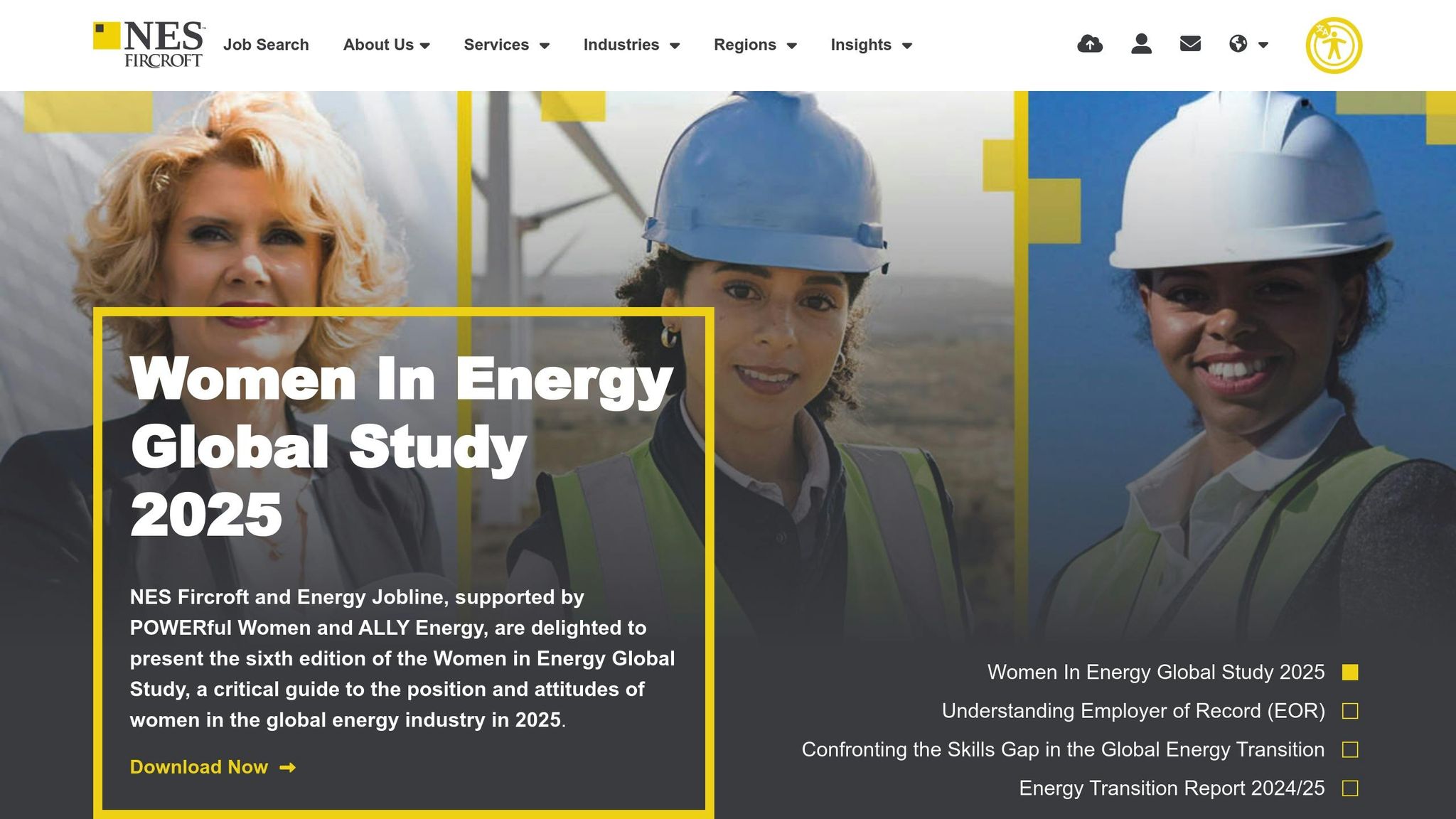
How Can We Increase Female Leadership in the Energy Industry? | NES Fircroft
Building Leadership Skills
Success in energy leadership requires a mix of technical know-how and strong interpersonal abilities. Developing these skills strategically can help address the challenges women face in advancing to senior roles, creating clearer paths to leadership opportunities.
Key Skills for Energy Leadership
Great energy leaders combine technical expertise with strategic leadership abilities. Technical skills are the bedrock of credibility in this field. Mastering areas like data analysis, regulatory compliance, project management, and technical operations empowers leaders to solve engineering challenges and oversee complex projects from start to finish.
At the same time, leadership skills are critical for career growth. Strategic decision-making helps leaders steer through the industry’s rapid shift toward renewable energy and sustainability. Team leadership is crucial when managing diverse groups of engineers, technicians, and support staff. Stakeholder management skills come into play when working with regulators, community organizations, and corporate executives. Additionally, expertise in change management is increasingly important as companies adapt to new technologies and evolving market demands.
Strong communication, negotiation, and collaboration are essential for leadership success. Skills like active listening, critical thinking, and adaptability help leaders keep pace with the energy sector’s fast-changing technological landscape.
A great example of technical expertise leading to industry leadership is Dr. Sarah Kurtz. At the U.S. National Renewable Energy Laboratory, she played a pivotal role in developing the multijunction solar cell, which significantly increased photovoltaic efficiency. Her innovative work highlights how deep technical knowledge can open doors to leadership positions.
These foundational skills set the stage for pursuing certifications and training programs that further prepare women for leadership roles.
Certifications and Training Programs
Industry-recognized certifications provide tangible proof of both technical and leadership capabilities:
- OSHA Safety – Focuses on safety leadership.
- PMP (Project Management Professional) – Demonstrates project management expertise.
- CEM (Certified Energy Manager) – Highlights energy management proficiency.
- NERC (North American Electric Reliability Corporation) – Ensures grid reliability knowledge.
Professional development programs tailored for women in energy also offer structured pathways to leadership. For instance, the Women in Energy Fellowship at Columbia University’s Center on Global Energy Policy equips early-career women with professional skills, industry insights, and a peer network to fast-track their leadership journey.
Similarly, the People-Centered Accelerator Mentoring Programme emphasizes presentation skills and client interaction, both key for leadership development.
Many employers also support advanced certifications through tuition reimbursement programs. Women can take advantage of these benefits by creating a clear development plan that aligns certification goals with their desired leadership roles.
With validated skills and certifications in hand, technology offers another avenue to showcase qualifications and connect with leadership opportunities.
Using Technology to Validate Skills
Digital platforms are revolutionizing how energy professionals highlight their qualifications and pursue leadership opportunities. For example, ABLEMKR’s mobile-first technology enables workers to upload and validate certifications, safety training, and other credentials. This ensures they are pre-vetted for high-demand roles while maintaining compliance tracking.
The platform’s "Verified Skills" feature goes a step further by assessing leadership competencies. Through vetting and interviews, ABLEMKR evaluates candidates based on specific employer needs, making it easier to validate the leadership skills required for energy roles. This tech-driven approach breaks down traditional barriers by directly connecting skilled professionals with employers looking for their expertise.
Professional profiles on such platforms allow women to showcase their experience, receive performance feedback, and highlight leadership qualities through tracked metrics and project outcomes. AI-powered job matching systems further streamline the process by pairing professionals with verified skills to leadership positions in high-demand energy sectors like oil and gas.
Beyond credential validation, these platforms open doors to mentorship, networking, and career advancement. They offer virtual events, peer support groups, and webinars that help women expand their professional networks and discover new leadership opportunities. By embracing these tools, women can position themselves for success in a rapidly evolving industry.
Creating Your Professional Network
Building strong professional relationships is a stepping stone to leadership in the energy sector, where women currently hold just 13.9% of senior roles. Establishing a solid network can open doors to opportunities that help women rise to leadership positions.
Finding Mentors and Sponsors
Having the right mentors and sponsors can make all the difference in your career. While mentors provide advice and share their experiences, sponsors go a step further by actively advocating for you – recommending you for promotions, high-profile projects, or leadership roles. Both play a critical role in your professional growth.
Start by identifying mentors within your organization and across the energy industry. Seek out leaders with a history of supporting women, deep knowledge of the field, and influence in their networks. Industry events, like CERAWeek or the Renewable Energy World Conference, are excellent places to meet potential mentors. When you approach someone, be upfront about your career aspirations and explain how their guidance can help you achieve your goals.
Structured mentorship programs can also provide a clear path to leadership. For example, the People-Centered Accelerator Mentoring Programme by SEforALL and GWNET paired 15 women from Kenya, Ghana, Rwanda, and Zambia with mentors in the energy sector in 2020. Over nine months, participants gained skills in public speaking, client relations, and business development through webinars and virtual networking sessions. The program had tangible results – participants pursued higher education, expanded their businesses, and built global connections.
These mentorships naturally extend into broader networking efforts within professional organizations.
Joining Professional Organizations
Professional organizations are invaluable for expanding your network and accessing opportunities that can shape your career. The Global Women’s Network for the Energy Transition (GWNET) is a standout group, offering networking events, leadership programs, and access to industry leaders through webinars and conferences.
For women in renewable energy, Women in Wind (GWEC) provides targeted resources and networking opportunities. If your focus is on traditional energy sectors, organizations like the American Association of Petroleum Geologists offer industry-specific events and connections. Additionally, Columbia University’s Center on Global Energy Policy’s Women in Energy initiative connects early-career professionals with established leaders through fellowships and networking programs, helping participants transition into leadership roles.
Joining these organizations is just the first step – active involvement is key. Volunteer for committees, present at events, or contribute articles to their publications. These activities not only increase your visibility but also demonstrate your leadership potential. Many organizations now host virtual events, making it easier to participate no matter where you are. For instance, GWNET’s online community fosters engagement through forums and virtual meetups.
While traditional networking builds a strong foundation, technology offers new ways to expand your reach.
Using Technology to Expand Connections
Technology is reshaping how professionals in the energy sector connect and grow their careers. Platforms like ABLEMKR are making it easier for skilled workers, including women, to find opportunities in oil & gas, utilities, mining, and infrastructure projects. This mobile-first platform matches professionals to projects based on their certifications, training, and location, providing real-time updates and recognition for top performers.
ABLEMKR’s verified skills feature allows women to showcase their expertise through structured vetting, breaking down traditional barriers by letting their performance speak for itself. Successfully completing projects on the platform helps women build a digital reputation, opening doors to leadership roles across the country. For instance, excelling in a project in Texas could lead to opportunities in North Dakota or Pennsylvania.
LinkedIn is another powerful tool for networking. Share insights about the energy industry, engage meaningfully with posts from leaders, and participate in energy-focused groups. Remember, it’s about consistent, authentic engagement – not self-promotion. Virtual networking tools, including video conferencing platforms, also allow you to maintain and grow relationships without the need for travel.
Ultimately, networking is about forming genuine relationships, not just collecting contacts. Focus on how you can contribute to others’ careers and projects. This mindset of mutual benefit will help you build stronger, more enduring connections that support your journey toward leadership.
sbb-itb-aa28329
Overcoming Common Challenges
Reaching leadership positions in the energy sector comes with its own set of challenges, especially for women. Navigating these obstacles requires a mix of strategic thinking, resilience, and actionable steps. By understanding the hurdles and adopting effective strategies, women can carve a path to success in this demanding industry.
Dealing with Gender Bias and Workplace Barriers
Gender bias remains a persistent issue in the energy sector. Women hold only 13.9% of senior management roles in energy and utility companies and just 12.1% of executive positions in oil and gas. These numbers highlight systemic challenges that demand both individual effort and broader organizational change.
One effective way to counter bias is by documenting your achievements. Keep a detailed record of your contributions, such as cost reductions, safety improvements, or successful project leadership. When the time comes for performance reviews or promotion discussions, having concrete evidence of your impact can counter subjective judgments. Consider creating monthly summaries of your accomplishments and sharing them during regular check-ins with your supervisor.
Another strategy is to address bias constructively. This doesn’t mean confronting every instance head-on but rather identifying patterns and addressing them thoughtfully. For example, if you notice that women’s ideas are frequently overlooked in meetings, propose a structured discussion format where everyone has the chance to present their thoughts before open debate begins.
Digital platforms like ABLEMKR can also help by validating certifications and showcasing measurable performance, helping to counteract subjective biases.
Advocating for transparent promotion criteria is equally important. Work with HR or leadership to establish clear guidelines for advancement, including specific skills, experience, and performance metrics. Transparency in promotion processes makes it easier to pinpoint and address bias.
The ongoing shift toward clean energy and technology-driven roles offers new opportunities where traditional biases may be less entrenched. By positioning yourself in these emerging areas, you can leverage your expertise in spaces that are evolving rapidly. These strategies not only help counteract bias but also build long-term resilience.
Building Confidence and Resilience
Confidence and resilience aren’t innate qualities – they’re skills you can develop. The high-pressure environment of the energy sector requires mental toughness, but with deliberate practice, anyone can strengthen these traits.
Start by adopting a growth mindset. Treat challenges as learning opportunities. Whether it’s mastering a new technology or leading a team for the first time, set measurable goals for each challenge and focus on the lessons you can take away.
Celebrate small wins to stay motivated. Leadership development is a gradual process, and recognizing your progress – even in small ways – can keep you going during tough times. For instance, if you successfully tackle a technical issue or receive positive feedback from a client, take a moment to acknowledge your achievement. Keeping a record of these wins can reinforce your confidence during challenging periods.
Programs like the SEforALL and GWNET mentoring initiative highlight the value of structured support. In 2020, 15 women from Kenya, Ghana, Rwanda, and Zambia participated in a nine-month program that paired them with experienced mentors. Through webinars and peer networking, they improved their confidence, technical skills, and leadership abilities. This example shows how consistent practice and supportive relationships can build confidence over time.
To further develop your skills, consider public speaking workshops and volunteer opportunities to present at industry events. Start small by speaking in internal meetings, and gradually work your way up to larger audiences. Many women in energy have found that regular practice in low-pressure settings helps build confidence for more significant opportunities.
Regular feedback is another critical tool. Ask supervisors, peers, and team members for specific input, such as, "What leadership qualities do you see me developing?" or "How can I improve my technical communication?" This kind of feedback helps you identify blind spots and track your growth.
Finally, take on challenging projects that push you out of your comfort zone. For example, the Female Leaders in Energy (FLIE) program, funded by the U.S. State Department from 2020-2023, provided mentorship and technical workshops to early- and mid-career women in Southeast Asia and the Pacific. The results were striking: 100% of participants reported improved technical knowledge, and 79% noted enhanced leadership skills. The program’s success underscores the value of stepping into challenging roles with structured support.
Company Policies That Support Women
While individual strategies are crucial, company policies play a significant role in advancing women’s careers. Understanding these initiatives can help you identify supportive employers and advocate for changes in your current workplace.
Flexible working arrangements are a game-changer for retaining women in energy careers. Companies offering remote work, flexible hours, or compressed workweeks report higher retention rates among female employees. These policies are especially valuable in an industry where project sites are often remote or require extensive travel.
Targeted recruitment programs also address gender imbalances. For instance, Shortlist’s "Women For Green Jobs" initiative achieved 66% female representation, far surpassing industry norms. By specifically recruiting women for traditionally male-dominated roles and offering tailored onboarding support, the program successfully increased female participation.
Formal mentorship programs and transparent promotion processes are equally impactful. These initiatives work best when they include clear objectives, regular check-ins, and accountability for both mentors and mentees.
Comprehensive parental leave policies are another critical factor. Companies that offer paid leave, gradual return-to-work options, and on-site childcare facilities retain more women in senior roles. These policies demonstrate a commitment to long-term career development rather than short-term productivity.
Finally, safety measures and training tailored to women’s needs create more inclusive workplaces. Providing appropriate personal protective equipment, clear harassment reporting procedures, and robust safety protocols ensures that women feel secure on project sites.
The business case for these policies is clear. Companies with strong female leadership deliver a 36% higher return on equity, and S&P 500 firms with above-median female representation in leadership see a 30% higher return on equity. These financial benefits highlight that supporting women’s advancement isn’t just the right thing to do – it’s a smart business decision.
When evaluating potential employers or advocating for change, look for organizations that implement multiple supportive policies. A comprehensive approach creates lasting cultural shifts that sustain women’s progress over time.
Selecting Your Leadership Path
The energy sector offers a variety of leadership opportunities, each with its own set of challenges and rewards. By understanding these options, you can make informed decisions that align with your strengths and long-term career aspirations. Let’s break down the two primary leadership tracks and explore programs designed to accelerate your journey.
Technical vs. Management Leadership Tracks
In the energy industry, leadership generally follows two main paths: technical and management.
Technical leadership is rooted in specialized expertise, such as engineering, operations, or environmental compliance. It often requires hands-on experience and advanced certifications. On the other hand, management leadership focuses on strategy, team dynamics, and stakeholder engagement, demanding strong business acumen and people management skills.
Technical leaders often step into roles like Technical Operations Director or Environmental Compliance Officer, where they oversee complex projects and ensure compliance with regulations. Management leaders, however, may find themselves in roles such as Sustainability Program Manager or Energy Policy Strategist, where the focus is on organizational strategy and cross-functional collaboration. These paths differ not only in responsibilities but also in lifestyle. For instance, technical roles might involve irregular hours and frequent travel, while management positions often come with more predictable schedules but greater accountability for team outcomes.
| Leadership Track | Key Qualifications | Growth Potential | Work-Life Balance |
|---|---|---|---|
| Technical | Degrees in engineering/science, technical certifications, hands-on experience | High, especially with the rise of clean energy technologies | Often includes irregular hours and travel |
| Management | Business/management degrees, leadership training, broad industry understanding | High in policy, sustainability, and strategic roles | Predictable hours but high-pressure decision-making |
As the energy sector undergoes rapid changes driven by clean energy initiatives, both tracks increasingly require knowledge of emerging technologies and adaptability. Choosing the right path depends on your strengths, interests, and preferred work style.
Leadership Development Programs and Opportunities
If you’re looking to fast-track your leadership journey, structured development programs can be a game-changer. For example, initiatives like the People-Centered Accelerator Mentoring Programme provide mentorship and skill-building opportunities tailored to aspiring leaders. Similarly, the Women in Wind Global Leadership Program focuses on helping women advance in the wind energy sector through networking and career development.
Many energy companies also offer internal leadership programs that include executive coaching, cross-functional projects, and even scholarships for advanced degrees or certifications. Beyond corporate initiatives, professional organizations host conferences, workshops, and certification programs to enhance both technical skills and leadership presence. Digital tools like ABLEMKR can also help you highlight your qualifications and connect with leadership opportunities.
By participating in these programs, you can build the skills and visibility needed to excel in your chosen leadership track.
Matching Your Goals with Leadership Opportunities
Once you’ve identified your preferred leadership path, it’s time to align your personal goals with market opportunities. Start with a self-assessment to evaluate your technical skills, leadership abilities, and career interests. Consider factors like your preferred work style and the impact you want to make. This process can help you identify gaps in your qualifications and create a roadmap for achieving your career goals. Mentors and leadership programs can provide valuable feedback and guidance as you refine your path.
The energy transition is creating new opportunities, particularly for women with expertise in innovation, technology, and environmental compliance. Careers in sustainability, renewable energy, and energy storage are especially promising. For instance, one inspiring case study highlights the career of Starring, who began in customer service at Battle Creek Gas Co. and eventually rose to leadership positions at ENSTAR Natural Gas Co. and SEMCO Energy. Her journey underscores the importance of continuous skill development and strategic career planning.
Financial considerations are also worth noting. Companies with strong female leadership report 36% higher return on equity, and S&P 500 companies with above-median female representation in leadership see a 30% higher return on equity. Additionally, women in leadership roles are often associated with greater adoption of renewable energy and stronger environmental policies.
Ultimately, the key is to align your strengths, values, and career goals with the opportunities available in this evolving industry. The energy sector’s transformation is opening doors for new leadership roles, creating exciting possibilities for those ready to step up.
Conclusion: Moving Forward in Your Leadership Journey
Stepping into leadership within the energy sector requires careful planning, embracing technology, and taking bold actions. The rapid changes in this industry present exciting opportunities for women to take on influential roles and help shape its future. The strategies shared here provide a solid foundation for actionable steps.
Action Steps for Leadership Success
To excel, focus on aligning your skills with your leadership aspirations. Seek out relevant certifications and actively participate in industry events and webinars to grow your network. Define clear career goals, track your progress, and ensure your digital presence highlights your most impactful achievements.
Master both technical and leadership skills that are highly valued in the energy sector. These include data analysis, regulatory expertise, project management, strategic decision-making, and stakeholder engagement. A well-rounded skill set like this positions you for success, no matter your chosen leadership path.
How Technology Supports Career Growth
Technology can be a powerful ally in accelerating your career. Digital platforms are opening doors for women in energy by emphasizing skills over traditional hiring practices. For example, ABLEMKR’s technology-driven skill validation connects certified professionals to key projects based on qualifications, safety training, and availability. This approach reduces bias and creates fairer opportunities for leadership-track roles.
The platform’s verified skills feature serves as an objective measure of your expertise, a critical factor for advancing into leadership positions where credibility is key. Tools like real-time worker visibility and compliance tracking also support flexible work arrangements while maintaining the high standards required in energy and extractives.
AI-powered matching systems take this a step further, linking you to opportunities that align with your verified skills and career goals. By building a transparent professional profile with performance metrics, you enhance your visibility for leadership roles across sectors like oil & gas, mining, utilities, and heavy infrastructure.
The Impact of Women in Leadership
The case for women in leadership is backed by measurable success. Companies with strong female leadership achieve 36% higher return on equity . Additionally, organizations with diverse leadership teams see 45% of their revenue coming from innovation, compared to just 26% for less diverse teams.
Women leaders are driving advancements in renewable energy and sustainability. For instance, Dr. Sarah Kurtz’s work on multijunction solar cells and Dr. Xiaojing Hao’s breakthroughs in solar efficiency highlight how women are pushing clean energy technologies forward. Female-led teams also excel in community energy projects, bringing innovative solutions and fostering strong stakeholder relationships that benefit entire communities.
Your leadership journey contributes to a ripple effect that boosts collaboration, productivity, and commitment within the energy sector. Women in leadership roles are linked to stronger environmental policies and increased adoption of renewable energy, helping the industry transition to more sustainable practices.
With women currently holding just 13.9% of senior management positions in energy and utility companies, there’s a clear need for growth and impact. By applying the strategies outlined here, leveraging technology to validate and showcase your skills, and committing to your leadership development, you’re not just advancing your own career – you’re driving meaningful change in the energy industry. Every step you take strengthens the transformative role of women in energy leadership.
FAQs
What strategies can help women overcome workplace challenges and advance into leadership roles in the energy sector?
Navigating workplace challenges and stepping into leadership roles within the energy sector calls for a mix of skill-building, strategic connections, and mentorship. For women, honing technical expertise alongside leadership abilities tailored to the unique demands of this dynamic industry can be a game-changer.
Mentorship programs and guidance from seasoned industry professionals offer more than just advice – they can pave the way to new opportunities and provide invaluable insights. At the same time, attending industry events and joining professional organizations can help expand networks, connecting women with peers and key decision-makers who can play a role in advancing their careers.
Innovative platforms like ABLEMKR are also making waves in the energy sector. By streamlining workforce deployment and creating pathways for skilled professionals, these tools are contributing to a more inclusive and efficient workplace. Such advancements are shaping the future of energy careers across the U.S., opening doors for a diverse workforce to thrive.
How can women in energy careers use digital platforms to showcase their skills and access leadership opportunities?
Women pursuing careers in the energy sector can harness digital platforms to showcase their skills and connect with leadership opportunities. One such tool, ABLEMKR, streamlines workforce deployment in fields like energy and extractives by pairing skilled professionals with critical projects across the U.S. It matches opportunities based on certifications, safety training, and availability, offering an efficient way to validate qualifications and gain visibility.
Using platforms like ABLEMKR, women can tap into high-paying, flexible roles while expanding their professional networks. This not only accelerates career advancement but also helps narrow the gap to leadership positions within the energy industry.
What are the advantages of pursuing a technical or management leadership role in the energy industry, and how can women determine the best path for their career?
Both technical and management leadership roles in the energy industry provide distinct avenues for growth and influence. Choosing the right path depends on your personal strengths and career aspirations.
A technical leadership role allows you to dive deep into your area of expertise, lead specialized projects, and drive innovation. It’s perfect for those who enjoy solving complex problems and working directly with technical challenges. On the other hand, a management track focuses on broader responsibilities like leading teams, shaping strategies, and steering organizational goals. It’s an ideal fit if you excel at collaboration, decision-making, and inspiring others to achieve shared objectives.
When deciding between these paths, reflect on what excites you most – whether it’s hands-on technical work or the opportunity to guide and influence at a higher level. Seeking mentorship, networking, and gaining exposure to both tracks early in your career can help you make a well-informed choice.


