
Hiring delays and compliance risks are common pain points in construction. Manual methods for verifying worker identities and credentials often slow down projects and increase safety concerns. Mobile ID verification solves these issues by enabling instant validation of worker credentials via smartphones, streamlining the hiring process and improving site security.
Here’s how mobile ID verification transforms construction hiring:
- Eliminates Paperwork: Digital worker profiles replace paper forms, reducing errors and delays.
- Ensures Compliance: Tracks certifications like OSHA training and flags expired credentials automatically.
- Improves Security: Scannable digital badges and biometric checks prevent access issues.
- Speeds Up Onboarding: Workers arrive pre-verified, saving time at site entry.
- Simplifies Multi-Site Management: Centralized systems sync worker data across locations.
Platforms like ABLEMKR take this further by pre-vetting workers and matching them to job sites based on certifications, training, and availability. This ensures faster deployment, safer worksites, and compliance with regulatory requirements.
Takeaway: Mobile ID verification is a practical solution to modernize construction hiring, reduce delays, and maintain safety and compliance standards.
myComply Solutions: Digital Orientation & Onboarding
Common Problems in Construction Hiring
The construction industry still lags behind when it comes to modern hiring practices. While many sectors have transitioned to digital workflows, construction firms often stick with outdated methods like paper forms, phone calls, and spreadsheets to verify workers. These manual processes create inefficiencies that ripple through every phase of a project – from onboarding to daily operations. The most pressing issues arise in areas like paperwork, compliance, and site security.
Manual Paperwork and Slow Processing
Relying on paper-based systems for worker verification slows everything down. Physical IDs and printed certificates require manual checks, creating bottlenecks at entry points – especially during shift changes when large groups of workers need clearance at the same time. Digital badge providers point out that paper certificates can be easily lost or even forged, whereas digital credentials can be verified almost instantly using mobile apps. Without these modern tools, workers often end up waiting at the gate, wasting time and delaying the entire operation.
Compliance and Certification Challenges
Manual processes also increase the risk of compliance failures. For example, U.S. employers must meet Form I-9 and E-Verify requirements to confirm work authorization. Handling these forms manually raises the likelihood of errors, missed deadlines for reverifications, and potential penalties. Additionally, storing OSHA training certificates and safety licenses in filing cabinets instead of digital systems makes it easy for expired credentials to go unnoticed. According to Veriforce, deploying workers without proper certifications in high-risk environments can lead to steep fines or, worse, serious injuries and fatalities. Without automated systems, HR teams face an uphill battle trying to keep worker records accurate and up to date across multiple sites.
Site Safety and Access Control Issues
Outdated verification methods also undermine site safety and access control. Without digital systems, unauthorized access, badge sharing, and unvetted workers become serious problems. Physical badges alone aren’t enough – they can be easily shared and don’t reliably confirm whether someone has the necessary training. By contrast, scannable ID badges can instantly verify a worker’s role, training status, and whether they’re authorized to enter restricted zones. Implementing these tools is essential for improving hiring processes and maintaining a safe, compliant work environment.
How Mobile ID Verification Works in Construction
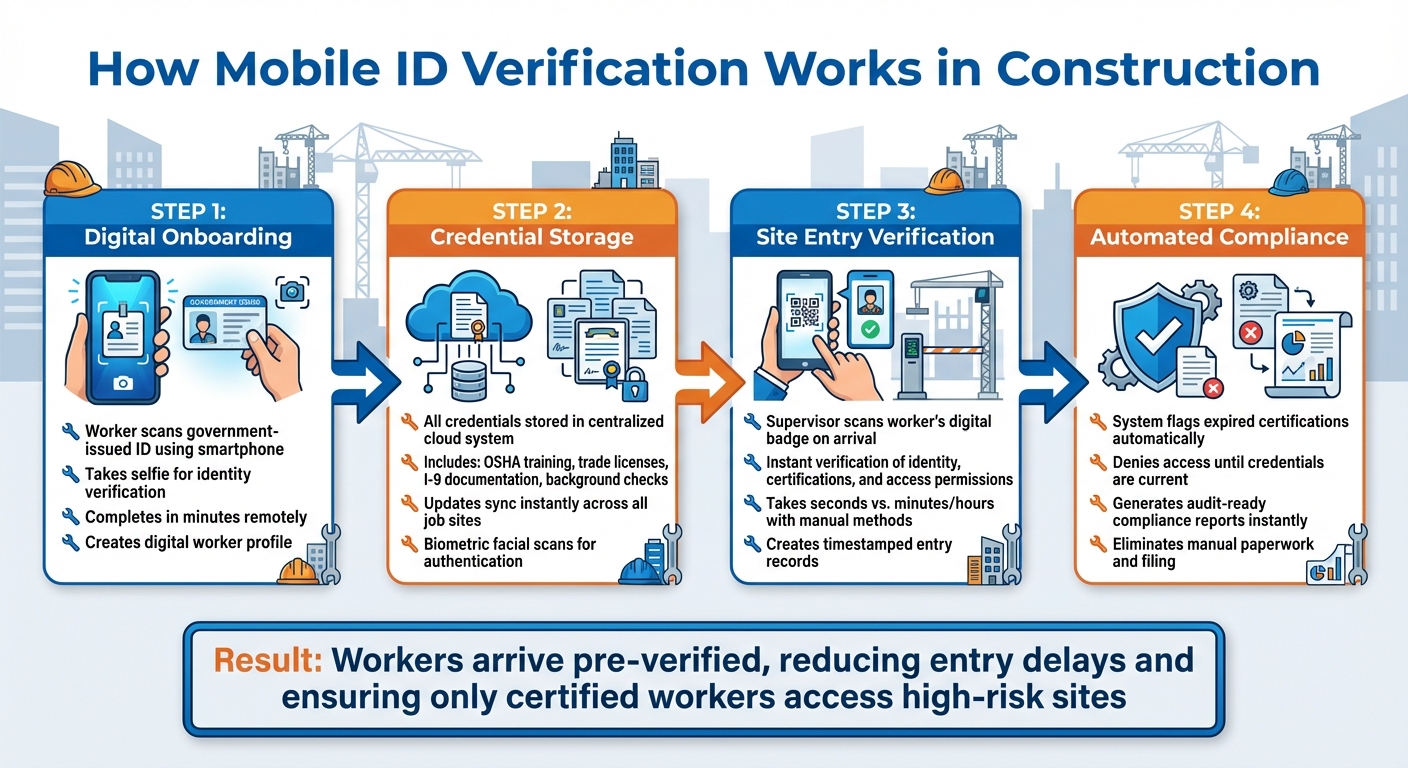
How Mobile ID Verification Works in Construction: 4-Step Process
Mobile ID verification replaces outdated manual checks with digital worker profiles stored securely in the cloud and accessible via smartphones. Each worker is assigned a scannable badge linked to their verified identity, certifications, safety training, and background check results. When workers arrive at the site, supervisors simply scan the badge with a mobile device, instantly confirming credentials and access permissions. This process takes seconds compared to the time-consuming manual methods that could take minutes or even hours. This speed and efficiency form the foundation of mobile ID systems, which we’ll explore further below.
Key Features of Mobile ID Systems
At the heart of mobile ID systems is the digital worker profile, which consolidates all credential data in one centralized location. During onboarding, workers use their smartphones to scan a government-issued ID and take a selfie, enabling remote identity verification in just minutes. Once verified, their profiles store everything from OSHA training certificates to trade licenses, I-9 documentation, and background check results. The cloud-based system ensures that records are updated instantly across all job sites – so, for instance, new training completion is immediately reflected on the worker’s badge.
To enhance security, platforms utilize biometric facial scans to authenticate identities and eliminate badge sharing. These systems integrate seamlessly with access control tools and training platforms, creating a streamlined and secure ecosystem.
Meeting Regulatory Requirements
Mobile ID systems tackle compliance challenges by automating every step of the process. For example, during Form I-9 verification, the system captures and stores work authorization documents digitally, reducing errors from manual data entry and helping avoid missed reverification deadlines. Certification tracking is also automated – platforms flag expired OSHA cards or missing licenses before the worker even reaches the job site, ensuring access is denied until all credentials are current.
Every verification event is timestamped and stored as an audit-ready record. This means when regulators request proof of compliance, HR teams can generate detailed reports instantly, eliminating the need to dig through stacks of paper files. By centralizing compliance management, these systems save significant time and resources compared to traditional manual processes.
How ABLEMKR Streamlines Hiring and Compliance
ABLEMKR takes mobile ID systems to the next level with its mobile-first platform, which connects pre-vetted workers to job sites based on verified certifications, safety training, availability, and even geo-location. Employers can monitor worker status in real time using the ABLEMKR app, where they can view professional profiles, ratings, and credential verification for every crew member.
The platform’s built-in compliance tracking ensures that only workers with up-to-date qualifications are deployed, whether it’s for an emergency shutdown or a planned project. By pre-vetting candidates, ABLEMKR ensures workers arrive on-site with all required skills and certifications already verified. This eliminates paperwork delays and the verification bottlenecks that often slow down traditional hiring processes. With its streamlined onboarding and centralized workforce management, ABLEMKR helps construction teams overcome long-standing challenges in hiring and compliance.
sbb-itb-aa28329
Practical Solutions for Construction Hiring Problems
Mobile ID verification simplifies the hiring process by enabling digital onboarding through smartphones. This eliminates the need for paper-based procedures and consolidates worker credentials into a secure digital profile. Instead of spending unnecessary time on paperwork at the site entrance, workers can complete their onboarding digitally before arriving. The system verifies their identity and organizes all credentials into a secure profile, reducing delays at entry. Here’s how these solutions address common challenges in construction hiring.
Faster Worker Onboarding
Mobile pre-enrollment significantly cuts down entry times. Workers arrive with pre-verified digital badges that supervisors can quickly scan to confirm their identity and grant access. Tools like PockeTracker scanners validate credentials instantly, speeding up site entry, allowing security staff to focus on other priorities, and improving overall productivity. This streamlined approach is especially valuable for emergency projects where teams need to mobilize quickly, such as last-minute shutdowns or urgent repairs.
The platform also matches pre-screened workers to job sites based on verified certifications, safety training, and location. This gives employers a clear view of each worker’s qualifications. While faster onboarding is essential, keeping credentials up to date is just as critical.
Accurate Credential Tracking
Digital systems automatically track and flag certifications nearing expiration, ensuring credentials are always current. Workers with expired certifications are restricted from site access until updates are made. Each credential is securely stored and linked to the worker’s verified identity. ABLEMKR enhances this process with pre-deployment vetting, offering employers real-time access to professional profiles and ratings. This added transparency helps reduce errors and potential fraud.
Better Site Security
Digital IDs with photo verification and biometric checks provide strong safeguards against unauthorized access. These tools not only improve site security but also reinforce compliance protocols. Digital badges allow instant mobile verification and use multi-factor authentication to ensure the person entering matches the verified profile in the system. QR code scanning at entry points creates timestamped records of arrivals and departures, giving project managers real-time insights into on-site activity. This extra layer of security is especially critical for high-risk projects in industries like oil and gas, mining, and utilities. Additionally, ABLEMKR’s real-time location tracking adds accountability by enabling employers to monitor worker positions across multiple sites.
Managing Workers Across Multiple Sites
Mobile ID systems make it easier to manage crews across different locations by synchronizing worker data instantly. A certification verified at one site is automatically recognized at all others, eliminating the need for repeated checks. ABLEMKR’s platform excels in this area by matching workers to jobs based on availability and location. Employers can oversee worker status across various projects – whether it’s pipeline repairs, mine development, or utility infrastructure. Integrated payroll workflows and compliance tracking ensure accurate payments and transparent cost management, streamlining operations across the board.
How to Implement Mobile ID Verification
Bringing mobile ID verification into your operations means addressing workflow inefficiencies and aligning the solution with your team’s day-to-day needs. It’s about identifying where delays occur, choosing the right tools, and ensuring everything works smoothly with your current systems. Here’s a step-by-step guide to help you get started.
Review Your Current Hiring Process
Begin by mapping out your entire hiring process – from the first point of contact to when a worker steps on-site. Break it down step by step, noting areas where things slow down, like manual identity checks or missed updates on expired certifications. Pay close attention to how much time is spent on verifying identities, checking credentials, and managing compliance paperwork. This analysis serves as your starting point. It highlights where mobile ID verification can make the biggest difference and gives you a way to measure improvements once the system is in place. With this understanding, you can choose technology that directly tackles these problem areas.
Choose the Right Technology Features
Your mobile ID verification system should be equipped to meet the specific needs of the construction industry. Here are the key features to look for:
- Mobile App Access: Workers and supervisors need to access profiles, credentials, and verification tools directly from their smartphones, no matter where they are.
- Credential Management: The system should automatically track certifications, flag expirations, and help prevent compliance issues.
- Streamlined Onboarding: Features that reduce manual paperwork and speed up pre-deployment processes are a must.
- Real-Time Information: Access to worker profiles, certifications, ratings, and even location tracking gives you full visibility across job sites.
- Digital Badges: Replace outdated paper certificates with mobile-verifiable digital badges to reduce the risk of forgery.
- Mobile Scanning Tools: Simplify site entry and improve security with efficient scanning capabilities.
Platforms like ABLEMKR combine all these features and go a step further by offering pre-vetted worker matching. Their system considers certifications, safety training, availability, and location, making it easier to quickly assemble crews for urgent projects.
Connect with Your Existing Systems
Once you’ve chosen the right tools, the next step is integration. To get the most out of mobile ID verification, it needs to work seamlessly with your current systems, such as HR, payroll, and access control platforms. This integration eliminates duplicate data entry and ensures that updates to credentials flow automatically across all systems. For example, ABLEMKR’s platform integrates compliance tracking and payroll, making data updates effortless. The goal is to ensure your mobile ID system syncs with your existing platforms, creating a smooth, uninterrupted flow of information.
Conclusion
Mobile ID verification simplifies the hiring process in construction by automating identity checks and credential validation. This ensures only certified workers are deployed to high-risk sites, helping to reduce accidents and minimize liability. It also plays a key role in regulatory compliance by verifying work eligibility, licenses, and safety training, which can protect companies from fines, contract breaches, and incidents involving unqualified workers.
By speeding up onboarding, cutting down on paperwork, and streamlining access control, this technology allows crews to get to work immediately. For contractors managing multiple sites – whether across states or in remote locations – mobile ID verification acts as a centralized digital tool. It ensures instant verification of worker qualifications and access rights, no matter where they are needed.
ABLEMKR stands out as a prime example of how mobile ID verification can seamlessly integrate into broader labor management systems for industrial projects. Designed for demanding sectors like construction, energy, and extractives, ABLEMKR’s approach relies on pre-vetted workers with verified certifications and safety training. This enables companies to quickly staff critical projects – whether it’s an emergency shutdown, a remote repair, or a scheduled infrastructure build – while maintaining compliance and safety standards across all sites.
As the U.S. ramps up investments in energy transition, infrastructure upgrades, and large-scale industrial projects, contractors face tighter deadlines, stricter regulations, and growing expectations for safety and transparency. Mobile ID verification equips companies to meet these challenges by ensuring qualified crews are deployed quickly, compliance is maintained, and site access is tightly controlled.
To take advantage of these benefits, evaluate your current hiring process to identify inefficiencies, such as manual document handling. Start by piloting mobile ID verification on a single project and track improvements in onboarding time, safety outcomes, and administrative tasks. Platforms like ABLEMKR already offer a tested framework for optimizing workforce deployment, making it easier to scale these practices across your operations.
FAQs
How does mobile ID verification enhance safety and compliance in construction hiring?
Mobile ID verification plays a key role in boosting safety and ensuring compliance within the construction industry. It confirms that workers’ certifications, licenses, and safety training are valid and up-to-date before they even set foot on a job site. This not only helps prevent credential fraud but also reduces the risk of workplace accidents and ensures regulatory standards are met.
By simplifying these verification processes, mobile ID verification helps construction companies avoid delays in hiring and deployment. It allows teams to be assembled quickly, ensuring they are both qualified and prepared to maintain a safe, compliant work environment.
What are the advantages of using digital worker profiles instead of paper-based systems?
Digital worker profiles make it easy to verify certifications, safety training, and worker availability instantly. By cutting out the delays and errors often seen with paper-based systems, they allow for quicker hiring decisions and a more seamless onboarding experience.
These profiles also streamline compliance tracking by giving employers immediate access to worker credentials, making it simpler to meet regulatory standards. In short, they boost efficiency, improve accuracy, and bring greater clarity to the construction hiring process.
How can construction companies use mobile ID verification to streamline hiring and compliance?
Construction companies can streamline their hiring process and stay on top of compliance requirements by using mobile ID verification through ABLEMKR’s platform. This platform integrates smoothly with existing HR, payroll, and safety systems via APIs or SDKs, allowing for real-time verification of worker credentials, certifications, and safety training.
By automating these checks, the platform eliminates delays in credential verification, eases administrative workloads, and ensures compliance at every stage. This means companies can focus on getting qualified workers on-site faster, helping them meet project deadlines without unnecessary hurdles.


