
Real-time invoicing makes managing workforce payments faster, more accurate, and transparent. It eliminates delays, reduces errors, and provides instant updates on labor costs and payments. Workers log hours on-site via mobile apps, and the system automatically calculates wages, overtime, and compliance with labor laws. Employers gain immediate insights into costs, helping them make better staffing decisions while ensuring workers are paid promptly and fairly.
Key Takeaways:
- Instant Payment Records: Payments are processed as work is completed, reducing delays.
- Error Reduction: Automates wage calculations, minimizing manual mistakes.
- Transparency: Workers can view real-time payment details on mobile apps.
- Compliance: Automatically adjusts for labor laws and wage regulations by location.
- Cost Visibility: Employers can monitor labor expenses in real-time for better decision-making.
This system simplifies payroll, ensures accuracy, and improves satisfaction for both workers and employers.
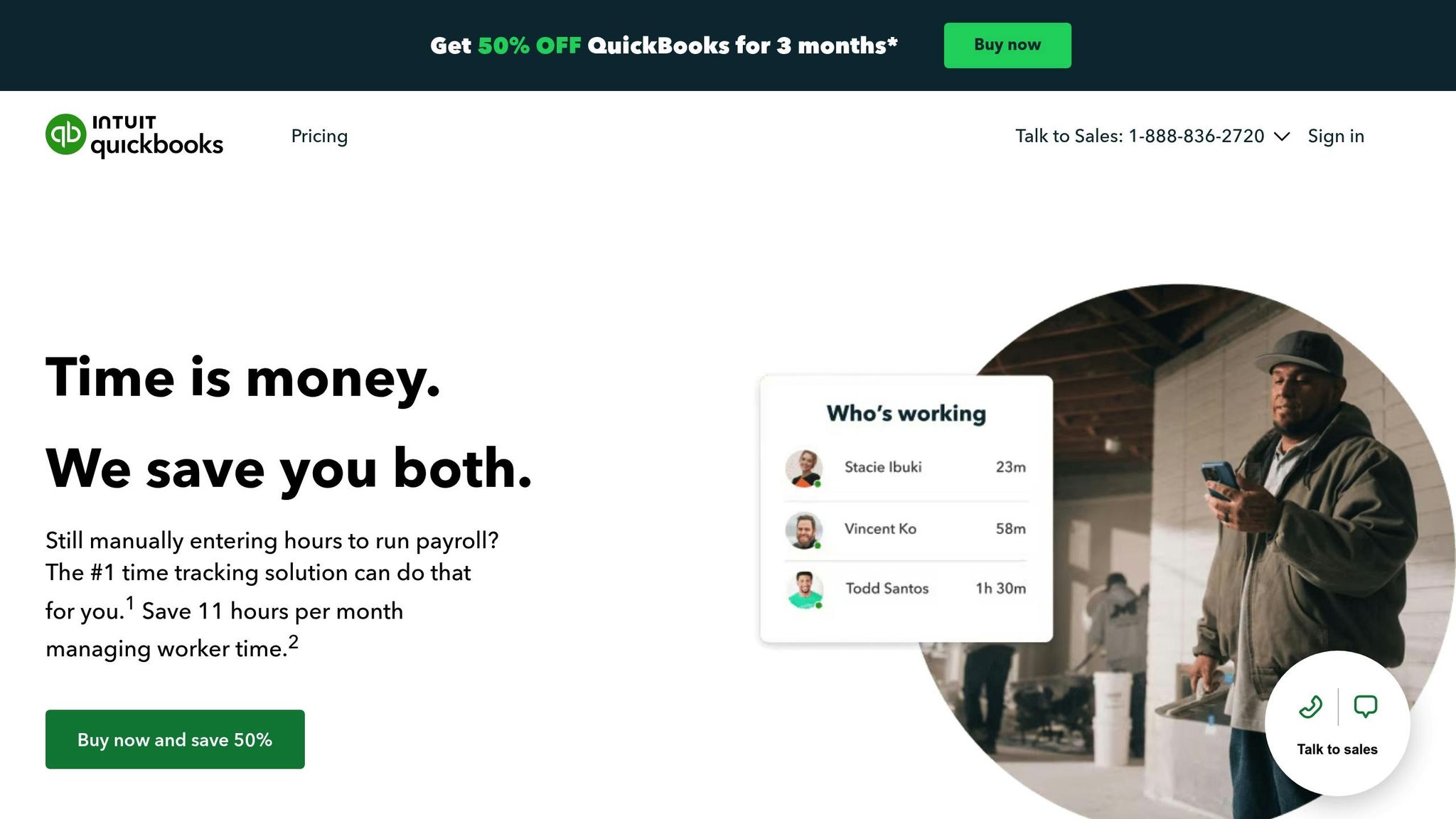
QuickBooks Time: Track time for effortless payroll, invoicing, and job costing.
How Real-Time Invoicing Streamlines Operations
Real-time invoicing has revolutionized workforce management, turning what was once a paperwork-heavy process into a smooth, automated system. With automated tools running 24/7, timesheets are now processed faster and more accurately than ever before.
This shift not only simplifies payroll and billing but also ensures they run more effectively.
Automated Payroll and Billing Processes
Gone are the days of manually entering timesheet data. Real-time invoicing systems now handle everything – from capturing work hours and calculating overtime to generating invoices automatically. This eliminates the need for constant communication between field supervisors, HR teams, and accounting departments.
For instance, when a worker completes their shift, the system automatically calculates overtime and generates invoices based on union agreements and state labor regulations. This is especially helpful for companies managing multiple job sites, each with unique wage laws, tax rates, and compliance requirements. These systems adjust seamlessly to regional rules without additional input.
The financial benefits are hard to ignore. By automating timesheet processing, companies cut down on administrative costs and reduce errors that could lead to wage disputes or compliance issues. It’s a win-win for everyone involved.
Instant Payment Updates for All Users
Real-time invoicing brings a new level of transparency. Workers can check their payment status, logged hours, and estimated earnings directly from their mobile devices. Meanwhile, supervisors gain instant insight into labor costs, helping them make informed staffing decisions on the spot.
This shared visibility eliminates the frustrations often tied to traditional payroll systems. Workers no longer need to chase updates about their paychecks, and project managers don’t have to wait for weekly or monthly reports to assess labor budgets. Instead, they can monitor costs in real time and adjust staffing or resources as needed.
One example of this in action is ABLEMKR, which uses integrated payroll workflows to provide real-time payment access for both skilled workers and employers. This system ensures seamless operations across construction and energy projects nationwide, offering transparency that benefits everyone.
Such real-time visibility also sets the stage for enhanced mobile interactions.
Mobile Platform Integration
The integration of mobile platforms takes automated payroll and real-time updates a step further, ensuring workers stay connected and informed at all times. Mobile apps linked to real-time invoicing systems simplify on-site time tracking and provide instant wage updates.
This convenience is vital. These systems are designed to handle complexities like time zones, local labor laws, and project-specific needs without requiring extra training. Workers can easily adapt, and supervisors can stay in the loop.
Mobile integration also facilitates faster communication between field teams and office staff. If there’s a question about recorded hours or payment details, workers can submit inquiries directly through the app and receive prompt answers. For companies managing large, dispersed teams, this feature offers real-time insights into worker locations, project updates, and labor costs. This makes it easier to allocate resources and adjust schedules on the fly.
Additionally, when workers input their own data into these mobile systems, the quality of information improves significantly. This reduces transcription errors, speeds up processing, and ensures that every hour worked is correctly attributed to the right project – providing a solid foundation for accurate payroll and billing.
Better Accuracy, Transparency, and Compliance
Real-time invoicing systems take the uncertainty out of payroll by automating calculations and maintaining detailed records. This not only reduces errors but also builds trust between employers and workers while ensuring adherence to complex labor regulations.
Switching from manual processes to automated systems isn’t just about convenience – it’s about achieving accountability and precision in workforce management.
Accurate Wage Calculations
Manual wage calculations are prone to mistakes, especially when accounting for overtime, shift differentials, and varying pay scales. Real-time systems handle these complexities effortlessly by applying predefined rules and up-to-date agreements. They automatically calculate variables like overtime, weekend premiums, and hazard pay – critical for industries like construction and energy, where pay structures often differ between projects.
These systems also ensure accuracy in deductions, benefits, and tax withholdings, delivering precise net pay without requiring manual adjustments. This eliminates the time and expense of fixing payroll errors later on.
For companies managing a workforce across multiple states, real-time systems automatically adjust calculations to reflect local tax rates and labor laws. For instance, a worker starting a project in Texas and completing it in Louisiana will have their wages calculated according to the regulations of each state, ensuring compliance and accuracy.
Clear Payment Records and Processes
Beyond accurate calculations, these systems enhance transparency, which is key to building trust and reducing disputes. Real-time invoicing systems maintain detailed audit trails that document how wages were calculated, when payments were processed, and what deductions were made.
Workers can access their payment history through mobile apps, allowing them to see not just their total pay but also a detailed breakdown. This includes hours worked, overtime, deductions, bonuses, and premiums. By providing this level of detail, these systems eliminate confusion and reassure workers that they’re being paid fairly.
Platforms like ABLEMKR exemplify this approach by offering integrated payroll workflows. Both workers and employers have real-time access to payment information, fostering a shared understanding of labor costs and compensation. The detailed audit trails also simplify resolving disputes and preparing for audits.
When audits or disputes arise, the system’s comprehensive record-keeping proves invaluable. Instead of piecing together scattered spreadsheets or paper records, companies can generate detailed reports that show complete payment histories for any worker or project. This level of documentation protects both employers and workers by providing clear evidence of all transactions.
U.S. Labor Law Compliance
Accurate and transparent records are essential for meeting stringent legal requirements. Compliance with federal and state labor laws demands constant attention to changing regulations, overtime rules, and reporting mandates. Real-time invoicing systems are designed to stay updated with current labor laws, automatically adjusting as regulations evolve.
The Fair Labor Standards Act (FLSA), for example, requires specific overtime calculations and record-keeping practices that vary by industry and job classification. Real-time systems ensure compliance by calculating overtime correctly based on the worker’s classification and industry-specific rules. For example, overtime rules for construction workers may differ from those in the energy sector, and these systems adapt accordingly.
They also handle varying state laws seamlessly, ensuring accurate wage and overtime calculations across jurisdictions. Additionally, they generate and store the detailed records required for compliance audits, such as hours worked, wages paid, and deductions taken. These records are formatted to meet regulatory standards and are readily available when needed.
For high-risk industries like energy and construction, compliance goes beyond wage and hour laws. It often includes maintaining safety training records, tracking certifications, and fulfilling specialized reporting requirements. Modern real-time invoicing systems integrate these needs into their workflows, creating a single, comprehensive record that satisfies all regulatory demands efficiently.
sbb-itb-aa28329
Effects on Employee Satisfaction and Productivity
Real-time invoicing doesn’t just streamline processes – it also has a big impact on employee morale and productivity. When workers are paid accurately and on time, trust in the organization grows, financial stress decreases, and employees can focus fully on their work. Reliable payroll systems are a cornerstone of a confident and motivated workforce.
Boosting Morale with Timely Payments
Nothing erodes trust like delayed or incorrect paychecks. Real-time invoicing eliminates this issue by ensuring payments are made exactly when they should be. This is especially important in industries where work is physically demanding or safety is a top priority, like construction and energy.
"Accurate time tracking and payroll ensure that your employees are compensated fairly and on time, which is fundamental to maintaining morale." – hrfuture.net
When payments are consistent and timely, employees feel valued and secure. This trust encourages them to share positive experiences with colleagues, strengthening team dynamics and even aiding recruitment efforts. By removing payment-related worries, organizations can directly enhance morale and create a more focused and cohesive workforce.
Empowering Workers with Mobile Access
Giving employees digital access to their payment details and work schedules puts them in control. With this transparency, workers can easily access critical information, reducing their reliance on HR teams for updates. This not only lightens the administrative load but also helps employees make smarter financial decisions, giving them a greater sense of empowerment.
Productivity Gains Through Payment Efficiency
Efficient payroll systems do more than just save time – they also drive productivity. By cutting down on payroll errors and related administrative tasks, employees and HR teams can concentrate on their primary responsibilities.
"When your team doesn’t have to worry about payroll issues or spend unnecessary time correcting mistakes, they can focus more on their core responsibilities." – hrfuture.net
This streamlined approach reduces stress, allowing workers to operate with greater clarity and focus. As trust in the payroll process grows, employees are more likely to engage proactively, bringing fresh ideas to the table and contributing to smoother project workflows. These benefits not only enhance daily operations but also set the stage for long-term organizational success. By addressing both human and operational needs, real-time invoicing becomes a key driver of workplace satisfaction and efficiency.
Implementation Challenges and Solutions
Implementing real-time invoicing can streamline operations and improve efficiency, but it’s not without its hurdles. To make the most of these systems, organizations need to carefully plan and address the challenges that come with the transition. With the right strategies, these obstacles can be tackled, paving the way for a smoother adoption process.
Managing Initial Setup Costs
The upfront costs of real-time invoicing systems can feel overwhelming. These expenses often include software licensing, hardware upgrades, integrating the system with existing tools, and training employees. However, with thoughtful financial planning, these costs can be managed effectively.
One way to ease the financial burden is to roll out the system gradually. Start with a pilot project to test its functionality and identify any issues before committing to a full-scale implementation. This phased approach not only spreads out costs but also minimizes risks.
A detailed cost-benefit analysis is also essential. While the initial investment may vary depending on the size of the business and the complexity of the system, the long-term savings – like reducing administrative tasks, minimizing payroll errors, and improving compliance – often outweigh the upfront costs.
If your organization already uses tools like project management or time-tracking software, you may be able to integrate real-time invoicing features into your existing setup. This can be more budget-friendly than starting from scratch and can also simplify the transition for employees who are already familiar with your current systems.
Employee Training and Change Management
The success of a real-time invoicing system doesn’t just depend on technology – it hinges on the people who use it. Transitioning from traditional methods to a digital system can be met with resistance, especially in industries that rely heavily on established processes.
To address this, training programs should cater to different learning preferences. Hands-on workshops, for example, are particularly effective for teaching field workers how to navigate the system. These sessions should cover essentials like entering time, accessing payment details, and using mobile apps.
Enlisting “change champions” within your organization can also help. These are team leaders or supervisors who adopt the system early on and serve as resources for their peers. Their support can reduce the workload for HR and IT teams while fostering a sense of trust among employees.
A gradual rollout strategy can further ease the transition. Start with administrative staff and project managers, allowing them to become proficient before introducing the system to field workers. This ensures that key personnel are ready to provide support when the broader workforce begins using the platform.
Consistent communication throughout the process is key. Share updates regularly about the system’s benefits, training schedules, and progress milestones. Being transparent about timelines and addressing concerns openly can help build confidence and cooperation among employees.
Customization for Industry Needs
Industries like construction and energy have specific invoicing requirements that generic software often can’t meet. Customization is critical to ensure the system aligns with the unique demands of these fields.
In construction, for instance, invoicing systems need to handle project-based billing, which can involve multiple job sites, varying pay rates, and complex overtime calculations. Including custom fields for job codes, equipment usage, and material costs ensures accurate tracking and billing while staying compliant with wage regulations.
For the energy sector, safety and compliance are top priorities. Invoicing platforms that integrate with safety training records, certification databases, and incident reporting tools can ensure that only qualified workers are paid for specific tasks, while also supporting regulatory compliance.
Mobile functionality is another must-have for industries where employees often work in remote areas with limited internet access. Features like offline data entry and automatic synchronization ensure no information is lost. Additionally, durable mobile interfaces designed for rugged environments – such as those operable with gloves or in harsh weather – are essential.
Scalability is vital for businesses that experience growth or seasonal workforce changes. A good invoicing system should accommodate new users, projects, and services without requiring costly upgrades or extensive modifications.
Finally, industry-specific reporting tools can save time and provide valuable insights. For example, construction companies might need cost-per-square-foot analyses, while energy companies could benefit from equipment utilization reports or safety compliance metrics. Setting up these customized reports during implementation can streamline operations and provide actionable data from day one.
How Real-Time Invoicing Transforms Workforce Management
Real-time invoicing is reshaping workforce management by moving away from outdated manual systems. This shift not only makes operations more efficient but also creates a transparent and employee-friendly work environment that benefits everyone involved.
Key Benefits at a Glance
Real-time invoicing brings significant improvements to workforce management through automation and transparency. Automated wage calculations eliminate errors in overtime and rate adjustments, ensuring financial accuracy. At the same time, built-in compliance features simplify regulatory tasks by providing tamper-proof records and real-time validation.
Employees also see direct benefits. With mobile access to payment details, workers gain immediate control and visibility over their earnings, which boosts satisfaction. Employers, on the other hand, build trust with their teams by sharing real-time data on hours worked, rates, and payment schedules. This open approach fosters a stronger relationship between employers and employees.
These benefits allow organizations to make quick, informed decisions that can drive strategic growth.
Steps for Employers and Workers
For businesses looking to adopt real-time invoicing, the first step is to evaluate current invoicing processes and pinpoint how these systems can integrate with existing ERP or accounting tools. Early involvement of finance, IT, and procurement teams is crucial to addressing potential challenges and ensuring a smooth transition.
Providing clear training and ongoing support will help employees and stakeholders adapt to the new system with confidence. For industries like construction and energy, platforms such as ABLEMKR offer tailored solutions. ABLEMKR integrates features like verified worker profiles, automated job matching, and transparent cost structures with real-time payment processing, making it a robust option for managing workforce challenges in high-demand sectors.
FAQs
How does real-time invoicing help businesses comply with labor laws across different regions?
Real-time invoicing plays a key role in ensuring businesses comply with labor laws by instantly checking and recording invoice data. This process helps meet specific regional requirements, like including mandatory fields, adhering to tax rules, and following reporting standards, which can significantly reduce the chances of errors or discrepancies.
With accurate and current financial records at their fingertips, businesses can promptly handle compliance issues and stay in step with local labor regulations. This approach not only lowers legal risks but also simplifies managing a workforce across different regions.
What steps should a company take to successfully implement a real-time invoicing system?
To set up a real-time invoicing system, begin by carefully assessing your current invoicing process. Look for inefficiencies, gaps, or areas that could be improved. This step helps pinpoint the exact features your business will need in the new system.
Next, select a platform that matches your business objectives and adheres to industry regulations. It’s crucial to involve key stakeholders early on to secure their support and make the integration process smoother.
After the system is implemented, focus on standardizing invoice formats and data to maintain consistency. Make sure your team receives comprehensive training, so they’re fully prepared to use the system effectively. This approach not only boosts efficiency but also minimizes errors, ensuring you get the most out of your investment.
How does real-time invoicing enhance workforce management and boost employee satisfaction in industries like construction and energy?
Real-time invoicing transforms workforce management by providing clear visibility into project finances and payment workflows. With this system, workers receive accurate and timely payments, easing financial worries, strengthening trust, and boosting morale across the team.
For managers, tracking payments in real time makes it easier to spot and address issues quickly. This leads to smarter resource allocation and minimizes project delays. The result? A smoother process that enhances productivity and keeps the workforce engaged and efficient.


