
Job descriptions are often the first impression a company makes on skilled workers, and their quality can make or break hiring efforts. Poorly written descriptions confuse candidates, attract unqualified applicants, and lead to high turnover. On the other hand, clear and detailed postings help attract the right talent, set realistic expectations, and improve retention.
Key Takeaways:
- Clarity Matters: Specific skills, certifications, and responsibilities should be outlined (e.g., "OSHA 30-hour certification required").
- Transparency Works: Include pay ranges, project details, and work conditions to increase interest.
- Focus on Skills: Shift from degree requirements to skills and certifications to widen the talent pool.
- Highlight Growth: Mention career advancement, training, and mentorship to appeal to long-term candidates.
Crafting Job Descriptions That Attract Top Talent: A Complete Guide
Research on Effective Job Descriptions
Studies reveal that well-structured job descriptions significantly improve both the quality and quantity of applicants. This highlights just how much language and structure can influence the hiring process.
How Language and Structure Affect Applicant Pools
The way a job description is crafted has a direct impact on both the number of applicants and their qualifications. Research in organizational psychology shows that clear, action-oriented language tends to attract more qualified candidates compared to vague or overly technical descriptions. For instance, swapping out generic phrases like "various duties as assigned" for specifics such as "operate hydraulic excavators for foundation work" or "perform electrical installations in compliance with industry standards" can make a noticeable difference in applicant quality.
Additionally, job postings that use organized formats – like clear sections and bullet points – draw more attention than dense, text-heavy paragraphs. This is especially critical in industries where skilled workers often skim listings during brief breaks.
Tone also matters. Using inclusive, straightforward language instead of corporate jargon can attract a broader range of applicants. For example, saying "seeking experienced welders who collaborate well with teams" resonates better in blue-collar industries than overly formal phrasing.
Another key factor is mobile optimization. With more candidates searching for jobs on their phones, ensuring descriptions are easy to read on smaller screens can boost engagement. This growing emphasis on precise, skills-focused language reflects a broader shift in hiring practices.
The Shift from Degree-Based to Skills-Based Hiring
Employers are increasingly moving away from requiring four-year degrees for skilled roles, especially in technical and trade fields. This shift toward skills-based hiring broadens applicant pools and promotes diversity without compromising on quality.
Instead of focusing on academic credentials, this approach prioritizes verifiable skills and certifications. Job descriptions that highlight specific abilities and relevant certifications tend to attract candidates who are ready to contribute right away. Research also shows that employees hired for their practical skills and experience often outperform and stay longer with their employers compared to those chosen based on degrees alone.
Job Description Elements That Attract Skilled Workers
Creating job descriptions that resonate with skilled workers in the construction and energy industries requires precision and attention to detail. The most effective postings provide the critical information candidates need to determine if they’re a good fit. Here’s how to craft job descriptions that draw in top talent.
Clear Skills, Certifications, and Safety Training Requirements
Job descriptions that spell out specific skills and certifications are far more effective than those with vague statements like "construction experience preferred." For example, stating, "Must hold current OSHA 30-hour certification and have 3+ years of experience operating tower cranes on commercial projects" provides clarity and sets clear expectations.
Safety training requirements are especially crucial in these industries. Mentioning certifications like confined space entry or hazmat handling, along with company safety protocols, signals a commitment to workplace safety. This not only attracts safety-conscious candidates but also weeds out those who lack the necessary credentials.
When listing technical skills, be as specific as possible. Instead of saying "electrical experience", try something like, "Experience with 480V three-phase systems and motor control centers" or "Proficiency in conduit bending and wire pulling for industrial applications." This level of detail allows qualified candidates to self-select while discouraging unqualified applicants.
Clear Compensation and Worksite Information
Transparency about pay can significantly boost application rates. Skilled workers are more likely to apply when job descriptions include specific wage ranges, such as "$28-$35 per hour based on experience" or "Starting at $65,000 annually with performance bonuses." Vague phrases like "competitive pay" often result in fewer applications.
Including details about the project location, duration, and working conditions is equally important. For instance, specifying, "18-month bridge construction in downtown Phoenix; outdoor work in temperatures up to 115°F," helps candidates understand what to expect.
Work schedules and timelines are another key factor. Clearly stating hours, such as "Monday-Friday, 6 AM-4:30 PM with occasional Saturday overtime" or "Rotating 12-hour shifts, 4 days on/4 days off," gives workers the information they need to decide if the position aligns with their commitments.
Additionally, providing detailed benefits information can set your job posting apart. Instead of saying "benefits available", outline specifics like health insurance, retirement plans, paid time off, and unique perks such as tool allowances or company-provided vehicles.
Career Growth and Training Opportunities
Skilled workers value employers who prioritize their professional development. Highlighting career advancement opportunities can make your job posting stand out. For example, mentioning pathways from journeyman to foreman or even project management roles appeals to candidates seeking long-term growth.
Support for training and certifications is another big draw. Including details like "Company pays for AWS welding certification upgrades and provides 40 hours of annual training" demonstrates your commitment to employee development and can attract ambitious workers.
Mentorship programs and apprenticeships are particularly appealing to younger workers entering the trades. Job descriptions that mention pairing new hires with experienced mentors or offering structured learning programs can differentiate your company from competitors.
Finally, highlighting cross-training opportunities can attract workers eager to expand their skill sets. Whether it’s learning to operate new equipment, gaining experience in different construction phases, or developing leadership abilities, these opportunities show your company is invested in their long-term success.
sbb-itb-aa28329
Data on Optimized Job Descriptions
Recent data highlights how fine-tuning job descriptions can significantly improve recruitment outcomes. By focusing on specific details and skills, companies have seen measurable improvements in attracting skilled candidates and achieving better hiring results. In contrast, generic job postings often fail to capture the attention of top talent.
Higher Applicant Volume and Diversity
Adding specific details – like clear salary ranges, technical requirements, and job responsibilities – can draw in a larger and more diverse group of applicants. For example, stating an exact compensation range instead of using vague terms like "competitive salary" makes the opportunity more transparent. Similarly, inclusive language and focusing on skills rather than unnecessary degree requirements can encourage applications from individuals with different backgrounds. When job descriptions clearly outline technical qualifications, candidates can quickly determine if the role aligns with their expertise. This not only increases the number of qualified applicants but also reduces unqualified submissions. A broader and more qualified pool sets the stage for better retention and employee satisfaction.
Better Retention and Worker Satisfaction
The benefits of well-thought-out job descriptions don’t end with hiring. Detailed postings help set realistic expectations, which can lead to greater satisfaction and long-term retention. Including information about training opportunities, apprenticeship programs, or clear paths for career growth can further enhance employee loyalty. This approach reduces turnover costs and helps build a more stable workforce.
Comparison: Standard vs. Optimized Job Descriptions
Optimized job descriptions stand out because they provide candidates with comprehensive details, allowing for a better evaluation of job fit. Companies that prioritize clarity in their postings often see improvements in hiring efficiency, candidate quality, and overall satisfaction. These improvements not only streamline the recruitment process but also cut costs by reducing the time spent on screening and lowering turnover rates.
This data reinforces the importance of well-crafted job descriptions as a crucial part of the recruitment process, offering tangible benefits for both employers and employees alike.
How ABLEMKR Supports Effective Job Descriptions and Hiring
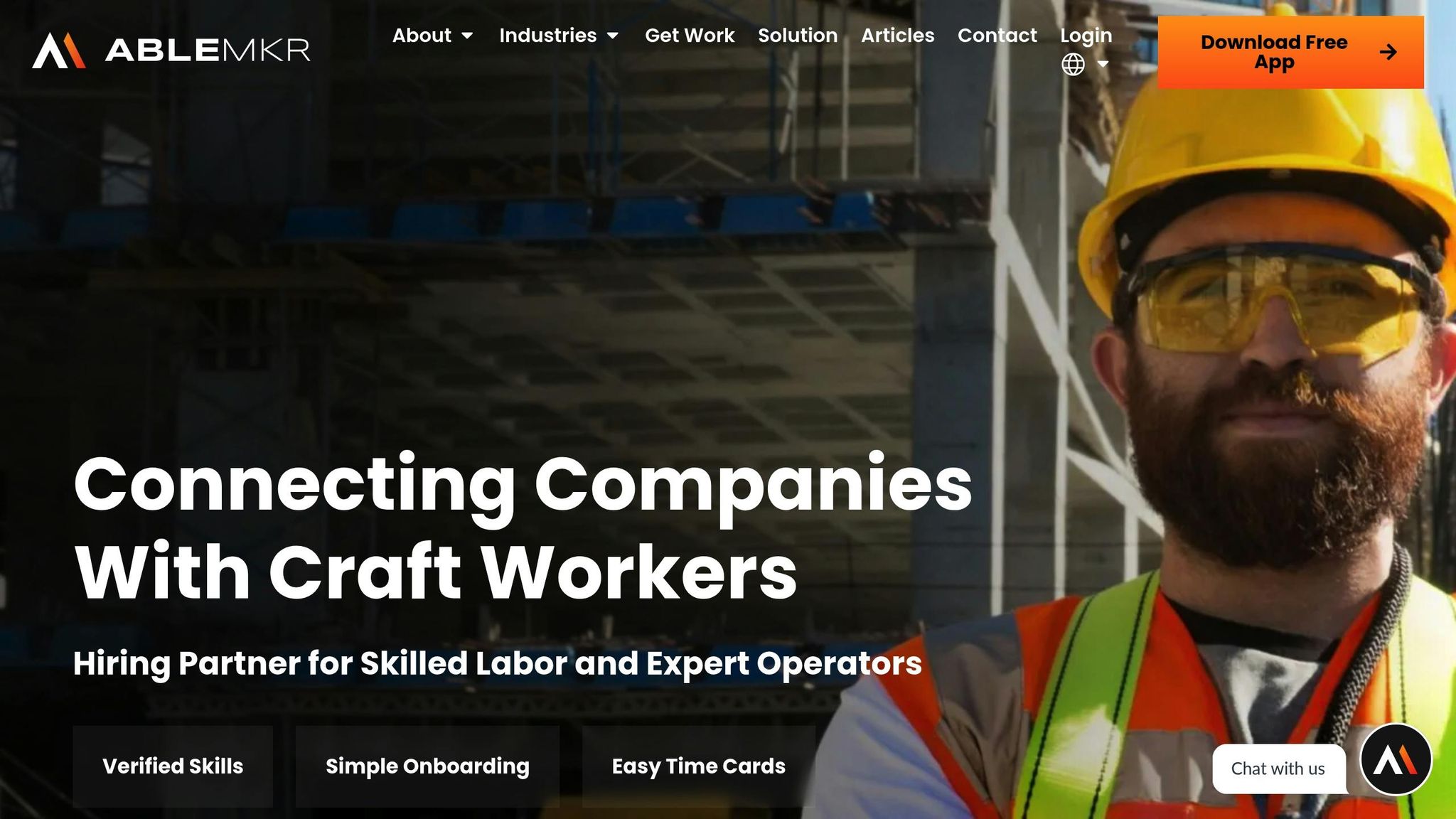
ABLEMKR simplifies job postings by providing tools that help employers create clear, targeted descriptions tailored specifically for skilled workers. This approach aligns with research showing that detailed job postings attract higher-quality applicants. With a focus on industries like construction, energy, and extractives, ABLEMKR ensures job descriptions meet the unique demands of these fast-paced sectors.
Tools for Creating and Publishing Job Descriptions
ABLEMKR equips employers with tools to craft comprehensive job postings that effectively attract skilled candidates. Through its verified worker profiles, employers can outline exact requirements, such as certifications, safety training, and technical skills. This level of detail reduces ambiguity, helping to filter out unqualified applicants.
Employers can also include specifics like compensation, work sites, and project duration – details proven to engage candidates. By offering a transparent cost structure, ABLEMKR encourages employers to provide clear salary details instead of vague terms like "competitive pay." Employers can specify hourly rates, overtime policies, and benefits, giving candidates the information they need upfront.
The platform’s mobile-first design allows for quick and easy job posting, whether for planned projects or urgent needs. This is particularly valuable in industries like oil and gas or mining, where timelines often shift, and skilled workers need to be deployed quickly.
Real-Time Job Matching and Clear Processes
Once job postings are created, ABLEMKR enhances their reach with automated job matching. This feature connects employers with candidates based on verified certifications, location, and availability. By targeting the most qualified workers, the platform improves applicant quality, a critical factor for successful hiring.
Geo-location matching ensures candidates are within proximity to the job site, while real-time invoicing and transparent payment processes provide assurance about compensation. Workers can see exactly where they’ll be working and consider commute times or travel needs before applying. The platform also offers a W2 employment structure and workers’ compensation coverage, making positions more appealing to experienced professionals. These features create a seamless process for connecting employers with the right candidates.
Simplified Workforce Management and Compliance
ABLEMKR doesn’t just help with hiring – it also simplifies workforce management. The workforce hourly management system automatically tracks worker hours, reducing administrative tasks and ensuring accurate payroll.
For industries like construction and energy, regulatory compliance is critical. ABLEMKR’s compliance tracking tools help employers meet these requirements effortlessly, allowing them to focus on creating detailed and engaging job descriptions instead of worrying about paperwork.
Additionally, project post-calculations provide a clear view of total project costs, enabling better budgeting for skilled labor. This feature supports precise job descriptions by including accurate timelines and project scope details, giving workers the information they need to evaluate opportunities.
The platform’s worker ratings system promotes accountability on both sides. Employers can reference past worker performance when creating postings, while workers can assess potential employers based on previous ratings. This mutual transparency fosters trust and leads to better matches, higher retention rates, and more effective hiring overall.
Conclusion: Writing Job Descriptions to Improve Skilled Worker Hiring
Focusing on skills in job descriptions can significantly improve the quality of applicants and boost retention rates. By prioritizing practical expertise over traditional academic credentials, employers can ensure a better match between candidates and job requirements.
Shifting away from rigid educational requirements and instead highlighting certifications and hands-on experience unlocks access to a broader talent pool. This approach welcomes career changers, military veterans, self-taught professionals, and international workers – groups that often bring valuable skills but may not meet conventional hiring criteria. For industries like construction, energy, and extractives, where workforce demands are rising, this inclusive strategy is critical. Technology-driven recruitment solutions are increasingly stepping in to meet these evolving workforce needs.
ABLEMKR leverages automation and AI to simplify the hiring process, amplifying the benefits of skills-focused job descriptions. Patrick Wallain, President and CEO of ABLEMKR, underscores the challenges many companies face:
"Companies have a hard time going from six workers on site to 100 in six weeks."
To address this, ABLEMKR automates the creation and distribution of job postings. Wallain explains:
"Instead of filling out, manually, 50 job posts, we are using AI and automation techniques to drag and scrape what companies need and push it out to a publisher network."
FAQs
What can companies do to create job descriptions that attract top skilled workers?
To draw in highly skilled professionals, businesses need to craft job descriptions that are clear, detailed, and engaging. Make sure to emphasize the key responsibilities, necessary skills, and opportunities for growth within the role. Adding information about the company’s culture, core values, and commitment to diversity can also make the position more enticing to potential candidates.
Being transparent is essential – spell out expectations, benefits, and career advancement opportunities upfront. This approach not only attracts the right talent but also minimizes mismatched applications, saving time and effort in the hiring process. A thoughtfully written job description is a powerful tool to connect with the most qualified candidates effectively.
What are the advantages of focusing on skills instead of degrees when hiring for skilled positions?
Shifting to a skills-focused hiring strategy broadens your options by emphasizing what candidates can do rather than where they studied. This approach allows companies to identify individuals with the abilities needed to excel, often leading to stronger job performance and a better match for the role.
It also opens the door to greater workplace diversity by considering candidates from a variety of backgrounds. Plus, assessing skills directly tends to be a more reliable way to predict success on the job compared to leaning heavily on educational qualifications.
How do clear and well-structured job descriptions affect hiring skilled workers?
Clear, detailed job descriptions are essential for attracting top talent and keeping employees engaged. When responsibilities, qualifications, and expectations are laid out plainly, candidates can better assess whether they align with the role. This leads to a stronger pool of applicants and fewer mismatches during the hiring process.
On top of that, transparent job descriptions help ensure that both employers and employees are on the same page, minimizing misunderstandings. This kind of clarity improves communication, boosts job performance, and creates a more predictable and satisfying work environment – key factors in retaining employees long-term.


