
Construction is shifting gears. The rise of gig work is transforming how contractors hire, manage, and pay workers, offering flexibility but introducing unique challenges. Here’s what you need to know:
- What is Gig Work in Construction? Temporary, project-specific jobs where workers choose assignments that fit their schedules. Think electricians, plumbers, or general laborers moving between projects.
- Why the Shift? Labor shortages, rising costs, and the need for specialized skills make gig work appealing for contractors and workers alike.
- Challenges: Managing schedules, keeping workers engaged, ensuring legal compliance, and maintaining quality/safety standards are more complex with gig workers.
- Solutions: Technology platforms like ABLEMKR simplify hiring, scheduling, compliance, and payment, while hybrid workforce models combine gig and full-time staff for flexibility.
In short, gig work is reshaping construction. Contractors need to adjust their workforce strategies, embrace tech tools, and treat gig workers as valuable contributors to thrive in this evolving landscape.
Project Management in the Gig Economy Managing Freelancers and Contractors | iCert Global

Challenges of Managing Gig Workers in Construction
Gig work in construction brings flexibility and potential cost advantages, but it also introduces hurdles that can complicate project management. These challenges, if overlooked, can disrupt timelines, inflate budgets, and jeopardize overall project outcomes.
Managing Complex Scheduling
Scheduling gig workers is far from straightforward. Unlike full-time employees with steady routines, gig workers often juggle multiple projects, leading to unpredictable availability. This can create logistical headaches, especially when last-minute cancellations or shifts in availability occur. For instance, a framing crew might be ready to start early in the week, but the electrical contractor for the next phase might not be available until later. Add in the possibility of workers opting for higher-paying gigs elsewhere, and contractors are often left scrambling to fill gaps.
Weather delays only add to the chaos, especially when specialized skills are in short supply. Geographic considerations further complicate things – while workers may travel for longer assignments, they often avoid shorter tasks. This means project managers must factor in travel time, costs, and worker preferences when coordinating schedules. These complexities can lead to disengagement, making it even harder to manage the workforce effectively.
Keeping Workers Engaged
Building loyalty and engagement with gig workers can feel like an uphill battle. Unlike full-time employees, gig workers often prioritize short-term financial gains and may leave for better-paying opportunities with little or no notice. This lack of long-term commitment can disrupt productivity and project momentum.
Communication and collaboration also take a hit. Gig workers typically start each project with no established rapport or communication practices, which can slow down workflows. Additionally, career development opportunities are often limited for gig workers. Full-time employees might be motivated by promotions or training programs, but gig workers, with their short tenures, often see little reason to invest in company-specific skills. This dynamic can lead to a "just-get-the-job-done" mindset, discouraging contractors from offering training or development.
Financial incentives alone often aren’t enough to keep gig workers engaged. If a more attractive opportunity arises, they may leave mid-project, especially if their pay is tied to task completion rather than a steady income.
Legal Compliance and Worker Classification
Legal compliance is another minefield when managing gig workers. Misclassifying workers can lead to hefty penalties, back taxes, and other legal troubles. The line between independent contractors and employees can blur, particularly in construction, where strict safety protocols and process adherence might unintentionally create an employer-employee dynamic.
The IRS uses criteria like control, financial arrangements, and the nature of the relationship to determine worker classification. Construction projects, with their detailed safety requirements and procedural guidelines, often test these boundaries.
Tax and payroll management for gig workers is also more complex. Contractors must issue 1099 forms and ensure workers handle their own tax responsibilities. Workers’ compensation insurance requirements add another layer of complexity, varying by worker classification and state laws. For example, California’s AB5 law imposes a strict test to determine independent contractor status, making it harder for construction companies to rely on gig labor. To stay compliant, contractors must maintain thorough documentation outlining work scopes, payment terms, and worker autonomy.
Maintaining Quality and Safety Standards
Quality and safety are critical in construction, but managing these aspects with gig workers can be tricky. With a constantly changing workforce, maintaining consistent quality is a challenge. Gig workers often differ in experience, work habits, and familiarity with a contractor’s processes, making it harder to meet client expectations consistently.
Safety is an even bigger concern. Regulatory guidelines demand proper training and strict adherence to safety protocols, but gig workers often arrive with varying levels of training and knowledge of current standards. This inconsistency can create risks on job sites.
Validating skills and credentials is another time-consuming but essential task. Unlike full-time employees who undergo thorough vetting during onboarding, gig workers often present self-reported qualifications that require verification. Ensuring that workers have the necessary skills is crucial for both quality and safety.
The transient nature of gig work compounds these issues. While improved training and onboarding can help address gaps, contractors may hesitate to invest time and resources in short-term workers, leaving these challenges unresolved.
Technology Solutions for Gig Workforce Management
Modern technology is stepping up to address the challenges of managing gig workers in the construction industry. From scheduling headaches to compliance hurdles, these tools simplify the way contractors connect with skilled workers and oversee projects, making the entire process more efficient.
Automated Scheduling and Job Matching
Smart scheduling tools are a game-changer for workforce planning. Instead of wasting time making endless phone calls to find available workers, contractors can now rely on platforms that automatically match jobs with the right candidates. These systems take into account factors like skills, location, availability, travel distance, certifications, and specific project needs to ensure the best fit.
Workers can update their availability in real time using mobile apps, which allows schedules to adapt instantly to changes, such as delays or last-minute adjustments. Automated reminders help reduce no-shows by prompting workers to confirm their attendance ahead of time. Additionally, rating systems highlight reliable workers for critical tasks, while geographic optimization tools ensure assignments are cost-effective by factoring in travel time and expenses.
Compliance and Cost Transparency
Beyond scheduling, these platforms offer tools to streamline compliance and improve cost management. For example, they automate worker classification and documentation, making it easier for contractors to meet legal requirements. Real-time invoicing eliminates the need for manual paperwork, giving contractors a clear view of labor expenses and helping them stick to their budgets.
Some systems also integrate workers’ compensation features, automatically adjusting coverage based on the type of work and the worker’s classification. This not only simplifies insurance management but also ensures both contractors and workers are properly protected.
ABLEMKR: Complete Workforce Solution
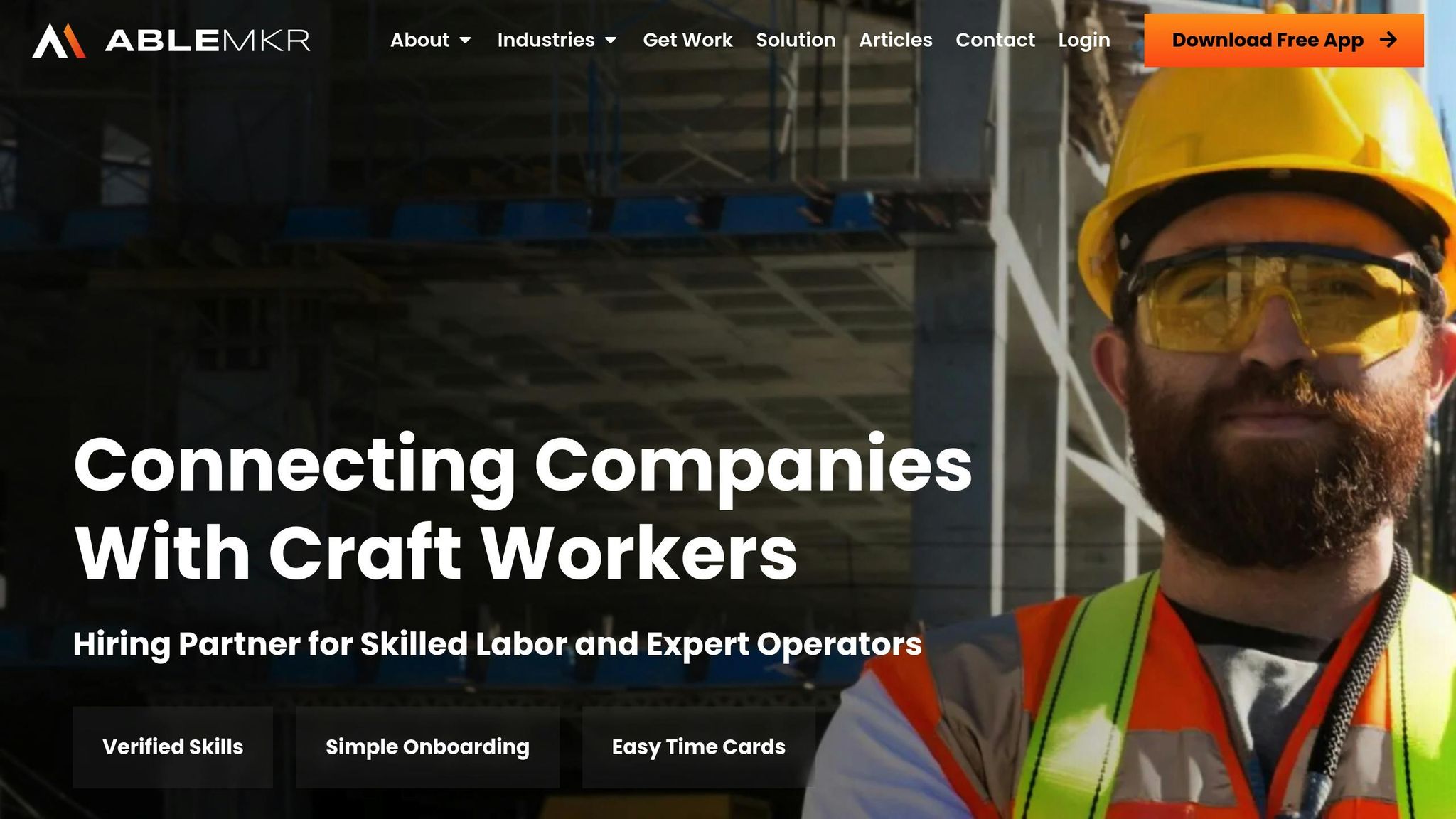
ABLEMKR stands out as a robust platform designed specifically for the construction and energy sectors. It tackles the unique challenges of gig workforce management by combining verified worker profiles with smart matching algorithms. Contractors can connect with pre-vetted talent in major U.S. cities and energy hubs, streamlining the hiring process.
The platform’s mobile-first approach makes it easy for workers to update their availability and track earnings, while contractors can post jobs, review candidates, and manage teams on the go. This addresses common pain points like worker engagement, compliance, and quality control.
ABLEMKR also uses a W2 employment model, solving classification issues and ensuring workers are covered by proper workers’ compensation. Its automated matching system takes into account certifications, safety training, availability, and location, ensuring the right workers are assigned to the right projects. Real-time updates give project managers visibility into worker attendance and confirmations, while integrated payroll tools simplify payment processing.
For workers, ABLEMKR offers flexible scheduling and guarantees on-time payments – two major concerns in gig work. A strong rating system helps top performers build their reputation and access better opportunities. Combined with transparent invoicing, the platform provides contractors with a clear view of labor costs upfront, making budgeting more predictable and hassle-free.
sbb-itb-aa28329
" tabindex="-1">
sbb-itb-aa28329
Best Practices for Retaining Gig Workers
Keeping skilled workers on board is a top priority for construction companies operating in the gig economy. With this sector valued at $556 billion in 2024 and projected to grow significantly by 2033, the competition for talent is intense. The secret? Treat gig workers like valued partners, not just temporary help.
Fair and Timely Pay
Nothing erodes trust faster than delayed or unclear payments. In construction, paying workers on time is non-negotiable if you want to keep them coming back.
To build trust, be upfront about wages. Clearly outline base pay, overtime, travel reimbursements, and bonuses to avoid misunderstandings. Transparency in pay helps workers feel secure and respected.
Proper worker classification is equally critical. Misclassification can lead to costly penalties, fines, and back payments. Leveraging technology can help here. Automated payroll systems not only ensure timely and accurate payments but also maintain compliance with tax laws and worker classification requirements. These systems reduce errors, keep payment schedules consistent, and make documentation a breeze.
But pay isn’t the only way to build loyalty – communication matters just as much.
Clear Communication and Feedback
Fair pay is essential, but clear communication is what keeps gig workers engaged. Open communication channels make workers feel heard and appreciated. Unlike full-time employees who regularly interact with supervisors, gig workers often operate independently, so intentional communication is key.
Regular check-ins during projects can identify potential issues before they become major problems. Whether it’s a quick text or a short phone call, addressing concerns about safety, equipment, or project updates creates a supportive work environment.
Feedback should go both ways. While companies can provide input on work quality and safety compliance, workers should also have the chance to share their thoughts. Whether it’s reporting a problem, suggesting improvements, or raising concerns about working conditions, this mutual exchange builds respect and strengthens operations.
Digital tools make this even easier. Mobile apps, for example, can provide real-time updates on schedule changes, safety alerts, or project modifications. They also let workers confirm availability, report task completions, and communicate directly with managers.
Training and Recognition Programs
Investing in workers’ skills and recognizing their efforts goes a long way in building loyalty. Offering safety training and skill development opportunities not only reduces the risk of injuries but also shows workers you’re invested in their growth.
Recognition matters too. Simple gestures like awards, positive reviews, or small bonuses can boost morale and enhance workers’ professional reputations. Performance-based incentives are another great motivator. Rewarding workers for meeting deadlines, maintaining safety standards, or receiving positive client feedback encourages excellence and helps identify top performers. These high achievers can then be prioritized for premium assignments.
Lastly, think long-term. Discuss career pathways with workers who show ambition. Whether it’s supervisory roles, specialized projects, or preferred contractor status, giving them a vision for the future transforms short-term gigs into lasting partnerships. This approach moves beyond transactional relationships, building a sense of loyalty and shared success.
The Future of Gig Work in Construction
The construction industry is evolving, and gig work is no longer a fringe concept – it’s becoming a core part of workforce strategy. By combining traditional roles with gig-based positions, forward-thinking construction companies are finding ways to stay ahead of the curve and adapt to changing demands.
Hybrid Workforce Models
Many construction firms are now adopting hybrid workforce models, which blend permanent staff with gig workers to create more dynamic and flexible teams. This approach allows companies to keep a stable core workforce while scaling up or down based on project needs.
This model works particularly well for specialized roles. Full-time employees handle essential tasks, while gig workers bring in expertise for specific, short-term projects. It’s a win-win: companies maintain stability while gaining the flexibility to adapt quickly.
Hybrid teams also shine during seasonal peaks. The key to success here is treating gig workers as integral team members rather than temporary help. Firms that include gig workers in safety protocols, project planning, and communication systems tend to achieve better outcomes than those that sideline them.
To make this model work seamlessly, companies are leaning heavily on integrated technology solutions.
The Role of Platforms Like ABLEMKR
Technology is revolutionizing workforce management in construction, and platforms like ABLEMKR are leading the charge. These platforms connect skilled laborers with projects across the U.S., handling everything from hiring and compliance to scheduling.
One of the biggest advantages of platforms like ABLEMKR is their ability to solve long-standing industry challenges. For example, pre-vetted worker profiles simplify the hiring process by ensuring that workers meet the necessary certifications and safety training requirements. Automated matching systems also help companies quickly find the right workers for the right jobs, cutting down on delays.
Mobile connectivity is another game-changer. Workers can search for opportunities and confirm availability directly from their phones, while employers gain real-time insights into worker status and project progress. This reduces downtime and speeds up decision-making.
Compliance is another area where these platforms shine. They streamline everything from worker classification to payroll processing, minimizing legal risks and ensuring workers are paid on time.
By integrating these tools, construction companies can adapt to industry shifts more strategically and efficiently.
Preparing for Industry Changes
To stay competitive, companies need to embrace hybrid workforce models and invest in technology that simplifies workforce management. Platforms that handle scheduling, communication, and compliance in one place are becoming essential.
As challenges like worker engagement and legal compliance persist, companies must rethink how they approach gig workers. The old mindset of treating temporary workers as expendable won’t work in today’s gig economy. Instead, building long-term relationships with skilled gig workers creates a reliable talent pool that companies can depend on for future projects.
Training internal teams to manage gig workers effectively is equally critical. Supervisors need to understand how to integrate gig workers into their teams, and HR departments must stay updated on classification rules and compliance regulations.
The industry is also seeing a surge in demand for projects related to energy transitions, mining, and heavy infrastructure. Companies that adapt their workforce strategies to meet these growing opportunities will be better positioned for success.
Lastly, the future lies in data-driven decision-making. Platforms that offer insights into worker performance, project costs, and scheduling efficiency will help companies optimize operations and identify top talent for future projects.
The construction industry isn’t just reacting to change – it’s shaping it. By blending traditional roles with gig work and leveraging advanced platforms, companies can build stronger, more competitive teams equipped for the challenges ahead.
FAQs
How can construction companies successfully integrate gig workers into their teams while ensuring quality and safety?
To bring gig workers on board effectively, construction companies need to focus on clear communication and implement structured onboarding processes. These efforts should emphasize safety protocols, project expectations, and quality standards to ensure gig workers are equipped to meet the company’s objectives.
Providing regular training sessions and safety briefings specifically designed for gig workers can go a long way in maintaining regulatory compliance and ensuring consistent work quality, even for short-term assignments. Tools like ABLEMKR can simplify this process by offering verified worker profiles and workforce management features, making hiring more efficient and oversight more transparent. This ensures that safety, quality, and productivity remain intact across all projects.
What legal factors should construction companies consider when hiring and managing gig workers?
Construction companies must carefully navigate worker classification laws to avoid legal troubles and financial penalties. Mislabeling gig workers as independent contractors instead of employees can lead to fines, lawsuits, and other serious consequences. For instance, California’s AB 5 law sets clear and stringent rules for determining worker status, and both federal and state agencies have ramped up their enforcement efforts.
Getting worker classification right isn’t just about staying on the right side of the law – it’s also about adhering to wage regulations, providing required benefits, and upholding labor protections. Understanding these responsibilities is crucial for safeguarding your business from expensive legal disputes while fostering a fair and transparent work environment.
How does ABLEMKR help construction companies manage gig workers more effectively, especially with scheduling and compliance?
ABLEMKR makes managing construction teams easier with its real-time job matching and flexible scheduling tools. These features help assign the right workers to the right tasks quickly, cutting down on delays and keeping projects running smoothly. This efficient process can lead to higher productivity and ensure projects stay on schedule.
When it comes to compliance, ABLEMKR offers verified worker profiles, guaranteeing that all hires meet safety and legal requirements. This reduces risks like worker misclassification or violations of labor laws, helping businesses avoid expensive penalties while maintaining a safer and more dependable workforce.


