
Worker credential fraud is a growing issue, especially in construction and energy industries, where fake qualifications can lead to accidents, delays, and financial losses. Here’s how digital tools are solving the problem:
- Real-time credential verification: Digital platforms instantly verify worker qualifications by connecting to official databases, making it nearly impossible to falsify credentials.
- Verified worker profiles: Secure, tamper-proof digital profiles store workers’ training, certifications, and experience, ensuring only qualified individuals are hired.
- Blockchain technology: Credentials stored on blockchain are tamper-proof, ensuring authenticity and eliminating fraud risks.
- AI-powered validation: AI detects fake documents and anomalies faster and more accurately than manual checks.
Why it matters: Credential fraud costs industries billions annually and puts lives at risk. Digital tools like ABLEMKR ensure safety, compliance, and trust by vetting workers and enabling ongoing monitoring.
Key takeaway: Investing in digital credential verification not only prevents fraud but also improves hiring accuracy, reduces project risks, and fosters safer workplaces.
2025 Identity Innovation in Workforce [Webinar]
What Is Worker Credential Fraud
Worker credential fraud refers to the intentional misrepresentation of qualifications to secure jobs or contracts. This dishonest practice involves forged, altered, fake, or exaggerated credentials, such as degrees, certifications, licenses, and other official documents. Here’s a closer look at how this fraud manifests.
The production of fake degrees has become a massive industry. According to a 2017 World Education Services report, there were over 1,000 diploma mills operating in the U.S. alone, with more than double that number worldwide. These operations churn out counterfeit credentials that can even fool experienced hiring professionals.
Types of Credential Fraud
Credential fraud can take various forms, all aimed at misleading employers about a worker’s actual qualifications. Some of the most common include:
- Falsified credentials from legitimate institutions: Fraudsters may alter real documents or create convincing forgeries from reputable schools or training organizations.
- Credentials from unrecognized institutions: Diploma mills, which sell degrees or certifications without requiring coursework or training, are a frequent source of fraudulent qualifications.
- Exaggerated or false claims: Workers may lie about completing certain training or earning certifications. For instance, someone might claim advanced safety training when they’ve only attended a basic course.
- Using expired credentials: In fields requiring regular certification renewals, some workers present outdated credentials, hoping employers won’t notice. For example, an expired OSHA certification might be used to secure a role.
- Fabricated work experience: The construction industry often encounters false claims of experience. A notable example occurred in 2008 when McCourt Construction falsely upgraded apprentices’ roles on a major project, leading to overbilling worth hundreds of thousands of dollars and substantial fines.
These practices not only deceive employers but also pose serious safety and financial risks, particularly in industries like construction and energy.
How Credential Fraud Affects Industries
The consequences of credential fraud ripple across industries, with sectors like construction and energy bearing the brunt due to the high-risk nature of their work and strict regulatory demands. Employing unqualified individuals in these fields can have dire outcomes.
Safety risks are the most pressing concern. In 2023/24, the construction industry accounted for more than half of all work-related deaths in the UK. When workers lack the proper training or certifications, they endanger themselves, their colleagues, and the public. A single error by an unqualified worker can result in severe accidents, injuries, or even fatalities.
Legal and financial repercussions are another significant fallout. In 2016, a UK construction firm faced £25 million ($34 million) in penalties for health and safety violations. Employers who fail to verify credentials can find themselves entangled in lawsuits, regulatory fines, or even criminal charges when fraudulent qualifications lead to compliance failures or accidents.
The construction sector is particularly vulnerable because of its decentralized structure, involving numerous subcontractors, temporary workers, and layered project hierarchies. This complexity makes thorough verification of workers’ qualifications challenging. Additionally, 42% of fraud schemes in construction involve corruption, while 37% involve billing fraud. These statistics highlight how credential fraud often intertwines with broader financial misconduct.
"Mitigating fraud risks requires understanding what can motivate fraudsters, how to recognize behavioral red flags, how to assess risk, and effectively implementing controls to mitigate those identified risks." – Suttle and Stalnaker
The damage extends beyond individual companies. Credential fraud erodes trust in educational and professional institutions and creates an uneven playing field for genuinely qualified workers. When fraudsters gain jobs over legitimate candidates, it distorts the labor market and devalues authentic credentials.
Globally, fraud schemes result in losses exceeding $3.6 billion annually, with weak internal controls contributing to nearly one-third of all cases. These alarming figures underscore why tackling credential fraud is a pressing concern for industries aiming to safeguard their workforce, projects, and financial stability.
Digital Tools That Stop Credential Fraud
Digital platforms are transforming the way credentials are verified, replacing outdated paper-based methods with automated, real-time checks. These tools ensure that workers genuinely have the qualifications they claim by using automated processes and live data connections. This shift is essential, especially when considering that 70% of people lie on their resumes, with 37% admitting to doing so frequently.
Modern systems connect directly to credential-issuing authorities, eliminating manual errors and streamlining the process. Employers can verify qualifications instantly, cutting down on administrative delays and costs. Beyond efficiency, these tools enhance workplace safety by ensuring that only properly qualified individuals are on-site.
The technology relies on unique identifiers or QR codes that link directly to issuing bodies, making it nearly impossible to fake credentials. For example, when a supervisor scans a worker’s digital credential, the system immediately verifies its legitimacy, ensuring it’s valid, up-to-date, and issued by an authorized provider. This digital-first approach is reshaping how credentials are managed, creating secure and verified worker profiles while enabling ongoing oversight.
Verified Worker Profiles
Verified worker profiles are changing how organizations store and access credential information. These digital records are tamper-proof and include a worker’s certifications, training history, and work experience – all verified directly with the original issuing organizations.
Take the example of a construction firm that swapped physical binders for digital credential wallets. This move not only reduced the risk of fraud but also improved hiring accuracy. With verified profiles, HR teams and recruiters can assess candidates with greater precision, focusing on the exact skills and certifications needed for specific roles. This leads to smarter hiring decisions and boosts organizational performance.
Platforms like ABLEMKR exemplify this approach by offering integrated, tamper-proof digital profiles that connect directly to certification bodies. This ensures that credentials are both legitimate and current, giving employers confidence in their hiring and workforce management decisions.
Real-Time Verification and Tracking
Real-time tracking takes credential security a step further by continuously monitoring qualifications. This capability is crucial for minimizing financial losses and safeguarding sensitive data by detecting fraudulent activities as they happen.
These systems have drastically reduced onboarding times – by as much as 90% – while enhancing security. Powered by AI, they instantly flag anomalies, trigger alerts, and block suspicious activities. What once took days can now be accomplished in minutes. For example, if fraud is detected, the system immediately raises an alert and halts any questionable transactions.
Mobile technology plays a critical role in real-time verification, especially in industries like construction and energy, where projects often occur in remote locations. QR codes on ID cards allow supervisors to quickly confirm worker qualifications in the field. This is particularly valuable in environments where unqualified workers can lead to accidents, delays, and increased costs related to workers’ compensation.
These systems also adapt to evolving fraud tactics through continuous learning. This adaptability ensures that detection models stay effective against new threats. Additionally, digital platforms enable ongoing monitoring of contractor performance, sending alerts for safety or compliance issues as they arise. This means that workers’ qualifications are tracked throughout a project, not just during the hiring process.
The benefits of real-time fraud detection go beyond preventing fraud. By proactively addressing security concerns, these systems build trust and provide peace of mind, especially in high-risk industries like construction and energy. In these fields, unqualified workers can pose serious safety risks, making robust verification systems even more critical.
Integrating real-time verification into workforce management systems creates a seamless, efficient process for employers while maintaining top-notch security. These digital solutions are helping organizations manage their teams more effectively, ensuring reliability and safety across all departments.
sbb-itb-aa28329
Technology That Supports Credential Verification
The way we verify and protect credentials is being transformed by cutting-edge technologies. At the forefront are blockchain and artificial intelligence (AI), which are making credential systems more secure, efficient, and fraud-resistant than ever before. These tools are tackling a major issue: credential fraud has surged by 78% in just five years, costing the global economy a staggering $2 billion annually. With the digital credentials market expected to hit $1.13 billion by 2026 – fueled by blockchain solutions growing at a 21.7% annual rate – it’s clear that organizations are turning to these technologies to address the $3 billion lost annually to credential fraud worldwide. Let’s explore how blockchain and AI are each playing a pivotal role in reshaping credential verification.
Blockchain for Credential Security
Blockchain technology brings a game-changing approach to credential verification. It creates a decentralized, tamper-proof ledger that ensures credentials are securely stored and verified. Each credential is given a unique cryptographic signature, making it nearly impossible to forge or alter. By removing the need for centralized authorities, blockchain distributes trust across a network, reducing delays and errors in the process.
The results speak for themselves. Organizations using blockchain-based systems have reported up to a 97% drop in fraudulent credential attempts. Blockchain also streamlines verification by enabling instant confirmation, eliminating the need for third-party agencies or direct communication with issuing institutions. A standout example is MIT’s 2017 initiative, Blockcerts, which provided blockchain-based diplomas. Graduates could share their credentials via a mobile app, allowing employers to verify them instantly without waiting for registrar approvals.
"The credentials that are cryptographically secured by the protocol and utility layer are tamper proof… It’s as if you called the university to confirm." – Dror Gurevich, founder and CEO of the Velocity Network Foundation
Blockchain doesn’t just secure credentials – it also empowers individuals. Workers can control and share their credentials as needed, ensuring privacy and security. This level of control, combined with blockchain’s resistance to tampering, makes it especially valuable in industries where credential accuracy is critical for safety and compliance.
AI-Powered Credential Validation
AI takes credential verification to another level by automating the detection of fraudulent documents and suspicious patterns. Its algorithms can process massive amounts of real-time data to spot anomalies that human reviewers might miss, providing a level of scrutiny far beyond traditional methods. The impact is undeniable: AI has already saved the global banking sector $31 billion as of 2025 by preventing fraud.
In credential verification, AI systems use techniques like anomaly detection, risk scoring, network analysis, and identity verification to maintain the integrity of credentials. For example, AI can identify subtle red flags – such as mismatched fonts, altered images, or inconsistent spacing – and cross-check credentials against public records and authoritative databases.
Real-world applications highlight AI’s effectiveness. JP Morgan Chase used AI-powered tools to combat transaction fraud, achieving a 50% reduction in false positives and a 25% improvement in fraud detection rates. In healthcare, one network adopted an AI-based credentialing system that cut processing times by 80% and reduced errors by over 90%. AI has also proven highly effective in detecting fraudulent medical credentials with remarkable accuracy. What makes AI especially powerful is its ability to learn and adapt. As fraud tactics evolve, machine learning models can be updated with new data, ensuring these systems stay ahead of emerging threats.
When paired with blockchain, AI becomes even more effective. It can analyze blockchain data to identify patterns that might indicate fraud, such as repeated transaction attempts or unauthorized access. Together, blockchain and AI form a robust, adaptive ecosystem that strengthens credential verification systems in an increasingly digital world.
How ABLEMKR Fights Credential Fraud
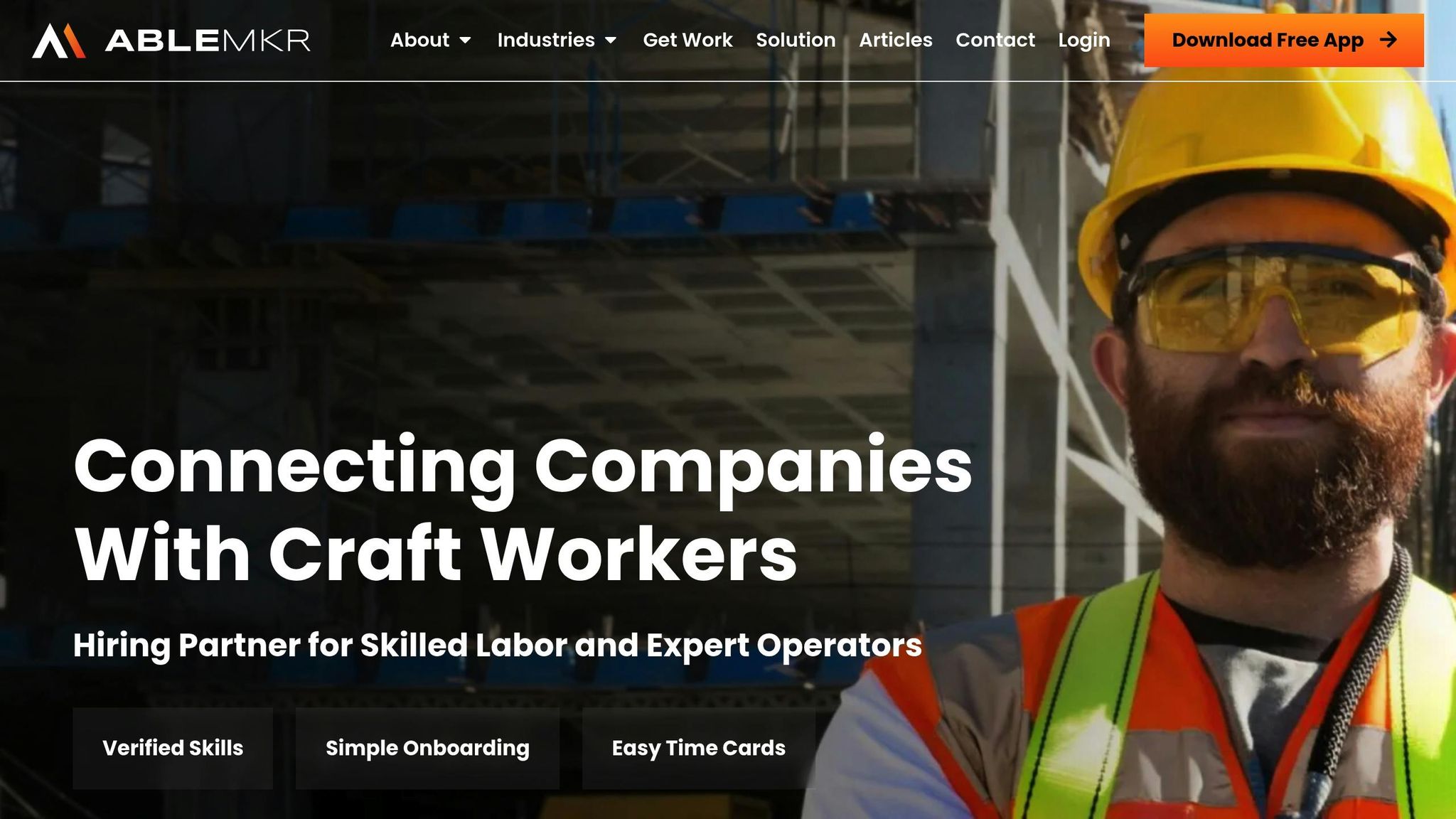
ABLEMKR takes digital verification tools to the next level by integrating them into a single platform designed to tackle credential fraud in the construction and energy sectors. Through a combination of thorough vetting processes and real-time workforce management tools, ABLEMKR ensures that employers connect with qualified workers while rigorously verifying each worker’s credentials. The platform also addresses labor shortages and tracks millions of worker hours annually, making it a comprehensive solution for industries where accuracy and compliance are critical.
This focus on credential integrity is especially vital in construction, oil & gas, and mining, where safety and regulatory compliance depend on maintaining up-to-date credentials.
Verified Worker Profiles and Ratings
ABLEMKR goes beyond basic credential checks by requiring workers to submit their credentials through the ABLEMKR app. Once submitted, these credentials undergo continuous, detailed screening to ensure they remain valid and compliant.
"ABLEMKR vets and interviews candidates to customer specifications, to ensure the right people are being delivered to do the right work, every time."
Employers gain access to detailed worker profiles and ratings, offering transparency into verified skills and performance history. The platform’s automated system efficiently matches workers to jobs, but only after their credentials have been verified. This verified information is then seamlessly integrated into ABLEMKR’s broader workforce management system, ensuring both precision and efficiency.
Workforce Management for Compliance
ABLEMKR’s workforce management tools provide employers with real-time oversight and compliance monitoring capabilities. These tools include verified skills validation, a streamlined onboarding process, and straightforward time tracking. The app also offers real-time work tracking and compliance updates, keeping employers informed at all times.
Additionally, ABLEMKR manages the entire employment lifecycle, from initial verification to ongoing monitoring. It even includes location tracking, allowing employers to view worker profiles and track their real-time locations through the app.
With thousands of workers already enrolled – and new ones joining daily – ABLEMKR upholds high standards for every individual added to its platform. By combining continuous vetting, real-time monitoring, and robust workforce management, ABLEMKR creates multiple layers of accountability that expose credential fraud and promote trust.
Conclusion: Building Trust with Digital Credential Tools
Digital credential verification has become a cornerstone for creating safer and more reliable workplaces, particularly in the construction and energy sectors. By combining verified worker profiles, real-time tracking, blockchain technology, and AI-driven validation, organizations can establish multiple layers of defense against credential fraud.
The stakes are high. Credential fraud doesn’t just delay projects – it can lead to legal troubles, safety hazards, and strained client relationships. Relying on manual verification processes may let unqualified workers slip through the cracks, making digital solutions a smart investment for reducing risks and safeguarding both finances and reputation.
Platforms like ABLEMKR showcase how technology can revolutionize workforce management. By requiring workers to submit credentials via a mobile app, followed by ongoing screening and real-time compliance monitoring, ABLEMKR ensures accountability throughout the employment cycle. This approach highlights how integrated systems can elevate industry standards and create a culture of trust.
To further combat credential theft, measures like multi-factor authentication, zero-trust policies, and regular security training are essential. These strategies, embedded in platforms such as ABLEMKR, provide robust protection against ever-evolving fraud tactics, ensuring that systems remain secure and reliable.
Looking ahead, advancements in AI and blockchain are set to make credential verification even faster and more secure. These technologies promise to strengthen fraud prevention while streamlining the process for both employees and employers.
To stay ahead, organizations need to evaluate their current verification methods, adopt automated systems for worker profiles, prioritize employee education, and enforce strict data privacy and threat monitoring protocols.
FAQs
How does blockchain technology help prevent credential fraud in industries like construction and energy?
Blockchain technology plays a key role in combating credential fraud by creating a secure and tamper-resistant digital record of worker credentials. Its decentralized ledger ensures that these records remain unaltered, bringing a new level of trust and transparency to the verification process.
One of the standout benefits is instant verification of worker qualifications, which not only saves time but also minimizes human errors. Plus, because blockchain operates on a decentralized system, it’s less vulnerable to cyberattacks, making it especially reliable for industries where safety and compliance are non-negotiable. With blockchain, employers can confidently verify skills and certifications, reducing fraud risks and fostering a more dependable workforce.
How does AI help prevent worker credential fraud, and why is it more effective than traditional methods?
AI has become a game-changer in tackling worker credential fraud, thanks to its ability to analyze massive datasets and spot unusual patterns or inconsistencies that might signal fraudulent activity. Unlike older methods that depend on manual reviews and rigid rules, AI evolves and adapts, learning to recognize new fraud tactics as they surface.
Because AI processes data in real time, it delivers faster and more precise results, cutting down on false positives and enabling a more proactive approach to fraud prevention. This is especially valuable in fields like construction and energy, where verifying worker credentials is critical for maintaining safety standards, meeting compliance requirements, and ensuring the success of projects.
Why is real-time credential verification essential in construction and energy industries, and what risks arise without it?
Real-time credential verification plays a critical role in industries like construction and energy. It ensures that workers possess the necessary qualifications and certifications to safely and effectively handle specialized or high-risk tasks. This not only upholds safety standards but also helps prevent costly errors and ensures compliance with strict industry regulations.
Relying on outdated or manual methods for credential verification can leave companies vulnerable to serious risks. Hiring unqualified workers may result in safety incidents, legal issues, project delays, or increased liability. Digital tools, such as ABLEMKR, provide an instant solution by verifying credentials on the spot. This reduces the chances of fraud, enhances workplace safety, and streamlines operations for a more efficient workflow.


