
Offshore medics face unique challenges – limited facilities, extreme conditions, and delayed access to care. Advanced tools now help bridge these gaps with real-time monitoring, early issue detection, and remote consultations. Key solutions include portable devices like wireless ultrasounds, compact patient monitors, and systems with satellite connectivity for seamless communication. These technologies improve care quality, reduce evacuation costs, and ensure workers’ safety in isolated environments.
Key Takeaways:
- Mindray TE Air & D60 Monitor: Portable devices for vital sign tracking and imaging, ideal for emergencies. Price range: $2,500–$12,000.
- Tempus Pro + Starlink: Rugged monitoring device with satellite connectivity for instant data sharing. High cost but reliable in remote areas.
- EURIECA® Equipment: Advanced emergency care tools for trauma and prolonged care. Bulky but effective.
- Remote Patient Monitoring (RPM): Continuous tracking via wearable devices and telemedicine platforms. Connectivity-dependent but reduces complications.
Quick Comparison:
| Tool | Key Use Case | Price Range | Connectivity | Battery Life |
|---|---|---|---|---|
| Mindray TE Air/D60 | Imaging & vital signs | $2,500–$12,000 | Wireless | 4–8 hours |
| Tempus Pro + Starlink | Emergency data sharing | High (custom setup) | Satellite | Long-lasting |
| EURIECA® Equipment | Trauma & extended care | Rental available | Limited | Varies |
| RPM Platforms | Continuous health tracking | Varies | Cellular/Satellite | Device-specific |
These tools simplify care delivery in high-risk offshore settings, ensuring medics can act quickly and effectively.
1. Mindray TE Air and D60 Monitor
The Mindray TE Air and D60 Monitor work hand-in-hand to support offshore medical care. The TE Air is a wireless handheld ultrasound device, while the D60 is a compact multi-parameter patient monitor. Together, they offer offshore medics a powerful combination of diagnostic imaging and vital sign monitoring, essential for managing emergencies in remote and challenging marine environments.
Portability and Durability
Both devices are designed with mobility and resilience in mind. The TE Air, a pocket-sized wireless ultrasound, eliminates the need for bulky equipment, making it easy to carry between locations. Its compact design is especially useful in confined spaces, where quick and efficient responses are needed.
The D60 Monitor is equally portable, allowing medics to transport it rapidly to injury sites. Both devices feature rugged casings that withstand water, dust, and shocks – perfect for environments like oil rigs or offshore wind farms, where salt spray and vibrations are constant challenges.
Hygiene is another priority. These devices come with easy-to-clean surfaces, addressing the need for infection control in remote settings, where sterilization resources may be limited, yet treating multiple patients is often necessary.
Health Monitoring Features
Beyond their durable design, these devices excel in health monitoring. The D60 Monitor tracks a wide range of vital signs, including 12-lead ECG, SpO2, non-invasive blood pressure, end-tidal CO2, temperature, and respiration rate. This extensive monitoring capability allows medics to continuously assess patient status and detect early signs of deterioration.
Advanced algorithms embedded in the D60 generate early warning scores, helping medics identify high-risk patients quickly. Customizable alarms ensure that monitoring parameters can be tailored to meet specific patient needs and the unique conditions of offshore operations.
The TE Air complements the D60 by offering point-of-care imaging. Its wireless ultrasound technology is invaluable for diagnosing internal injuries, evaluating cardiac function, and addressing other conditions where visual confirmation is crucial.
Real-Time Data Transmission
Both systems are equipped with wireless connectivity, seamlessly integrating with telemedicine platforms. This feature enables offshore medics to share vital signs and diagnostic data with onshore specialists for remote consultations.
The TE Air’s app-based transmission allows ultrasound images to be shared in real-time with medical experts, facilitating collaborative diagnoses. Similarly, the D60 Monitor supports real-time data streaming, enabling onshore physicians to monitor patients during critical situations.
This capability is particularly useful during medical evacuations. Continuous data transmission ensures receiving hospitals are fully informed and prepared to deliver the necessary treatment as soon as the patient arrives.
Remote Environment Performance
These devices are built to perform reliably in offshore settings. With efficient power management, the TE Air offers up to 4 hours of operation on a single charge, while the D60 Monitor provides up to 8 hours of continuous monitoring. This extended battery life ensures they remain functional during emergencies or routine checks.
Both devices maintain consistent performance under challenging conditions, including vibration, humidity, and temperature fluctuations commonly encountered on offshore platforms. Their intuitive controls and clear displays enable medics to quickly assess situations, even in high-pressure or low-light environments.
The D60 Monitor’s modular design allows for quick adjustments, making it versatile enough to handle a variety of patient needs and clinical scenarios. Fast boot-up times ensure that monitoring can begin immediately during emergencies, eliminating delays that could impact patient care. Together, these features give offshore medics the tools they need to make informed, timely decisions when it matters most.
| Feature | Mindray TE Air | Mindray D60 Monitor |
|---|---|---|
| Device | Wireless handheld ultrasound | Multi-parameter patient monitor |
| Battery Life | Up to 4 hours | Up to 8 hours |
| Key Functions | Imaging (ultrasound) | Vitals (ECG, SpO2, BP, etc.) |
| Connectivity | Wireless, app-based | Wired/wireless, telemedicine-ready |
| Price Range | $7,000 – $12,000 USD | $2,500 – $5,000 USD |
2. Tempus Pro with Starlink Connectivity
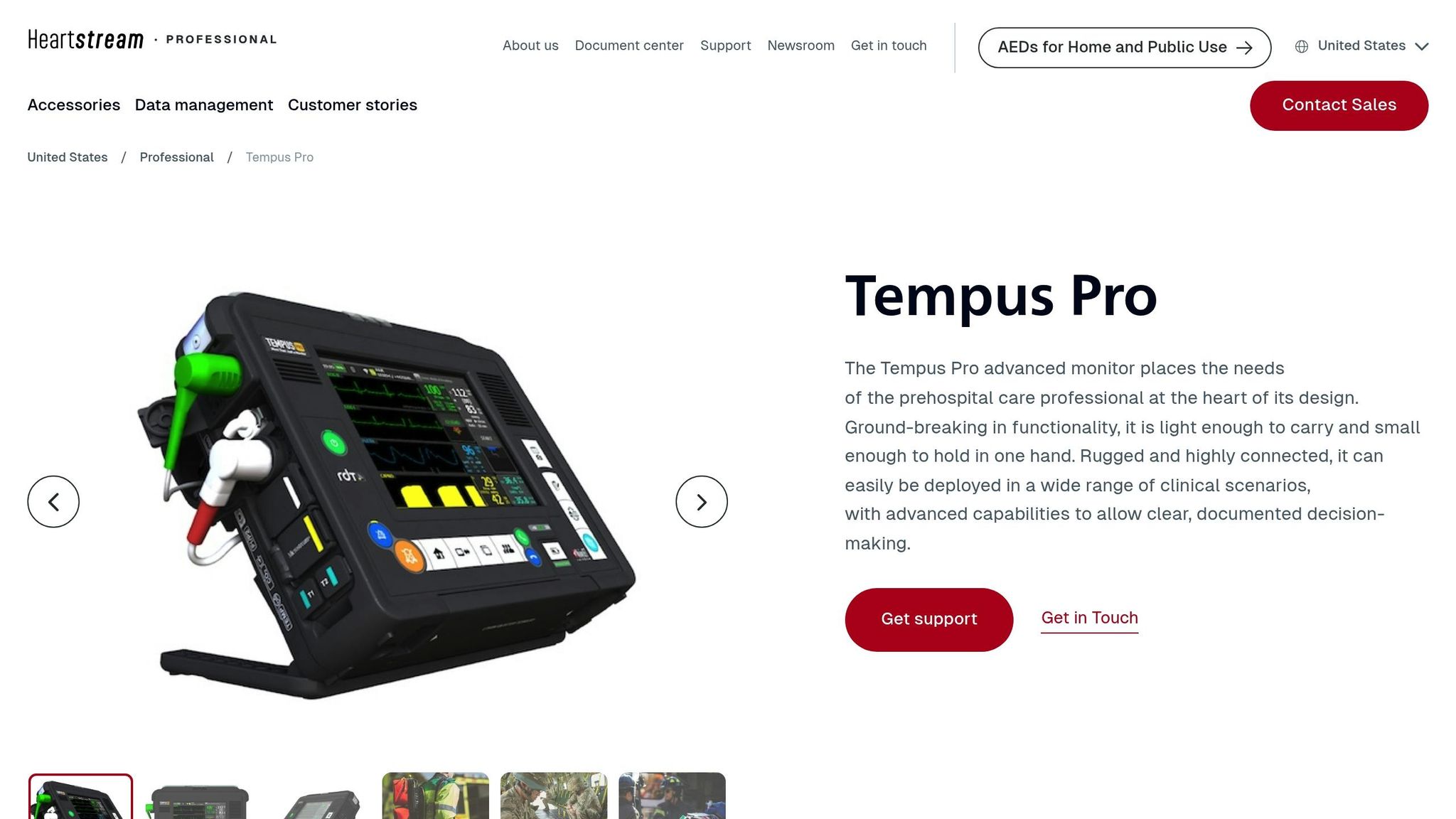
The Tempus Pro system, paired with Starlink connectivity, brings high-speed satellite internet to remote offshore sites, ensuring seamless communication with onshore medical experts.
Portability and Durability
The Tempus Pro is built to handle the harsh realities of offshore environments. Its rugged design resists saltwater exposure, constant vibrations from machinery, and extreme temperature changes – conditions typically found on oil rigs and offshore wind farms. Plus, its compact and lightweight build makes it easy for medics to carry through tight spaces or between different levels of offshore platforms.
Since it runs on battery power, it doesn’t rely on a constant power supply. This portability becomes critical in emergencies, allowing medics to quickly move the device to injured workers in isolated areas or during evacuations. The system also features an intuitive touchscreen interface, reducing the time needed for training and enabling medical staff to concentrate fully on patient care, even in high-pressure situations.
Real-Time Data Transmission
The Tempus Pro doesn’t just endure tough conditions – it thrives in them, thanks to its advanced connectivity. By integrating Starlink’s high-bandwidth, low-latency satellite internet, the system enables instant transmission of patient data to onshore teams, even in locations where traditional communication methods fail.
This satellite-based connection ensures dependable communication. It also supports secure video consultations, allowing offshore medics to collaborate directly with onshore physicians when quick, critical decisions are required.
Health Monitoring Features
Equipped with hospital-grade monitoring capabilities, the Tempus Pro tracks a wide range of vital signs, including 12-lead ECG, non-invasive blood pressure, oxygen saturation (SpO₂), end-tidal CO₂, temperature, and respiration rate. These features allow it to detect early signs of patient deterioration.
Its advanced algorithms can issue alerts in less than two minutes, giving medical teams the chance to intervene quickly. All data is transmitted through encrypted channels, ensuring patient privacy while maintaining fast and secure communication.
Remote Environment Performance
The Tempus Pro goes beyond just transmitting data. Its durable construction ensures consistent performance even in severe weather conditions that might disrupt other communication systems. This reliability makes it indispensable when traditional infrastructure isn’t an option.
During evacuations, the system allows offshore teams to continuously share patient data with onshore hospitals, enabling them to prepare treatment plans in advance. Regular testing of its connectivity ensures it’s always ready for action, making it a vital asset for managing medical emergencies in resource-limited offshore settings.
| Feature | Tempus Pro + Starlink | Traditional Systems |
|---|---|---|
| Data Transmission | Real-time via satellite | Often delayed, coverage-dependent |
| Connectivity Range | Global offshore coverage | Limited to local infrastructure |
| Telemedicine Support | Integrated video/data sharing | Rare or unavailable |
| Emergency Response | Instant specialist consultation | Delayed communication |
3. EURIECA® Offshore Medic Equipment
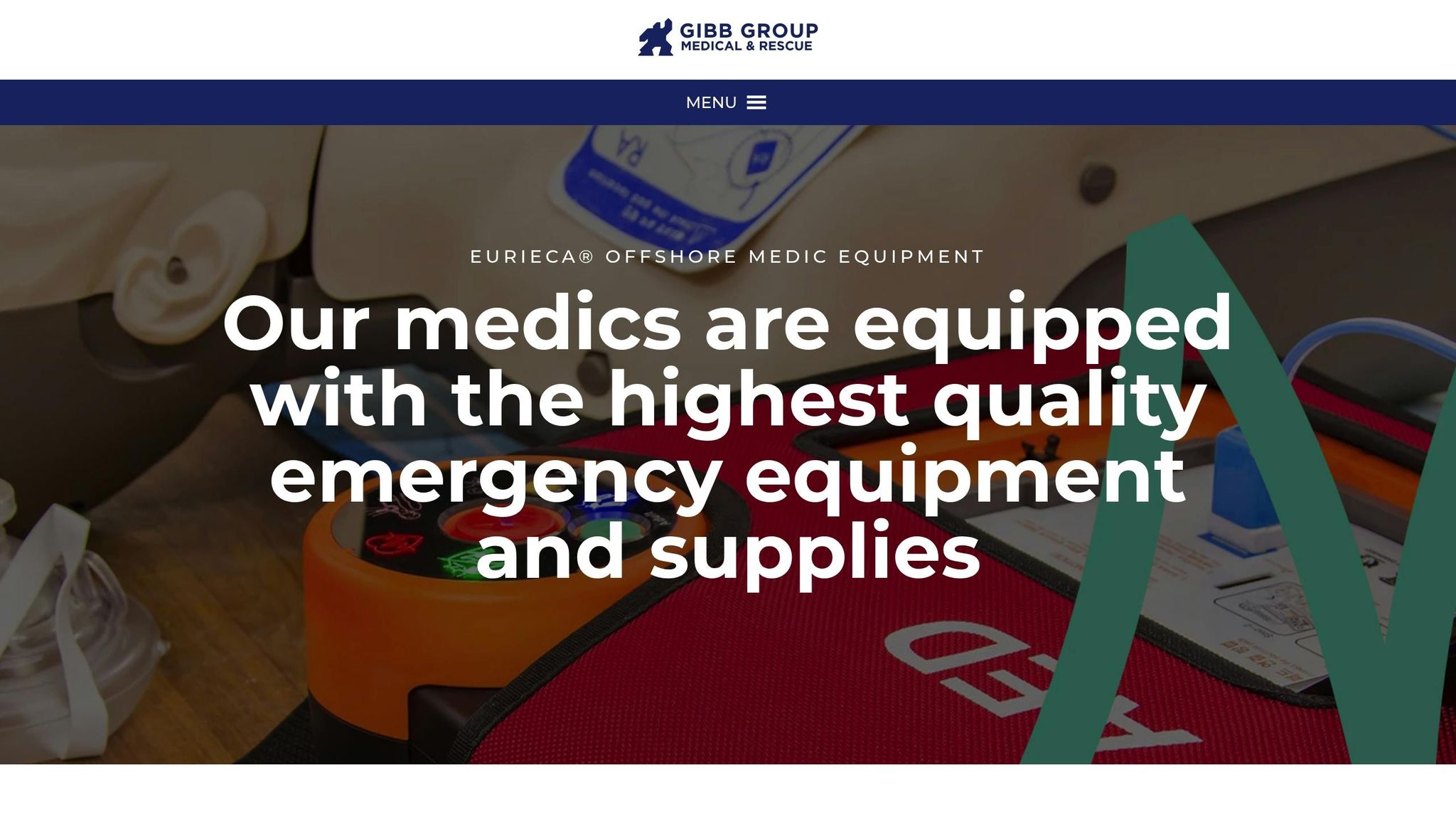
The EURIECA® Offshore Medic Equipment is a specialized solution crafted for the demanding conditions of offshore environments. It bridges the gap between basic first aid and advanced medical care, ensuring offshore medics can handle critical situations effectively. Here’s a closer look at its portability, monitoring capabilities, and performance in remote areas.
Portability and Durability
Designed for quick deployment, the EURIECA® system is built to function across various offshore levels, making it ideal for remote and hard-to-reach locations like oil rigs or wind farms. Its portable structure enables medics to respond swiftly to emergencies, regardless of location.
The equipment is engineered to withstand the challenges of offshore conditions, including saltwater exposure, vibrations, and extreme weather. This durability ensures consistent performance over time. Additionally, the system can be rented, offering flexibility for operators. Unlike standard medical kits, EURIECA® is specifically tailored for immediate use in extreme offshore scenarios.
Health Monitoring Features
EURIECA® provides hospital-grade monitoring, offering continuous, multi-parameter tracking of vital signs. It includes features like 12-lead ECG, SpO₂ (oxygen saturation), non-invasive blood pressure (NIBP), and end-tidal CO₂ (ETCO₂) measurements. These capabilities allow medics to assess cardiovascular and respiratory health, as well as overall patient stability, in real time.
What sets this system apart is its ability to handle most emergency care needs directly at the point of injury. Advanced algorithms process patient data quickly – generating alerts within two minutes – so medics can act fast in critical moments, significantly reducing response times.
Remote Environment Performance
In remote offshore settings, where hospital transfers might be delayed or impractical, EURIECA® equipment is invaluable. It supports extended casualty management, ensuring continuous care even in isolated conditions. This feature is crucial when immediate access to hospital facilities isn’t an option.
The system also integrates with remote monitoring platforms, enabling real-time data sharing. This connectivity allows offshore medics to consult with onshore specialists, effectively bringing expert advice to even the most remote locations. For instance, studies of similar telemedicine systems used in North Sea wind farms reported a 100% success rate in transmitting vital parameters within defined WLAN coverage areas.
Designed to maintain functionality even when infrastructure fails, EURIECA® ensures reliable care under challenging conditions. By providing advanced monitoring and meeting health and safety regulations, it helps offshore operators prioritize worker well-being.
| Monitoring Capability | EURIECA® Equipment | Basic Offshore Kits |
|---|---|---|
| ECG Monitoring | 12-lead capability | Limited or none |
| Vital Signs Tracking | Multi-parameter continuous | Basic spot checks |
| Emergency Response | Point-of-injury deployment | Fixed location only |
| Data Integration | Real-time transmission ready | Manual recording |
sbb-itb-aa28329
4. Remote Patient Monitoring Platforms
Remote patient monitoring (RPM) platforms are reshaping offshore healthcare by combining wearable devices, mobile apps, and secure data transmission. These systems provide continuous health oversight, connecting offshore workers with onshore medical specialists in real time. By integrating these technologies, RPM platforms improve emergency response and preventive care, creating a seamless healthcare ecosystem.
Real-Time Data Transmission
One standout feature of RPM platforms is their ability to send critical health data instantly, even from the most remote locations. These systems leverage cellular-enabled devices and satellite connections to maintain uninterrupted communication with onshore medical teams. Unlike traditional setups that rely on Wi-Fi or smartphones, modern cellular devices operate independently, simplifying their use in offshore environments. With automated data collection, patient vitals are transmitted immediately, eliminating delays caused by manual processes. Many platforms also use machine learning algorithms and standardized scoring systems, like NEWS2, to generate quick alerts for medical teams.
Health Monitoring Features
RPM platforms go well beyond basic vital sign tracking. They typically include advanced features such as ECG monitoring (up to 12-lead), SpO₂, non-invasive blood pressure (NIBP), end-tidal CO₂ (ETCO₂), temperature, and respiration rate monitoring. Some systems even support portable ultrasound imaging and can interface with AEDs, giving offshore medics access to hospital-grade diagnostic tools. Beyond diagnostics, these platforms manage comprehensive patient records and offer telemedicine capabilities like video calls and remote consultations. These features enable offshore workers to access specialist care and mental health support from onshore professionals. Platforms like Accuhealth also log all monitoring activity and communication, creating detailed audit trails that help meet regulatory requirements.
Remote Environment Performance
Offshore environments pose unique challenges, requiring RPM platforms to withstand harsh weather, constant vibration, and limited space while maintaining reliable connectivity. To meet these demands, systems are built with rugged, portable hardware. Their performance depends on factors like device durability, battery life, and connectivity. Platforms equipped with satellite or cellular data transmission ensure dependable monitoring, even in isolated areas. However, environmental conditions and network availability can sometimes impact transmission reliability, making contingency plans a critical part of implementation. Success also hinges on selecting platforms with proven reliability in similar settings and ensuring medics are trained to operate and troubleshoot the equipment.
RPM platforms are proving their value in offshore healthcare, improving health outcomes, speeding up emergency responses, and reducing complications through early detection. Case studies show fewer hospital and ER visits and greater safety for offshore workers. By integrating these systems, companies can streamline health monitoring and emergency response in challenging, high-risk environments.
Advantages and Disadvantages
When it comes to health monitoring tools in offshore environments, each option brings its own set of strengths and challenges. Medics must carefully evaluate their specific needs to choose the most suitable equipment for their operations.
The Mindray TE Air and D60 Monitor offers portable, multi-parameter monitoring, tracking vital signs like ECG, SpO₂, and blood pressure in real time. Its compact design is ideal for the tight quarters of offshore facilities, and its sturdy build ensures durability in harsh marine conditions. The intuitive interface makes it especially useful in emergencies. However, connectivity issues can arise when transmitting data remotely, particularly in areas with limited satellite or Wi-Fi access. Additionally, extended use may drain the battery, and advanced diagnostic features often require specialized training and logistical preparation.
The Tempus Pro with Starlink connectivity stands out for its ability to transmit patient data in real time to remote medical experts, enabling immediate consultation and decision-making. Its rugged design and integrated diagnostic tools, including ECG, ultrasound, and vital signs monitoring, make it a reliable choice for extreme offshore environments. Starlink connectivity helps to overcome many traditional communication barriers. However, reliance on satellite connectivity means it can be affected by poor weather or technical disruptions. The device also comes with higher costs, requires specialized setup, and demands vigilance to ensure data security.
EURIECA® Offshore Medic Equipment is designed to handle a wide range of emergencies, from trauma management to patient stabilization and ongoing monitoring. With features like 12-lead ECG, SpO₂, NIBP, and ETCO₂, it’s well-equipped for both acute care and prolonged scenarios where evacuation might be delayed. While its versatility is a major advantage, the equipment’s bulkiness, maintenance needs, and dependency on operator expertise can make rapid deployment more difficult in offshore settings.
Integrated Remote Patient Monitoring (RPM) platforms provide continuous tracking of patient vitals, allowing for early detection of medical issues and seamless collaboration between offshore medics and remote physicians. These platforms, however, rely heavily on stable connectivity via Wi-Fi or satellite, which can be disrupted by environmental factors. Data privacy and security are also ongoing concerns. Additionally, RPM systems often involve a significant initial investment and require continuous technical support.
| Tool | Key Advantages | Disadvantages |
|---|---|---|
| Mindray TE Air/D60 | Portable, user-friendly, durable | Connectivity issues, battery limitations, training needs |
| Tempus Pro + Starlink | Real-time expert consultation, rugged design, strong connectivity | High cost, weather dependence, data security risks |
| EURIECA® Equipment | Emergency versatility, advanced monitoring, acute care support | Bulky, maintenance-intensive, requires skilled operation |
| RPM Platforms | Continuous tracking, early issue detection, remote collaboration | Connectivity-dependent, costly, privacy concerns |
These comparisons highlight the evolving demands of offshore healthcare, balancing technological advancements with practical challenges. Training requirements differ across devices. For instance, the Mindray monitors and EURIECA® equipment are relatively straightforward and can be operated with basic medical training. On the other hand, the Tempus Pro’s advanced diagnostic features often require specialized instruction, while RPM platforms range from easy-to-use systems to more complex setups that demand familiarity with digital health technologies.
Offshore conditions – such as extreme weather, constant vibrations, and limited space – further complicate the use of these tools. While they are designed to withstand tough environments, factors like durability, battery life, and reliable connectivity play a critical role in their overall effectiveness. Success in offshore healthcare ultimately depends on choosing reliable equipment and ensuring medics are well-trained in both operation and troubleshooting.
Conclusion
Choosing the right health monitoring tools for offshore operations means combining multiple technologies rather than relying on a single solution. This approach simplifies workflows for offshore medics while improving the quality of care provided.
For acute emergencies, EURIECA® Equipment offers trauma care solutions with advanced monitoring capabilities, such as 12-lead ECG and multi-parameter vital tracking. When paired with Tempus Pro’s satellite connectivity, it allows for quick consultations with onshore specialists, ensuring timely and effective responses.
For routine health tracking, Remote Patient Monitoring (RPM) platforms continuously monitor vital signs, enabling early detection of potential issues and facilitating remote consultations. Studies conducted on North Sea wind farms highlight the effectiveness of telemedicine in these settings.
Cost savings are another key benefit. Advanced monitoring tools help reduce the need for costly evacuations, which can range between $5,000 and $150,000. In comparison, the daily expense of remote monitoring is far more manageable.
Compact solutions like the Mindray TE Air and D60 Monitor offer portable, multi-parameter functionality, making them ideal for the space constraints of offshore facilities. Additionally, systems featuring AI-powered diagnostics and predictive analytics are paving the way for the next wave of offshore health tools. These innovations promise automated alerts that can further enhance patient care.
To ensure effective health management, operators should prioritize tools that provide real-time monitoring, secure data transmission, and telemedicine support for both emergencies and routine care. Reliable satellite or WLAN connectivity is essential, as is the use of standardized scoring systems like Early Warning Scores to improve early detection and minimize false alarms.
Integrating these tools with workforce management platforms, such as ABLEMKR, takes operational efficiency to the next level. These platforms provide real-time health oversight, enhance safety compliance, and streamline the mobilization of medical personnel during emergencies. This integration ensures seamless monitoring of worker health while reducing operational challenges.
Durable, easy-to-use equipment combined with reliable connectivity not only enhances patient care but also cuts evacuation costs and boosts worker safety in high-risk offshore environments.
FAQs
How do tools like the Mindray TE Air and D60 Monitor improve emergency response for offshore medics?
Advanced health monitoring tools like the Mindray TE Air and D60 Monitor are transforming how offshore medics handle emergencies. These devices deliver real-time, precise health data, allowing medics to quickly evaluate critical situations and make well-informed decisions, even in remote or high-risk locations.
With features such as compact, portable designs, wireless connectivity, and intuitive interfaces, these tools are perfectly suited for offshore environments. They provide essential information – like vital signs and diagnostic imaging – right where it’s needed most. In emergencies where every second matters, this immediate access to critical data can truly save lives.
What are the benefits of using satellite connectivity with the Tempus Pro system in remote offshore locations?
Satellite connectivity integrated with the Tempus Pro system brings essential benefits to offshore medics operating in remote locations. It allows patient data to be sent in real time to onshore medical teams, enabling quicker and more precise decision-making during emergencies. This feature is a game-changer when every second counts.
The system also facilitates telemedicine consultations, giving medics access to expert advice for handling complex medical situations. On top of that, it ensures reliable communication in areas where traditional networks fall short, offering a dependable link for routine health checks and urgent care needs. Together, these capabilities enhance safety and health outcomes for workers in demanding offshore environments.
How do remote health monitoring tools help reduce the need for costly medical evacuations in offshore environments?
Remote health monitoring tools are essential for keeping workers healthy in offshore environments. They make it possible to keep a constant eye on vital signs, spot potential health problems early, and step in promptly to prevent issues from escalating.
By tackling health concerns directly on-site and in real time, these tools help reduce the need for costly and complicated medical evacuations. They also enhance worker safety and ensure offshore teams stay healthy and fully functional, even in remote and high-risk locations.


