
Cross-border worker verification ensures employees are legally authorized to work in the U.S., adhering to federal laws like the Immigration Reform and Control Act (IRCA). Employers must verify identity and work authorization using Form I-9 and additional visa-specific documents. Non-compliance risks include legal penalties, operational disruptions, and reputational damage.
Key takeaways:
- Form I-9: Required for all employees within three days of starting work.
- Visa Documentation: Specific requirements for H-1B, TN, and E-3 visas.
- Legal Obligations: File Labor Condition Applications (LCA), meet prevailing wage requirements, and maintain public access files.
- Recordkeeping: Retain documents beyond standard periods and prepare for audits.
- Challenges: Managing employment law differences, tax obligations, and data privacy across jurisdictions.
- Technology Solutions: Digital platforms like ABLEMKR streamline verification, track document expirations, and reduce compliance risks.
Employers should prioritize regular audits, centralized systems, updated policies, and clear communication with workers to remain compliant and efficient in managing cross-border employees.
Remote I-9 Verification: What Employers Should Know
Required Documentation and Legal Requirements
Navigating the documentation and legal requirements for cross-border workers is crucial to ensure compliance with U.S. regulations. These requirements can vary depending on the worker’s status and visa category, making accurate and thorough documentation a must. Here’s a closer look at what’s needed.
Required Documents for Cross-Border Workers
Form I-9 is the foundational document for all employees, including cross-border workers, to verify identity and work authorization. For these workers, additional documentation is often required, categorized into three lists: identity and work authorization (List A), identity only (List B), and work authorization only (List C).
For cross-border workers, List A documents might include a U.S. passport, a permanent resident card, or an unexpired foreign passport with a temporary I-551 stamp. Temporary visa holders typically present their foreign passport along with their Form I-94 arrival/departure record and supporting visa documentation.
In certain fields, professional certifications are non-negotiable. Workers may need to provide proof of current OSHA 10 or OSHA 30 certifications, licenses for operating specialized equipment, or other safety training credentials. These must be verified to ensure they’re authentic and up to date.
Visa-specific documentation depends on the worker’s visa category. For example:
- H-1B workers need their approved I-797 Notice of Action.
- TN visa holders (under NAFTA) must provide evidence of professional qualifications and job offer letters matching their designated profession.
- E-3 visa holders from Australia need their approved petition and documentation showing the job qualifies as a specialty occupation.
Legal Requirements in the U.S.
Employers hiring cross-border workers must meet several legal obligations to ensure compliance:
- Labor Condition Application (LCA): Employers hiring workers on H-1B, H-1B1, or E-3 visas must file an LCA with the Department of Labor before employment begins. This filing certifies that workers will be paid the required wage and that hiring them won’t negatively affect similarly employed U.S. workers.
- Prevailing wage requirements: Employers must pay at least the wage determined by the Department of Labor for the specific job and geographic location. This wage determination must be secured before filing the LCA and remains valid for a set period, typically 90 to 365 days.
- Public access file maintenance: Employers must maintain a file accessible for public review. This file includes the certified LCA, proof of the actual wage paid, and evidence that the required notices were provided to bargaining representatives or posted at the worksite.
- Notification requirements: Employers must notify authorities when workers are assigned to new sites or when job duties change. For H-1B workers, this often involves filing amended or new LCA applications, especially for industries like construction or energy where work locations shift frequently.
Recordkeeping and Audit Preparation
Proper recordkeeping is critical for compliance and audit readiness. Employers must retain documents beyond the standard three-year I-9 retention period for cross-border workers. For example, LCA-related records must be kept for one year after the LCA is no longer in use. Some visa categories require employers to retain documentation for the entire authorized employment period plus additional time.
To stay prepared for audits, employers should maintain well-organized physical and digital files for each worker. These files should include all required documentation, along with updates or amendments to work authorization. Conducting quarterly reviews of worker files can help identify expiring documents and ensure all notifications are up to date.
For digital storage, electronic systems must meet legal retention standards while ensuring secure access. These systems should allow quick retrieval of documents during audits while protecting sensitive information from unauthorized access.
Compliance Challenges in 2025
Navigating compliance for cross-border workers is becoming increasingly complex. Employers must contend with a web of overlapping regulations across multiple jurisdictions, which raises both legal and operational risks. Understanding these challenges is critical for managing a global workforce effectively. Below are some of the most pressing areas where compliance issues arise.
Managing Employment Law Differences
Employment laws differ widely from country to country. For example, in the U.S., employers operate under at-will employment principles and follow overtime rules outlined in the Fair Labor Standards Act. In contrast, many other countries enforce strict termination protections, varying overtime thresholds, and different leave entitlements. These differences add layers of complexity to benefits administration and demand careful alignment with U.S. legal standards to avoid violations.
Tax and Social Security Issues
Handling payroll for cross-border workers is no small feat. Employers must accurately track workdays to meet tax obligations and avoid unintended liabilities, such as triggering foreign tax responsibilities. For instance, when employees perform services abroad, they may inadvertently create tax liabilities in their home country, potentially leading to permanent establishment issues. Social security totalization agreements between the U.S. and other countries can help prevent dual contributions, but employers need to identify applicable agreements and maintain proper documentation. Additionally, state tax rules present another layer of complexity, especially when employees work in multiple states, as non-resident or temporary worker tax requirements often differ.
Data Protection and Privacy
Cross-border data transfers are tightly regulated by privacy laws. The European Union’s General Data Protection Regulation (GDPR), for example, governs how employers handle data for EU-based workers, even if the employment is in the U.S. Employers must also comply with state-specific laws, such as Illinois’ Biometric Information Privacy Act, which sets rules for collecting and storing biometric data used for security or timekeeping. Beyond that, restrictions on background checks, data retention policies, and other privacy-related regulations vary across jurisdictions, requiring careful oversight.
Immigration and Work Authorization Risks
Violations related to unauthorized work can lead to steep penalties, making it crucial to document worker activities thoroughly. Changes to visa status require immediate updates to avoid compliance issues. For industries where employees frequently move between job sites, certain visa programs – like the H-1B – may require amended petitions when work locations change. Misclassifying business visitors is another common risk, especially when their activities blur the line between attending meetings, undergoing training, and performing actual work. As enforcement becomes stricter, companies must establish strong systems for tracking work authorization and ensuring all employment activities adhere to visa restrictions. Robust recordkeeping and audit preparedness are essential to managing these challenges effectively.
sbb-itb-aa28329
Using Technology for Compliance
As compliance demands become more complex, digital technology offers a practical way to close regulatory gaps and improve workforce management. Relying on manual processes for compliance can lead to delays and increase the risk of errors, while digital platforms streamline tasks like verification, onboarding, and tracking. These tools provide real-time insights into worker status and regulatory requirements, making compliance more manageable.
How Digital Verification Platforms Work
Digital verification platforms simplify compliance by centralizing credential checks and automating key processes. These systems review worker profiles to ensure certifications, safety training, and work authorizations are current. They also track upcoming renewals, helping to prevent gaps that could lead to non-compliance. Additionally, these platforms securely store compliance documents, making them easy to access during audits or inspections.
ABLEMKR takes this concept further by tailoring these technologies to meet the unique needs of industries with high compliance demands.
ABLEMKR‘s Compliance Solutions
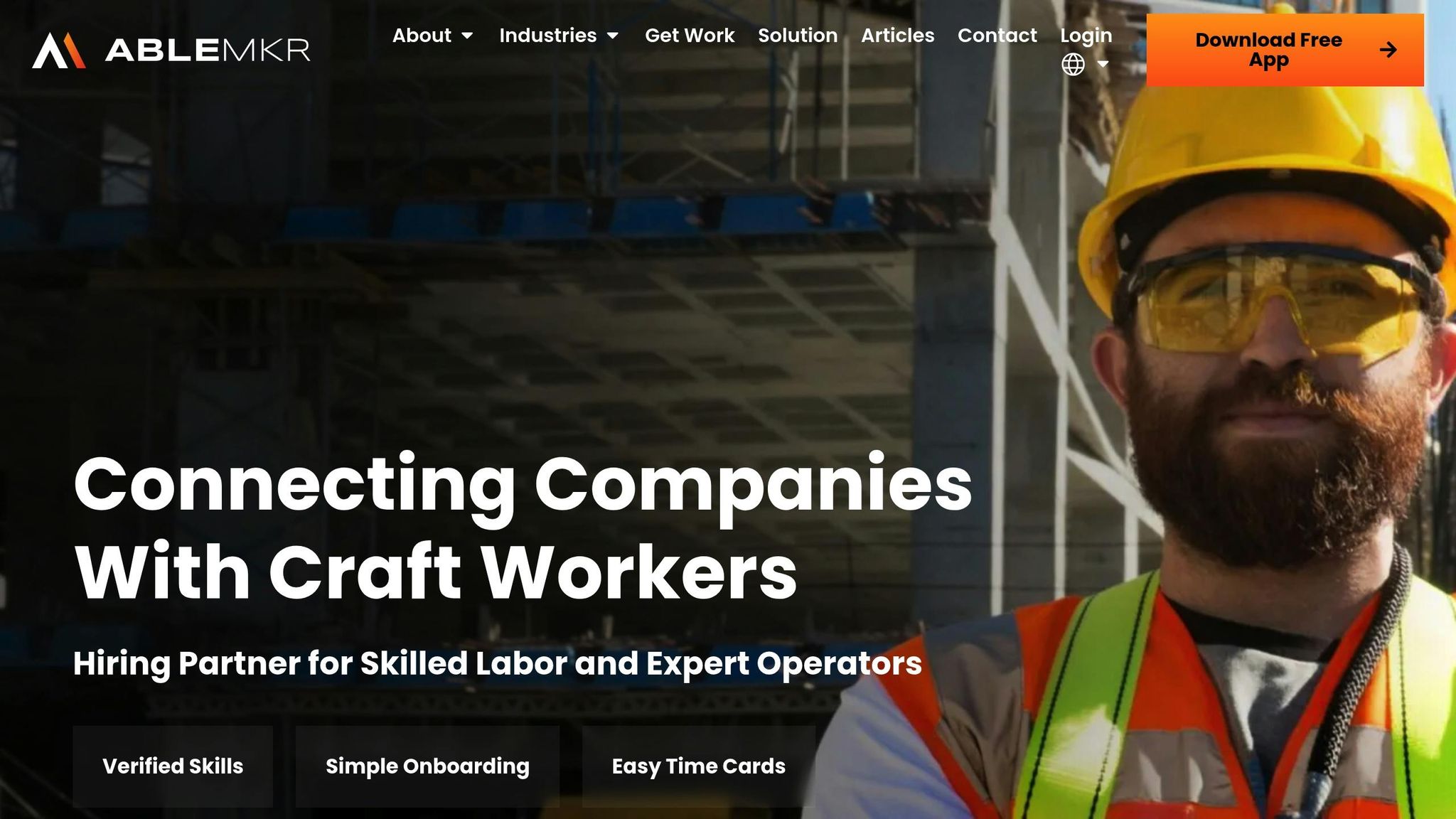
ABLEMKR’s platform is designed to tackle the specific compliance challenges faced by construction and energy companies, especially those managing cross-border workers. The system pre-screens workers by verifying their certifications, safety training, and work authorizations before they are added to the talent pool. This proactive approach minimizes last-minute compliance issues during crew mobilization.
The platform also uses geo-location tools to match pre-vetted workers with suitable job sites. When a worker’s certification is close to expiring or their work authorization needs renewal, the system sends timely notifications to both the employer and the worker. This reduces the administrative workload for HR teams and ensures compliance stays on track.
Benefits of Scalable Technology
Scalable technology eliminates many of the headaches associated with traditional recordkeeping. By organizing digital records, platforms like ABLEMKR make audits smoother and less time-consuming. Routine tasks such as tracking document renewals and updating worker statuses are automated, freeing up resources for more strategic priorities. Plus, the system grows with your needs, all while keeping administrative costs in check. With well-organized digital records, employers can quickly provide the necessary documentation during regulatory inspections, ensuring they are always audit-ready.
Best Practices for Cross-Border Compliance
Managing cross-border workers effectively requires more than simply keeping tabs on paperwork. Companies need to establish structured processes and maintain consistent oversight to minimize risks and ensure smooth operations for both HR teams and employees. Below are some practical steps to integrate technology and refine policies to reduce compliance challenges.
Conduct Regular Compliance Audits
Make it a priority to conduct yearly audits of your policies, practices, and documentation to ensure alignment with employment laws. Focus your audit on critical areas like hiring procedures and recordkeeping, ensuring all required employment documents are complete and up-to-date.
If your audit uncovers gaps, take immediate action to address them. This might involve updating worker classification protocols, strengthening your record-keeping systems, or revising verification procedures. Quick corrective measures not only resolve current issues but also bolster long-term compliance, reducing the likelihood of repeat problems.
Use Centralized Verification Systems
Streamline verification processes by consolidating them into a single digital platform. Avoid juggling multiple spreadsheets or paper-based systems, which can lead to confusion and errors.
A centralized platform automates credential checks, monitors document expiration dates, and sends alerts well in advance. This ensures consistent standards across all job sites and worker categories. For example, ABLEMKR has shown how this approach can prevent last-minute compliance headaches during crew mobilization.
Update Employment Policies
Stay ahead of changing regulations by regularly reviewing and updating your cross-border employment policies. Laws evolve, and policies that worked in the past may no longer meet current requirements.
Develop clear, written procedures that outline how your organization handles worker verification, documentation, and ongoing compliance monitoring. Assign responsibilities for each step and set reliable timelines for completing tasks.
Don’t forget to incorporate data protection and privacy requirements into your policies, particularly since cross-border workers may be subject to multiple regulatory frameworks. Address varying privacy laws and data-handling expectations across jurisdictions.
Whenever you revise policies, communicate updates promptly to all relevant staff. Clear communication ensures everyone understands changes that may affect worker documentation or employment status.
Train HR and Site Managers
Policy updates are only as effective as the people implementing them. That’s why training for HR and site managers is essential to ensure they’re up-to-date on regulations.
Offer targeted training that covers international labor laws, tax regulations, and compliance requirements specific to your industry and the regions where you operate. Include practical scenarios to help staff identify potential compliance issues before they escalate.
It’s equally important to train managers on local labor laws, workplace policies, and compliance guidelines. Site managers, who often serve as the first point of contact for cross-border workers, should also be familiar with visa policies, cultural norms, and regulatory expectations.
Interestingly, companies that emphasize cultural training report 20% fewer misunderstandings with their global workforce. Adding cultural awareness to training programs can help managers lead more effectively and foster stronger team dynamics.
Maintain Clear Communication with Workers
Regular communication with cross-border workers is key to keeping everyone on the same page. Schedule periodic check-ins to share compliance updates and address any concerns. Workers should clearly understand their documentation requirements and know whom to contact with questions.
Offer multiple communication channels to meet the needs of a diverse workforce. These could include multilingual resources, dedicated phone lines, or digital messaging platforms that accommodate different time zones and language preferences.
When workers need to update or renew documentation, notify them well in advance. Provide clear instructions and deadlines to ensure they can meet requirements on time.
Finally, document all compliance-related communications. Keeping a detailed record of what information was shared, when, and by whom protects both your organization and its workers, creating a clear audit trail for future reference.
Conclusion
Verifying cross-border workers is a critical step for companies in industries like construction and energy, where demand for skilled labor is high. With the construction sector grappling with significant labor shortages and a heavy reliance on foreign-born workers, the stakes have never been higher.
Failing to verify workers properly can lead to serious consequences. Companies risk legal penalties and operational disruptions from ICE audits and raids. Additionally, relying on labor brokers who employ undocumented workers under exploitative conditions often results in poor work quality, delays, and costly project rework.
To address these challenges, adopting digital solutions is no longer optional – it’s essential. Tools that automate credential checks, track document expiration dates, and maintain audit-ready records can help businesses stay compliant. Platforms like ABLEMKR demonstrate how integrated compliance tracking ensures only pre-screened workers make it to job sites, reducing unexpected compliance issues and fostering a more reliable workforce.
Beyond minimizing risks, effective worker verification offers broader advantages. It helps stabilize the labor market, improves operational efficiency, and supports tax revenue. Companies that invest in these systems today not only shield themselves from legal and operational risks but also align with ethical industry practices.
As regulations tighten and enforcement becomes more rigorous, businesses that prioritize thorough cross-border worker verification will set themselves apart. They’ll benefit from reduced legal exposure, smoother operations, and access to a dependable, skilled workforce.
FAQs
What compliance challenges do employers face when managing cross-border workers in 2025?
In 2025, handling cross-border workers presents a host of compliance hurdles. Employers must juggle different employment laws, obtain the right work authorizations or visas, and tackle tax and social security requirements to prevent issues like double taxation. On top of that, managing sensitive worker information means adhering to strict data privacy regulations.
Shifting immigration policies, including changes to remote work visas and global agreements, add another layer of complexity. To stay ahead, businesses need to remain informed and take proactive steps to meet these ever-changing demands.
How does a platform like ABLEMKR simplify cross-border worker verification and compliance?
Platforms like ABLEMKR make cross-border worker verification and compliance much more manageable by automating essential tasks such as identity checks, document validation, and regulatory compliance reviews. By leveraging secure data sources and real-time updates, these platforms help ensure accuracy, minimize fraud risks, and enable employers to meet legal obligations more efficiently.
They also simplify the onboarding process by connecting workers to jobs that align with their certifications, training, and availability. Employers benefit from real-time updates on worker status, while built-in compliance tracking helps navigate complex regulations across multiple countries. This makes it easier to deploy workers swiftly and with confidence.
What legal requirements must employers follow when hiring cross-border workers on U.S. visas?
Employers bringing in cross-border workers on U.S. visas are responsible for following federal immigration laws to the letter. This means they must verify that each worker has valid immigration status and proper work authorization. On top of that, they’re required to keep detailed and accurate records of all necessary documentation. Employers also need to sign attestations, under penalty of perjury, affirming their compliance with these legal requirements.
There are additional visa-specific conditions to consider. For example, some visa programs prohibit layoffs of U.S. workers in the same role within 120 days before hiring a foreign worker. Ensuring that all employment practices align with federal guidelines is not just important – it’s a legal obligation to stay compliant with U.S. regulations.


