
The building world in the U.S. is short on workers, which makes projects cost more, take longer, and slows growth. Here’s a look at why this is, and how smart data use is helping to fix it:
- Big issues:
- More older workers, not many young ones coming in.
- Schools and local colleges with few job training options.
- Old ways of hiring don’t get tech-smart people.
- Hard work and safety worries keep people away.
- Changes in rules about people coming to the U.S. cut down the number of workers.
- What it means for businesses:
- More costs from working extra hours, waiting, and getting short-term staff.
- Problems with not having the right skills and following rules.
- Not enough workers where they are needed most.
- Using data to help:
- Using smart forecasts to see what workers will be needed.
- Using up-to-date data to put workers where best.
- Digital tools like ABLEMKR make hiring, checking skills and managing teams easier.
- Ways to fix it for good:
- On-the-job training and learning by doing to build skills.
- Making parts of buildings ahead to need fewer people on site.
- Having robots and teaching workers more kinds of jobs.
- More pay, better benefits, and a good balance of work and life to keep skilled people.
LABOR SHORTAGE: Construction experts share data for workforce shortage
Why is There a Lack of Construction Workers
A set of old issues has led to the lack of workers in construction we see now. Knowing why this happens is key to fix the issue of finding good workers. Let’s look at the main reasons.
Key Causes of the Shortage
One major cause is an aging workforce. As old workers quit, they take their know-how with them, leaving a big gap in skilled workers.
Next is limited job training. Over time, many high schools cut out shop classes and job programs. Plus, community colleges now offer less hands-on training in building work. Without these programs, not many young people start in this area with the skills they need.
Poor hiring tries also add to this problem. Many building firms stick to old hiring ways, which often miss young, tech-smart job seekers who look for work online. This old way hurts their chance to find new people.
Money issues have made less workers too. In hard times, many shift to jobs they see as safer, leaving building jobs.
The hard work and safety worries in building work also push people away. Long days, hard work, and the risk of hurt make it less nice for possible workers.
Lastly, changes in rules about people coming to the country have cut down the number of both skilled and new workers, adding to the shortage.
Problems for Bosses and Workers
These root issues bring big problems for both bosses and workers in building work.
Rising wages is a big problem. With less workers, firms must pay more to get people, making project costs go up. Small firms, mainly, find it hard to match big firms with more money.
Following rules is another pain for bosses. New rules can swamp small firms that don’t have big HR teams, raising the risk of rule breaks and fines.
Skills that don’t match is another issue. Bosses need workers skilled in specific areas, but many general workers don’t fit. This gap stops general workers from moving to better jobs, like being electricians or HVAC workers.
Places that don’t match make it hard too. Building jobs often are in places with costly homes. Workers face long travels or even moving, which can be a big block.
For workers, hard job searches are common. Many building jobs are short or for one project, forcing workers to use who they know to find the next job. This leads to breaks in work and less money.
Gaps in benefits is another issue. Compared to other areas, building jobs often don’t offer full benefits, making other jobs look better to workers.
Lastly, blocks to training stop workers from getting better at their skills. Training programs often have long waits, and unpaid training can be hard to pay for. While training online is on the rise, many workers still face blocks like not much access to tech or good internet.
These issues form a loop where the field can’t keep old workers or bring in new ones. To break this loop, we need smart, data-backed plans to fix skill gaps and make construction jobs more appealing.
Solving Work Shortages with Data
Building firms now more and more use data to fix work issues. No more just guessing or wishing all goes well, a lot of firms now tap into deep data to know work needs, plan ahead, and make work better. This change helps stop work shortages and keeps jobs on time.
Right now, 45% of building firms use simple data. Those that use deep data see up to 30% less job overruns. These facts show how using data can change sudden delays into things we can handle. Let’s see how deep data and real-time data are changing how we handle work.
How Deep Data Helps
Deep data cuts doubt in work planning. By looking at old data and using math models and learning machines, firms can figure out work needs well. For example, if data shows repeat times when more workers are needed, firms can get ready early, dodging last-minute mess. These models do more than count heads – they look at things like area costs, job times, team work, and even outside things.
Another main win is finding out early where skills are missing. This gives firms time to hire the right people or set up training.
Using Real-Time Data for Better Work Handling
Real-time data changes how building firms handle work each day. AI tools can shift workers as needed based on current facts, job steps, or new changes. For example, if one team ends a job early or if there is a delay, the system changes how workers are spread out. This stops having too few or too many workers, cuts extra pay costs, and lowers plan mistakes.
Tools like digital copies and IoT things push this more. Sensors on gear and job sites give live updates on how fast work is going, how safe it is, and how much is done. This makes a loop that keeps making work handling better. Also, when weather might mess up work, plans can change to keep teams going. These real-time tools also make sure data is gathered the same way for all jobs.
Why Digital Tools Help Building Firms
Digital work tools add a new level of smooth running by making how data is gathered the same. This builds a growing pool of knowledge for later jobs. Over time, these tools offer looks into work trends, how fast work goes, and team show.
This stored knowledge is priceless as skilled project leaders retire or leave. By keeping these insights, firms make sure future work planning uses what was learned before.
sbb-itb-aa28329
Tech Tools That Link Workers and Bosses
New job tools are changing how we find workers, all thanks to smart tech that predicts needs. These tools dig into data to pair workers and jobs well, often bringing in good fits fast.
More and more in building jobs, digital ways are taking hold. With firms using simple data tools more, it’s the right time for smarter systems that mix facts and smooth hiring. A top pick here is the tool called ABLEMKR.
What ABLEMKR Brings
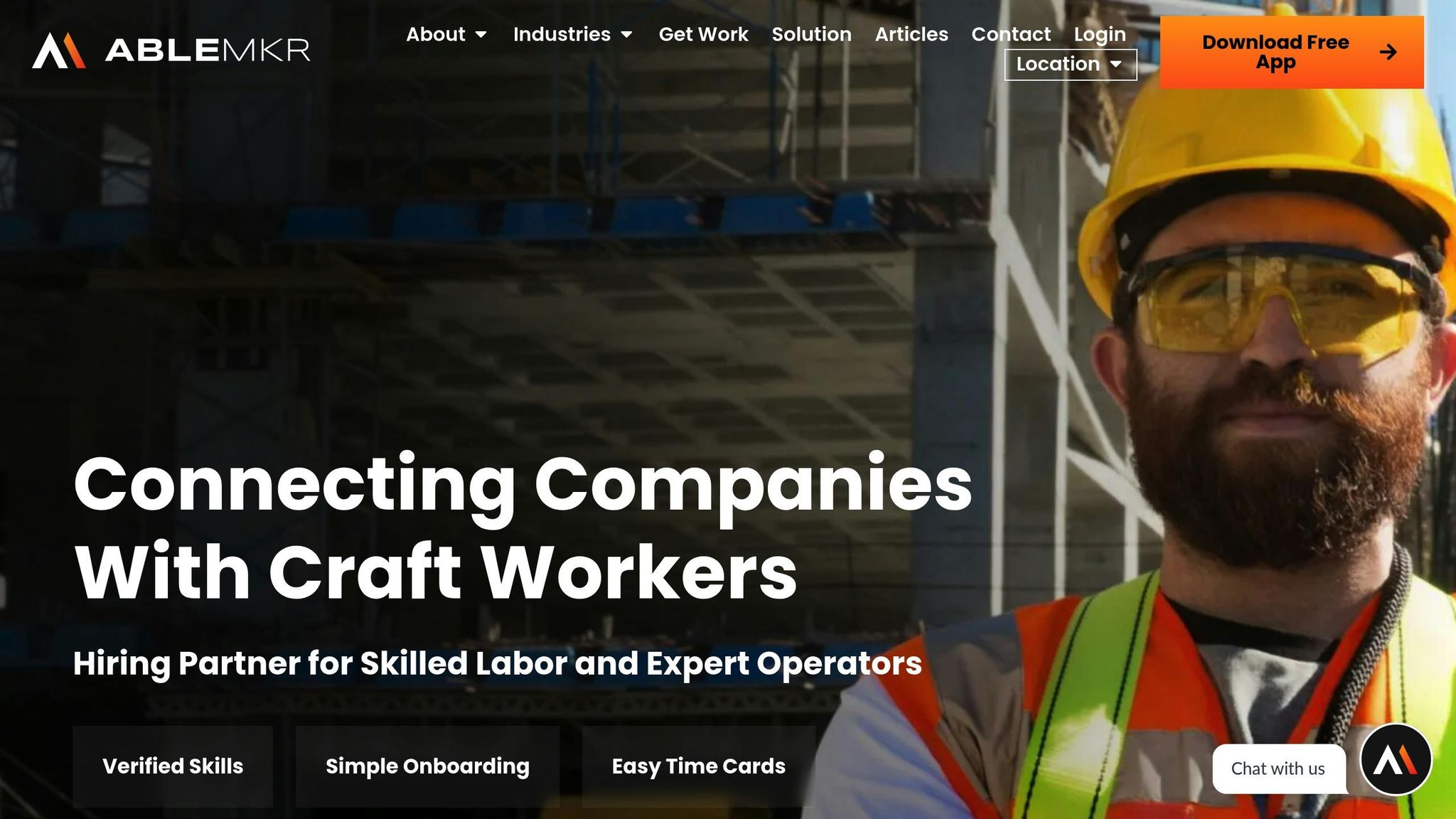
ABLEMKR makes it easy for building firms to find and manage workers, from pairing them up to paying them. It zeroes in on linking firms with skilled workers and machine users, with checked profiles and strong work team tools.
A big plus of ABLEMKR is its skill checks. Worker pages list things like proof of learning, safe work steps, and job past – all checked. This lets firms pick workers who fit exact needs for tough building jobs, cutting the risk of bad matches.
The tool also gives varied hiring ways to fit different job needs. Firms can:
- Bring in temp workers for short jobs.
- Try temp-to-hire to test workers before making roles long-term.
- Join by part hire for ongoing work needs.
- Pick direct hiring for long-term spots.
This choice lets building firms grow their teams as needed, without the slow steps usual in old-style hiring.
The boring bits of hiring are made easy by ABLEMKR too. Starting is quick and clean, while keeping track of time cards is made simpler, cutting down on lots of paper. Workers get the perks of W2 jobs and cover if hurt, easing worries for bosses.
How Tech Makes Work Team Handling Better
ABLEMKR does more than just hire – it also boosts how we handle workers day by day with its tools. Via its mobile app, bosses can see where workers are right now, making it easier to run teams. If a job site needs more workers or certain skills, the system finds pros nearby fast.
For firms without their own job seekers, ABLEMKR steps in as an HR help. This is great for medium-size builders who need skilled people but can’t keep full-time job seeker teams. The tool covers everything from checking candidates to doing talks, making sure every worker fits what the firm needs.
Keeping track of rules is another key thing. The tool checks on proofs of learning, when safe work steps run out, and rules for specific jobs. This stops costly waits that happen when workers show up not ready.
Built-in talk tools keep all in touch. Workers can text through the app, while bosses get news on worker spots and when they can work. This way, it stops problems like no-shows or mix-ups in times.
Good Points For Bosses and Workers
Tools like ABLEMKR make hiring quick and lift the bar on worker quality. The checked skill system lets bosses know a worker’s skills first hand, cutting down on hiring errors.
For bosses, clear cost plans make budgeting easy. Firms can see prices for different types of workers and skill sets before they pick who to hire.
Workers gain a lot too. Sites like ABLEMKR give them flexible work choices in many fields. With the app, workers can look at profiles and scores, helping them pick projects that match their job aims. They get paid on time, cutting out money worries.
A built-in scoring system adds more trust. Workers can build good names, while bosses can pick based on scores and feedback. This back-and-forth improves work and cuts down on people leaving projects.
Also, the platform’s mobile reach means workers can find new jobs fast. Instead of waiting between jobs, skilled workers can set up their next job before the current one stops. This keeps jobs going and holds onto skilled pros in the building field.
Building a Lasting Construction Crew
Creating a strong team in construction means more than just hiring. It involves careful planning, new training ways, and keeping skilled workers. To fix the ongoing lack of workers, the industry must think ahead.
Training and Skills Growth Programs
Vocational training is vital in readying the next wave of construction workers. Trade schools and local colleges have programs made to meet what employers need. These programs are hands-on and give students real experience that gets them ready for work on site.
Apprenticeship programs mix learning on the job with paid work. This helps both workers, who make money as they learn, and employers, who get a steady flow of skilled people.
Reaching groups not well-represented can also grow the workforce. Women, minorities, and young people often don’t know about the good jobs in construction. Special outreach can show the great pay and job safety, getting more people to join.
Teaching soft skills like talking well, working as a team, and solving problems helps new workers fit into the workplace. This training makes teams strong and cuts down on workers leaving.
The best training programs work closely with local employers. By making sure what they teach matches the skills needed, these programs make sure grads are ready to start work right away.
These steps are key to building a crew ready for today’s construction challenges.
New Ways to Grow the Workforce
Prefabrication is making big changes by moving some construction to factories. By making parts off-site, fewer workers are needed on-site and projects finish quicker. Factory jobs also offer stable year-round work in good settings, which attracts workers.
Modular construction goes further, putting together big parts of buildings off-site. This needs special skills but pays more and gives more steady work. Companies are teaching workers for modular methods, opening new job ways.
Robotics and automation are shaping things anew. Workers now run machines and handle more complex tasks instead of doing hard or repetitive work. This change not only makes work safer but also keeps jobs interesting and effective.
Digital tools are now key at construction sites. Workers who use tablets, apps, and digital measuring tools add more to their teams, boosting how well and accurately they work.
Companies looking to the future are also putting money into cross-training. Workers who can do many jobs, like electrical and plumbing, are more useful and secure. This flexibility helps in slow times and keeps jobs safe.
While growing skills is important, keeping workers also needs good work places and chances to move up.
Keeping Skilled Workers in Their Jobs
Making a workplace where skilled workers want to stay starts with better work conditions. Safer sites, cleaner spaces, and a culture of respect lower staff leaving and raise work quality.
Good pay and full benefits like health cover, retirement help, and days off are key for workers with families. Such things make a job in building work more tempting and keepable.
Putting safety first grows trust. Workers who know that their bosses care about their safety tend to stay longer. Good safety training cuts down on harm and builds loyalty.
Clear chances to move up keep people too. Workers must see a way up, either by getting a higher role or through skills training. This matters a lot for young staff who want to advance.
Work-life balance is key, even in jobs known for long days. Being able to pick your hours, having steady work times, and getting sure days off make stress less and stop burnout.
Also, saying "well done" can really lift spirits. Small acts of thanks, like noting good work, marking big moments, or showing thanks make a happy work place. Workers who feel seen tend to stick around and speak well of their job.
Top firms in keeping staff mix these ways. They know that workers today want more than just pay. Giving this leads to less quitting, more work done, and a name that brings in the best people.
Moving Ahead: How to Beat Construction Worker Shortages
Tackling the lack of workers in construction means using cool tech together with a strong plan for the people who work for us. Making good use of data and putting money into training folks can deal with these problems right away.
One good tech tool is predictive analytics, which lets building companies guess their need for workers by looking at old project info, yearly patterns, and new changes in the market. This ahead-of-time thinking stops the rush to find workers at the last minute and makes sure things go smoothly on the job site. Along with these forward-looking ideas, new tech ways are changing how bosses and workers meet up.
Look at ABLEMKR, for example – a tool that lets those who are hiring take charge of how they find people. Here is what an ABLEMKR Top Recruiter said:
"Contractors set the rate, and ABLEMKR looks after finding workers."
With a clear cost system (35% site fee) and use of many workers already checked, ABLEMKR swaps old ways of hiring with a new, smooth way.
By using new data tools, online hiring, and work growth plans, building firms can fix today’s labor needs and get ready for later work tests. This full plan fixes hiring issues and makes them stronger in a tough market.
Using new tech and focusing on making workers better can help top names in the field beat work gaps and make their teams stronger.
FAQs
How can firms that build things use facts to know labor needs and fix skill gaps?
Firms in building have a big help in data study and future-guessing tools when they work on knowing labor needs and fixing skill gaps. By looking at past project info, keeping an eye on worker trends, and watching live job place facts, firms can stay in front of hard staff problems and spot parts where skills may be lacking.
With future-guessing study, firms can line up their worker count with project plans, helping to cut wait times and lift work speed. These tools also make way for better training plans and wise use of stuff, making sure projects run well and keep on budget.
Why use digital ways like ABLEMKR to hire and manage workers in building jobs?
Web tools such as ABLEMKR make it easy to hire and run your team in the building field by giving you quick looks at key things like worker profiles, plans, and job site info. This makes sure all are in the know, raises work output, and cuts down on office tasks.
With parts like checked worker profiles, easy team work, and clear tracking of project costs, tools like ABLEMKR help firms to handle their teams better. What’s the gain? Time is saved, costs are cut, and work on building sites moves more smoothly.
How can the building job area pull in young folk and grow a long-term crew for what’s next?
To get young folk, the building job area must look new, full of tech charm. If it shows off new tech tools, robots, and top tech, it might seem cooler to young ones like Gen Z and millennials who often like jobs that take new ideas.
More than tech, giving guides to help them, new ways to learn, and clear steps up in their careers can draw young minds. Talking about good things like high pay, stable jobs, and chances to grow long-term can also reach this group, helping to form a lasting and strong crew.


