
Digital worker verification is transforming how industries ensure safety, compliance, and efficiency. Here’s what you need to know:
- What it is: A tech-driven process to confirm worker identities, validate certifications, and ensure eligibility.
- Why it matters: Prevents fraud, avoids compliance issues, and speeds up hiring in high-risk sectors like construction, energy, and utilities.
- Key technologies: AI for document checks, biometrics for identity verification, and blockchain for secure credential storage.
- Challenges: Navigating varying regulations, ensuring data privacy, and addressing cost concerns.
- Future trends: Mobile-first tools, continuous monitoring, and blockchain for credential portability.
Platforms like ABLEMKR simplify the process, offering pre-vetted workers, real-time updates, and automated alerts to reduce delays and compliance risks. Digital verification isn’t just about meeting regulations – it’s about building a safer, more efficient workforce.
Digital Identity in the Age of AI with Joelle Smith, First Advantage
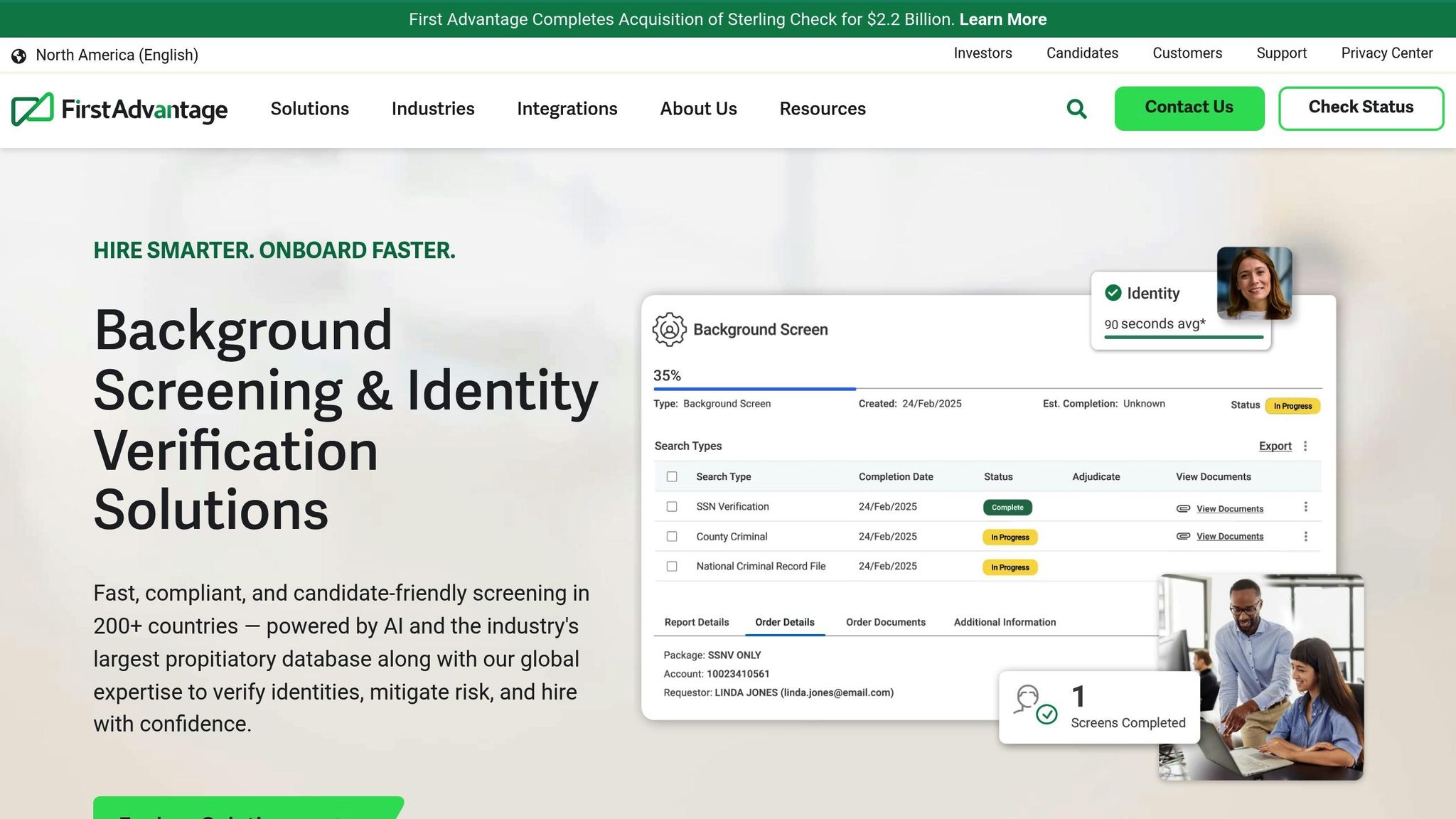
Core Technologies for Worker Verification
Worker verification has come a long way, thanks to advancements in technology that have replaced slow, manual processes with fast, automated systems. At the heart of this transformation are three key technologies that ensure secure and efficient verification while enabling platforms like ABLEMKR to mobilize workers in real-time and stay compliant.
AI-Based Document Authentication
AI-powered document authentication uses machine learning to analyze documents for security features like watermarks, fonts, and textures. With the help of Optical Character Recognition (OCR), it dives deeper, checking for inconsistencies in spacing, font alignment, and other details that could indicate forgery. These systems cross-check submitted documents against databases of legitimate certificates from training organizations and government agencies.
- Real-time cross-referencing: The technology instantly verifies certificate numbers, issue dates, and expiration details by connecting directly with training provider databases. This eliminates the need for time-consuming manual checks like phone calls or emails, speeding up worker onboarding.
- Pattern recognition: These algorithms continuously learn from each verification, improving their ability to detect new forgery techniques. Suspicious documents are flagged for human review, ensuring a robust defense against evolving fraud methods.
Biometric Verification and Liveness Detection
Biometric technology ensures that the person presenting credentials is the same individual they claim to be, addressing vulnerabilities in older systems where legitimate documents could be misused by others.
- Facial recognition: This compares onsite photos with government-issued IDs, compensating for changes in appearance or the presence of protective gear.
- Liveness detection: To prevent fraud using static photos or videos, the system requires users to perform simple actions like blinking or turning their head during verification. This confirms the presence of a real person.
- Fingerprint scanning: In environments where facial recognition is less effective due to safety gear, fingerprint scanning adds another layer of security. Mobile devices can capture high-quality fingerprint data, integrating seamlessly into the verification process.
- Multi-modal biometric systems: For high-security applications, combining facial recognition with voice patterns or fingerprints ensures extra reliability. Industries like offshore drilling or nuclear energy benefit from this layered approach, especially when deploying workers to critical sites.
The technology is designed to perform even in tough field conditions. Rugged mobile devices enable biometric checks during shift changes or emergency deployments, ensuring workers can access job sites without delay.
Blockchain for Secure Worker Records
While biometrics confirm a worker’s identity, blockchain secures their credentials, creating a system of trust that endures throughout their career.
- Immutable credential storage: Once a certification or training record is added to the blockchain, it cannot be altered or deleted. Cryptographic signatures and timestamps guarantee its authenticity and permanence.
- Decentralized verification: Employers can verify credentials directly through the blockchain without relying on training providers or past employers. This speeds up the process for workers juggling multiple projects.
- Smart contracts: Automated systems can track compliance and send renewal reminders for expiring certifications, ensuring workers stay qualified. This helps industries with strict regulations avoid costly delays caused by outdated credentials.
- Portable worker profiles: Workers retain control over their credential data, granting access to employers as needed while protecting sensitive information. This mobility is especially valuable for skilled professionals who frequently work with different contractors.
- Cross-industry compatibility: Blockchain allows credentials to be recognized across various sectors. For example, a worker trained in construction can easily present their qualifications when transitioning to an oil and gas project, simplifying hiring for both parties.
Together, these technologies form a complete verification system. With platforms like ABLEMKR, employers can quickly and safely deploy certified workers, ensuring compliance and efficiency at every step.
Regulatory and Industry Standards for Verification
Digital worker verification operates within a maze of federal regulations and industry standards. Employers must carefully balance the need for efficiency with legal and safety obligations when adopting these systems. Let’s take a closer look at the key U.S. standards and industry-specific requirements that influence digital verification practices.
Key U.S. Standards and Frameworks
Agencies like OSHA set the baseline for worker safety, requiring employers to verify essential safety training and maintain accurate certification records.
Recent updates from NIST and the Department of Transportation have introduced varying Identity Assurance Levels, requiring employers to verify credentials using government-issued photo IDs and related certificates. Programs like E-Verify also play a critical role, mandating employers to confirm employee work authorization by completing Form I-9 verification promptly. These frameworks support the advanced technologies discussed earlier.
Compliance in Construction and Energy Industries
High-risk industries like construction and energy have unique verification needs. In construction, workers must often complete OSHA 10- or 30-hour courses to meet mandatory training requirements.
The energy sector demands even more specialized credentials. For instance, roles requiring access to sensitive facilities often call for a Transportation Worker Identification Credential (TWIC). When it comes to pipelines and hazardous materials, federal regulations require strict operator qualification verification. Digital systems are vital for managing and tracking these certifications.
In the nuclear sector, verification standards are even more rigorous. Workers often undergo comprehensive background checks and fitness-for-duty evaluations to meet regulatory demands.
Evolving Standards and Regulations
As digital tools advance, regulatory guidelines are evolving to keep pace. For instance, there’s growing emphasis on integrating liveness detection into remote identity verification processes. Meanwhile, updated regulations in some sectors now require longer retention periods for digital records to ensure thorough audit trails.
State privacy laws, such as CCPA and VCDPA, have added another layer of complexity, requiring explicit worker consent for collecting biometric or sensitive data. Employers deploying workers across state lines must also navigate varying state-specific verification rules and reciprocity agreements to stay compliant.
With the rise of AI-powered document authentication, new governance frameworks now require regular audits to ensure fairness and accuracy.
Platforms like ABLEMKR are adapting to these shifting standards, continually refining their processes to align with new regulations. This ensures that businesses can deploy skilled workers efficiently while staying compliant with all legal requirements.
sbb-itb-aa28329
Best Practices for Implementing Worker Verification
Implementing digital worker verification effectively requires careful planning and a clear strategy. Rushing into a system without preparation can lead to integration problems and compliance issues. To get it right, you need to understand the unique needs of your workforce, choose the right technology, and maintain open communication throughout the process. A thoughtful approach not only ensures compliance but also improves how quickly and efficiently the system operates. Below, we’ll explore strategies for setting up verification processes, managing risks, and protecting worker data.
Using Platforms Like ABLEMKR for Verification
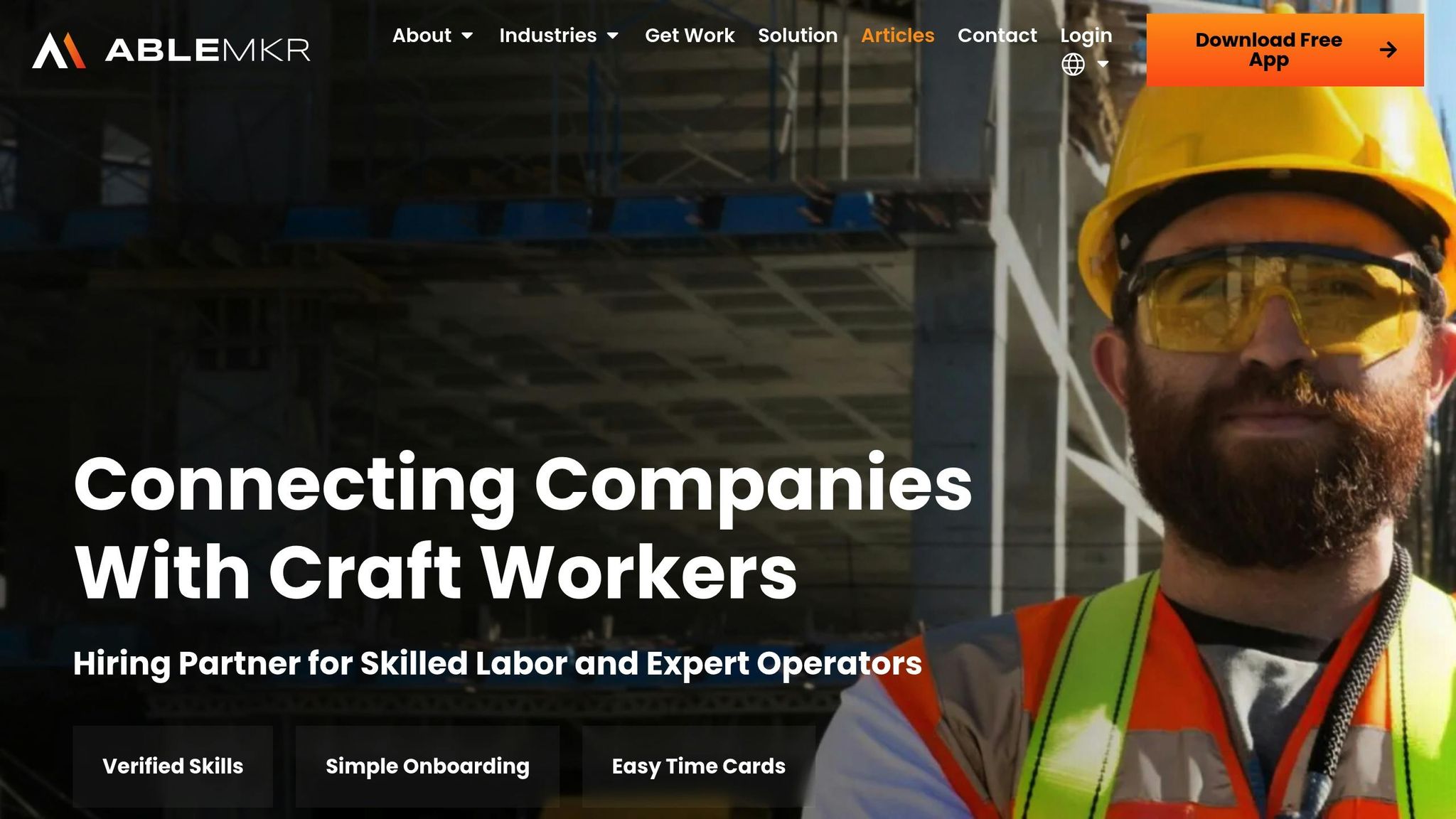
Modern platforms like ABLEMKR simplify managing worker credentials and compliance, especially in industries where quick crew mobilization is critical. With its mobile-first design, ABLEMKR is tailored for high-risk sectors that need rapid deployment, such as construction or emergency response.
One standout feature is its pre-vetting process, which ensures that only properly qualified workers are added to the talent pool. This reduces delays when urgent projects – like pipeline repairs or shutdowns – arise. Employers can quickly access a list of verified workers who are ready to go.
The platform also provides real-time updates on certifications and worker availability, making it easier to assemble crews under tight deadlines. Automated alerts notify both employers and workers when certifications are close to expiring, helping avoid the risk of deploying unqualified personnel. Additionally, ABLEMKR’s geo-location matching connects employers with nearby, qualified workers. This is especially helpful in remote areas where traditional hiring methods can fall short.
While leveraging such platforms is a game-changer, a solid verification strategy should also include a thorough assessment of risks associated with each role.
How to Assess Risk and Choose Verification Methods
Risk assessment is a cornerstone of any strong verification process. Employers must evaluate how each position impacts safety, security, and compliance before deciding on the right verification methods.
For high-risk roles, multi-layered checks – such as background screenings, biometric verification, and certification tracking – are essential. On the other hand, medium- and low-risk roles may only require basic document and identity verification.
Scalability is another important factor. A system that works well for a small team should also handle larger workforces as your operations grow. Additionally, verification processes should account for state-specific requirements to ensure compliance across all locations.
Finally, a reliable verification strategy must prioritize protecting worker data, which is critical to maintaining trust and meeting legal obligations.
Data Privacy and Worker Consent
Data privacy is a key consideration when implementing digital verification. Workers are increasingly aware of their rights regarding personal information, and failing to address privacy concerns can lead to pushback or even legal trouble.
Always obtain explicit consent before collecting personal data. Instead of using vague, generic consent forms, provide clear explanations of what data is being collected, why it’s needed, and who will have access to it.
State-specific privacy laws, such as California’s CCPA and Virginia’s VCDPA, add an extra layer of complexity. Companies operating across multiple states must ensure their consent processes meet the strictest applicable standards.
Following data minimization principles – only collecting the information absolutely necessary for compliance and safety – helps reduce both security risks and regulatory exposure. Being transparent about how data is handled builds trust, and allowing workers access to their own records strengthens that trust even further.
To keep sensitive information secure, implement measures like encryption, multi-factor authentication, and regular security audits. Training supervisors and HR staff on privacy regulations and keeping them updated on changes ensures consistent practices across the organization.
Investing in strong privacy protections not only reduces legal risks but also leads to smoother verification processes and greater worker satisfaction. By prioritizing data security and transparency, companies can foster trust and create an environment where verification systems are both effective and well-received.
Future Trends and Challenges in Worker Verification
As digital worker verification continues to evolve, businesses are navigating a landscape shaped by technological advancements and shifting workforce dynamics. This section dives into emerging trends and challenges, offering insights to help employers refine their verification strategies and stay ahead.
Privacy and Technology Adoption Challenges
Resistance to digital verification is a notable hurdle, particularly among workers in industries like construction and energy. Many are wary of sharing personal information on digital platforms due to concerns about data security.
Adding to the complexity, privacy laws vary widely across states. For example, California and Virginia enforce stricter data protection regulations, making it difficult to implement a one-size-fits-all verification strategy. Employers must navigate this patchwork of laws while maintaining compliance.
Generational differences also come into play. Younger workers often embrace digital tools, while older employees may prefer traditional, paper-based methods. Balancing these preferences without sacrificing security or efficiency is a challenge companies must address.
Cost is another barrier, especially for small and medium-sized businesses. While digital verification offers long-term benefits like reduced compliance risks and faster hiring, initial implementation expenses can be daunting. Additionally, many organizations rely on outdated HR and payroll systems that require costly upgrades to integrate with modern verification platforms. Careful planning and investment are essential to overcome these obstacles.
Despite these challenges, emerging trends are reshaping how worker verification is approached, offering new opportunities for innovation.
Verification Trends for 2025 and Beyond
Artificial intelligence (AI) is revolutionizing fraud detection in verification processes. AI-powered systems can instantly analyze documents, spotting subtle signs of tampering or forgery that might elude human reviewers. These tools are constantly improving, adapting to new fraud patterns to stay one step ahead.
Predictive risk assessment is another game-changer. Beyond verifying current credentials, these systems analyze worker behavior and certification histories to forecast potential compliance risks. This allows employers to make smarter hiring decisions and allocate resources more effectively.
Zero Trust security models are setting a new benchmark for verification platforms. Under this model, no user or device is automatically trusted. Every verification request is treated as potentially suspicious until validated, significantly boosting security.
Mobile-first verification has become a necessity. Workers increasingly expect to complete verification tasks via their smartphones. Platforms that fail to deliver seamless mobile experiences risk falling behind, especially in industries where employees spend most of their time in the field.
Blockchain technology is emerging as a tool for creating tamper-proof credential records. Although still in its early stages, blockchain-based systems promise to give workers greater control over their data while providing employers with confidence in credential authenticity.
Continuous compliance monitoring is replacing periodic checks. Instead of verifying credentials at hiring or annually, new systems offer real-time monitoring, alerting employers instantly when certifications expire or compliance issues arise.
Cross-industry credential portability is gaining traction. As workers transition between sectors, systems that allow them to carry verified credentials across industries streamline hiring and reduce redundancy.
How ABLEMKR Is Shaping the Future
In this rapidly evolving landscape, ABLEMKR is at the forefront of digital worker verification, leveraging advanced technology to redefine industry standards. Its mobile-first platform exemplifies how verification tools can adapt to modern workforce needs, turning compliance processes into a competitive edge.
ABLEMKR’s pre-vetting approach moves verification from reactive to proactive. Instead of verifying workers only when they’re needed, the platform maintains a pool of pre-verified workers ready for immediate deployment. This is especially valuable in urgent scenarios like pipeline repairs or power outages, where delays can be costly.
The platform’s geo-location matching takes workforce deployment to the next level. By combining verified credentials with real-time location data, ABLEMKR quickly identifies qualified workers who are nearby and available, ensuring projects are staffed efficiently.
Certification tracking with automated alerts helps employers stay ahead of compliance issues. By notifying companies before certifications expire, ABLEMKR minimizes the risk of deploying unqualified workers, maintaining safety standards across job sites.
ABLEMKR’s success in expanding from construction into energy and extractive industries highlights its scalability. This cross-industry approach fosters standardized verification practices, benefiting both employers and employees.
The concept of worker-owned digital identities is becoming more tangible through platforms like ABLEMKR. Workers can maintain control over their verified credentials, making them easily accessible to potential employers. This reduces the verification burden on companies while enhancing career portability for workers.
ABLEMKR also addresses broader workforce challenges, such as payment delays. By linking verified work completion to automated payment processing, the platform ensures workers are paid on time, reducing friction in the employment relationship.
As industries adapt to the energy transition and tackle increasingly complex infrastructure projects, ABLEMKR is positioning itself as a key player. Its combination of mobile technology, data-driven insights, and industry expertise is setting the stage for more efficient and reliable worker verification across high-risk sectors.
Conclusion and Key Takeaways
Digital worker verification has become a vital backbone for managing today’s workforce, especially in industries like construction, energy, and extractives where safety and compliance are non-negotiable. Moving from paper-based processes to digital verification improves safety, reduces compliance risks, and makes hiring faster and smoother.
Technologies like AI authentication, biometric scans, and blockchain are driving this shift. These tools provide faster, more accurate verification compared to manual processes, making them indispensable for industries that need to fill roles quickly and securely.
However, compliance hurdles remain, as standards vary widely across states and industries. Companies working in multiple regions face the challenge of aligning with diverse regulations while maintaining efficient and secure practices. The solution lies in adopting systems that can handle these variations without sacrificing reliability or speed.
Platforms like ABLEMKR illustrate how technology can address these challenges. By offering pre-vetted pools of workers with verified certifications, up-to-date safety training, and location data, these platforms eliminate traditional delays in workforce deployment. Real-time compliance tracking, combined with automated payroll integration, creates a more seamless experience for employers and workers alike. Mobile access further simplifies administrative tasks, saving time for HR teams.
The future of workforce management is heading toward continuous monitoring. This approach gives employers instant insights into worker certifications, status updates, and potential compliance issues before they become problems. It’s a proactive way to stay ahead in high-risk industries.
Employers should focus on high-risk roles and critical certifications, prioritizing platforms that offer mobile-friendly interfaces, real-time updates, and payroll system integration. While the upfront cost of digital verification tools may seem significant, the long-term benefits – fewer compliance risks, faster hiring, and better worker satisfaction – far outweigh the investment.
FAQs
How do digital worker verification systems safeguard sensitive worker information and ensure privacy?
Digital worker verification systems play a key role in protecting sensitive information by using advanced security measures like encryption, multi-factor authentication, and role-based access controls. These tools are designed to block unauthorized access and maintain the privacy of crucial data.
On top of that, organizations using these systems often adopt smart practices such as performing regular security audits, restricting data access to only what’s absolutely needed, and educating employees on safeguarding data. Together, these efforts help reduce potential risks and keep worker information secure.
What challenges do businesses face with digital worker verification, and how can they address them?
Businesses often face hurdles when rolling out digital worker verification systems. Some of the common challenges include inconsistent data quality, difficulties in integrating new systems with existing workflows, and dealing with fragmented legal or compliance requirements. On top of that, workers might feel frustrated if the process is too complicated or if they aren’t properly trained, which can slow down adoption.
To tackle these obstacles, companies should prioritize easy-to-use, scalable technology that simplifies the verification process. Regular staff training is crucial to ensure everyone knows how to navigate the system effectively. It’s also important to keep systems flexible enough to adapt to new fraud tactics. By focusing on these areas, businesses can create a smoother and more efficient verification process that works well for both employers and workers.
How does blockchain improve the security and portability of worker credentials in digital verification systems?
Blockchain strengthens the security of worker credentials by employing advanced encryption and hashing methods. These technologies ensure that credentials remain tamper-proof and securely stored, making unauthorized alterations virtually undetectable.
Additionally, blockchain enhances portability by giving workers ownership and control over their verified credentials. This means credentials can be effortlessly transferred across platforms or organizations, simplifying the verification process. By decentralizing this system, blockchain minimizes fraud while keeping credentials both secure and easily accessible when required.


