
Renewable energy jobs come with unique risks, from high-voltage systems to extreme heights. Training workers to handle emergencies effectively is critical to ensure safety and prevent disasters.
Key takeaways from this guide include:
- Specialized Training Needs: Workers must understand the specific hazards of renewable energy systems, like thermal runaway in batteries or high-pressure steam in geothermal plants.
- Emergency Response Protocols: Clear procedures for different emergency levels (e.g., toxic gas leaks or electrical issues) help prevent minor incidents from escalating.
- Hands-On Simulations: Drills tailored to real-life scenarios, such as fall rescues or confined space evacuations, are essential for preparedness.
- Skill Gap Concerns: Only 32% of energy-related education focuses on renewables, highlighting the need for targeted workforce training.
- Digital Tools: Platforms like ABLEMKR ensure rapid deployment of qualified workers during emergencies, track certifications, and manage compliance seamlessly.
This article covers how to assess risks, close skill gaps, and implement effective emergency training programs for renewable energy sites.
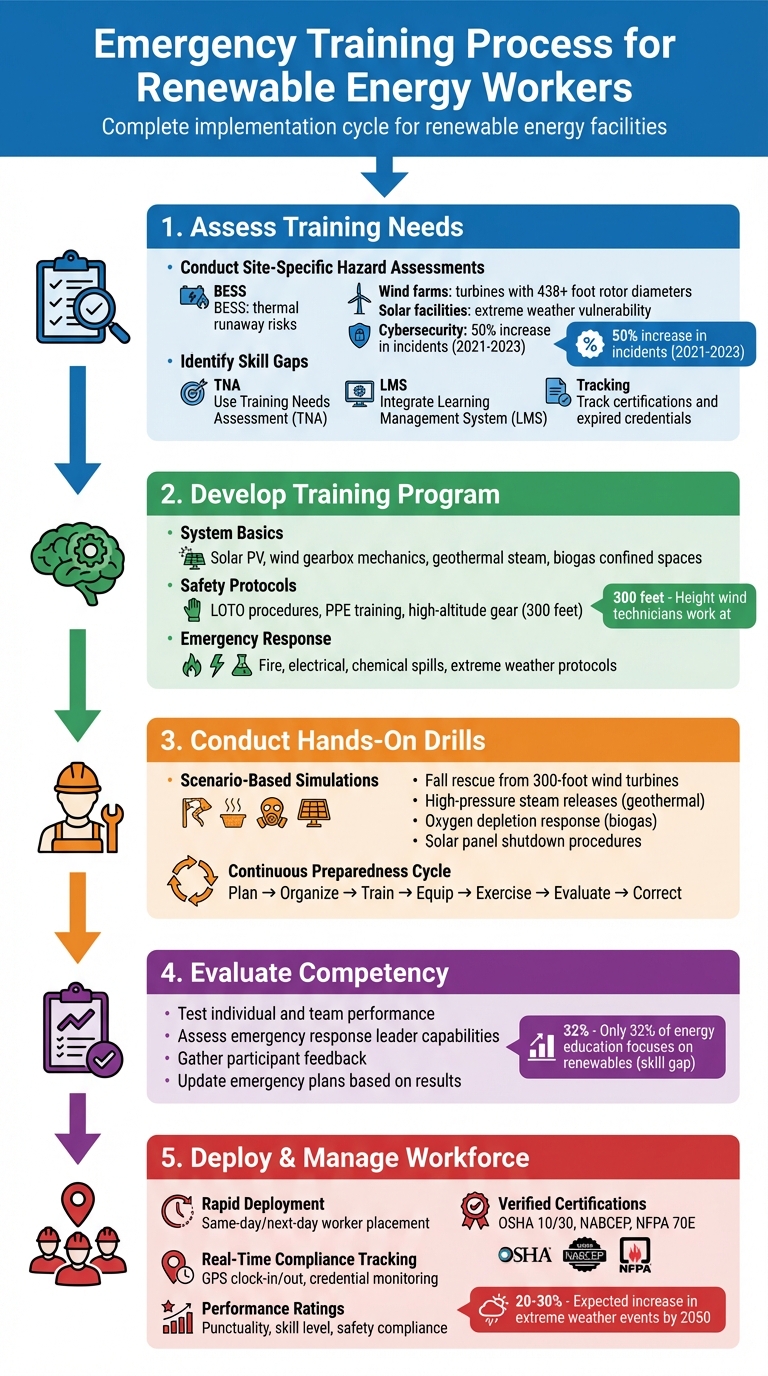
Emergency Training Implementation Process for Renewable Energy Workers
Assessing Training Needs for Renewable Energy Sites
Conducting Site-Specific Hazard Assessments
Every renewable energy facility comes with its own unique risks that must be carefully evaluated. For instance, Battery Energy Storage Systems (BESS) present challenges like lithium-ion thermal runaway, which require specialized fire suppression measures. Wind farms face logistical difficulties due to the increasing size of turbines – some with rotor diameters exceeding 438 feet – making fire suppression in confined nacelles especially tricky.
Solar facilities, on the other hand, need detailed vulnerability mapping to address risks from extreme weather events. Beyond physical dangers, cybersecurity threats are becoming a growing concern. Between 2021 and 2023, cyber incidents in the energy sector surged by 50%, with attackers increasingly targeting previously isolated systems like Operational Technology (OT) and Industrial Control Systems.
To mitigate these risks effectively, Probable Maximum Loss (PML) assessments should be conducted early, ideally at the 10% design stage. These assessments guide technology choices while considering long-term climate risks such as rising sea levels and extreme heat. By 2050, global extreme weather events are expected to increase by 20-30%, further emphasizing the importance of proactive planning.
Identifying Skill Gaps Among Workers
Once the hazards for a specific site are identified, the next step is evaluating whether workers have the skills to handle these risks. This involves assessing their strengths and pinpointing areas where additional training is needed. The Department of Energy suggests using a Training Needs Assessment (TNA) to gather data from Individual Development Plans (IDPs) and identify common skill gaps across teams. This structured process helps organizations focus on addressing the most critical training needs that directly impact safety.
"A systematic process used by organizations to assess and prioritize all the formal training identified through the Training Needs Analysis and allocate resources to address the highest priority training needs." – Department of Energy
Integrating a Learning Management System (LMS) into this process can streamline data collection and provide real-time updates on workforce readiness. For example, the system can flag expired certifications or missing modules on renewable-specific risks, such as handling battery thermal runaway incidents. This ensures that training budgets are spent effectively, targeting the most pressing gaps rather than generic safety courses that don’t address the unique challenges of renewable energy sites.
sbb-itb-aa28329
Developing a Training Program
Basics of Renewable Energy Systems
Before workers can effectively handle emergencies, they need a clear understanding of how renewable energy systems work. This means learning the essential components and operational principles unique to each type of technology. For instance, in solar power systems, workers should know how photovoltaic panels produce electricity and why covering them with opaque sheets during maintenance is critical to prevent accidental power generation. Wind energy training must include a solid grasp of gearbox mechanics and blade dynamics, especially since technicians often work at heights of up to 300 feet for installation and maintenance tasks. Geothermal energy sites require familiarity with high-pressure steam systems, while biogas facilities demand knowledge of confined space hazards and gas detection protocols. With this foundational knowledge, workers can move on to more specific safety measures.
Safety Protocols and Risk Mitigation
Strong lockout/tagout (LOTO) procedures are essential for all renewable energy sites, though their implementation varies depending on the technology. For example, hydroelectric facilities require de-energizing all power sources and setting up physical barriers with clear warning signs. In solar installations, workers need training on specialized tools that stop electrical generation during maintenance. Wind turbine technicians, on the other hand, must be skilled in using high-altitude safety gear like harnesses, lanyards, and anchor points to prevent falls.
Personal protective equipment (PPE) training should align with the specific risks of each energy system. Geothermal workers need heat-resistant clothing and should be trained on pressure relief systems, while biogas facility staff must use respiratory protection and fire-resistant gear. To ensure workers are fully prepared, training should progress from theoretical lessons to hands-on simulations and supervised fieldwork, helping new employees gain practical experience. These safety measures lay the groundwork for effective emergency response strategies.
Emergency Response Strategies
Emergency response training must include detailed planning, regular drills, and ongoing evaluations. Workers should be equipped with clear protocols for handling various emergencies, such as fires, electrical issues, chemical spills, and extreme weather. Evacuation procedures are a key focus, with drills designed to familiarize workers with escape routes and designated assembly points.
Training should also emphasize the use of alarms, sirens, and emergency broadcast systems to quickly alert others during an incident. Clear roles and responsibilities must be assigned to designated emergency response leaders. Additionally, workers should be trained on how to coordinate with internal response teams, law enforcement, and local emergency services, as outside support is often necessary during renewable energy emergencies. These strategies ensure that teams are prepared to act swiftly and effectively when it matters most.
Hands-On Training and Scenario-Based Drills
Simulating Renewable Energy Emergencies
Classroom learning alone doesn’t cut it – workers need hands-on drills that mimic real-life scenarios. These simulations should reflect the specific dangers tied to each renewable energy technology. For example, practicing a fall rescue from a 300-foot wind turbine, managing a high-pressure steam release at a geothermal plant, or responding to oxygen depletion in a biogas facility are all critical scenarios to rehearse. The aim? To test both equipment shutdown and evacuation procedures under conditions that feel as real as possible.
"Training and exercising plans is the cornerstone of preparedness, which focuses on readiness to respond to all hazards, incidents and emergencies." – University of Nevada, Reno
Effective training programs follow a continuous preparedness cycle: plan, organize, train, equip, exercise, evaluate, and take corrective action. For solar installations, workers might practice covering panels with opaque sheets to safely halt electricity generation before starting maintenance. Wind turbine drills could focus on using harnesses and lanyards for emergency descents, while biogas facility exercises might center on using gas detectors and ventilating confined spaces. These drills should also test communication protocols to ensure they work even in noisy or remote environments. By simulating these situations, organizations can evaluate readiness and fine-tune their emergency response strategies.
Evaluating Worker Competency
Once the drills are complete, it’s essential to assess how well workers can apply what they’ve learned. Using clear criteria, organizations can evaluate individual and team performance, ensuring workers are prepared for the unique risks tied to their specific environments. For instance, workers need to understand how to handle electrical hazards in solar arrays or protect themselves from thermal exposure at geothermal sites.
"Hands-on training consists of simulation exercises and field training under supervisory guidance, which are vital for turning a rookie into a seasoned veteran of the industry." – Survival First Aid Kits
Combining hands-on simulations with supervised field training builds expertise over time. Emergency response leaders, in particular, must prove they can manage resources and coordinate effectively using systems like the Incident Command System during drills. After each exercise, gathering participant feedback and updating emergency plans is key to addressing any gaps. This ongoing process ensures that as technology and risks evolve, training programs remain relevant and effective.
Using ABLEMKR for Worker Deployment

Connecting Pre-Vetted Workers to Emergency Response Projects
When renewable energy systems fail, quick action is critical. ABLEMKR’s platform transforms lengthy hiring processes into same-day or next-day solutions, ensuring labor gaps caused by equipment breakdowns or severe weather are filled without delay. The platform uses certifications, safety training, availability, and geo-location to match qualified workers to your site in record time.
Certifications like OSHA 10/30, NABCEP, and NFPA 70E are digitally verified to ensure every worker meets strict safety standards. During the vetting process, ABLEMKR also confirms government-issued IDs, Social Security numbers, and work authorization (I-9 compliance). When you post an emergency job, the system’s algorithm filters for workers with the required active certifications, so you’re not left guessing about their qualifications.
Workers are evaluated after every job based on punctuality, skill level, and safety compliance. High-performing workers are prioritized for future emergency placements, and you can review their ratings and verified skills before assigning them to critical projects. To streamline the process even further, clearly list required certifications and provide 48–72 hours’ notice whenever possible.
This rapid response system sets the stage for streamlined compliance and effective workforce management.
Managing Compliance and Workforce Status in Real-Time
ABLEMKR doesn’t just connect you with workers – it keeps you informed about compliance and workforce activity in real time. In emergencies, knowing where your workers are and whether their credentials are valid is non-negotiable. The platform offers real-time visibility into worker status, which is invaluable during evacuations or crises. Expired credentials are automatically flagged, and renewal dates are tracked to ensure only fully qualified workers are sent to job sites.
As the legal employer under a W-2 model, ABLEMKR handles workers’ compensation, liability insurance, and payroll, reducing compliance risks. This approach eliminates contractor misclassification issues while ensuring the necessary insurance coverage for high-risk renewable energy projects. Features like GPS-verified mobile clock-in/out prevent errors from manual processes, while integrated payroll workflows handle administrative tasks seamlessly. Bill rates typically range from 30–70% above the worker’s gross wage, covering payroll taxes, insurance, and other overhead costs. This creates a straightforward, variable cost structure based on actual hours worked.
Solar+Storage Fire Safety Training: Single and Multifamily Residential (1.12.21)
Conclusion
Emergency training for renewable energy sites is all about addressing hazards like falls, electrical issues, and high-pressure releases. It begins with targeted hazard assessments, pinpointing risks such as falls from heights of up to 300 feet or electrical malfunctions. From there, hands-on simulation exercises prepare workers to handle emergencies effectively. These exercises are tailored to the specific risks and training needs of each site.
The "green skill gap" highlights a critical issue: many workers are not ready for emergencies unique to renewable energy sectors. This gap makes ongoing training and regular drills crucial for keeping the workforce prepared. As the University of Nevada, Reno emphasizes:
"Training and exercising plans is the cornerstone of preparedness, which focuses on readiness to respond to all hazards, incidents and emergencies".
Beyond training, digital tools take emergency response to the next level. Platforms like ABLEMKR enable rapid worker deployment and track compliance in real time. For example, expired credentials are flagged immediately, and GPS-verified clock-in/out systems provide a clear view of workforce status during evacuations or crises. These features ensure compliance and improve workforce management during emergencies.
By incorporating digital workforce management, emergency protocols become an ongoing process of planning, training, equipping, and evaluating. Regularly reviewing plans, assigning emergency response leaders, and maintaining well-stocked first-aid kits and specialized gear lay the groundwork for effective responses. When paired with tools that manage compliance, payroll, and insurance, organizations can respond more quickly and safely to emergencies in renewable energy environments.
Specialized training combined with advanced technology reduces risks, protects workers, and ensures operational continuity during crises.
FAQs
What renewable energy emergency training is required by law?
There aren’t any specific legal mandates for renewable energy emergency training. However, OSHA standards, such as HAZWOPER (Hazardous Waste Operations and Emergency Response), require training for handling hazardous waste and emergency situations. Whether these standards apply depends on the nature of the emergency. Employers should carefully evaluate the risks unique to their sites to identify the appropriate training requirements.
How often should renewable energy sites run emergency drills?
Renewable energy sites should make it a priority to hold emergency drills on a regular basis, even if specific intervals aren’t outlined. These drills are a vital part of staying prepared for potential incidents. Consistent training, detailed planning, and practical exercises ensure teams are ready to respond effectively when emergencies arise. Regularly practicing these scenarios helps uphold safety protocols and keeps preparedness at a high standard.
What certifications should emergency response workers have?
Emergency response personnel working on renewable energy sites need certifications that prove their ability to handle emergencies effectively. One such certification is the OPITO ‘Emergency Coordinator for Renewable Energy (Wind)’. This credential ensures that individuals are trained in site-specific protocols, as well as in conducting drills and exercises. It validates that they possess the necessary skills and knowledge to carry out emergency response duties with confidence and precision.


