
Real-time reporting is transforming how construction teams operate by providing live updates on project data, improving communication, safety, and cost management. Here’s why it matters:
- Instant Updates: Teams get live data on material deliveries, labor hours, and safety incidents, avoiding delays caused by outdated information.
- Improved Communication: A shared platform ensures everyone – from field crews to managers – stays aligned and informed.
- Cost Control: Real-time tracking of labor, materials, and equipment helps avoid budget overruns and maintain profitability.
- Enhanced Safety: Hazards can be reported and addressed immediately, reducing risks and ensuring compliance with regulations.
- Streamlined Workforce Management: Tools like ABLEMKR simplify staffing, payroll, and scheduling with integrated, real-time solutions.
How Is Real-Time Tracking Used In Construction? – How It Comes Together
Better Communication and Collaboration
Construction projects often involve a mix of teams spread out across various locations – from field crews and office staff to subcontractors. When these groups rely on outdated or incomplete information, miscommunication is almost guaranteed. Real-time reporting solves this issue by creating a single, shared source of truth that everyone can access instantly. This smooth flow of up-to-date information ensures all team members stay aligned and on the same page.
Instant Information Sharing Between Teams
Traditional construction communication methods, like phone calls, text messages, or end-of-day reports, often lead to delays and confusion. Real-time reporting changes the game by enabling instant data sharing across all project stakeholders.
Now, field workers can update project statuses directly from their mobile devices as tasks are completed. For example, if a task finishes ahead of schedule, the update immediately notifies the project manager. This eliminates lag time and allows for quick follow-up actions.
This elimination of delays is especially critical when managing change orders or unexpected problems. Instead of waiting hours for updates to filter through various channels, supervisors can spot issues as they arise and coordinate solutions in real time. This instant visibility ensures that minor problems don’t grow into significant delays.
By enabling direct communication between the field and the office, real-time reporting cuts out unnecessary steps that often introduce errors or slow down the process.
Better Decision-Making Through Clear Data
Improved information sharing lays the groundwork for faster, more informed decision-making.
Real-time dashboards bring together data on labor, materials, equipment, and budgets, giving managers the tools to reallocate resources quickly and address potential issues. For instance, if bad weather threatens outdoor work, managers can immediately shift tasks indoors and adjust resource allocations on the fly. Real-time visibility into labor usage also makes it easier to spot when crews are underutilized or when extra manpower is needed.
When data is current and complete, timely decisions become reliable decisions. Instead of discovering productivity issues weeks later through traditional reporting, project managers can identify trends as they emerge and make adjustments before they affect timelines or budgets.
These real-time dashboards also enhance stakeholder communication. When meeting with clients or investors, project managers can confidently present the latest project updates, showing exactly where things stand at that moment. This level of transparency builds trust and strengthens relationships throughout the project’s duration.
Additionally, real-time reporting fosters collaborative problem-solving by ensuring that everyone has access to the same accurate, up-to-date information. When challenges arise, field supervisors, office staff, and project managers can work together with a shared understanding of the situation, leading to faster, more effective solutions.
Efficiency and Cost Management
Real-time reporting is revolutionizing the way construction teams manage their day-to-day operations by cutting down on administrative tasks. When data flows directly from the field to management systems, teams spend less time buried in paperwork and more time focusing on productive work. This shift not only simplifies daily workflows but also enhances cost management, delivering clear improvements in both areas.
Streamlined Workflows and Reduced Manual Effort
In traditional construction reporting, workers fill out paper forms, supervisors compile daily reports, and office staff manually input data into various systems. These manual processes are prone to errors and delays. Real-time reporting eliminates many of these steps by capturing data automatically as tasks are completed.
Mobile updates ensure that schedules, inventory, and payroll systems are refreshed instantly through automated data capture. This eliminates the usual lag between work completion and record keeping. Automated work logs, which are part of the same system, further reduce administrative burdens and facilitate instant communication.
The time saved on administrative tasks is significant. Project managers no longer need to spend hours consolidating reports from different teams or chasing down missing details. Instead, they can access detailed project updates through centralized dashboards, enabling them to make informed decisions quickly.
Automated systems also naturally lead to fewer errors. With accurate data in hand, costly mistakes like rework or scheduling conflicts become far less common. Mobile reporting tools even allow for real-time documentation, such as worksite photos and delivery scans, creating a reliable audit trail that supports both quality assurance and accurate billing.
Real-Time Cost Tracking for Better Budget Control
Real-time reporting doesn’t just improve workflows; it’s a powerful tool for keeping project budgets on track. Construction projects often operate on slim margins, where even minor cost overruns can eat into profitability. Real-time cost tracking provides project managers with the insights they need to manage expenses effectively throughout the project.
Labor costs can be tracked with precision when time-tracking systems integrate directly with payroll. Managers can see exactly how much labor is being used for each task or phase of the project as it happens. This visibility allows them to make quick adjustments if labor hours start exceeding the budget, rather than discovering the problem weeks later through outdated reporting methods.
Material costs also benefit from real-time tracking. Automated updates from delivery receipts and usage reports allow managers to spot excessive material usage early. If a specific crew is consistently using more materials than planned, the issue can be investigated and resolved before it affects the overall budget.
Real-time monitoring also helps with equipment utilization. Managers can see when equipment is idle, when it’s being used effectively, or when maintenance issues are causing downtime. This data helps optimize equipment deployment, reduce rental costs, and improve productivity.
Cash flow management becomes far easier with real-time cost visibility. Accurate billing information can be generated as work is completed, rather than waiting for end-of-month reports. This faster billing process improves cash flow and reduces the administrative hassle of piecing together records after the fact.
The integration of real-time cost data with project schedules enables more accurate budget forecasting. Managers can use up-to-date spending and progress data to predict project costs with greater accuracy. This allows for proactive adjustments to budgets, avoiding the need for reactive fixes later on.
For workforce management, platforms with clear cost structures provide valuable insights. When labor costs, benefits, and administrative fees are visible in real time, managers can make smarter staffing decisions. This helps ensure the workforce meets project demands while staying within budget constraints.
sbb-itb-aa28329
Better Safety and Compliance
Construction sites are inherently risky environments, where safety incidents can happen in an instant. Traditional reporting methods often take hours – or even days – to document and address these issues. With real-time reporting, hazards are identified and addressed immediately, ensuring ongoing adherence to safety regulations. This quick response not only improves hazard detection but also enhances incident documentation and response protocols.
Active Safety Monitoring and Incident Reporting
Real-time safety systems are transforming how construction teams manage workplace hazards. By instantly recording safety data, these systems allow for immediate action. Workers can report hazards directly from mobile devices, attaching photos and location details, which prompts swift interventions to prevent injuries.
Digital systems also create timestamped, traceable records that clarify who is responsible for safety tasks. When a hazard is reported, the system automatically assigns it to the relevant supervisor or safety officer, tracks response times, and escalates unresolved issues based on established protocols. Automated workflows ensure safety tasks – like regular check-ins or equipment inspections – are seamlessly integrated into daily operations. These systems don’t just react to incidents; they also help teams identify recurring hazards or high-risk areas, enabling proactive measures. This transparency fosters trust between workers and management, encouraging consistent reporting and preventive action.
Easier Compliance and Regulatory Tracking
Real-time systems not only enhance safety reporting but also simplify regulatory compliance by automating documentation, tracking requirements, and maintaining clear audit trails. Construction projects must meet a range of federal, state, and local regulations, from OSHA safety standards to wage laws.
By integrating time-tracking with payroll and compliance reporting, these systems help ensure adherence to labor laws. Features like real-time timekeeping verify that workers are on-site when clocking in or out, reducing time theft and ensuring accurate wage records. Systems can also require safety check-ins before work begins, reinforcing compliance.
Automated data capture provides project managers with detailed, timestamped records of safety training, equipment inspections, and incident reports. This standardization minimizes compliance gaps that could lead to citations or delays. With real-time visibility into compliance status, managers can address issues before they escalate.
These digital tools also extend accountability to subcontractors and specialty trades by linking safety teams, foremen, and subcontractors on a shared platform. This unified approach ensures everyone meets the same compliance standards. Maintaining continuous, filterable records makes audit preparation a routine part of project management.
A data-driven approach to compliance management highlights areas where additional training or resources may be needed. Real-time data reveals patterns, such as specific crews or activities consistently struggling with certain requirements. This insight allows for targeted interventions, improving overall compliance and reducing the administrative workload for project managers. Strong compliance practices also minimize downtime and disruptions, reinforcing operational efficiency – a key theme in earlier discussions.
Workforce Management with ABLEMKR
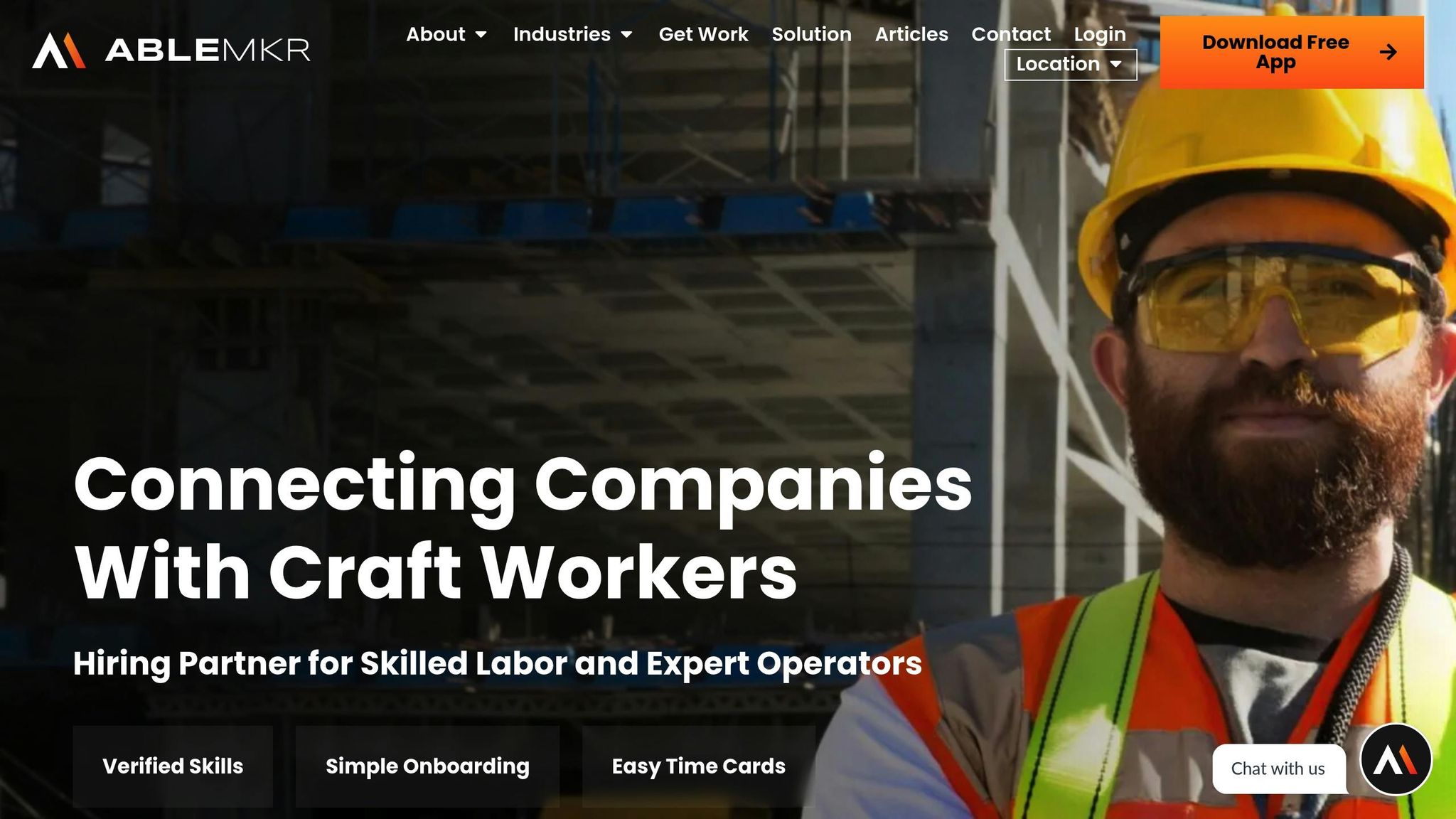
Real-time reporting is changing the way construction companies handle workforce management. By integrating this feature, companies can not only speed up staffing processes but also improve financial oversight and operational efficiency. With better communication and cost tracking, it also brings a new level of coordination and analytics to workforce management.
Streamlined Staffing and Scheduling
ABLEMKR’s mobile-first platform makes staffing faster and smarter by instantly matching pre-vetted workers to job sites. It uses real-time data on certifications, safety training, availability, and location to ensure the right people are deployed to the right jobs. Whether it’s for emergency repairs, last-minute changes, or scheduled tasks, this automated system helps construction companies mobilize crews without delay.
The platform continuously updates worker availability and location. For example, if a project manager needs skilled labor on short notice, they can quickly identify certified workers nearby and deploy them immediately. This eliminates the need for endless phone calls and manual scheduling, which often slow down projects.
Two-way communication further enhances staffing efficiency. Workers receive instant alerts about opportunities that match their skills and preferences, while employers get immediate confirmation once a worker accepts an assignment. This reduces no-shows and ensures staffing levels stay on track.
Transparent Costs and Payroll Integration
Beyond making staffing easier, ABLEMKR simplifies financial management with integrated payroll solutions. Real-time tracking allows construction companies to review labor costs instantly and ensures payroll processes are seamless. This reduces administrative burdens and helps avoid budget overruns.
The platform’s clear cost structure eliminates surprise fees and hidden charges often associated with traditional staffing methods. It tracks employee hours and locations in real time, enabling immediate review and approval of work hours.
Payroll workflows are built into the platform, automatically capturing time data, overtime calculations, and compliance requirements. It even manages workers’ compensation coverage, easing liability concerns for employers. Additionally, real-time invoicing allows for immediate billing, improving cash flow. Instead of waiting for weekly or monthly billing cycles, construction companies can access detailed cost breakdowns as work progresses, making financial planning and project management much smoother.
Real-Time Analytics for Employers and Workers
With real-time analytics, both employers and workers gain valuable insights. For construction companies, these analytics provide detailed metrics on worker productivity, safety compliance, and performance history. Automated alerts notify project managers when certifications are nearing expiration, helping avoid compliance issues that could disrupt work or lead to penalties.
For workers, the platform offers a clear view of their earnings, work history, and performance ratings. This transparency helps them make informed decisions about job opportunities and their career paths.
At the project level, managers can access comprehensive dashboards that display staffing levels, productivity metrics, and cost performance across multiple sites. This data-driven approach is particularly useful for large companies managing numerous projects in different locations. It enables better resource allocation and ensures that projects run efficiently.
The platform also includes a rating system that promotes accountability for both workers and employers. Real-time feedback ensures high service standards are maintained. Employers can quickly identify and retain top-performing workers, while workers can use ratings and reviews to avoid challenging employers. This mutual accountability helps create a better working environment for everyone involved.
Conclusion: Key Benefits of Real-Time Reporting
Real-time reporting is reshaping the U.S. construction industry by improving communication, increasing efficiency, enhancing safety, and simplifying workforce management.
With instant access to live project data, stakeholders can make informed decisions on the spot, cutting down on confusion and project delays. Workflows become more efficient by reducing paperwork, and real-time cost tracking helps catch budget concerns early, preventing costly overruns.
Safety and compliance also see major improvements. Teams can respond to hazards immediately, while automated systems handle documentation and certification tracking with ease.
When it comes to workforce management, tools like ABLEMKR simplify the process by connecting pre-vetted workers to job sites, monitoring labor costs in real time, and managing payroll effortlessly. This allows construction companies to focus on building rather than getting bogged down by administrative tasks.
In a fast-moving industry, real-time reporting has become a must-have for construction teams aiming to stay ahead.
FAQs
How does real-time reporting boost communication and teamwork in construction projects?
Real-time reporting transforms how construction teams communicate and collaborate by offering instant access to project updates. With everyone working from the same set of information, it’s easier to avoid misunderstandings, address issues quickly, and keep workflows on track.
This constant flow of up-to-date insights doesn’t just improve teamwork – it strengthens collaboration between team members and stakeholders. Decisions can be made more effectively, and projects run more efficiently. The result? A more organized, proactive work environment that saves time and minimizes costly delays.
How does real-time reporting improve safety and compliance on construction sites?
Real-time reporting plays a crucial role in helping construction teams stay on top of safety and compliance. By spotting hazards as they happen, it allows for immediate incident reporting and ensures that safety protocols are consistently monitored. This kind of vigilance minimizes the chance of accidents and helps projects meet regulatory requirements.
It also provides the ability to respond to safety concerns more quickly, simplifies audit preparation, and makes tracking safety performance more efficient. With tools like dynamic dashboards and automation, teams can manage compliance more effectively while prioritizing a safer workplace.
How does real-time reporting improve cost control and efficiency in construction projects?
Real-time reporting transforms how construction teams manage costs and efficiency by providing instant access to the latest project data. With this information at their fingertips, project managers can closely monitor expenses, labor productivity, and material usage as they occur. This ensures budgets remain intact and resources are allocated wisely.
Spotting problems early allows teams to act fast, making adjustments to prevent delays or unexpected costs. This proactive method sharpens decision-making and improves project outcomes, driving better efficiency and profitability across the board.


