
Managing pipeline construction crews is challenging, especially with remote locations, connectivity issues, and the need for compliance and cost tracking. Mobile workforce management apps are solving these problems by streamlining staffing, communication, and project monitoring. Here’s a quick look at three platforms:
- ABLEMKR: Focuses on connecting companies with pre-vetted skilled workers. Features include real-time timesheet logging, payroll management, and flexible pricing options. Ideal for staffing solutions.
- App X: Offers tools like scheduling, GPS tracking, and compliance features but lacks detailed information on usability and pricing. Best for teams managing existing crews.
- App Y: Tailored for pipeline-specific workflows, with features like time tracking, analytics, and real-time communication. Pricing and full capabilities remain unclear.
Quick Comparison
| Platform | Strengths | Limitations | Best For |
|---|---|---|---|
| ABLEMKR | Verified workers, payroll tools | Limited project management | Flexible staffing solutions |
| App X | Scheduling, GPS tracking | Limited details on features | Managing existing teams |
| App Y | Pipeline-specific workflows | Unclear pricing and features | Large-scale operations |
Mobile apps are becoming essential in pipeline construction, with 90% of workers using smartphones daily by 2020. Choosing the right tool depends on your needs, whether it’s staffing, communication, or detailed analytics.
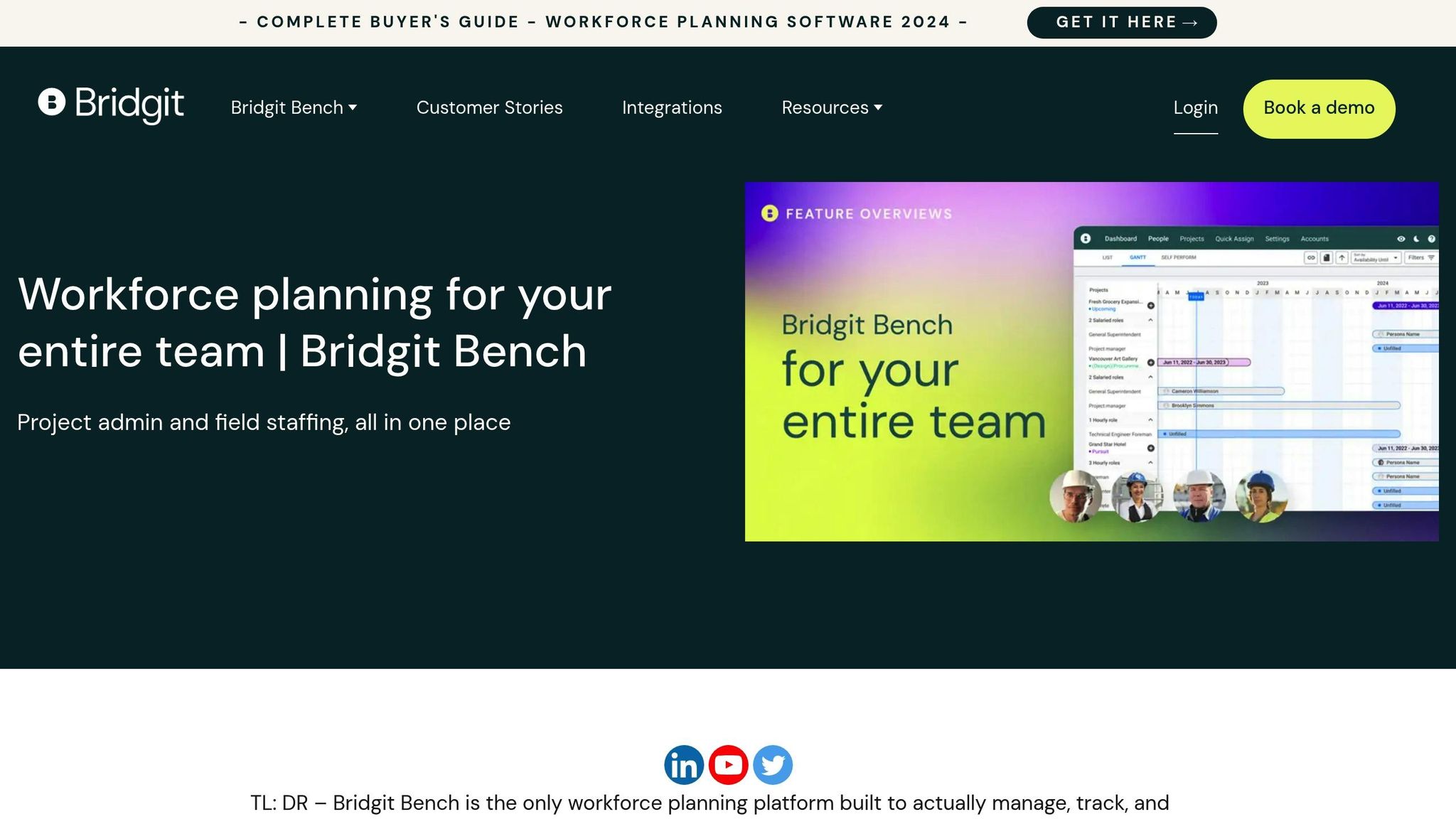
Construction workforce planning on the go | Bridgit Bench mobile app
1. ABLEMKR
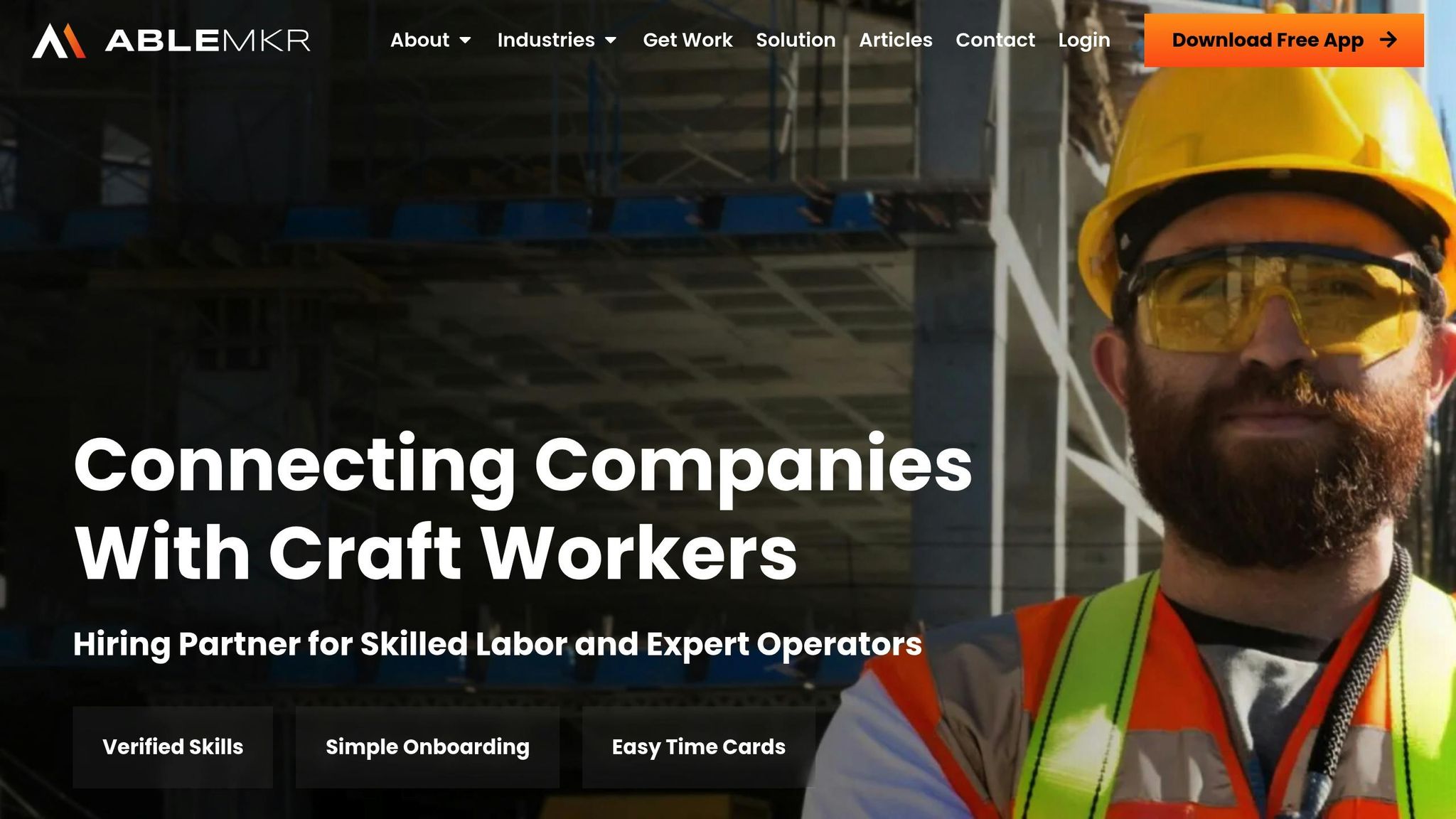
ABLEMKR is a workforce management platform tailored for industries like construction, oil and gas, and mining. It tackles the staffing challenges pipeline construction companies face by connecting them with a vast pool of pre-vetted skilled workers.
Core Features
From start to finish, ABLEMKR handles every aspect of the worker lifecycle. This includes vetting, interviews, onboarding, and payroll management. One standout feature is its real-time timesheet logging, which helps avoid delays and disputes. Companies can specify the exact skills they need for their pipeline projects, and ABLEMKR’s system matches them with qualified candidates from its extensive database.
The platform also simplifies administrative burdens by managing tasks like worker onboarding, insurance, payroll taxes, and supplemental benefits.
"ABLEMKR delivers an experience for workers and employers to deliver accountability and transparency in the skilled workforce employment process."
These features create a streamlined process for both employers and workers, backed by flexible pricing options.
Cost Structure
ABLEMKR offers pricing options designed to fit various project sizes and company needs. Employers can choose between monthly subscription plans with reduced hourly worker rates or opt for standard hourly mark-up pricing. Additionally, companies set their hourly rates, and ABLEMKR matches them with skilled workers at those rates, making the rate-setting process simple and efficient.
Usability
Designed with the field in mind, ABLEMKR’s mobile app keeps workers and employers connected no matter where the project takes place. Workers can log hours, check job details, and communicate with supervisors, while employers gain real-time updates on project progress and costs. These tools directly address common issues like communication gaps and cost transparency – both critical for pipeline project success.
ABLEMKR’s dedication to the industry goes beyond its platform. The company actively engages in key events, such as serving as a Gold Sponsor and 1-2-1 App Sponsor at the Energy Projects Conference (EPC) Show in 2025. Additionally, its President & CEO, Patrick Wallain, holds a position on the Energy Projects Show Advisory Board.
With its growing marketplace, ABLEMKR ensures pipeline contractors can quickly find the specific skills they need to get the job done.
2. App X
App X is a mobile workforce management app aimed at pipeline construction, but not much is known about its features, pricing, or user feedback.
Core Features
The app is expected to include common tools like a mobile-friendly interface optimized for smartphones and tablets, real-time data sync between the field and office, and offline functionality for job sites with limited connectivity. Other standard features in similar apps often include:
- Automated scheduling
- GPS tracking
- Customizable workflows
- Compliance tools to meet industry safety and regulatory requirements
These capabilities are essential benchmarks, and App X will need to demonstrate its effectiveness in delivering them.
Usability
There’s little information available about how user-friendly App X is. However, apps in this category are generally expected to have intuitive interfaces that work well for both managers and field workers. They should require minimal training, function reliably in tough field conditions, and help eliminate paperwork. Additionally, these apps often streamline team communication and provide real-time insights into project progress.
Cost Structure
Pricing details for App X remain unknown. Workforce management apps typically base their costs on factors like the number of users, available features, and integration requirements. Costs to consider include subscription fees, implementation expenses, and potential savings from improved efficiency.
Future reviews will hopefully provide more clarity on how App X compares in terms of pricing and value.
sbb-itb-aa28329
3. App Y
Building on the functionality of App X, App Y takes field crew management a step further with tools tailored specifically for pipeline operations. While detailed information about its full capabilities isn’t widely available, it addresses key challenges in managing pipeline construction crews.
Core Features
App Y offers a range of essential tools aimed at streamlining workforce management. These typically include:
- Time tracking to log employee hours for payroll and productivity monitoring.
- Automated scheduling to efficiently allocate workers across project sites.
- Real-time communication for instant updates among team members.
- GPS tracking to monitor employee locations and improve route planning.
- Analytics and reporting to provide performance insights based on data.
- Mobile access for reviewing schedules and job details on the go.
- Employee self-service features that allow workers to manage their own schedules.
- Pipeline-specific workflows tailored to the unique demands of construction projects.
These tools create a foundation for improving team coordination and efficiency, as explored further in the usability section.
Usability
While specific details about App Y’s user experience are scarce, workforce management platforms typically prioritize simplicity and accessibility. Their interfaces are often designed to support fair scheduling and promote a healthy work-life balance. A clean layout with intuitive navigation ensures ease of use. Mobile compatibility is particularly important for pipeline crews working in remote locations, enabling them to access the software seamlessly. To maximize the benefits of the platform, frontline staff may require brief onboarding sessions to familiarize themselves with its features.
Cost Structure
The pricing for workforce management tools like App Y varies widely, depending on the features and scale of the solution. Here’s a general breakdown:
- Basic plans: $2.50 to $17.00 per user per month, suitable for small teams (fewer than 10–20 employees).
- Mid-market solutions: $4.50 to $28.00 per user per month, designed for larger teams working either on-site or remotely.
- Enterprise-level systems: Often custom-priced or quote-based, these cater to large organizations with complex needs and may include extra costs for implementation, maintenance, or customer support.
For pipeline companies, selecting the right solution requires careful consideration of business size, operational needs, and integration requirements. Trialing multiple platforms can help identify the best fit for their specific workflows and budgets. This approach ensures effective cost management, a critical factor in pipeline construction projects.
Advantages and Disadvantages
Every workforce management app comes with its own set of benefits and challenges, especially when it comes to pipeline construction.
ABLEMKR stands out for its ability to connect pipeline contractors with verified workers. Features like automated job matching and real-time invoicing simplify the hiring process, while offering W2 employment and workers’ compensation coverage. On the downside, it doesn’t provide extensive project management tools.
App X is great for teams that already have an established workforce, thanks to its strong scheduling and communication tools. However, it might not be the best choice for addressing staffing shortages.
App Y focuses on pipeline-specific workflows and offers detailed analytics to help optimize resource allocation. That said, its pricing and the full scope of its features remain unclear.
"The single most challenging part of leading a mobile workforce is trust. The people on the team need to trust each other. This has to be true throughout the entire organization. There can’t be exceptions for executives or anyone else; everyone has to be trustworthy." – Beau Vrolyk, Managing Director of Vrolyk Ventures
Beyond app-specific features, companies face broader hurdles when implementing these solutions. Common challenges include employee concerns over GPS tracking and time monitoring, connectivity issues in remote areas, and difficulties integrating new tools with existing systems, which can lead to data silos.
ABLEMKR’s transparent pricing model is a plus, helping contractors accurately forecast staffing costs. In contrast, many traditional workforce management apps require custom quotes for enterprise-level features. However, initial implementation can be costly, especially when factoring in training and hardware compatibility.
| Platform | Key Strengths | Primary Limitations | Best Suited For |
|---|---|---|---|
| ABLEMKR | Verified worker profiles, transparent costs, W2 employment | Limited project management features | Companies needing flexible staffing solutions |
| App X | Strong scheduling tools, established communication features | Focus on managing an existing workforce | Teams with a stable employee base |
| App Y | Pipeline-specific workflows, detailed analytics | Unclear pricing and limited public information | Large operations requiring detailed insights |
These comparisons underline the trade-offs each platform brings to the table. The success of these tools often depends on the size of the workforce and the training required for adoption. Workers tend to favor apps that offer flexible scheduling and clear pay structures over those that focus heavily on monitoring. Additionally, data security is a top priority in pipeline operations, where protecting sensitive project locations and crew movements is critical.
Statistics reveal that adopting mobile workforce management solutions can boost productivity by an average of 30%, with 73% of businesses reporting improved customer satisfaction. However, these gains are only realized when companies overcome implementation challenges and choose tools that align with their specific operational needs and workforce dynamics.
Final Thoughts
Choosing the right mobile workforce management app for pipeline construction boils down to understanding your specific operational needs. Different platforms cater to various segments within the U.S. pipeline industry, so aligning your priorities with the app’s features is key.
For contractors struggling with staffing or needing flexible workforce solutions, ABLEMKR is a standout option. Its verified worker profiles, clear pricing, W2 employment model, and workers’ compensation coverage help simplify staffing while reducing administrative hassle.
Other platforms focus on advanced features like scheduling, real-time communication, or in-depth analytics, making them ideal for larger-scale operations. Whether your priority is agile staffing, streamlined coordination, or detailed project data, there’s a solution designed to meet your needs. This trend reflects the growing reliance on mobile technology across industries.
The global shift to mobile-first management is undeniable. With over 6.3 billion people expected to use smartphones in 2024 and 88% of mobile time spent on apps, mobile workforce management isn’t just a convenience – it’s becoming essential.
"Every company is a software company." – Satya Nadella, CEO, Microsoft
As mobile adoption continues to rise, successful implementation will depend on focused training and user engagement. For pipeline construction companies, ensuring workers are well-trained and comfortable with these tools is crucial for maximizing efficiency. Apps that emphasize flexible scheduling and transparent pay structures can significantly boost worker satisfaction and operational performance.
Looking ahead, the global mobile application development market is projected to exceed $600 billion by 2030. This growth signals ongoing advancements in specialized workforce management solutions. For pipeline construction companies, the question is no longer whether to adopt mobile solutions, but which platform aligns best with their unique management and workforce needs.
FAQs
How does ABLEMKR ensure its workers are skilled and reliable for pipeline projects?
ABLEMKR ensures top-notch worker quality and dependability through a detailed screening process. Each worker is assessed based on verified profiles, ratings, and reviews from previous projects. The platform also prioritizes safety and professionalism by requiring proper insurance coverage and upholding strict standards for craftsmanship and workplace safety, aligning with industry demands.
What are the main advantages of using mobile apps for managing pipeline construction teams?
Mobile apps designed for workforce management in pipeline construction offer several important advantages that can significantly improve project workflows and results. These tools simplify operations by facilitating real-time communication and providing immediate access to project information, keeping teams aligned and well-informed throughout the process. They also enhance workforce planning, cutting down on operational expenses and reducing the likelihood of manual mistakes.
On top of that, these apps play a crucial role in boosting safety and compliance. They ensure safety measures are consistently implemented and monitored. With a centralized platform to handle resources, schedules, and worker profiles, decision-making becomes faster and more accurate – something that’s critical in the fast-moving environment of field operations.
What should pipeline companies look for in a mobile app to effectively manage their workforce?
When choosing a mobile app to manage pipeline construction workforces, it’s crucial to focus on ease of use. The app should be straightforward and simple enough for teams to quickly get the hang of without extensive training. Key features to look for include real-time scheduling, secure data encryption, and the ability to scale as your workforce grows.
Another important consideration is whether the app integrates smoothly with your existing systems. This can help streamline daily operations and reduce unnecessary complications. By keeping these priorities in mind, pipeline companies can boost efficiency, maintain compliance, and ensure workforce management runs seamlessly, tailored to their unique requirements.


