
Cross-training is a game-changer for energy companies facing labor shortages and complex projects. It equips workers with multiple skills, enabling them to handle diverse tasks, reduce project delays, and lower costs. This approach is especially useful in the energy sector, where projects demand expertise across various disciplines like electrical systems, safety protocols, and equipment maintenance.
Key Takeaways:
- What is Cross-Training? Training employees to perform multiple roles, such as teaching electricians basic plumbing or training technicians to operate machinery.
- Why It Matters: Addresses labor shortages, supports project flexibility, and reduces hiring and overtime costs.
- Benefits: Improves efficiency, keeps projects on schedule, boosts employee satisfaction, and strengthens retention.
- Challenges: Requires upfront investment, time for training, and careful planning to avoid skill dilution or resistance from employees.
- Tools for Success: Platforms like ABLEMKR streamline skill tracking, scheduling, and cost management for cross-training programs.
By investing in structured cross-training programs, energy companies can build resilient teams capable of meeting the demands of modern projects while keeping costs under control.
Key Benefits of Cross-Training Programs
Cross-training programs not only enhance operational performance but also improve employee satisfaction. Energy companies adopting these programs often see measurable gains in both areas, creating a mutually beneficial outcome for employers and workers.
Improved Workforce Flexibility and Efficiency
Cross-training equips workers to handle multiple roles, reducing disruptions caused by staffing shortages or absences. This adaptability ensures that projects keep moving forward without unnecessary downtime. For example, instead of waiting days or weeks for a specific technician to become available, cross-trained team members can step in immediately. In time-sensitive energy projects, this ability to maintain momentum can mean the difference between meeting deadlines and incurring costly penalties.
By breaking down workflow dependencies, cross-training also prevents delays from snowballing into larger project-wide setbacks. Workers with knowledge of various aspects of a project can identify and address potential bottlenecks early, enabling quick course corrections.
Efficiency gains grow over time as cross-trained workers transition smoothly between project phases. For instance, a wind turbine installation team with versatile skills can shift from foundation work to electrical connections without waiting for new specialists to join the project and get up to speed. This seamless transition reduces downtime and accelerates project completion.
Moreover, having a versatile workforce allows managers to allocate resources more strategically. Instead of maintaining separate crews for each specialty, companies can deploy smaller, multi-skilled teams that adapt to changing project needs in real-time. This approach not only reduces labor costs but also sustains high levels of productivity.
Better Worker Engagement and Retention
Cross-training keeps employees engaged by diversifying their tasks and offering opportunities for career growth. Workers who rotate between responsibilities often report greater job satisfaction and a stronger sense of investment in the projects they contribute to.
Learning new skills also enhances workers’ marketability and earning potential. Employees become more valuable to their current employer and more competitive in the broader job market. This added value can open doors to higher-paying roles, whether within their current company or elsewhere.
For employers, cross-training supports retention by showing a commitment to employee development. When workers feel that their growth is a priority, they are more likely to stay with the company. This reduces turnover, which in turn saves the significant costs associated with recruiting, hiring, and training new staff. Retaining experienced workers also preserves institutional knowledge that would otherwise take years to rebuild.
Additionally, cross-trained employees develop stronger problem-solving skills by understanding how different systems and tasks interconnect. This broader perspective makes them more effective team members and natural candidates for leadership roles as they progress in their careers.
Pros and Cons of Cross-Training
While the benefits of cross-training are substantial, energy companies must also weigh the challenges and resource demands required for effective implementation. Below is a summary of the advantages and challenges:
| Advantages | Challenges |
|---|---|
| Workforce flexibility – Teams can quickly adapt to changing project needs and staffing gaps | Upfront training costs – Initial investment in training materials, instructors, and reduced productivity during learning periods |
| Reduced project downtime – Cross-trained workers can handle critical tasks, preventing delays | Time investment – Workers need time away from billable work to acquire new skills |
| Lower recruitment costs – Existing employees can fill multiple roles, reducing the need for specialized hiring | Potential skill dilution – Workers may become generalists instead of deep specialists |
| Improved retention – Professional development opportunities boost job satisfaction and loyalty | Scheduling complexity – Managing multi-skilled workers requires more advanced workforce planning |
| Enhanced problem-solving – Broader knowledge helps workers address issues across disciplines | Resistance to change – Some employees may prefer their current roles and resist additional responsibilities |
| Better project coordination – Cross-trained teams communicate more effectively across work phases | Certification upkeep – Maintaining certifications in multiple areas may require ongoing training and renewals |
The success of cross-training hinges on careful planning and long-term commitment. Companies that treat it as an investment, rather than a quick fix, typically see the best results. Tools like ABLEMKR can streamline the process by identifying employees who already possess diverse skills or show potential for cross-training, making implementation more efficient.
These insights pave the way for designing a cross-training program that maximizes benefits while minimizing challenges.
Step-by-Step Guide to Building a Cross-Training Program
Creating a strong cross-training program involves a structured, three-phase approach that aligns with the specific goals of energy projects.
Assess Workforce Skills and Identify Gaps
Start by taking stock of your team’s skills. Create a detailed inventory that includes primary roles, secondary skills, and certifications. Often, workers have untapped abilities – like a welder with electrical experience or a technician with construction know-how – that can be leveraged to fill gaps.
Next, map out the skills required for each phase of your project. For renewable energy projects, for example, this might include tasks like site preparation, foundation work, equipment installation, electrical connections, and commissioning. This step helps pinpoint where cross-training can ease bottlenecks or reduce reliance on specialized contractors.
Pay special attention to critical skill gaps where only one or two workers hold vital expertise. These single points of failure can derail a project if key personnel become unavailable. Prioritize cross-training in these areas to build redundancy and lower risk.
To simplify this process, consider using workforce management tools like ABLEMKR. These platforms offer verified worker profiles, making it easier to identify complementary skills and uncover opportunities for cross-training.
Lastly, think about seasonal and project-specific demands. Energy projects often have fluctuating labor needs, and cross-trained workers can help maintain steady staffing levels without the constant cycle of hiring and layoffs. Identifying these gaps now will guide the design of your training program.
Design and Implement Training Plans
Once you’ve identified skill gaps, create targeted training plans that address these needs while building on your workers’ existing strengths. A mix of approaches works best to accommodate different learning styles and practical constraints.
Start with job shadowing and mentorship programs. Pair experienced workers with those learning new skills. For instance, a seasoned turbine technician can mentor a maintenance worker, sharing both technical know-how and safety tips gained from years in the field.
Introduce rotational assignments to help workers gradually take on new tasks. For example, an electrical worker might begin by observing mechanical installations, then assist with equipment placement, and eventually learn basic mechanical troubleshooting.
Break training into manageable pieces to respect workers’ time constraints and project deadlines. Short modules that fit into project lulls or between shifts ensure training doesn’t interfere with milestones while still allowing steady skill development.
Encourage peer-to-peer learning. Some workers are naturally gifted at teaching and explaining complex tasks. Formalizing these relationships within your training program can expand your teaching capacity without needing external instructors.
Set clear competency checkpoints throughout the training process to verify progress and ensure safety. In the energy sector, incomplete training can lead to serious risks, so it’s essential to confirm workers are mastering skills effectively. These checkpoints also build workers’ confidence as they see their progress.
Monitor Progress and Optimize Training
Once your training program is in place, regular monitoring is crucial to ensure it delivers results and remains effective.
Define success metrics before you even start. Track outcomes like fewer project delays, lower overtime costs, improved safety records, and better worker retention rates. These measurements provide tangible evidence of your program’s effectiveness and help secure ongoing support.
Gather feedback from workers to refine your approach. They often have insights into what’s working and what could be improved, offering valuable input that program designers might overlook.
Watch how workers apply their new skills in real-world conditions. Classroom or simulated training doesn’t always translate perfectly to the field, so observing on-the-job performance can reveal areas where additional support or adjustments are needed.
Stay flexible. Adjust the intensity and focus of training based on project demands and worker progress. Some skills may turn out to be more critical than expected, while others might not be as relevant. Adapting to these insights keeps your program effective over time.
Track long-term outcomes for cross-trained workers. Employees with diverse skills often advance more quickly, adding value beyond immediate project needs. Monitoring this data helps showcase the broader benefits of your program, including worker development and retention.
Update training content regularly to keep up with new technologies, safety standards, and industry practices. The energy sector evolves quickly, and your training must stay current to remain useful. Regular reviews ensure workers are learning practical, up-to-date skills.
Workforce management tools like ABLEMKR can also help track progress and measure the financial impact of cross-training. For example, its cost transparency features can show how versatile workers improve overall efficiency and resource use.
The key to lasting success lies in treating cross-training as an ongoing process. Programs that evolve based on real-world results and industry changes deliver the most value for both your team and your company.
Tools and Technologies for Cross-Training
Expanding on a structured cross-training program, modern digital tools have made managing intricate energy projects much more manageable. These platforms simplify everything from identifying skill gaps to tracking progress, creating a seamless experience that enhances every step of the cross-training process – from initial assessments to ongoing monitoring.
How Workforce Management Platforms Help
Workforce management platforms play a key role in successful cross-training by organizing worker information and automating administrative tasks. These platforms centralize details like skills, certifications, and experience, making it easier to match employees with appropriate training opportunities.
The standout feature is automated candidate matching. Instead of sifting through countless worker profiles manually, these tools can quickly identify employees whose current skills align with specific training needs. For instance, the platform might highlight that three electrical workers with basic mechanical skills are perfect candidates for turbine maintenance training.
Scheduling coordination is another area where digital tools shine. Energy projects often involve complex schedules with multiple crews working across shifts. Workforce platforms can automatically pinpoint when workers are available for training without disrupting project timelines.
Certification tracking ensures employees stay compliant with safety standards by automatically scheduling renewal sessions for required credentials.
When it comes to progress monitoring, these platforms replace informal feedback with data-driven insights. They can track metrics like training completion rates, competency assessments, and on-the-job performance, offering a clear picture of how cross-training efforts are paying off.
Using ABLEMKR for Cross-Training Programs
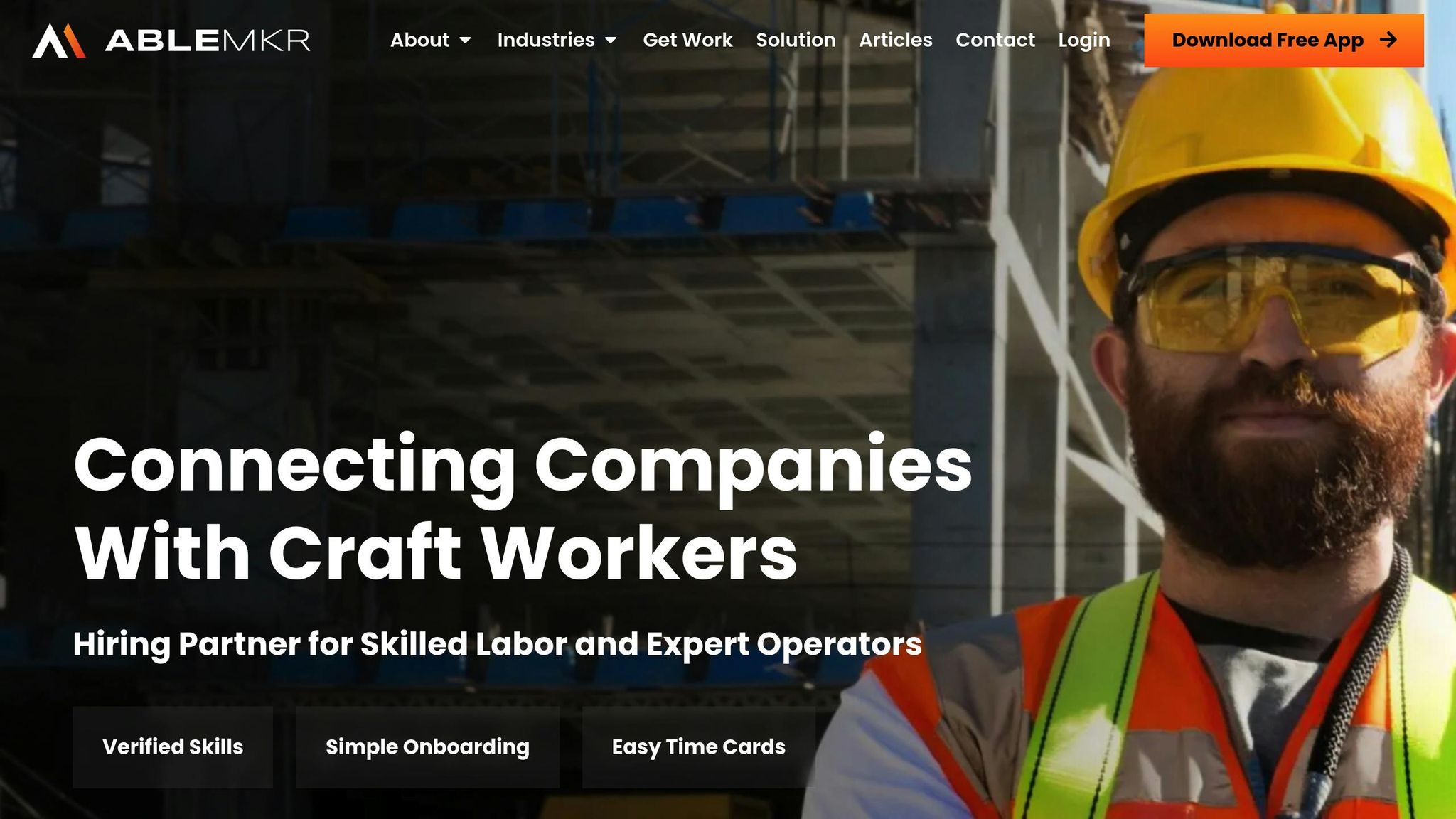
ABLEMKR stands out as a prime example of how digital platforms can seamlessly integrate cross-training into your operations. Its verified worker profiles offer detailed insights into each employee’s skills, certifications, and experience, making it easier to identify cross-training opportunities.
The platform’s automated job matching feature, typically used for external roles, can also be adapted for internal cross-training. This technology identifies employees whose skill sets align with specific training programs within the organization.
ABLEMKR’s flexible scheduling capabilities are particularly useful in the energy sector, where unpredictable factors like weather, equipment delays, or regulatory changes can disrupt plans. The platform allows training coordinators to quickly adjust schedules in response to shifting project demands.
Another standout feature is transparent cost tracking, which helps companies understand the financial impact of cross-training. By monitoring expenses like training time, materials, and temporary dips in productivity, organizations can weigh these costs against benefits such as reduced overtime, fewer contractor fees, and improved efficiency.
The platform also supports real-time invoicing and hourly management, enabling companies to track the exact time and resources spent on cross-training. This data is critical for calculating return on investment and demonstrating the program’s value to leadership.
With its mobile app, ABLEMKR ensures workers can access training materials, update skill profiles, and schedule sessions directly from job sites. This is especially beneficial for energy projects in remote areas where office access may be limited.
ABLEMKR also includes a worker ratings system, which can be adapted to monitor cross-training progress. Supervisors can document how effectively employees apply newly acquired skills on the job, creating a performance record that supports safety objectives and career development.
For companies juggling multiple energy projects, ABLEMKR’s workforce management tools help coordinate cross-training across various sites and teams. This ensures that investments in training benefit the organization as a whole, rather than being confined to individual projects. By integrating these tools, companies can maintain consistent progress and maximize the impact of their cross-training initiatives.
sbb-itb-aa28329
Best Practices for Cross-Training Success
Once your cross-training program is up and running, keeping it effective requires more than just scheduling sessions or monitoring progress. The key lies in creating a supportive environment, using proven training pathways, and ensuring the program stays relevant over time. Here’s how energy companies can make cross-training a lasting success.
Build a Culture of Collaboration
Collaboration is the backbone of any successful cross-training initiative. Leadership should take an active role in mentoring, while senior technicians dedicate time to guide newer employees. Breaking down silos by integrating teams across different trades is equally important. For example, forming mixed-skill teams – like pairing an electrician with a mechanical technician during turbine maintenance – can deepen each worker’s understanding of how their roles intersect. This hands-on collaboration highlights the connection between electrical systems and mechanical components.
Peer-to-peer learning is another powerful tool. Workers often grasp new skills faster when they can ask questions freely and see how to apply what they’ve learned in real time. Setting up buddy systems – where seasoned workers partner with those learning new skills – creates natural teaching moments throughout the day.
Recognizing achievements is also essential. Celebrate workers who complete certifications, demonstrate new skills, or assist in training others. Recognition doesn’t always have to be monetary; a shoutout during team meetings or in company newsletters can go a long way in keeping morale high.
Finally, formal apprenticeships and regular program reviews ensure the long-term success of your cross-training efforts.
Use Apprenticeship and Pre-Apprenticeship Programs
Apprenticeships are a tried-and-true way to develop multi-skilled workers. These programs combine classroom learning with hands-on experience, equipping employees with both the theoretical and practical knowledge they need for various roles in the energy sector.
Pre-apprenticeship programs are an excellent starting point for workers with limited technical experience. These programs introduce basic safety protocols, tool usage, and foundational concepts across multiple trades. Workers who complete pre-apprenticeships often transition more smoothly into specialized roles and become strong candidates for cross-training later on.
Mentorship is a critical component of these programs. Experienced workers not only teach technical skills but also share industry knowledge, such as why certain procedures are essential, how to troubleshoot issues, and what safety measures to prioritize in different scenarios.
Partnering with local technical schools can further enhance apprenticeship programs. While the schools handle classroom instruction, companies can focus on providing practical, on-the-job training. This collaboration often lowers training costs while ensuring workers receive a well-rounded education that aligns with industry standards.
Review and Update Training Programs Regularly
To keep your cross-training program effective, make regular updates based on performance data and worker feedback. Quarterly reviews can help you assess key metrics like skill mastery, completion rates, and worker satisfaction. Use this information to refine your program and address any gaps.
Feedback from workers who have gone through the training is invaluable. Exit interviews or surveys can uncover areas for improvement, highlight effective teaching methods, and suggest where additional support might be needed. Workers often provide insights that program designers may overlook.
Tracking performance metrics is another must. Metrics like time-to-competency for new skills, safety incident rates, project timelines, and worker retention can help you measure the program’s impact and pinpoint areas for adjustment. This data is also helpful for demonstrating the program’s value to leadership and securing ongoing support.
Finally, ensure the program evolves alongside industry trends. Incorporate updates related to new equipment, safety technologies, and regulatory requirements to keep your workforce prepared for the rapidly changing energy sector. By staying proactive, you’ll ensure your cross-training efforts remain effective and relevant.
Conclusion: The Value of Cross-Training for Energy Projects
Cross-training has become an essential strategy for tackling some of the most pressing challenges in the energy sector. With the industry struggling to fill critical staffing gaps and find skilled workers, workforce flexibility is no longer just an advantage – it’s a necessity.
When done right, cross-training programs offer clear advantages. They reduce dependency on single-skilled workers, creating teams that can shift gears as project demands change. This approach not only strengthens internal capabilities but also lessens the need for constant external hiring.
The roadmap for cross-training outlined earlier provides energy companies with a practical way to navigate these challenges. By integrating technology into the process, the strategy becomes even more robust. Tools like ABLEMKR help companies connect with skilled labor when needed and offer workforce management solutions that make implementing cross-training programs more seamless. This combination of cultivating internal talent and tapping into external resources equips businesses to meet staffing demands head-on.
In short, cross-training isn’t just about addressing today’s workforce issues – it’s about future-proofing the energy sector. For companies weighing whether to adopt these programs, the question isn’t whether they can afford to invest, but whether they can afford not to.
FAQs
How can energy companies cross-train workers without compromising their core skills?
To make sure cross-training strengthens rather than diminishes core skills, energy companies should begin with a skills assessment. This helps pinpoint each employee’s strengths and areas that could use improvement. With this insight, training programs can be tailored to focus on building relevant skills while safeguarding the expertise workers already have.
It’s also important to prioritize continuous learning by encouraging employees to put their new skills into practice in real-world situations. Combining technical training with soft skills development – like teamwork and problem-solving – ensures employees stay flexible and capable without sacrificing their specialized knowledge. This approach cultivates a well-rounded workforce that maintains high levels of expertise.
How can companies address employee resistance to cross-training in the energy sector?
Overcoming resistance to cross-training among employees starts with clear communication. It’s important to explain the purpose and advantages of cross-training, like enhancing skills, opening doors for career advancement, and offering greater job stability. When employees understand how this process benefits them personally, they’re more likely to get on board.
Involving your team in the planning stages is another key step. By listening to their concerns and addressing them openly, you can build trust and encourage cooperation. To make the transition smoother, ensure employees have access to the right support – whether that’s hands-on training, useful resources, or guidance along the way.
Taking a gradual approach, such as rolling out cross-training in phases, gives employees time to adjust without feeling overwhelmed. And by highlighting how cross-training strengthens both individual careers and the organization as a whole, companies can foster a sense of shared purpose while minimizing resistance.
How can ABLEMKR support cross-training programs for energy workers?
ABLEMKR simplifies cross-training programs by linking energy workers with personalized upskilling opportunities, helping them grow their expertise and stay flexible in their roles. The platform also handles credential verification, making it easier for employers to find the right candidates for specific training programs.
On top of that, ABLEMKR automates job matching and workforce management. This allows companies to efficiently assign workers to training programs while keeping a clear view of project costs. The result? A more organized and effective way to manage workforce development in the energy industry.


