
Labor shortages in construction and energy are delaying projects, increasing costs, and creating safety risks. Here’s how on-demand staffing platforms are solving these challenges:
- Quick Access to Skilled Workers: Connects employers with pre-screened workers in as little as 24–72 hours, eliminating hiring delays.
- Flexibility for Projects: Allows businesses to scale their workforce up or down based on project needs without long-term commitments.
- Cost Efficiency: Pay only for the labor you use, with transparent pricing and no hidden fees.
- Improved Worker Quality: Platforms use rigorous vetting, skill assessments, and feedback systems to ensure reliable, qualified workers.
- Lower Business Risks: Handles payroll, tax compliance, and workers’ compensation to reduce administrative burdens and legal exposure.
With 93% of construction firms facing worker shortages and 45% turning down work, on-demand staffing offers a fast, reliable solution to keep projects on track. Platforms like ABLEMKR are transforming how businesses handle workforce challenges.
How Workers Direct Simplifies Construction Staffing | Hire Skilled Tradespeople Fast!
How On-Demand Staffing Platforms Work
On-demand staffing platforms are all about connecting employers with skilled workers quickly and efficiently. Using advanced technology, these platforms create a seamless way for labor supply to meet demand in real time. This model is particularly useful in industries like construction and energy, where project schedules can shift suddenly, and workforce needs can change overnight. With processes designed for speed and precision, these platforms introduce features that simplify staffing challenges.
Main Features of On-Demand Staffing Platforms
Most modern on-demand staffing platforms are designed with a mobile-first approach, offering user-friendly interfaces that let workers browse and claim shifts directly from their smartphones. Behind the scenes, real-time matching algorithms pair workers with open positions based on factors like skills, location, availability, and even past performance ratings. Geolocation tools not only help match workers to nearby jobs but also ensure accurate clock-ins and clock-outs – critical for industries like construction and energy, where precision matters.
Integrated payment systems are another standout feature, often enabling fast payouts, sometimes on the same day or the next day. Feedback systems allow employers and workers to rate each other after assignments, helping maintain quality across the board.
For employers, these platforms can sync with existing workforce management systems, simplifying the hiring process. Many platforms also let employers create job postings and handpick workers directly, cutting down on time and effort. For example, CoreMedical Group used a temporary staffing platform and saw a 30% revenue boost within just eight weeks. Additionally, agencies using these platforms can manage significantly more workers – up to three or four times more compared to traditional methods. Beyond matching and payments, these platforms are designed to meet strict legal and compliance standards.
Worker Verification and Legal Compliance
Maintaining legal and industry compliance is a top priority for on-demand staffing platforms, especially in regulated sectors where safety is paramount. These platforms conduct thorough screening processes, which often include background checks, credential verification, and skills assessments. For instance, Tradesmen International manages a talent pool of over 500,000 craftworkers, all of whom are rigorously vetted through interviews, reference checks, verified work hours, and hands-on skill testing.
Many platforms also integrate with E-Verify systems to ensure compliance with employment eligibility rules. This feature has become increasingly important as regulations evolve. For example, in January 2025, Illinois updated its Right to Privacy in the Workplace Act, keeping E-Verify voluntary while adding safeguards to protect worker privacy during the verification process.
Some platforms go even further, assessing over 150 skills per worker, achieving show rates as high as 98%. They also offer training and compliance services, including safety programs designed to meet industry standards. These verification systems are flexible, adapting to changing laws and tailored to meet the requirements of different states and jurisdictions.
A great example is ABLEMKR, which specializes in verified worker profiles for construction and energy projects. Their process includes credential checks and skill assessments customized for the demands of these industries. With such rigorous verification measures, platforms like ABLEMKR ensure fast and reliable worker deployments, contributing to the growing success of on-demand staffing solutions.
Benefits of On-Demand Staffing for Urgent Projects
When construction and energy projects encounter sudden labor shortages, on-demand staffing provides a game-changing solution to manage workforce needs during critical phases.
Speed and Flexibility
One of the biggest advantages of on-demand staffing is the ability to quickly adapt to changing project demands. Unlike traditional hiring methods, which can drag on for weeks or months, on-demand platforms connect employers with qualified workers in just hours.
This speed is especially crucial in emergencies. For example, during a recent episode of Ask the Expert on R&R Magazine, GigSmart President Rich Oakes shared how a restoration company used an on-demand platform to scale its workforce overnight following a disaster, minimizing downtime and keeping operations on track.
On-demand providers can place skilled safety professionals within 24 to 72 hours. This rapid deployment allows project managers to stay on schedule, even when unexpected labor needs arise. Additionally, businesses can bring in specialized workers for specific phases of a project without committing to long-term contracts. This flexibility is particularly useful in industries like construction and energy, where each stage often requires different expertise and crew sizes. With clear pricing models, this approach also simplifies financial planning for projects.
Transparent Pricing and Budget Control
On-demand staffing platforms make cost management straightforward by offering clear, upfront pricing. Instead of dealing with hidden recruitment fees, benefits, or idle time costs, companies only pay for the labor they actually use.
This pay-as-you-go model eliminates many expenses tied to permanent hires, such as health insurance, retirement contributions, and paid leave. Additionally, the platform takes care of payroll, tax withholdings, and other administrative tasks. For urgent projects with fluctuating labor needs, this financial clarity is essential. Many platforms also feature real-time billing systems, allowing managers to monitor labor costs as they accrue. ABLEMKR, for instance, offers tools like project post-calculations and real-time invoicing to make tracking expenses seamless.
Reliable Worker Quality
Modern on-demand staffing platforms ensure quality through rigorous vetting processes and performance tracking. These platforms maintain pools of pre-screened workers with verified skills tailored to industries like construction and energy.
Technology plays a key role here, with features like in-app time tracking and geo-location verification ensuring workers arrive on time and stay accountable throughout their shifts. Rating systems also allow both employers and workers to provide feedback after each job, creating a system where top performers are rewarded and underperformers are filtered out.
Lower Business Risk
On-demand staffing reduces many of the risks associated with traditional employment by shifting responsibilities to the staffing platform. For example, these platforms often handle workers’ compensation insurance, which lowers financial exposure when hiring temporary labor. They also manage payroll, tax compliance, and insurance, protecting companies from potential legal issues related to worker classification, wage disputes, and safety compliance.
For safety-critical industries like construction and energy, these platforms ensure workers arrive with the necessary certifications and experience, reducing the risk of safety violations and keeping operations running smoothly. This quick access to qualified workers also helps prevent costly delays caused by labor shortages. With nearly 58 million Americans working as independent contractors, freelancers, or temporary laborers, the talent pool is vast, making it easier to find skilled workers when needed.
This risk reduction is even more critical given the challenges industries face today. Supply chain disruptions rose by 14% between 2019 and 2020, and by 2030, an estimated 2.1 million critical jobs are expected to remain unfilled. Platforms like ABLEMKR are stepping in to address these challenges, offering reliable, verified staffing solutions tailored to U.S. industries.
sbb-itb-aa28329
Examples of On-Demand Staffing Success Stories
Real-world examples demonstrate how on-demand staffing can quickly address workforce challenges and improve project outcomes.
Case Studies: Rapid Workforce Solutions
Confidence in Construction Bids: Exhibau, a construction company, used ABLEMKR to expand their capacity for bidding on projects beyond their in-house workforce. Brandon from Exhibau shared:
"ABLEMKR allows us to bid on projects that we wouldn’t be comfortable bidding on as a company alone. It gives us the confidence to supply all personnel needed to execute the work if we win the bid."
This strategy allowed Exhibau to pursue larger contracts without the financial strain of maintaining a larger permanent staff.
Flexibility for Residential Projects: Desmond Construction faced scheduling uncertainties common in residential construction. Curtis from Desmond Construction explained how on-demand staffing provided much-needed flexibility:
"Working with an on-demand provider of skilled and unskilled workers has been valuable to us. We don’t always know when projects are going to move forward and they happen a lot when we have other projects that have been pushed back at the same time. The inconsistency in scheduling on residential construction projects allows ABLEMKR to add high value!"
Tailored Workforce Selection: Glow, another construction company, valued the ability to pre-select workers based on profiles and experience. Nick from Glow emphasized:
"This company was an excellent vendor for us! They allowed us to pick and choose workers seeing their profile and experience FIRST, not just sending us whoever they had on the lot. We choose the person and the schedule."
These stories highlight how tailored, flexible staffing solutions can address specific challenges and create opportunities for growth.
Measured Results from On-Demand Staffing
Improved Workforce Quality: CVE Tech reported a measurable 20% improvement in worker quality after using ABLEMKR’s services. This directly contributed to better project results and more predictable labor costs.
Timely Project Completion: TED, a construction company, maintained its project schedules and quality standards by leveraging ABLEMKR’s staffing services. The company noted that projects were completed on time and met all specifications, thanks to the platform’s professionalism and adaptability.
Specialized Technical Talent: A maritime and marine services client praised the ability to source highly skilled technical candidates. They shared:
"Your recruiters consistently deliver technical talent, rather than generic candidates found on any job board!"
These examples show how on-demand staffing effectively bridges talent gaps, helping businesses navigate the challenges of a fast-evolving market.
Why ABLEMKR Works Best for On-Demand Staffing
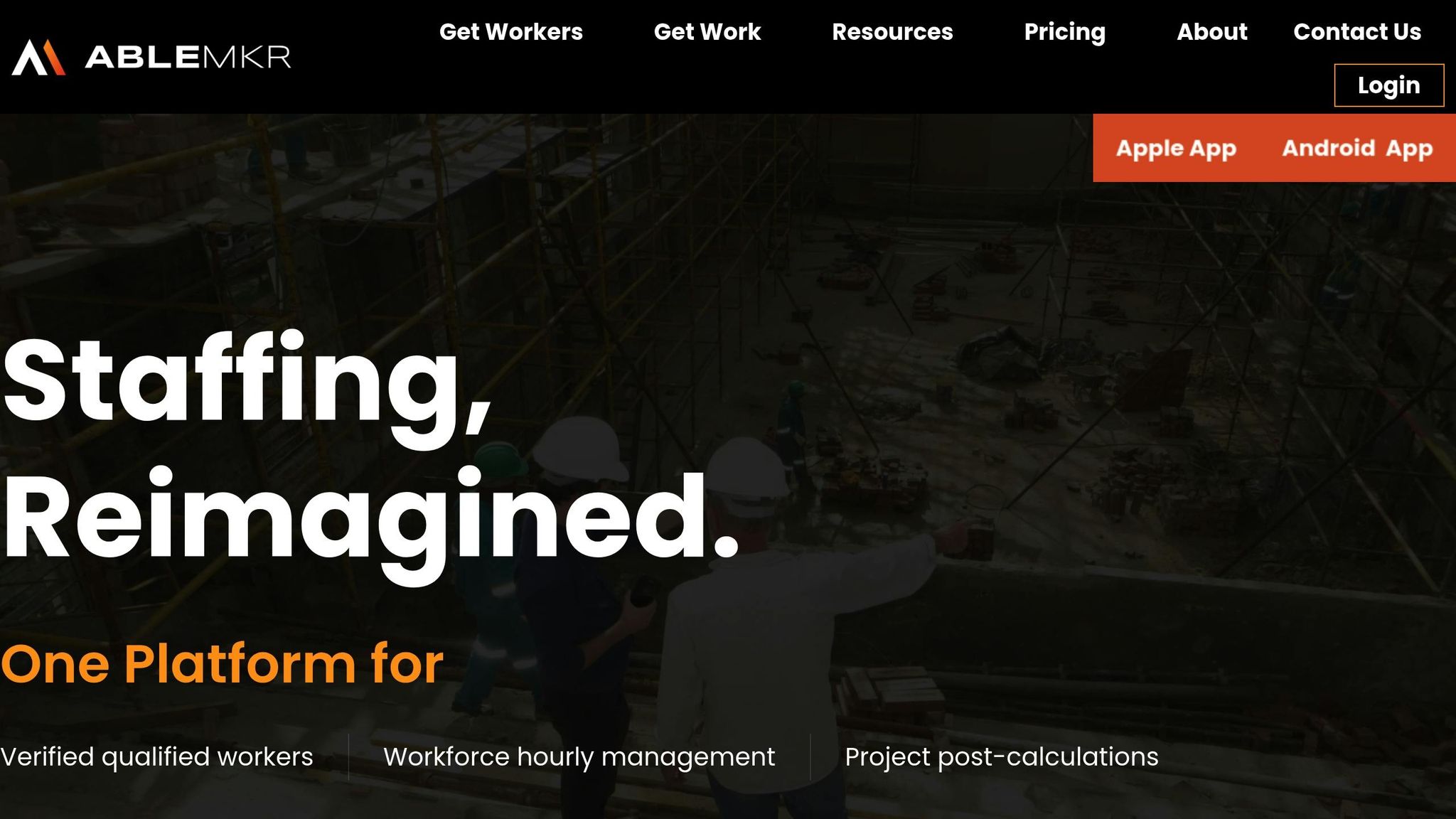
ABLEMKR has proven its value in the U.S. construction and energy sectors, as shown by success stories like CVE Tech. It’s designed to address the unique challenges these industries face, making it a go-to solution for on-demand staffing.
Features Tailored for Construction and Energy Work
ABLEMKR eliminates the usual headaches of working with traditional temp agencies by offering a smooth, digital-first experience for both contractors and workers. Through its free mobile app, users can create detailed profiles and get matched with reliable candidates automatically.
The platform’s verified worker profiles give contractors a clear view of each candidate’s experience, skills, and ratings, helping them make informed hiring decisions. Workers can highlight their certifications, past projects, and specialized skills, ensuring they stand out in fields like construction and energy.
With automated job matching, contractors can quickly find workers with the exact skills they need. Plus, built-in management tools make it easy to track hours, oversee progress, and manage multiple job sites – all while minimizing overhead. These features also help contractors stay compliant with the strict legal and safety standards required in the U.S.
Ensuring Legal and Safety Compliance
The risks tied to labor shortages make legal and safety compliance non-negotiable in construction and energy projects. ABLEMKR addresses this by providing W2 status and workers’ compensation for its workforce. The platform also prioritizes OSHA compliance to ensure safety on every job.
Electrical safety is a key focus, with workers trained in essential standards like the National Electrical Code (NEC) and OSHA protocols to help prevent accidents. Additionally, ABLEMKR supports projects that need to meet building energy code requirements. With an estimated 75% of U.S. buildings expected to be new or renovated by 2035, the platform connects contractors with workers familiar with Department of Energy (DOE) guidelines and International Energy Conservation Code standards. Regular risk assessments and safety measures, such as inspections for faulty wiring or poor grounding, are also part of the process to prevent hazards before they escalate.
Transparent Pricing and Real-Time Billing
Beyond simplifying staffing, ABLEMKR brings clarity to project finances, which is critical for managing risks. Its straightforward pricing model removes the guesswork, preventing unexpected costs that could derail budgets. David from CVE Tech shared his experience:
"ABLEMKR delivered improved worker quality by 20% with real-time invoicing and transparent weekly cost updates".
The platform’s philosophy is simple:
"What you see is what you get. Worker ratings, detailed job postings, and a no-surprises payment structure are our version of ‘measure twice, cut once’".
Contractors benefit from detailed cost breakdowns, which include hourly rates, fees, and workers’ compensation costs. This level of transparency helps with accurate project bidding and budget planning. Additionally, ABLEMKR’s project post-calculations feature allows contractors to estimate total labor costs upfront, making it easier to plan financially and remain competitive, even on tight deadlines.
Conclusion: Fixing Labor Shortages with On-Demand Staffing
Labor shortages in construction and energy are becoming increasingly difficult to manage, jeopardizing project timelines and overall success. With 80% of contractors struggling to find skilled workers and an estimated 2.4 million jobs potentially going unfilled by 2028, traditional hiring methods just can’t keep up with the demand. This creates a pressing need for faster, more flexible staffing solutions.
On-demand staffing platforms offer a practical answer to these challenges by delivering qualified workers in as little as 24–72 hours. This quick turnaround helps contractors avoid costly delays and keeps projects moving forward smoothly. Since 2019, the popularity of temporary staffing platforms has surged by 73% annually, reflecting a shift from long-term hiring to more adaptable, project-based workforce solutions.
Platforms like ABLEMKR take this concept further by combining advanced technology with deep expertise in the construction and energy industries. By streamlining the hiring process and reducing administrative headaches, these platforms allow contractors to focus on meeting deadlines and staying within budget.
The construction industry’s high turnover rate – averaging 58.4% – highlights the critical need for workforce flexibility. On-demand staffing not only addresses immediate labor shortages but also provides companies with the ability to scale their workforce up or down based on project requirements, minimizing the risks associated with permanent hires.
For contractors facing urgent staffing challenges, platforms like ABLEMKR offer a game-changing solution. With their speed, transparency, and access to qualified talent, these platforms transform labor shortages into opportunities for competitive growth.
FAQs
How do on-demand staffing platforms ensure workers are qualified and reliable for construction and energy projects?
On-demand staffing platforms make sure workers are both skilled and dependable by combining thorough screening methods with cutting-edge technology to connect businesses with the right talent. These platforms typically pre-screen workers for their qualifications, experience, and certifications, giving employers peace of mind about the abilities of the individuals they hire.
Take ABLEMKR, for instance. This platform offers verified worker profiles that provide detailed insights into a worker’s skills and past experience. This makes it easier for businesses to quickly find the right fit for their projects, whether they need skilled or unskilled labor in industries like construction, energy, or similar fields. By simplifying the hiring process, these platforms enable companies to stay productive and meet tight deadlines – all without compromising on quality.
What steps do on-demand staffing platforms take to ensure legal compliance and protect businesses and workers?
On-demand staffing platforms take several steps to ensure they align with labor laws while safeguarding both businesses and workers. For example, they verify worker identities and their eligibility to work in the U.S. through systems like E-Verify, which helps minimize risks tied to hiring undocumented workers. To further support fair hiring practices, these platforms also conduct background checks in compliance with the Fair Credit Reporting Act (FCRA).
Additionally, these platforms assist businesses in adhering to workplace safety standards, such as OSHA regulations, by providing access to pre-approved workers who meet the required qualifications. This approach not only helps minimize compliance issues but also improves workplace safety and simplifies the hiring process for urgent staffing needs.
How do on-demand staffing platforms help businesses stay on budget?
On-demand staffing platforms operate on a flexible pricing system, usually charging businesses on a pay-per-hour or pay-per-shift basis. This setup lets companies bring in workers only when they’re needed, sidestepping the fixed costs tied to full-time employees, like benefits and long-term contracts.
This model is particularly helpful for businesses that experience fluctuating labor demands. Whether it’s ramping up for a major project or scaling back during quieter times, companies can adjust their workforce with ease. By paying solely for the hours worked, they can manage costs more effectively, boost efficiency, and stick to their project budgets. This is especially beneficial in industries like construction and energy, where labor needs often shift dramatically.


