
Digital platforms are transforming construction compliance by automating processes, reducing errors, and saving time. Traditional methods, like paper-based systems, are prone to inefficiencies, human error, and high costs. These outdated approaches can lead to delays, safety risks, and fines.
With features such as real-time monitoring, automated reporting, and secure cloud storage, digital tools help construction firms manage compliance more effectively. Key benefits include:
- Automation: Cuts repetitive tasks by up to 95%, saving time and reducing errors.
- Real-Time Monitoring: Tracks certifications, permits, and safety data live, preventing costly violations.
- Cost Savings: Helps reduce rework and compliance penalties, saving up to 25% on project costs.
- Secure Storage: Centralized digital records ensure fast, reliable, and organized access during audits.
- Mobile Access: Field teams can update compliance data instantly, improving coordination.
By integrating workforce management, these platforms also verify worker credentials, assign qualified staff, and improve project timelines. Despite challenges like cost and system integration, many firms see a return on investment within 6 to 18 months.
Digital compliance tools are reshaping the construction industry by improving efficiency, ensuring safety, and reducing costs. Firms adopting these technologies now are staying ahead in a competitive, highly regulated market.
Automated Documentation for Compliance
Automating Compliance Documentation
Digital platforms are reshaping how compliance paperwork is handled by automating tasks like tracking safety briefings, training records, permits, and certifications. Using AI and Natural Language Processing (NLP), these systems can extract and classify important details from contracts, permits, and design specifications. For example, some platforms can process a building permit in just five minutes, significantly cutting down on manual work.
A recent survey highlights the benefits of AI in this area, showing 92.1% positive returns, with businesses reporting a 19% reduction in operational costs and a 10% boost in revenue. Considering that workplace injuries cost the economy $60 billion annually in lost productivity, the role of automated compliance tracking becomes even more apparent.
AI tools also streamline workflows by analyzing incoming submittals, RFIs, and change orders, pulling out critical data and routing it to the right team members. These systems monitor everything from incident reports to equipment certifications and worker qualifications, even issuing alerts when compliance issues arise.
With these automated systems in place, compliance documents are not only tracked but also securely stored and ready for immediate access.
Secure Digital Storage and Quick Access
Cloud-based storage has transformed the way construction companies manage compliance records. Instead of digging through filing cabinets or scattered computer folders, teams can now retrieve documents instantly and securely.
Advanced security features address concerns about storing sensitive data online. Role-based access ensures only authorized personnel can view or edit records, while encryption safeguards against unauthorized access. Detailed audit trails log every interaction with a document, providing full transparency during regulatory reviews.
Version control is another essential feature, helping avoid costly errors caused by using outdated documents. As highlighted by an industry expert:
"Multiple versions of documents can exist, leading to significant errors if outdated versions are inadvertently used." – Trimble
Centralized digital platforms also tackle common frustrations like poor organization and slow connectivity. Reflecting on these challenges, another expert noted:
"Access difficulties arise when finding documents, whether they are paper or digital. Poor organization and technology limitations, such as unreliable internet connectivity and slow VPNs, can make this process time-consuming and frustrating." – Trimble
This secure and efficient storage system lays the groundwork for maintaining audit-ready records.
Maintaining Audit-Ready Records
By combining automated documentation with secure storage, digital platforms ensure businesses can maintain continuous audit readiness. Automated retention policies manage document archiving in line with regulatory requirements, issuing alerts when records approach the end of their retention periods.
A well-organized Document Management System (DMS) eliminates the stress of last-minute audit preparations:
"A Document Management System (DMS) takes the panic out of audits by keeping your records organized, secure, and accessible, all year long. Instead of preparing for an audit only when the deadline looms, your business can operate in a state of continuous audit readiness." – Katie Day, Recordsforce
Real-time dashboards and tools like digital evidence capture – through photos, videos, and keyword searches – make it easy to generate accurate reports. These features quickly identify training gaps, expired certifications, or missing documentation, reducing errors and ensuring compliance records meet audit standards.
Real-Time Monitoring and Updates
Real-Time Compliance Data
Digital tools now offer live updates on certifications, training records, and permit statuses, giving companies the ability to track compliance without relying on guesswork. This kind of visibility is crucial for avoiding costly violations and project delays.
And speaking of costs – non-compliance can be incredibly expensive. Serious violations can lead to fines of up to $13,653, while willful violations may cost as much as $136,532. In the worst cases, such as fatal violations, fines can reach $500,000 and even lead to criminal charges.
Companies that integrate AI and automation into their compliance tracking systems have seen regulatory violations drop by 40%. These systems capture all activities in real time, maintaining a continuous compliance record and alerting managers to potential issues before they escalate. Live data ensures that nothing slips through the cracks, creating a proactive approach to compliance management.
This seamless flow of information also lays the groundwork for mobile solutions that keep field teams informed and connected.
Mobile Apps for Compliance Management
Real-time data becomes even more powerful when paired with mobile apps, which give field teams instant access to compliance updates. In fact, 88% of reviewers consider mobile access an essential or highly important feature for construction compliance.
Modern safety apps are designed to enhance real-time monitoring with practical features like GPS tracking and geo-fencing. These tools help track the location of workers and equipment, allowing for quick responses during emergencies. Incident reporting is another critical feature, enabling field teams to document and address minor issues immediately, preventing them from turning into larger problems.
With these apps, field workers can update safety information on the spot, while managers receive instant notifications about any changes in compliance status. This ensures that decisions are always based on the most up-to-date information.
Automated Alerts and Notifications
To complement real-time monitoring and mobile tools, automated notification systems step in to provide early warnings and prevent compliance oversights. These systems send out alerts for expiring certifications, upcoming safety briefings, and regulatory changes, ensuring that no critical detail is overlooked.
The impact of automated alerts is significant – they’ve been shown to reduce non-compliance penalties by up to 55% and help teams stay proactive in managing contractual obligations.
A great example of this is construction materials testing (CMT) software, which simplifies compliance workflows with customizable alerts. Users can set up notifications tailored to specific projects by selecting the project type, alert parameters, message format, and recipients. An intuitive alert dashboard makes it easy for teams to review and manage these notifications efficiently. These systems also track supplier performance and adherence to contract terms, notifying staff of unmet expectations or service levels. By catching issues early, teams can address them before they disrupt project timelines.
Contractor Compliance Software Explained
sbb-itb-aa28329
Combining Workforce Management with Compliance
Digital platforms are revolutionizing workforce management by seamlessly integrating it with compliance requirements. This ensures that staffing decisions not only meet regulatory standards but also enhance project efficiency.
Checking Worker Credentials
Gone are the days of tedious manual credential checks. Digital platforms have reshaped the way construction companies verify worker credentials, replacing outdated processes with automated systems that are both fast and highly accurate. These platforms serve as centralized hubs for managing worker certifications, qualifications, and credentials, offering instant access to current information. In fact, automated credential verification can cut processing time by up to 80% while achieving near-perfect accuracy.
Take, for example, a digital ID system that incorporates biometric authentication. This system not only improved safety and efficiency but also saved $2 million annually for one construction company. Features like 3D facial verification allow for secure and rapid credential checks, while mobile apps provide quick access to digital ID cards. Automated compliance checks ensure real-time verification, preventing unqualified workers from gaining access to job sites. By using verified data, these systems also simplify the assignment of compliant workers, improving overall project coordination.
Managing Workforce Assignments
Digital platforms go beyond credential verification by streamlining workforce assignments across the entire project lifecycle. By integrating workforce management with compliance monitoring, these tools ensure that the right skilled workers are in the right place at the right time. This approach increases the likelihood of projects being completed on time and within budget by 10%, while also cutting project timelines by up to 25%.
Automation plays a key role here. Tracking certifications, work hours, and safety protocols in real time minimizes the risk of fines and delays. Additionally, immediate access to real-time data allows for quick adjustments to boost productivity. For instance, a medium-sized commercial construction company adopted a mobile-based digital ID system, reducing payroll processing time by 40% and achieving 98% accuracy in tracking time and attendance.
The market for mobile workforce management is also growing rapidly. Valued at $11.07 billion in 2025, it is expected to grow at a 12.4% CAGR through 2037. These platforms enhance communication and coordination, ensuring that all team members stay aligned with project goals and safety protocols.
ABLEMKR: Supporting Compliance Through Workforce Management
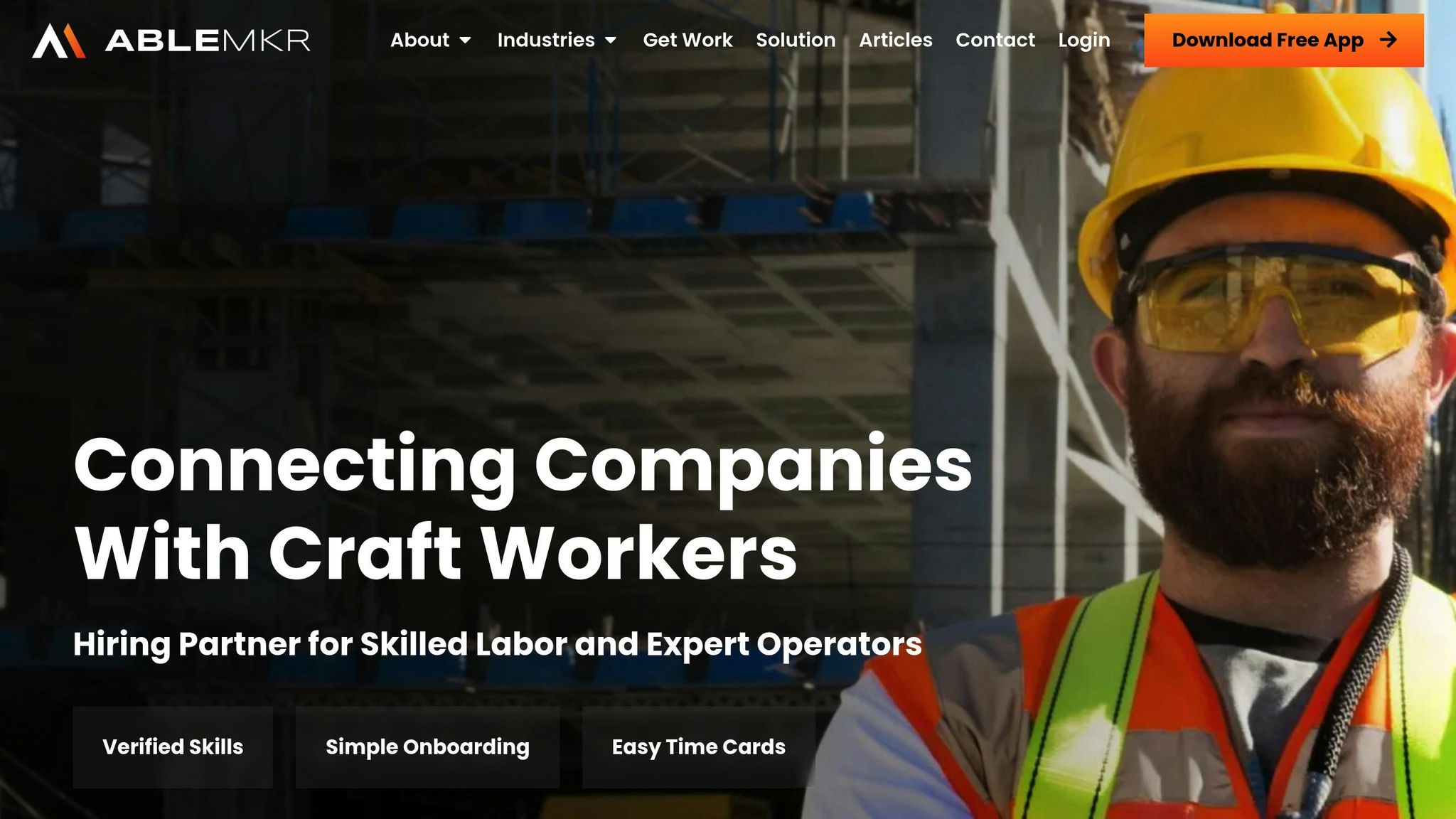
ABLEMKR takes these benefits a step further by connecting qualified workers with construction opportunities through verified profiles and automated compliance checks. The platform’s workforce management features enable real-time tracking, creating the documentation needed to meet regulatory standards. Transparent cost structures also provide audit trails, ensuring compliance with ease.
The ABLEMKR mobile app is designed for dynamic construction environments, offering flexible scheduling while maintaining oversight of workforce assignments. Features like worker ratings and automated job matching ensure that qualifications align with project needs. Additionally, the platform supports W2 employment and workers’ compensation coverage, addressing employment classification and insurance requirements. This combination of tools helps maintain audit readiness, with real-time tracking and documentation that simplify regulatory compliance.
Benefits and Challenges of Digital Compliance Platforms
Digital compliance platforms have the potential to transform operations by streamlining processes and improving efficiency. However, implementing them requires careful planning and consideration.
Benefits of Digital Compliance Platforms
Digital compliance platforms bring a range of advantages that can significantly boost project outcomes. One standout benefit is the time saved by automating routine administrative tasks, freeing up valuable hours for teams to focus on more critical work.
Another key advantage is improved accuracy. These tools simplify planning, scheduling, and tracking, which helps reduce errors and costly rework. This is especially important in construction, where about 70% of projects exceed their budgets by at least 10%, and 90% of large-scale projects face delays .
Real-time visibility is a game changer for compliance management. Features like automated tracking of regulatory changes, precise record-keeping, and deadline alerts enable teams to stay proactive. Mobile compatibility allows field workers to update compliance status directly from job sites, ensuring the information is always current.
Automation also increases operational efficiency. By digitizing repetitive tasks and integrating with payroll systems, companies can save up to 11 hours per week and eliminate redundant data entry .
Security and accessibility are enhanced as well. Cloud-based platforms provide secure access from anywhere, making collaboration seamless. Advanced security measures help protect sensitive data, ensuring compliance with legal data protection standards. Additionally, these tools enable smarter resource allocation, reducing waste and maximizing efficiency.
While the benefits are undeniable, companies must also navigate several challenges to make the most of these platforms.
Common Challenges and Solutions
One of the biggest hurdles is resistance to change. Employees often hesitate to adopt new technologies, especially in industries accustomed to traditional methods. To overcome this, organizations can promote a culture that values innovation and highlight the benefits of compliance software. Tailored training sessions and phased rollouts can also ease the transition.
Integration with legacy systems is another common challenge. Connecting new platforms to older systems requires careful planning, thorough testing, and validation to ensure data integrity. Starting with a small pilot project can help identify potential issues before a full-scale launch .
Cost concerns are particularly significant for smaller firms, as the initial investment and resource allocation can be daunting. However, many companies see a return on investment within 6 to 18 months, making it a worthwhile endeavor. Strategic budgeting and prioritizing compliance can help manage these costs .
Data privacy and security are critical when dealing with sensitive information. Regular security audits, staff training on data handling, and encryption protocols can mitigate risks effectively.
Lastly, keeping up with evolving regulations is an ongoing challenge. Investing in flexible software and fostering a culture of continuous compliance education can help companies stay ahead of regulatory changes.
Comparison Table: Key Benefits and Challenges
Here’s a quick look at the main benefits, challenges, and possible solutions:
| Benefits | Challenges | Solutions |
|---|---|---|
| Time Savings: Save 5-11 hours weekly | Resistance to Change: Hesitant adoption | Phased deployment with role-specific training |
| Improved Accuracy: Fewer errors and rework | Integration Complexity: Legacy systems | Careful planning and pilot testing |
| Real-Time Insights: Up-to-date compliance data | Cost Concerns: High initial investment | Pilot projects and ROI tracking |
| Operational Efficiency: Automated workflows | Skills Gap: Lack of tech-savvy staff | Comprehensive employee training |
| Secure Access: Cloud-based collaboration | Data Privacy: Sensitive information risks | Regular audits and encryption protocols |
| Resource Optimization: Less waste, better allocation | Regulatory Updates: Constantly changing rules | Flexible software and ongoing education |
The construction sector loses approximately $177 billion annually due to overspending, illustrating the potential impact of adopting digital compliance platforms. These tools can improve productivity by up to 14% and cut project costs by 4%. They also simplify compliance with labor laws and safety standards, reducing legal risks while enhancing operational efficiency.
To succeed, companies should engage stakeholders early, demonstrate the platform’s advantages through pilot projects, and provide ongoing support and training. Regularly monitoring the platform’s impact and gathering team feedback can further ensure a strong return on investment .
Conclusion: Improving Compliance Efficiency with Digital Platforms
Digital platforms have reshaped how construction firms handle compliance, replacing outdated, manual methods with automated solutions. This shift is gaining momentum, with 78% of construction companies now using digital tools to boost efficiency and transparency.
By automating repetitive tasks – cutting them down by as much as 95% – and saving up to 77% of the time spent on routine work, teams can focus on delivering quality, ensuring safety, and meeting deadlines. This approach not only reduces costs but also simplifies daily workflows.
Real-time monitoring and automated compliance checks have taken much of the uncertainty out of regulatory adherence. These tools provide constant oversight and immediate alerts, helping businesses avoid costly violations and maintain high compliance standards.
Platforms that integrate workforce management with compliance, like ABLEMKR’s verified profiles and automated job matching, ensure that only certified workers are assigned to tasks. This reduces risks, keeps projects running smoothly, and translates into measurable cost savings.
The financial impact of digital adoption in construction is staggering. By 2025, contractors are projected to save around $9.1 billion annually thanks to automated compliance and streamlined documentation. Considering that workplace injuries account for $60 billion in lost productivity each year, and violations can lead to fines as high as $136,532, the economic advantages of digital compliance are undeniable.
Looking ahead, advancements in artificial intelligence and IoT sensors will enable these platforms to predict risks and deliver even more proactive compliance management. Already, 83% of construction professionals agree that digital transformation speeds up project delivery times.
This digital shift is paving the way for a safer, more efficient, and profitable construction industry. Companies adopting these tools now are setting themselves up to succeed in a competitive and increasingly regulated environment.
FAQs
How do digital platforms make compliance easier in the construction industry?
Digital platforms make compliance in construction much easier by automating tasks like managing documents, verifying information, and keeping updates current. This cuts down on manual work, reduces mistakes, and ensures compliance data stays accurate and up-to-date.
With features like real-time tracking and centralized dashboards, these tools let you monitor compliance status effortlessly and adapt quickly to any regulatory changes. Instant notifications and progress tracking keep teams on schedule, helping to lower risks and operational costs. By simplifying these processes, digital platforms boost efficiency and improve overall project management.
What challenges do construction companies face when adopting digital compliance platforms, and how can they address them?
Construction companies frequently face pushback from employees when introducing digital compliance platforms. Adjusting to new workflows and unfamiliar technologies can be daunting for teams. On top of that, managing compliance across various regions with different regulations adds another layer of complexity.
To tackle these challenges, companies should focus on proactive planning and implement comprehensive training programs to help employees transition more easily. Choosing platforms that are easy to use and offer features like automated documentation and real-time updates can streamline compliance tasks, cut down on mistakes, and keep projects running on schedule.
How do real-time monitoring and mobile access improve compliance management on construction sites?
Real-time monitoring combined with mobile access transforms compliance management on construction sites, making it both faster and more efficient. With instant updates and continuous oversight, project managers can quickly spot and address safety, quality, or regulatory issues, cutting down on delays and minimizing mistakes.
Mobile access allows field workers to update or check compliance details directly from the job site. This ensures every activity is tracked as it happens, and any problems are dealt with immediately. The result? Consistently high safety standards and seamless regulatory compliance throughout the project.


