
Emergency staffing in construction is a critical solution for addressing sudden workforce gaps caused by illness, injuries, or other emergencies. With the industry already facing a labor shortage – needing an additional 439,000 workers by 2025 – these gaps can lead to delays, increased costs, and compromised project quality. Key strategies include:
- Cross-training workers to handle multiple roles.
- Rescheduling tasks to optimize available resources.
- Using on-demand staffing platforms like ABLEMKR for quick access to skilled labor.
- Implementing emergency response plans to prepare for workforce disruptions.
On-demand platforms like ABLEMKR simplify emergency hiring by connecting managers with pre-screened, qualified workers in hours. These tools handle payroll, certifications, and compliance, reducing administrative burdens and keeping projects on track. For construction managers, having a plan and leveraging technology ensures productivity even during unexpected staffing challenges.
What Causes Labor Shortages and How They Affect Projects
Main Reasons for Workforce Gaps
Labor shortages in construction stem from several long-term trends. By understanding these underlying issues, project managers can better anticipate and address workforce challenges.
Aging Workforce and Rising Retirements
The construction industry is grappling with an aging workforce. Over 20% of its workers are over 55 and nearing retirement. For every five workers retiring, only two are entering the field. With the median age of construction workers at 42, these demographic shifts are creating predictable gaps in the labor pool.
Low Interest from Younger Generations
Fewer young people are pursuing construction careers. In fact, less than 3% of young individuals consider construction as a viable career path. Gen Z accounts for just 16.8% of the workforce in this sector, leaving a smaller pipeline of replacements for retiring workers.
Impact of Immigration Policies
Immigration plays a critical role in the construction labor force, with nearly 25% of U.S. construction workers being immigrants. In states like Texas and California, this number jumps to 40%. Any changes to immigration policies or border restrictions can quickly shrink the workforce, especially in regions heavily reliant on immigrant labor.
High Turnover Rates
Retention is a major hurdle for the construction industry. The turnover rate has climbed to 56% since 2021, and half of construction firms report that new hires either quit or fail to show up shortly after starting. This constant churn makes it harder to maintain a stable workforce.
Competition from Other Industries
Construction workers now have more job options, and many are choosing industries with better working conditions. Anirban Basu, Chief Economist at ABC, points out: "The U.S. hasn’t educated and produced enough blue-collar workers in recent years". This shortage of skilled labor, coupled with more appealing opportunities elsewhere, makes it increasingly difficult to attract and retain talent.
Skills and Certification Shortages
Even when workers are available, many lack the qualifications needed for specialized roles. According to 62% of contractors, finding candidates with the right certifications, licenses, and skills is a significant challenge. Roles in trades like electrical work, plumbing, and HVAC demand extensive training, which takes years to develop.
These persistent gaps not only disrupt project timelines but also drive up costs.
How Shortages Affect Project Timelines and Costs
The ripple effects of labor shortages touch every aspect of construction, from timelines to budgets.
Delays and Disruptions
With fewer workers on-site, projects slow down. Over half of contractors (54%) report that labor shortages are already causing delays. Tasks requiring specialized skills often face bottlenecks, as workers with the necessary expertise aren’t readily available, forcing other phases of the project to stall.
Rising Costs and Budget Challenges
Labor shortages also push costs higher. Field craft professionals now earn $36.54 per hour, an 18% premium over the average private-sector wage. These higher wages, aimed at attracting workers, inevitably inflate project budgets. Additionally, inexperienced workers filling gaps often lead to mistakes, with rework consuming 9–20% of a project’s budget.
Compromised Quality and Safety
When teams are rushed or understaffed, the quality of work and safety standards can suffer. This leads to more rework and increased risks on-site . New workers, often inadequately trained, face greater hazards, while experienced staff may be stretched too thin to provide proper oversight.
Operational Inefficiencies
Labor shortages force supervisors to spend more time managing teams and troubleshooting issues. To meet demand, the industry needs to add 740,000 workers annually over the next few years. Without these hires, delays in critical infrastructure projects and escalating costs will persist.
Lost Business Opportunities
The broader impact is undeniable. A staggering 94% of construction firms report difficulties in finding workers. Many firms are even turning down lucrative projects because they lack the skilled staff to complete them. This underscores the challenge of not just filling positions but ensuring workers have the expertise to deliver quality results safely and efficiently.
Staff Your Event Emergency Why July 4th Could Make or Break Your Business
How to Handle Emergency Staffing Needs
When construction projects face unexpected labor shortages, acting swiftly can mean the difference between staying on schedule and dealing with costly delays. For project managers, having practical strategies ready is key to maintaining productivity while seeking longer-term solutions.
Quick Actions for Project Managers
The first step in addressing sudden workforce gaps is making the most of your existing team. One effective approach is cross-training. This allows workers to take on multiple roles, providing much-needed flexibility when team members are unavailable or when specific skills are urgently required. Companies with cross-training programs often see productivity gains of 15-25%.
"Superintendents can optimize their available workforce and help keep projects on track by implementing different strategies, such as cross-training, prioritizing safety, offering overtime, and using technology." – Essel Environmental
Rescheduling shifts and redistributing tasks can also help cover critical work. By moving non-urgent tasks to less busy times or focusing essential work during peak staffing hours, managers can better utilize their available workforce.
Strategic overtime is another short-term solution, but it needs careful monitoring. While overtime provides immediate relief, overworked teams are more prone to mistakes, which can lead to setbacks.
Tapping into internal networks can be a quick way to find qualified replacements. Workers often know skilled professionals who might be available for short-term assignments. These referrals typically lead to faster onboarding since the candidates are already familiar with industry standards and safety practices.
Leveraging technology can also reduce the strain on your workforce. Construction management software automates routine tasks, streamlines processes, and improves communication, enabling your team to accomplish more with less manual effort.
Finally, maintaining strict safety measures is critical. With over 40% of construction workers aged 45 or older, protecting experienced team members from injuries ensures they remain productive and available.
These immediate steps help stabilize the situation while preparing for long-term solutions, such as a comprehensive emergency response plan.
Why You Need an Emergency Response Plan
An emergency response plan is essential for minimizing disruptions. While OSHA mandates written safety programs and emergency plans for construction companies, these plans should also address workforce management during crises.
Identifying hazards and assessing risks is a crucial first step. Construction sites face numerous threats, from fires and structural collapses to severe weather and chemical spills. Any of these can lead to immediate staffing shortages.
Reliable communication systems are another vital component. Phones, radios, and emergency alert systems ensure that project managers can quickly coordinate responses and access labor pools. With the industry short by roughly 500,000 workers to meet current demand, clear and rapid communication is more important than ever.
Emergency response teams should include personnel with diverse skills and clearly defined roles. Regular training and drills keep procedures fresh, ensuring the team can act quickly when needed.
A strong plan also includes steps for assessing damage, identifying repair needs, and calculating the workforce required for recovery efforts. Annual reviews and updates ensure the plan stays relevant, accounting for changes in site conditions, regulations, and emerging risks.
When internal strategies aren’t enough, digital staffing platforms can provide additional support.
Using On-Demand Staffing Platforms
For situations where traditional methods fall short, on-demand staffing platforms offer a fast and efficient way to fill sudden gaps. These platforms connect construction projects with pre-screened workers, ensuring quick access to skilled professionals.
ABLEMKR is one such platform, designed to address emergency staffing needs in construction. It connects managers with both skilled and unskilled workers through verified profiles, matching candidates to positions based on qualifications. Its automated job-matching system identifies available workers quickly, while real-time invoicing and transparent cost structures help managers stay on budget.
The mobile app makes it easy for managers to post jobs and review profiles directly from the job site. Workers receive instant notifications, speeding up the placement process.
Additional workforce management tools ensure compliance with safety regulations. The platform tracks certifications, licenses, and training records, reducing the risk of placing unqualified workers in specialized roles.
Cost management is also simplified. ABLEMKR’s cost transparency feature allows managers to evaluate the financial impact of emergency hires before making decisions, helping to avoid budget overruns.
Whether the need is for laborers, skilled tradespeople, or administrative staff, ABLEMKR’s comprehensive pool of workers can handle a variety of staffing challenges. The platform also provides W2 employment and workers’ compensation coverage, easing the administrative burden during high-pressure situations. This allows project managers to focus on keeping their projects on track rather than getting bogged down in paperwork.
How ABLEMKR Makes Emergency Staffing Easier
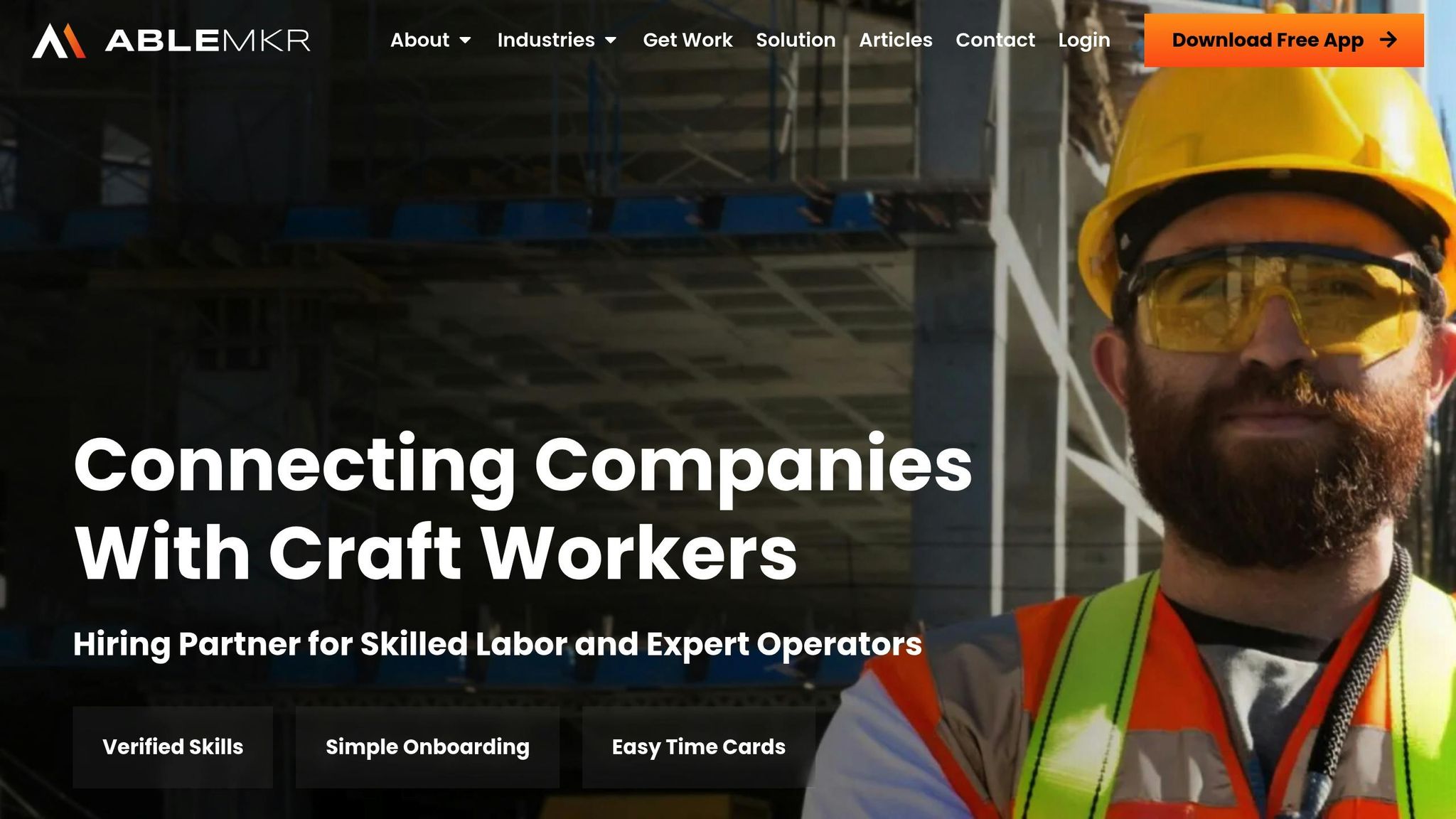
When construction projects hit unexpected labor shortages, ABLEMKR steps in to provide quick and dependable staffing solutions. Since its founding in 2018 in Tempe, Arizona, ABLEMKR has been connecting companies in construction, oil & gas, and mining with skilled craft workers. With features like fast worker placement, cost control, and flexible job options, ABLEMKR simplifies emergency staffing challenges.
Key Features for Rapid Worker Placement
At the heart of ABLEMKR’s emergency staffing success are its verified worker profiles. Each candidate is thoroughly vetted to ensure they meet your specific project needs, so you can rely on skilled workers when the pressure is on.
The platform’s automated job matching system speeds up the hiring process by instantly pairing job postings with qualified candidates based on their skills, certifications, and proximity to the job site. This is a game-changer for emergencies when time is critical.
ABLEMKR’s mobile app acts as a command center for emergency staffing. Project managers can post urgent job openings directly from the field, browse worker profiles, and make hiring decisions in real time. The app also features real-time location tracking, allowing managers to see where available workers are and deploy them efficiently. Workers log their hours through the app, providing instant visibility into workforce activity.
For added flexibility, ABLEMKR offers a range of hiring options, including flex workers, flex-to-hire arrangements, fractional hiring partners, and direct placements. This variety ensures that project managers can tailor staffing solutions to their specific emergency needs.
Cost Management and Regulatory Compliance
Emergencies often bring concerns about budgets and compliance, but ABLEMKR addresses these with its transparent cost structure and robust administrative support.
The platform handles onboarding, insurance, payroll, and benefits, taking the administrative load off your shoulders during high-stress situations. All workers are employed under W2 status, ensuring compliance with labor laws – a critical factor in the construction industry, where adherence to wage and hour regulations is non-negotiable. With the sector’s turnover rate projected to hit 5.2% in 2024, compared to the national average of 3.7%, having a compliant staffing solution is more important than ever.
ABLEMKR also provides real-time invoicing, giving you immediate insight into costs so you can make informed hiring decisions without blowing your budget. Additionally, the platform’s continuous screening and vetting process ensures that workers maintain necessary certifications and meet project requirements, reducing the risk of safety issues or delays caused by misplacements.
Beyond cost and compliance, ABLEMKR offers staffing solutions for both field and office roles, making it a versatile choice for emergency hiring.
Field and Office Staffing Options
ABLEMKR goes beyond traditional construction roles, offering staffing solutions for both field and office jobs. This flexibility ensures companies can find the right talent, whether for one-off needs or more regular hiring.
For field roles, ABLEMKR connects you with skilled tradespeople, equipment operators, and general laborers who are ready for immediate deployment. These workers come with the necessary safety certifications and technical expertise to handle demanding construction environments.
For office-based roles, the platform provides access to candidates for positions like project coordinators, administrative assistants, and technical support staff. This feature is especially useful during times of sudden departures or when extra help is needed during busy project phases.
To further streamline the process, ABLEMKR includes a worker ratings system, where feedback from previous assignments helps ensure better matches. Detailed job postings also clarify role expectations, minimizing the risk of mismatches during emergency staffing.
With ABLEMKR, you get a comprehensive, efficient, and reliable staffing solution that’s ready to deliver when time is of the essence. From fieldwork to office support, ABLEMKR ensures your projects stay on track, no matter the challenge.
sbb-itb-aa28329
On-Demand Staffing vs Regular Hiring Methods
When construction projects face sudden labor shortages, project managers often find themselves weighing two choices: traditional hiring methods or on-demand staffing platforms. Each has distinct benefits and challenges, and understanding these differences is key to addressing workforce gaps efficiently.
On-demand staffing platforms, like ABLEMKR, have revolutionized how quickly workers can be matched with employers – sometimes in just minutes. In contrast, traditional hiring methods can take weeks or even months to complete. This speed advantage makes on-demand staffing a game-changer for urgent needs.
| Factor | On-Demand Staffing | Traditional Hiring Methods |
|---|---|---|
| Speed | Workers deployed within hours or days | Weeks to months for full hiring process |
| Cost Structure | Pay only for work performed, with a 35% platform fee | Fixed salaries, benefits, recruiting costs |
| Flexibility | Scale workforce up or down instantly | Long-term commitments; difficult to adjust |
| Administrative Burden | Platform handles payroll, benefits, insurance | Full HR management required |
| Worker Quality | Verified profiles with ratings system | Extensive vetting but slower process |
| Compliance | W2 status with automatic compliance handling | Manual compliance management |
Labor costs make up 30–50% of a project’s total expenses, so precise resource allocation is critical. On-demand staffing helps reduce overhead by eliminating costs like benefits, insurance, and office space. However, it’s not without trade-offs. The platform’s 35% fee can add up for extended projects, and the short-term nature of these arrangements can limit long-term worker relationships. On the other hand, traditional hiring offers stability and greater control but can struggle to adapt to the unpredictable nature of construction workloads, such as changes in project scope or weather delays.
When On-Demand Staffing Works Best
On-demand staffing shines in scenarios that demand speed and flexibility. It’s particularly useful during emergency labor shortages, seasonal peaks, or sudden shifts in project requirements. Construction workloads often fluctuate due to factors like weather, project phases, or client demands. In these situations, on-demand platforms allow project managers to quickly scale their workforce.
This approach is also ideal for projects requiring specialized skills. For example, hiring tradespeople with specific certifications for short-term tasks is often more cost-effective than keeping full-time specialists on staff. Given that skilled tradespeople can earn 25–75% more than unskilled workers, on-demand staffing ensures you only pay for the expertise you need when you need it.
Geographic differences in labor costs further highlight the value of on-demand staffing. Labor expenses can vary by as much as 40% across U.S. regions, and on-demand platforms allow businesses to tap into local talent without establishing permanent operations in every location.
For short-term or fluctuating needs, the speed and adaptability of on-demand staffing often outweigh its higher per-hour costs. It’s particularly effective for tasks lasting days or weeks, while traditional hiring may still be the better choice for roles spanning several months or more.
Additionally, with high turnover and a nationwide labor shortage, on-demand staffing minimizes replacement costs, which can range from 50–150% of a worker’s annual salary. On-demand workers also focus solely on their assigned tasks, delivering efficiency during critical project phases.
Conclusion: Making Construction Projects Successful with Emergency Staffing
Emergency staffing plays a crucial role in keeping construction projects on track. Traditional hiring methods often take around 44 days to fill positions and cost companies about $4,700 per new hire. Emergency staffing solutions, on the other hand, offer a faster, more efficient alternative. They help minimize downtime, reduce risks like property damage and hazardous conditions, prevent financial losses, and alleviate stress. Plus, they provide instant access to skilled, local talent, ensuring projects stay on course.
Platforms like ABLEMKR are redefining how emergency staffing works. With features designed to simplify the process, project managers can deploy qualified workers in hours, not weeks. The platform guarantees compliance and protects all parties involved, making it a game-changer for the industry.
The benefits extend beyond speed. Emergency staffing reduces costs by allowing companies to hire only when needed, while staffing providers handle recruiting, onboarding, payroll, and benefits. This approach keeps projects on schedule and within budget. By partnering with platforms that offer pre-screened professionals and prioritize safety through training and certifications, construction companies can quickly fill workforce gaps without compromising quality or safety.
In construction, where every delay can have a domino effect on timelines and budgets, having immediate access to skilled workers isn’t just helpful – it’s essential. Platforms like ABLEMKR provide the reliability, speed, and expertise needed to overcome unexpected labor challenges and keep projects moving forward.
FAQs
How does cross-training workers help address labor shortages in construction projects?
Cross-training employees equips construction teams with the flexibility to tackle unexpected labor shortages head-on. When workers are skilled in multiple roles, projects can keep moving forward seamlessly, even when staffing gaps emerge. This strategy minimizes delays and boosts productivity, making it easier for teams to hit their deadlines.
On top of that, cross-trained employees create a stronger, more adaptable workforce. They can shift between tasks as project needs evolve, which is a game-changer in the fast-moving world of construction, where surprises are part of the job.
What are the benefits of using on-demand staffing platforms like ABLEMKR for urgent construction staffing needs?
On-demand staffing platforms such as ABLEMKR offer a quick and effective way to tackle unexpected labor shortages in construction projects. These platforms enable companies to rapidly adjust their workforce to match project demands, helping to keep operations running smoothly and deadlines on track.
ABLEMKR stands out with features like verified worker profiles and an easy-to-navigate hiring process, making it simple for businesses to find both skilled and unskilled labor when they need it. Beyond just staffing, it takes care of workforce management tasks like payroll and scheduling, cutting down on administrative work and boosting overall efficiency. This level of adaptability allows businesses to stay within budget while responding swiftly to urgent staffing challenges.
How can construction managers prepare for unexpected labor shortages?
Handling Labor Shortages in Construction
Sudden labor shortages can throw a wrench into any construction project, but being prepared can make all the difference. Construction managers should develop a solid contingency plan that outlines clear communication strategies and assigns specific roles to team members. Regular risk assessments and ongoing staff training can also ensure your crew is ready to tackle unexpected challenges without missing a beat.
One smart approach is using flexible staffing solutions like ABLEMKR. This platform connects managers with both skilled and unskilled workers, helping to quickly fill labor gaps. By doing so, you can minimize delays and keep your projects on track. The combination of proactive planning and having a dependable pool of workers at your fingertips is essential for navigating workforce challenges effectively.


