
Navigating diverse teams in the U.S. construction industry isn’t just about managing projects – it’s about understanding and leveraging differences in communication, work habits, and decision-making. Here’s what you need to know:
- Diverse Teams Create Opportunities and Challenges: Workers from different backgrounds bring unique skills but also differing views on hierarchy, time, and problem-solving.
- Key Leadership Focus Areas:
- Clear communication to avoid misunderstandings and ensure safety.
- Building trust through consistent processes and fair treatment.
- Addressing differences in values like time management and decision-making styles.
- Why It Matters: Poor leadership can lead to delays, safety risks, and team conflicts. Strong leadership improves productivity, safety, and team cohesion.
- Solutions:
- Use standardized communication protocols like visual aids and multilingual tools.
- Offer awareness training to address unconscious bias and cultural differences.
- Leverage workforce management platforms (e.g., ABLEMKR) to ensure transparency, track skills, and streamline hiring.
How to Lead a Global, Multicultural Team
Common Challenges in Cross-Cultural Construction Leadership
Leading multicultural teams in construction goes beyond managing language barriers – it requires navigating deep differences in work habits, communication styles, and interpersonal dynamics. Understanding these challenges is the first step toward addressing them effectively.
Communication Barriers
One of the most immediate obstacles on construction sites is language differences. Misunderstanding safety briefings, for example, can lead to serious accidents or project delays. Even when everyone speaks a shared language, subtle differences in how things are expressed can create confusion.
Nonverbal communication adds another layer of complexity. Cultures that value direct communication might expect quick responses, interpreting silence as disinterest or defiance. Meanwhile, those who favor an indirect approach may view silence as a thoughtful pause to process information. These mismatched expectations can disrupt team coordination and create unnecessary tension.
The consequences of communication breakdowns can ripple throughout a project. Misinterpreted instructions might result in rework, missed deadlines, or even safety hazards. A single misunderstanding can snowball, impacting productivity and morale.
Value Conflicts Between Cultures
Cultural values and work styles can also clash, creating friction within teams. For instance, some workers might prefer a clear chain of command, while others thrive in environments that encourage collaboration and shared decision-making. These differing expectations can lead to frustration and inefficiency.
Time management is another common source of tension. In some cultures, punctuality and strict schedules are paramount, while others prioritize relationships and flexibility over rigid timelines. These differences can complicate project coordination and strain team dynamics.
Decision-making styles are another sticking point. Some cultures lean toward consensus and careful deliberation, while others favor quick, top-down decisions. When these approaches collide, it can erode trust and slow progress. Studies have shown that cultural misalignment in decision-making can fragment teams and undermine overall performance.
Trust and Relationship-Building Difficulties
Trust is the foundation of any successful team, but in multicultural settings, building it can take more time and effort. Developing rapport becomes particularly tricky when team members have different ideas about how trust is formed. For some, trust grows through personal connections and shared experiences, while others base it on professional reliability and competence.
In construction, where teams are often brought together quickly for specific projects, there’s little time for the gradual relationship-building some cultures value. Workers who need personal bonds to feel comfortable may struggle in fast-paced environments that demand immediate results.
Remote or distributed teams face even more hurdles. Without face-to-face interaction, it’s harder to pick up on nonverbal cues or address misunderstandings casually. Digital communication can allow cultural differences to linger unresolved, further complicating team dynamics.
In construction, the stakes for trust are incredibly high. Workers must rely on one another to follow safety protocols, report hazards, and collaborate effectively in potentially dangerous situations. When trust falters, people may hesitate to voice concerns or ask for help, turning small issues into significant setbacks. Rapidly assembled teams, common in the industry, often lack the time needed to establish the trust required for safe and efficient work.
These challenges highlight the need for proactive strategies to bridge cultural gaps, which will be explored in the next section.
Solutions for Leading Multicultural Construction Teams
Managing multicultural construction teams effectively means turning potential challenges into strengths. By focusing on communication, cultural understanding, and trust, leaders can create a more unified and productive workforce.
Improving Communication Through Standardized Protocols
Clear communication is the backbone of any successful team, especially in multicultural settings. Start with straightforward instructions and use visual aids like color-coded plans, visual schedules, and safety posters featuring universal symbols. These tools help overcome language barriers and reduce mistakes or safety risks. A closed-loop communication method – where workers repeat instructions back to confirm understanding – can catch misunderstandings early.
Leverage multilingual digital tools to share visual instructions via mobile devices, providing workers with a constant point of reference. Establishing a common project language, often English in U.S.-based construction, alongside translation support and regular team briefings, ensures everyone stays aligned on goals and safety requirements. Beyond these tools, recognizing and respecting cultural nuances adds another layer of effectiveness to team communication.
Once communication is streamlined, the next step is fostering cultural understanding to strengthen team cohesion.
Investing in Awareness Training
Cultural awareness training can turn potential friction into collaboration. Programs like the Associated General Contractors of America’s "Culture of CARE" campaign show how structured training can improve both team retention and project outcomes. These programs address unconscious bias, cultural norms, and safety practices, often using practical, real-world scenarios. For instance, exploring different approaches to time management and decision-making can help team members understand varying response times.
Ongoing training is key. Regular refresher sessions and metrics – such as incident reports, retention rates, and team satisfaction surveys – help measure success. Gathering qualitative feedback from supervisors and workers can also provide valuable insights for continuous improvement.
Building Trust with Clear Processes
Trust is built on transparency and consistency. Standardized onboarding ensures every worker understands their role, responsibilities, and company procedures right from the start. Tools like ABLEMKR enhance transparency by offering real-time data on worker certifications, status, and performance. When tasks and opportunities are assigned fairly – based on skills and availability – and payroll processes ensure timely payments, trust naturally grows.
Team-building activities also play a big role. Cross-cultural workshops, shared meals featuring diverse cuisines, collaborative problem-solving exercises, and on-site safety drills bring workers together to tackle real challenges. Mentorship programs and peer support networks further strengthen relationships and facilitate knowledge sharing. To maintain fairness, implement clear grievance procedures, anonymous feedback channels, and regular audits of hiring and promotion practices. These measures not only build trust but also improve operational efficiency while fostering mutual respect across the team.
sbb-itb-aa28329
Technology’s Role in Managing Cross-Cultural Construction Teams
Managing multicultural teams on construction sites can be challenging, but workforce management platforms are stepping in to simplify the process. These digital tools help tackle communication barriers, build trust, and address operational hurdles that often arise in diverse work environments. Here’s how these solutions are making a difference.
Streamlining Hiring and Onboarding with ABLEMKR
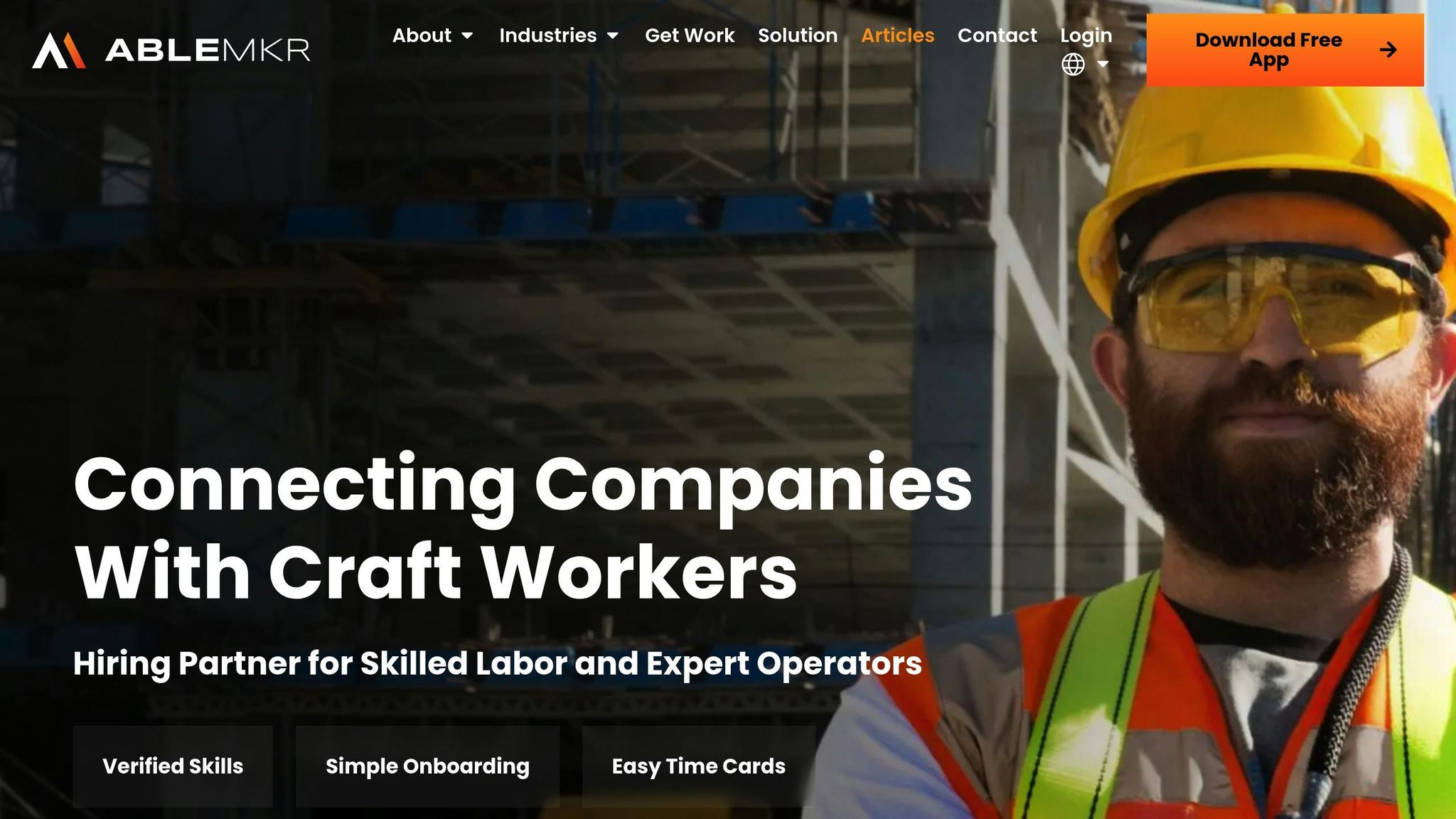
Hiring for construction projects becomes more complex when cultural differences and language barriers come into play. ABLEMKR, a mobile-first workforce management platform, simplifies this process by matching vetted workers to job sites using objective criteria such as certifications, safety training, availability, and location. This skills-based system reduces reliance on subjective assessments, helping to eliminate cultural biases.
The platform’s "Verified Skills" feature ensures workers are assigned based on proven qualifications. For example, if a contractor needs certified welders for a pipeline repair, ABLEMKR can quickly identify qualified candidates, regardless of their cultural background. Meanwhile, the "Simple Onboarding" tool standardizes the hiring process, allowing everyone to start on equal footing and reducing potential friction during integration.
While onboarding sets the foundation, real-time collaboration tools take team connectivity to the next level.
Improving Collaboration Through Real-Time Visibility
Real-time tracking has revolutionized team coordination. ABLEMKR offers instant updates on worker status, attendance, and task progress, enabling managers to address potential issues before they escalate into larger problems. This level of transparency is particularly helpful when language differences might make verbal communication less effective. Managers can rely on real-time data to monitor project progress and worker performance, ensuring that challenges are addressed promptly.
Additionally, the platform includes compliance tracking to ensure that safety standards and legal requirements are consistently met, creating a safer and more efficient workplace for everyone.
Ensuring Equity and Transparency in Workforce Operations
Trust is essential in any team, and it grows when workers see fairness and transparency in action. ABLEMKR supports this by integrating payroll workflows that guarantee on-time payments, reducing delays that can erode trust. Standardized payroll systems and flexible scheduling also allow workers to balance job responsibilities with personal or cultural commitments, fostering a more inclusive and supportive work environment.
Transparent compensation practices further enhance trust by clearly showing workers how their pay is calculated. This clarity is especially important in multicultural teams, where concerns about favoritism or unfair treatment might otherwise arise.
"ABLEMKR delivers an experience for workers and employers to deliver accountability and transparency in the skilled workforce employment process."
Conclusion: Building Effective Leadership in Multicultural Teams
Leading multicultural construction teams means fostering an environment where diverse viewpoints contribute to stronger project results. The U.S. construction industry is at a critical juncture – how it addresses cross-cultural challenges directly affects safety, productivity, and team retention.
A three-part strategy involving training, standardized processes, and technology can turn these challenges into strengths. Training equips leaders with the cultural awareness to spot and address conflicts before they grow. Standardized communication protocols and clear processes ensure everyone is aligned, working from the same guidelines. Meanwhile, technology platforms like ABLEMKR help break down traditional barriers by focusing on verified skills and transparent operations instead of subjective evaluations. Together, these elements improve operations while enhancing safety and team cohesion.
The stakes couldn’t be higher. Women and Black workers remain underrepresented in construction, making inclusive environments critical for both workforce well-being and project success. Strategies like improved onboarding and live tracking methods transform potential friction into operational advantages. Companies that embrace multicultural leadership often see tangible improvements in team dynamics, safety records, and project outcomes.
Key Takeaways
Strong cross-cultural leadership relies on three core principles:
- Training and Awareness: Effective leaders spot communication gaps and cultural conflicts early, addressing them with targeted training and clear procedures. Programs like the Associated General Contractors of America’s "Culture of CARE" offer practical tools for fostering inclusion.
- Technology Integration: Platforms like ABLEMKR streamline workforce management by matching workers to projects based on certifications, training, and availability. This reduces hiring bias and provides real-time insights into project progress and compliance.
- Strategic Leadership: The best leaders see multicultural teams as an opportunity to leverage diverse skills and perspectives, not a challenge to overcome. With the right mix of education, planning, and technology, construction leaders can build teams that excel across cultural boundaries.
FAQs
What strategies can construction leaders use to overcome communication challenges in multicultural teams?
Effective communication within multicultural construction teams demands a deliberate and thoughtful strategy. Leaders should aim to establish clear, inclusive communication channels while addressing challenges like language barriers, cultural nuances, and potential misunderstandings.
A practical tool to enhance workforce coordination is ABLEMKR. This platform connects projects with pre-vetted, skilled workers who meet necessary certifications and training requirements. By leveraging such tools, teams can integrate more seamlessly, reducing the chances of miscommunication.
Beyond technology, fostering team cohesion requires a human touch. Leaders can encourage cultural understanding, provide language assistance when necessary, and ensure that instructions are straightforward and accessible to everyone. These efforts contribute to a more collaborative and efficient work environment, where every team member can thrive.
How can leaders foster trust in multicultural construction teams that are quickly assembled?
Building trust within multicultural construction teams hinges on clear communication, respect for cultural differences, and strong, consistent leadership. Leaders should encourage open and honest conversations to ensure every team member feels valued and understood, no matter their background. Setting shared goals and clear expectations from the start can help align the team and minimize potential miscommunications.
Providing cross-cultural training and organizing team-building activities can help bridge cultural divides and strengthen collaboration. Recognizing and appreciating the unique talents and viewpoints each individual brings to the table fosters a sense of belonging and mutual respect. By staying transparent and addressing any conflicts swiftly, leaders can cultivate a unified and efficient team atmosphere.
How can technology like ABLEMKR enhance the leadership of multicultural construction teams?
Technology like ABLEMKR plays a key role in helping leaders manage multicultural construction teams by taking the hassle out of workforce management. It simplifies processes like hiring, onboarding, and compliance, ensuring that workers are assigned to projects based on their certifications, safety credentials, availability, and location.
With features that offer real-time updates on worker status and automate payroll tasks, ABLEMKR allows leaders to shift their focus toward fostering collaboration and driving project success. This streamlined approach minimizes delays, enhances communication, and creates a more unified team dynamic, even in diverse work environments.


