
When it comes to emergencies, the construction and energy industries face unique challenges. Construction sites deal with temporary, ever-changing hazards like crane collapses or trench cave-ins. Energy facilities, on the other hand, must manage constant risks like refinery explosions or hazardous material leaks. Both rely on emergency protocols, but their approaches differ due to the nature of their work environments, regulatory requirements, and risk profiles.
Key takeaways:
- Construction: Risks are localized, dynamic, and tied to specific project phases. Plans must be updated frequently as work progresses.
- Energy: Risks are continuous and can have widespread impacts, requiring long-term, multi-agency coordination.
- Regulations: Construction follows OSHA‘s 29 CFR 1926, while energy facilities adhere to 29 CFR 1910 and additional agency rules, creating a more complex compliance landscape.
- Technology: Both sectors use tools like real-time monitoring and communication systems, but energy facilities also rely on advanced frameworks for large-scale disruptions.
Quick Comparison:
| Aspect | Construction | Energy |
|---|---|---|
| Common Risks | Falls, trench collapses, crane failures | Explosions, hazardous leaks, wildfires |
| Impact Scale | Localized (worksite/individual) | Regional (community/infrastructure) |
| Regulations | OSHA 29 CFR 1926 | OSHA 29 CFR 1910 + multiple agencies |
| Response Lead | Site Coordinator, Local EMS | Incident Commander, Unified Command |
Both industries can improve by combining flexible planning with structured systems and leveraging workforce platforms for better crisis management.
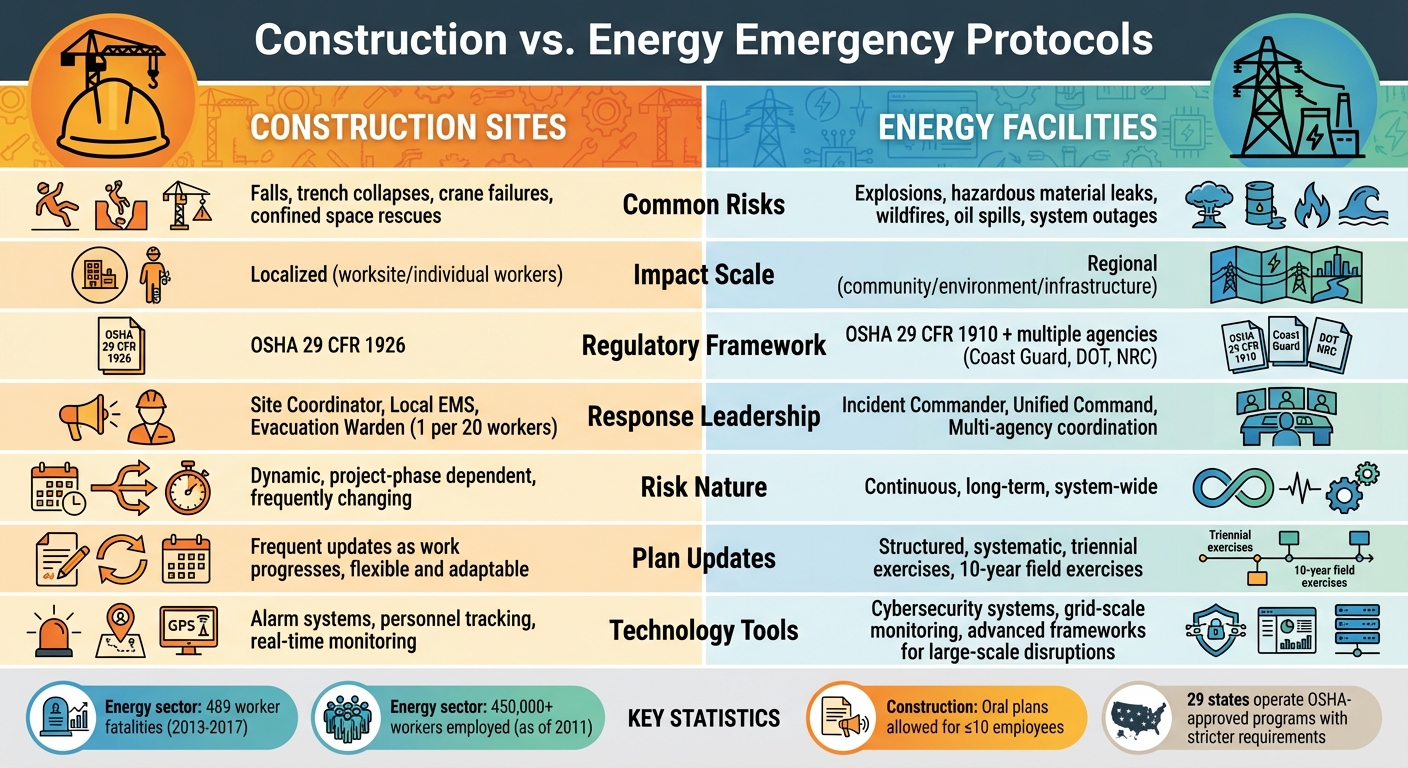
Construction vs Energy Emergency Protocols Comparison Chart
Regulatory Foundations: Construction vs. Energy Emergency Protocols
Construction Regulations and Standards
The Occupational Safety and Health Administration (OSHA) requires construction sites to follow strict guidelines under 29 CFR 1926. One key requirement is having a written Emergency Action Plan (EAP). Employers with 10 or fewer employees, however, are allowed to communicate these plans orally. These EAPs must include clear instructions for escape routes, a system to account for all workers after an evacuation, and specific roles for rescue operations.
When hazardous materials are involved, the HAZWOPER standard (29 CFR 1926.65) mandates a detailed, site-specific emergency response plan. Another critical aspect of construction safety is the need for regular inspections conducted by "competent persons" who evaluate job sites and equipment. OSHA enforces compliance stringently – failure to provide personal protective equipment (PPE) to each employee, for example, can lead to separate citations for every affected worker.
Energy Sector Regulations and Standards
Energy facilities operate under a different set of OSHA rules, primarily outlined in 29 CFR 1910. Emergency Action Plans fall under section 1910.38, while Process Safety Management (PSM) is covered in section 1910.119. For oil and gas operations, site preparation adheres to construction standards, but drilling, servicing, and production activities follow general industry regulations.
Beyond OSHA, several other agencies regulate the energy sector. The U.S. Coast Guard (33 CFR 154), the Department of Transportation (49 CFR 171-178), and the Nuclear Regulatory Commission all contribute additional safety requirements for marine operations, transportation, and radiological hazards. Unlike construction’s project-focused approach, the energy sector’s regulatory framework demands operators comply with multiple agencies, creating a more complex compliance landscape.
Between 2013 and 2017, the oil and gas sector recorded 489 worker fatalities. As of 2011, the industry employed over 450,000 workers, highlighting the importance of robust safety measures. These layered regulations underscore the unique enforcement challenges faced by the energy industry compared to construction.
Differences in Regulatory Scope and Enforcement
The scope of regulations differs significantly between construction and energy operations. Construction regulations are dynamic, evolving alongside the project’s progression from excavation to final touches. In contrast, energy regulations focus on long-term facility operations, emphasizing system reliability and resilience.
When specific hazards aren’t fully addressed by existing standards, OSHA enforces the General Duty Clause (Section 5(a)(1) of the OSH Act) to ensure adequate worker protection.
State-level regulations add another layer of complexity. Twenty-nine states operate OSHA-approved programs, often with stricter safety requirements than federal standards. States like California, Texas, and Wyoming enforce additional rules, such as Petroleum Safety Orders, that go beyond federal mandates. This patchwork of regulations creates challenges for companies working across multiple states, particularly in coordinating training and maintaining compliance.
"Site preparation is the only aspect of oil and gas well drilling and servicing operations covered by 29 CFR 1926… All other aspects… are covered by 29 CFR 1910." – OSHA Letter of Interpretation
Oil and Gas Process – Emergency Shutdown System (ESD)
Risk Profiles and Emergency Scenarios: Construction vs. Energy Sites
Understanding the risks unique to each industry is critical for developing effective emergency response strategies.
Common Emergency Scenarios in Construction
Construction sites are ever-changing environments, which means the risks evolve as projects progress. Workers often face dynamic hazards, including the need for rapid rescues from trenches, pits, tanks, or confined spaces. Falls from heights are a persistent danger, whether from cranes, communication towers, or partially built structures. These incidents – like trench collapses or crane failures – require swift, site-specific responses.
Fires and floods are among the leading causes of evacuations on construction sites. Because the layout of these sites changes frequently, evacuation routes must be updated regularly to ensure safety. Another pressing concern is heat-related illnesses. Every year, extreme heat and humidity lead to fatalities among construction workers, highlighting the need for robust heat safety protocols. These risks are often localized, contrasting with the broader challenges seen in energy operations.
Common Emergency Scenarios in Energy Sites
Energy facilities face risks that extend far beyond the immediate worksite. Hazardous material releases and fires can threaten not only employees but also nearby communities and ecosystems. Incidents like oil spills, pipeline leaks, and grid failures can disrupt entire regions for days, showcasing the far-reaching consequences of emergencies in this sector.
Wildfire prevention and response have become a top priority for utility companies. For instance, Pacific Gas and Electric (PG&E) and San Diego Gas and Electric (SDG&E) now submit detailed Wildfire Mitigation Plans spanning multiple years (2026-2028) to address utility-related fire risks. Additionally, power outages in energy systems can have a cascading effect, impacting thousands of customers. Such large-scale incidents often require a Unified Command structure, involving cooperation between federal, state, and local agencies. These system-wide challenges underline the complexity of emergency responses in the energy sector.
Comparing Risk Characteristics and Responses
The primary distinction lies in the scope and impact of emergencies. Construction site incidents, such as falls or trench collapses, are typically localized, affecting only the immediate worksite. In contrast, energy-related emergencies may occur less frequently but can result in widespread, catastrophic consequences that disrupt regional infrastructure and public safety.
| Sector | Common Incidents | Impact Scale | Response Lead |
|---|---|---|---|
| Construction | Falls, trench collapses, crane failures, confined space rescues | Localized (Worksite/Individual) | Site Coordinator / Local EMS |
| Energy | Wildfires, explosions, hazardous material releases, oil spills, system outages | Regional (Community/Environment) | Incident Commander / Unified Command |
The organization of emergency responses reflects these differences. Construction sites often assign an evacuation warden for every 20 workers, with site coordinators overseeing rescue efforts. Meanwhile, energy facilities rely on specialized HAZMAT teams and incident commanders who work in conjunction with multiple agencies. The response – whether evacuation or shelter-in-place – depends on the specific hazard. For example, a chemical spill might require workers to evacuate to a nearby highway, whereas a tornado would necessitate gathering in an internal safe area. These distinct risk profiles directly shape how each industry plans and executes its emergency protocols.
sbb-itb-aa28329
Structure and Execution of Emergency Protocols
Now that we’ve explored risk profiles and regulatory differences, let’s dive into how different sectors structure and execute their emergency protocols. These protocols reflect the unique demands of each industry. For example, construction sites need flexible, project-specific plans, while energy facilities depend on extensive frameworks built for continuous operations.
Construction Protocols: Tailored and Adaptable
Emergency plans for construction sites are anything but one-size-fits-all. They must be customized to fit the specific job site, as outlined by OSHA 1926.35. These plans include critical details such as escape routes, assigned roles, and accountability measures for personnel. However, they aren’t static; employers are required to update and review the plan with employees whenever changes occur – whether it’s a new update to the plan or a shift in someone’s responsibilities.
"The employer shall designate and train a sufficient number of persons to assist in the safe and orderly emergency evacuation of employees."
Construction sites also assign specific roles for tasks like rescue operations, medical assistance, and handling essential equipment during an evacuation. These roles are tailored to the scale and needs of each project, with protocols evolving alongside changing work conditions.
Energy Protocols: Comprehensive and Systematic
Energy facilities, on the other hand, operate under centralized and highly coordinated protocols. These are guided by frameworks from the Office of Management, which integrate Directives Programs and Emergency Response Planning Guides into broader Energy Assurance Plans. These plans align with state utility commissions and federal agencies.
Energy facilities prepare for large-scale "Black Sky" events – severe disruptions that demand cooperation across federal, state, and private sectors. Their emergency measures include specialized response teams, mutual aid agreements, advanced cybersecurity tools, integration of renewable energy into black start restoration strategies, and maintaining backup fuel supplies for at least 72 hours. These protocols are designed to ensure resilience and readiness for even the most challenging scenarios.
Technology’s Role in Emergency Protocols
Technology plays a critical role in executing emergency plans across both sectors. In construction, tools like alarm systems and personnel tracking help manage site-specific emergencies. In the energy sector, cybersecurity systems and grid-scale monitoring are essential for maintaining operational stability.
Platforms like ABLEMKR further enhance emergency readiness. They match certified workers to tasks in real time, track certifications, and ensure that only qualified personnel are deployed during crises. Whether it’s adapting to the ever-changing conditions of a construction site or responding to widespread energy disruptions, these technological tools provide a vital link between planning and action.
Conclusion: Lessons and Opportunities for Cross-Sector Learning
Strengths and Challenges in Construction
The construction industry stands out for its adaptability. Emergency action plans can be tailored to the unique conditions of each project, and OSHA permits employers with 10 or fewer employees to communicate these plans verbally instead of maintaining written records. This kind of flexibility is essential in an environment where conditions change daily.
However, this adaptability can also create challenges. Plans often need to be updated whenever an employee’s responsibilities shift or when the plan itself is revised. This frequent updating can lead to inconsistencies, especially across projects with high turnover or multiple subcontractors. Without standardized documentation and training records, ensuring every worker is equally prepared becomes a significant hurdle.
Strengths and Challenges in Energy
Energy facilities, on the other hand, excel in structured processes. These sites engage in regular coordination with local emergency planning committees, conduct triennial tabletop exercises, and hold field exercises every ten years to ensure continuous improvement. Detailed procedures for equipment inspections and the requirement to submit evaluation reports within 90 days of exercises further reinforce this systematic approach.
But with this structure comes a lack of agility. Unlike construction sites that can adapt to daily changes, energy facilities are designed for long-term stability. When faced with unexpected events – like extreme weather or unforeseen equipment failures – this rigid system can struggle to respond quickly. Addressing these limitations calls for innovative solutions that balance structure with flexibility.
Workforce Technology’s Role in Bridging Gaps
Despite their differences, both sectors can benefit from digital workforce platforms to address their respective weaknesses. For example, ABLEMKR offers tools to automate headcounts, meeting OSHA’s evacuation requirements, and instantly updates emergency plans when roles change. It also streamlines data collection during mandatory exercises. By leveraging certified, geo-located workers, these platforms improve crisis response – whether it’s evacuating a construction site or managing disruptions at an energy facility.
FAQs
How do emergency response protocols differ between construction sites and energy facilities?
Emergency response protocols vary greatly between construction sites and energy facilities due to the distinct risks and regulatory demands of each industry.
On construction sites, OSHA’s 1926.35 standard sets the rules. This standard requires a written emergency action plan that prioritizes general site safety. These plans typically cover evacuation routes, fire response, and basic first-aid measures for incidents like falls or structural failures. Training on construction sites often focuses on site-specific evacuation drills and straightforward rescue techniques.
Energy facilities, such as those in oil, gas, or mining, face more stringent regulations, including the EPA’s Risk Management Plan (RMP) and OSHA’s HAZWOPER standards. Emergency protocols here are far more detailed, addressing hazardous material releases, coordination with external emergency responders, and meticulous documentation of actions taken during incidents. Workers at these facilities undergo advanced training, such as HAZWOPER certification, and must follow rigorous safety protocols like lockout/tagout (LO/TO) procedures.
In essence, construction site protocols revolve around general safety and evacuation, while energy facilities require highly specialized training and coordination to manage complex, high-risk situations.
What are the key differences in emergency response regulations between construction and energy industries?
Emergency response rules vary greatly between the construction and energy industries, mainly because of the unique risks and operations involved. Construction sites fall under OSHA’s construction safety standards (29 CFR Part 1926). These standards require employers to develop an Employee Emergency Action Plan, which includes key details like evacuation routes, reporting procedures, and worker training to maintain safety during emergencies.
On the other hand, energy facilities that deal with regulated chemicals must adhere to the EPA’s Risk Management Program (RMP) under 40 CFR Part 68. These facilities are expected to establish a formal Emergency Response Program. This includes having trained responders on-site, maintaining detailed procedures, and conducting annual coordination drills. Facilities that don’t handle their own emergency responses must collaborate with local public safety agencies and carry out annual notification drills.
Platforms such as ABLEMKR simplify compliance by linking certified, pre-vetted workers to critical projects. This helps construction companies meet OSHA standards and allows energy operators to quickly staff trained responders, ensuring faster responses and safer operations in both industries.
How is technology improving emergency response protocols in construction and energy industries?
Technology is reshaping how emergency response is handled in the construction and energy sectors, turning outdated, reactive systems into dynamic, real-time safety networks. Tools like automated alert systems, GIS-based incident reporting, and mobile communication platforms now make it possible to coordinate instantly between on-site teams and emergency responders. The result? Faster response times and better awareness of what’s happening on the ground.
In construction, digital platforms are used to track certifications, monitor live site conditions, and log incidents. This ensures that the right, qualified personnel can be deployed quickly when high-risk situations arise. Over in the energy sector, tools like hazard modeling software, wearable sensors, and remote-monitoring systems are detecting risks earlier and triggering immediate responses. These technologies make sure safety-critical information is not only accurate but also readily available and actionable when it’s needed most.


