
Hiring the right oil and gas engineers is critical. Why? Because mistakes in this high-risk industry can lead to safety violations, environmental disasters, or costly downtime. Here’s what you need to know:
- Define clear job requirements: Identify core engineering disciplines (petroleum, mechanical, chemical, civil) and set education and experience standards.
- Verify certifications: Ensure candidates have licenses like PE, IWCF, or API, along with OSHA safety training.
- Assess technical skills: Test knowledge of industry software (e.g., AutoCAD, Petrel) and regulatory compliance.
- Evaluate problem-solving and safety focus: Use scenario-based questions to gauge decision-making under pressure.
- Check soft skills and company fit: Communication, teamwork, and a commitment to safety are non-negotiable.
- Background checks: Confirm credentials, work eligibility, and compliance with safety standards.
Key stat: Only 10% of petroleum engineering graduates meet licensing requirements, making thorough vetting essential.
Platforms like ABLEMKR can speed up hiring by offering pre-vetted candidates and real-time compliance tracking, cutting hiring times by up to 60%.
Oil and Gas Job Careers For Engineers and details about petroleum Industry Skills #oilandgasJobs
Define Job Requirements and Qualifications
Before posting a job, it’s crucial to clearly define the requirements. This step lays the groundwork for attracting the right candidates while weeding out those who don’t meet the criteria. Getting this part right from the start saves time and prevents costly hiring mistakes later.
Identify Core Engineering Disciplines
Oil and gas projects rely on engineers with specialized expertise, depending on the project’s scope and stage. Here’s a breakdown of the core disciplines:
- Petroleum Engineers: Focus on exploration, drilling, and optimizing production. They develop methods to extract resources efficiently and ensure wells operate at their peak productivity.
- Mechanical Engineers: Handle the design and maintenance of equipment like pumps, compressors, and turbines. Their role is essential in keeping machinery running safely and avoiding costly breakdowns.
- Chemical Engineers: Oversee refining and processing operations. They manage the transformation of crude oil into usable products like gasoline and petrochemicals, ensuring high product quality and operational efficiency.
- Civil Engineers: Take charge of infrastructure projects, such as pipelines, site preparation, and facility construction. They ensure structures meet safety standards and can endure the challenging conditions often found in oil and gas environments.
Depending on the project’s needs, expertise in geology, electrical engineering, or environmental engineering may also be required. For instance, environmental engineers are becoming increasingly important as the industry adapts to stricter emissions regulations and sustainability goals.
Once the necessary disciplines are identified, it’s time to set the education and experience requirements for each role.
Set Minimum Education and Experience Standards
Most engineering roles in oil and gas require a bachelor’s degree in a relevant field – such as petroleum, mechanical, chemical, or civil engineering – preferably from an ABET-accredited program. This ensures candidates have a strong technical foundation and meet industry standards.
- Entry-Level Positions: Typically require 0–2 years of experience. Candidates often gain this experience through internships, co-op programs, or fieldwork that offers hands-on exposure to industry operations.
- Mid-Level Roles: Usually need 3–7 years of experience, with proven involvement in real-world projects. Familiarity with regulatory compliance, project management, and technical troubleshooting is often expected.
- Senior Positions: Demand 8+ years of experience, including leadership roles and oversight of major projects. Advanced qualifications, such as a master’s degree or specialized coursework, may also be preferred.
| Position Level | Education Requirement | Experience Range | Key Qualifications |
|---|---|---|---|
| Entry-Level | Bachelor’s degree | 0–2 years | Internships, basic technical skills |
| Mid-Level | Bachelor’s degree | 3–7 years | Project experience, regulatory knowledge |
| Senior | Bachelor’s/Master’s | 8+ years | Leadership, advanced project management |
List Required Certifications and Licenses
Certifications and licenses are critical in the oil and gas sector, especially for roles involving safety, compliance, or design validation. Some key credentials include:
- Professional Engineer (PE) License: A must for roles tied to public safety and regulatory compliance. It signals advanced expertise and professional competency.
- IWCF Certification: Essential for drilling engineers and those managing well operations. It confirms the ability to handle well control situations and prevent hazards.
- API Certifications: Cover various aspects of operations. For example:
- API 653: Tank inspection
- API 510: Pressure vessel inspection
- API 570: Pipeline inspection
- OSHA Safety Certifications: The 30-Hour General Industry certification is often mandatory for field roles, given the high-risk nature of the work.
- H2S Safety Certification: Required for engineers working in environments where hydrogen sulfide gas is present, ensuring they can handle these risks safely.
It’s essential to verify that certifications are current and issued by recognized organizations. Many bodies, like IWCF and API, offer online tools for this purpose. For academic credentials, direct contact with universities or third-party verification services can confirm authenticity. As regulations evolve, such as updates from OSHA, EPA, and DOT, engineers must pursue ongoing professional development to stay compliant.
Check Technical Skills and Industry Knowledge
When hiring for oil and gas engineering roles, it’s crucial to go beyond credentials and assess candidates’ real-world technical abilities. Targeted evaluations can help identify individuals who not only understand the theory but can also handle the practical challenges of the job. This step is essential for roles that demand expertise in complex software, strict regulatory environments, and quick problem-solving.
Test Software Skills
The oil and gas industry depends heavily on specialized software, and proficiency with these tools is a must. Key platforms include Petrel and Kingdom for geological modeling and seismic interpretation, AutoCAD and AVEVA for engineering design, Aspen HYSYS and PRO/II for process simulation, and SCADA systems for real-time production monitoring and control.
To validate software skills, use hands-on assessments tailored to the role. For example:
- Drilling engineers: Ask candidates to interpret well logs or design a drilling program using industry-standard tools.
- Process engineers: Present a scenario requiring optimization of a gas processing plant in Aspen HYSYS.
- Mechanical engineers: Assign a task to design equipment layouts using AutoCAD.
Additionally, ERP systems like SAP or Oracle are becoming increasingly important for managing project budgets, procurement, and supply chain operations. You can test candidates’ familiarity by asking them to describe how they’ve used these platforms in past roles, such as tracking project progress or ensuring compliance.
These exercises should mimic real-world challenges, ensuring candidates can navigate software effectively under pressure. This step helps establish their technical foundation before moving on to other critical areas like regulatory compliance and problem-solving.
Review Regulatory Compliance Knowledge
Navigating the intricate world of federal regulations is a key part of any oil and gas engineer’s job. A strong understanding of these rules can significantly influence project outcomes.
Use scenario-based questions to assess candidates’ regulatory knowledge. For instance, you might ask:
- How they would ensure compliance with DOT pipeline integrity regulations for a new project.
- How they’d address EPA emissions standards when designing a processing facility.
These questions reveal how well candidates can translate regulatory requirements into actionable engineering decisions. You can also test adaptability by presenting hypothetical regulatory changes and asking how they would adjust ongoing projects. This is particularly relevant as the industry shifts toward stricter environmental standards.
To get a deeper understanding of their experience, request examples from their past work. Ask them to explain specific compliance challenges they’ve faced and how they resolved them. This approach highlights their ability to apply theoretical knowledge in real-world situations.
Test Problem-Solving Skills
The oil and gas sector is full of unpredictable challenges, from equipment failures to environmental risks. Strong problem-solving skills are essential for navigating these situations effectively. Once technical and regulatory expertise is confirmed, focus on evaluating candidates’ ability to think critically and act decisively under pressure.
Scenario-based assessments are an excellent way to test this. For example:
- Present a situation involving equipment failure during critical operations and ask for a mitigation plan.
- Pose a budget cut scenario requiring project redesign.
- Challenge candidates with an environmental risk, such as a pipeline leak, and ask them to minimize impact while maintaining compliance.
Effective problem-solvers typically break down complex issues, explore multiple solutions, weigh risks and benefits, and present clear action plans. They should also show an understanding of how their decisions affect safety, compliance, and timelines.
| Assessment Type | Example Scenario | Skills Evaluated |
|---|---|---|
| Software Proficiency | Design pipeline route using AutoCAD | Technical tool mastery, attention to detail |
| Regulatory Knowledge | Ensure EPA compliance for new facility | Regulatory understanding, practical application |
| Problem-Solving | Address equipment failure during production | Critical thinking, decision-making under pressure |
Lastly, combine these assessments with reference checks. Speak with previous supervisors to verify the candidates’ technical expertise, regulatory experience, and problem-solving abilities. Together, these steps provide a well-rounded view of their qualifications and readiness for the role.
Review Soft Skills and Company Fit
While technical knowledge is the backbone of any oil and gas engineering position, soft skills are equally important. The industry’s high-pressure environment calls for engineers who can communicate clearly, collaborate effectively, and prioritize safety. These interpersonal abilities become even more crucial when projects involve remote locations, strict deadlines, or cross-disciplinary teams. Together, technical and soft skills create cohesive, high-performing teams.
Check Communication and Teamwork Skills
Oil and gas engineers often need to simplify complex technical details for diverse audiences, ranging from field technicians to executives. Clear communication helps avoid misunderstandings and ensures everyone is aligned on project goals.
To assess communication skills, use behavioral interview techniques. For instance, ask candidates to explain a complex technical concept to someone without an engineering background. This exercise demonstrates their ability to break down jargon and adjust their communication style based on the audience. You can also present scenarios where they must resolve conflicts within a team or collaborate with professionals from other disciplines.
Ask candidates to share examples of times they resolved disagreements or clarified intricate concepts. These stories can reveal their communication style and teamwork abilities.
Another valuable approach is gathering peer feedback from past projects. Reach out to former colleagues or supervisors to learn how candidates worked in cross-functional teams, managed disagreements, and contributed to problem-solving efforts.
Screen for Attention to Detail and Safety Focus
In oil and gas operations, even minor mistakes can lead to serious consequences, such as equipment failures, environmental damage, or injuries. This makes attention to detail and a strong focus on safety essential traits for any candidate.
Ask candidates to provide specific examples of when their attention to detail prevented costly errors or safety incidents. Request stories about how they identified risks, implemented corrective actions, or improved safety protocols. These examples highlight their proactive approach to risk management and thorough work habits.
Technical assessments can also gauge attention to detail. Review past project documentation for accuracy, thoroughness, and completeness. You can also pose scenario-based safety questions like, “What steps would you take to ensure compliance with HSE protocols on a new site?” or “Describe a time you identified a safety hazard and the actions you took to address it.”
Additionally, verify candidates’ HSE certifications and review records of their past safety interventions to confirm their qualifications and commitment to safety.
Check Company Culture Fit
Beyond technical and safety skills, evaluating a candidate’s alignment with company culture is crucial for long-term success. In the oil and gas industry, safety and risk management are deeply ingrained values. Candidates must share these priorities to thrive and contribute positively to the organization.
Behavioral interviews that explore values alignment are a great way to assess cultural fit. Questions like “What does a safety-first culture mean to you?” or “How do you support a culture of risk management?” can reveal candidates’ personal values and their understanding of industry expectations.
Present ethical dilemmas related to safety and compliance to evaluate decision-making. For example, ask how they would respond to pressure to cut corners on safety to meet tight deadlines. Their answers can indicate whether they’ll uphold company standards under challenging circumstances.
| Assessment Area | Sample Question | What It Reveals |
|---|---|---|
| Communication Skills | "Explain a complex technical concept to someone without an engineering background" | Ability to adapt communication style |
| Teamwork | "Describe resolving a conflict within your project team" | Collaboration and conflict resolution skills |
| Safety Focus | "Tell me about a time you identified and addressed a safety hazard" | Proactive safety mindset and attention to detail |
| Culture Fit | "How would you handle pressure to compromise on safety standards?" | Alignment with company values and ethics |
Reference checks should also focus on cultural fit. Ask past supervisors about candidates’ adherence to safety protocols, how they responded to feedback, and their ability to work within the company’s values. This process helps ensure candidates will integrate seamlessly into your organization.
The Society of Petroleum Engineers (SPE) highlights that technical expertise alone isn’t enough for project success. Studies consistently show that teams with strong communication skills and a focus on safety experience fewer incidents and achieve higher productivity. These soft skills are essential for both individual and organizational success.
sbb-itb-aa28329
Verify Background, Credentials, and Compliance
Once you’ve assessed a candidate’s skills and how well they align with your company’s values, the next crucial step is to verify their background and credentials. In the oil and gas industry, where strict regulations govern operations, hiring unqualified or non-compliant workers can lead to serious consequences – legal penalties, safety incidents, or even project shutdowns. A thorough verification process not only protects your organization but also ensures the safety and efficiency of your workforce.
Run Background and Reference Checks
Start by verifying employment history. Reach out to previous employers to confirm job titles, dates of employment, and responsibilities. Pay attention to gaps in employment, as they may require further clarification.
Reference checks are another critical part of this process. They offer valuable insights into a candidate’s performance and adherence to safety practices. Speak with former supervisors to evaluate the candidate’s reliability, incident reporting habits, and ability to handle high-risk environments. Ask targeted questions about their track record with safety protocols and responsiveness to safety concerns.
For roles involving access to sensitive infrastructure or government contracts, criminal background checks may be necessary. Make sure your background check procedures comply with federal and state laws, such as the Fair Credit Reporting Act (FCRA) and Equal Employment Opportunity Commission (EEOC) guidelines.
Drug screening is often a standard requirement for safety-critical positions in the oil and gas sector. Pre-employment drug testing ensures candidates meet the safety standards required for these high-risk environments. This step is especially important for roles that demand security clearances or involve hazardous tasks.
Confirm Certifications and Educational Credentials
Always verify educational degrees directly with issuing institutions or through services like the National Student Clearinghouse. For engineering roles, confirm that degrees come from ABET-accredited programs, as this is often a prerequisite for professional licensure. Avoid relying solely on candidate-provided transcripts – contact the university directly for verification.
Professional certifications should also be verified with their issuing organizations. For example, check Professional Engineer (PE) licenses through the relevant state licensing boards. Similarly, confirm certifications from groups like the Society of Petroleum Engineers (SPE), API, or IWCF using their official verification tools or by contacting them directly.
Pay close attention to expiration dates for certifications, as many require periodic renewal. Ensure all certifications will remain valid throughout the candidate’s employment, and set up a system to track renewal deadlines to avoid compliance lapses.
Check Worker Eligibility and Safety Standards
Start by verifying I-9 documentation to confirm work eligibility in the U.S. This step is mandatory for every hire, and all required documents must be completed and retained in compliance with federal regulations.
Safety standards, such as those enforced by OSHA, can vary depending on the role and location. Confirm that candidates have completed the necessary safety training, such as OSHA 10-hour or 30-hour courses, HAZWOPER certification for hazardous waste operations, or any site-specific training. Keep detailed records of these certifications to meet regulatory requirements.
State-specific regulations may add additional layers of complexity. Ensure compliance with both federal and state requirements by verifying licenses, safety training, and I-9 documentation.
| Verification Area | Key Requirements | Verification Method |
|---|---|---|
| Education | ABET-accredited degree | Contact university or use National Student Clearinghouse |
| Professional License | Current PE license | State licensing board verification |
| Safety Training | OSHA, HAZWOPER certifications | Contact training provider or certification body |
| Work Eligibility | I-9 documentation | Federal E-Verify system |
Failing to properly verify a candidate’s credentials can lead to severe consequences. For instance, hiring someone with falsified safety certifications could result in workplace accidents, regulatory fines, and even project shutdowns. The oil and gas sector operates under intense scrutiny, so compliance failures often attract investigations and penalties from multiple agencies.
To demonstrate due diligence, maintain detailed records of all verification steps. Keep copies of certifications, degrees, safety training documentation, background check results, and work eligibility records. These documents are essential for audits and serve as proof that your hiring practices meet legal and industry standards.
For organizations managing high-volume or complex hiring processes, third-party verification services can be a practical solution. These services often conduct checks more efficiently than an in-house team. However, for critical roles or when questions arise about a candidate’s credentials, maintain direct communication with certifying bodies to ensure accuracy and authenticity.
Speed Up Hiring and Onboarding with ABLEMKR
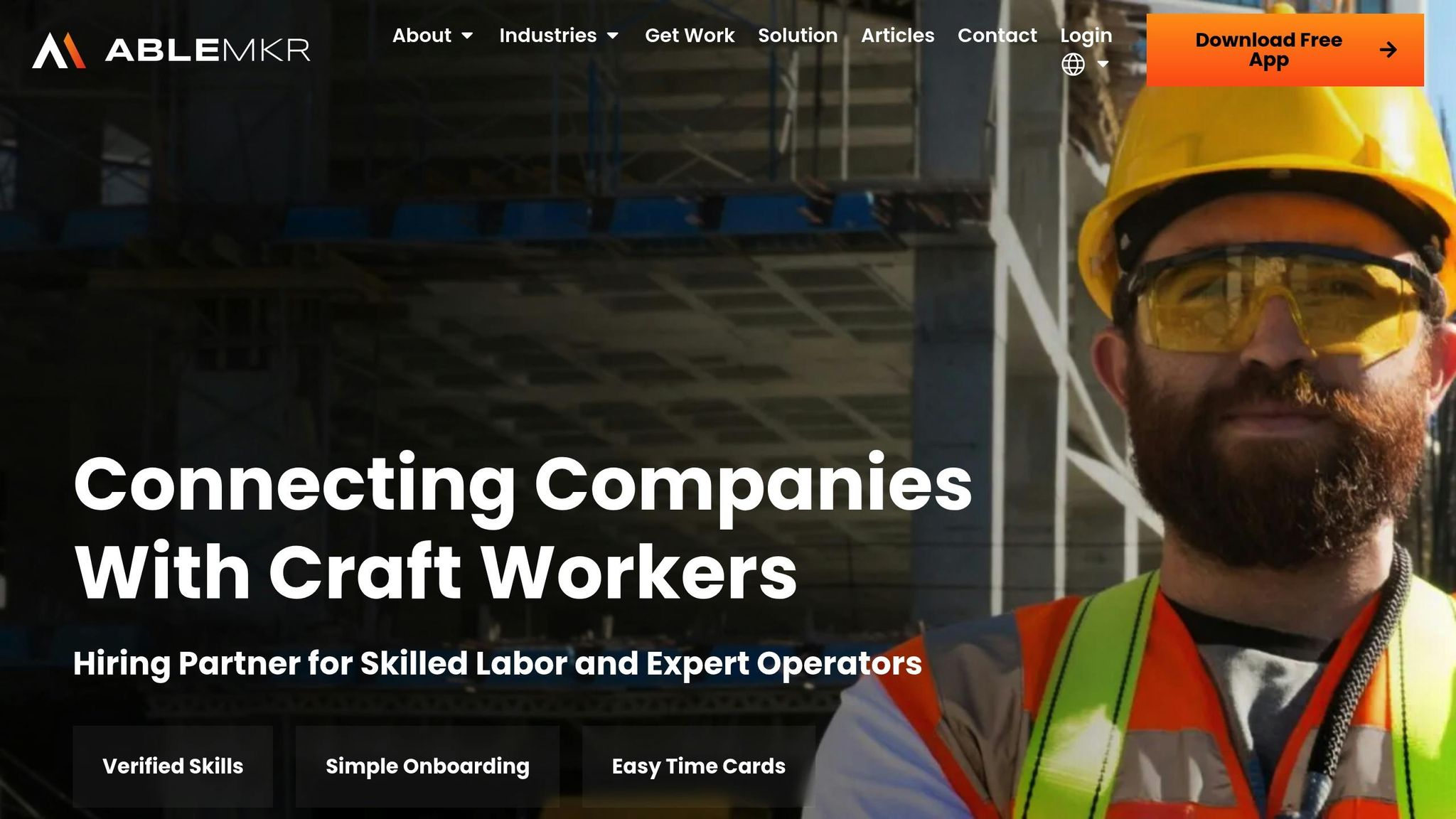
When it comes to staffing for oil and gas projects, time is often of the essence. Whether it’s an emergency shutdown, a remote repair, or a time-critical operation, delays in hiring can disrupt entire workflows. ABLEMKR’s workforce deployment platform tackles this challenge head-on, simplifying the process from candidate sourcing to onboarding.
Tap Into Pre-Vetted Talent Pools
ABLEMKR maintains a robust database of pre-screened engineers, all with verified credentials and up-to-date safety training. This means employers can skip the lengthy initial screening process and immediately access qualified candidates who meet industry standards.
The platform’s vetting process ensures that all engineers in the talent pool have the necessary skills and certifications before they’re available for hire. For example, with geo-location capabilities, ABLEMKR has enabled deployments in as little as 24 hours – a dramatic improvement compared to the weeks traditional methods often require.
Beyond speed, staying compliant is a top priority. Companies using ABLEMKR have reported hiring times cut by up to 60%, while onboarding processes are completed 40% faster than conventional approaches. In an industry facing a growing talent shortage, these efficiencies make a real difference.
Stay on Top of Compliance and Documentation
One of ABLEMKR’s standout features is its real-time compliance tracking. This tool ensures that certifications like Professional Engineer (PE) licenses, OSHA safety training, and HAZWOPER credentials are always up to date.
The platform provides instant updates on each worker’s compliance status, covering completed training, certifications, and background checks. This eliminates the need for manual paperwork and allows employers to onboard new hires as soon as they meet all requirements. Project managers can quickly see which candidates are ready to start, removing administrative bottlenecks and speeding up the workflow.
ABLEMKR’s compliance tracking has helped reduce compliance-related project delays by 30%. Automated alerts notify employers about upcoming certification expirations, enabling them to avoid costly interruptions or fines. Additionally, the platform’s automated payroll and documentation workflows ensure accurate, on-time payments and support audit readiness, reducing the risk of penalties in a heavily regulated industry.
Smarter Workforce Deployment and Real-Time Visibility
ABLEMKR’s mobile-first platform takes workforce deployment to the next level by intelligently matching engineers to job sites. It considers factors like certifications, availability, location, and project needs to ensure the right talent is sent to the right place. For instance, if a project calls for engineers with expertise in specific drilling software and HSE certifications, ABLEMKR filters its talent pool to find candidates who meet those exact requirements and are located nearby.
This precision reduces travel and relocation expenses while ensuring that job sites are staffed efficiently. Whether it’s a last-minute shutdown, a remote pipeline repair, or a scheduled mine development, ABLEMKR’s smart matching system makes rapid mobilization possible.
The platform also provides real-time workforce visibility, helping project managers track worker status, resolve scheduling conflicts, and adapt quickly to changing needs. With automated payroll and embedded compliance tracking, the entire process remains transparent and efficient.
| ABLEMKR Feature | Traditional Hiring | ABLEMKR Advantage |
|---|---|---|
| Time-to-hire | 4-8 weeks | 60% faster (1.6-3.2 weeks) |
| Compliance verification | Manual, time-intensive | Real-time updates |
| Candidate pool access | Limited, local | Pre-vetted, nationwide |
| Documentation workflow | Paper-based | Automated, digital |
Getting started with ABLEMKR is simple. Employers register on the platform, outline their project requirements – including certifications, experience levels, and location preferences – and let the system take care of the rest. Compliance tracking tools verify candidate readiness, while digital onboarding ensures workers can be deployed immediately.
Conclusion: Key Points for Hiring Oil & Gas Engineers
When hiring oil and gas engineers, a structured and efficient approach is essential. Start by defining clear qualifications: a bachelor’s degree in petroleum, mechanical, or chemical engineering, along with certifications such as PE licensure and OSHA training.
Candidates should showcase expertise in industry-specific software, regulatory compliance, and problem-solving. Equally important are strong communication skills, teamwork, and a commitment to safety practices.
Thorough compliance checks play a vital role in the hiring process. This includes conducting background checks, verifying credentials, and ensuring adherence to regulatory standards to mitigate legal and operational risks. With only 10% of petroleum engineering graduates currently meeting the licensing and certification standards demanded by top employers – and this gap expected to grow by 2026 – careful vetting is more important than ever.
Platforms like ABLEMKR help address talent shortages by offering access to pre-vetted candidates and real-time compliance tracking. Their automated workflows streamline administrative tasks while ensuring regulatory requirements are met.
FAQs
What certifications and licenses are essential for hiring oil and gas engineers, and how can employers verify them?
When bringing oil and gas engineers onto your team, it’s essential to confirm they have the necessary certifications and licenses that prove their expertise and adherence to industry standards. Common qualifications include a Professional Engineer (PE) license, OSHA safety certifications, and specialized training in fields like pipeline integrity, drilling, or offshore operations. The exact requirements can differ based on the project’s scope and location.
To confirm these credentials, employers can request official documentation, check directly with licensing boards, or use services like ABLEMKR, which pre-screens candidates for certifications, safety training, and regulatory compliance. This process helps ensure you’re hiring professionals equipped to handle the challenges of your project.
How does ABLEMKR simplify hiring oil and gas engineers for employers?
ABLEMKR simplifies the process of hiring oil and gas engineers by matching pre-vetted professionals to projects based on their certifications, safety training, availability, and location. This approach helps companies quickly access the skilled workforce they need for critical tasks.
For employers, the platform offers real-time updates on worker status, automated payroll management, and integrated compliance tracking. These features minimize administrative tasks, keep projects on track, and ensure safety and regulatory requirements are met efficiently.
Why is it essential to evaluate both technical expertise and soft skills when hiring oil and gas engineers, and how can these skills be effectively assessed during interviews?
Hiring oil and gas engineers means finding the right mix of technical know-how and soft skills – both are essential for managing the demands of high-stakes, complex projects. Technical expertise ensures candidates have the necessary certifications, experience with industry-standard tools, and a solid grasp of safety protocols. On the other hand, soft skills like communication, teamwork, and problem-solving are key for thriving in dynamic environments and overcoming on-site challenges.
To assess these skills during interviews, take a well-rounded approach. For technical abilities, use scenario-based questions or assign hands-on tasks to gauge their practical knowledge. When it comes to soft skills, behavioral questions can offer insights into how candidates handle conflict, perform under pressure, or take on leadership roles. Tools like ABLEMKR can further streamline the process by connecting you with pre-vetted engineers who have verified qualifications and certifications, making it easier to hire skilled professionals with confidence and speed.


