
Managing remote energy teams is complicated. Workers often operate in isolated locations with limited oversight, unreliable communication, and safety risks. These challenges demand tailored strategies to ensure safety, compliance, and efficiency. Here’s what you need to know:
- Real-Time Visibility: Use mobile-first tools for live updates on worker locations and task progress, even in low-connectivity areas.
- Purpose-Built Platforms: Generic tools like Slack and Zoom fall short. Industry-specific solutions streamline hiring, compliance tracking, and payroll.
- Clear Communication Protocols: Balance real-time updates (e.g., safety huddles) with asynchronous methods (e.g., shared dashboards).
- Digital Onboarding: Mobile-friendly onboarding ensures workers are certified, trained, and ready before they reach the site.
- Outcome-Based Metrics: Track results – not hours – and provide regular feedback to improve team performance.
- Compliance Automation: Use platforms that verify certifications and safety protocols in real time, reducing risks and regulatory issues.
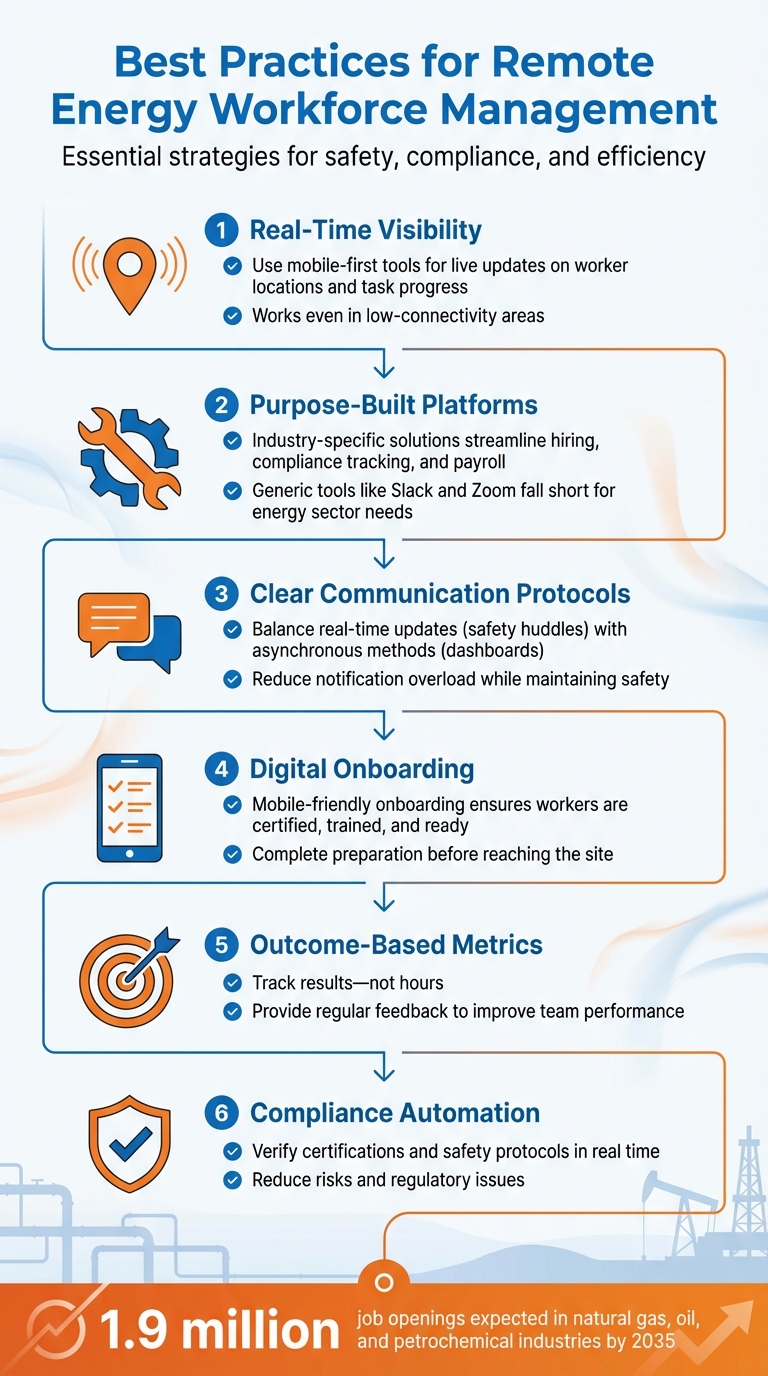
6 Best Practices for Remote Energy Workforce Management
Managing Remote Workers Webinar pt.2
sbb-itb-aa28329
Using Mobile-First Technology for Workforce Coordination
Remote energy sites come with their own set of hurdles. Workers often operate in areas where cellular coverage is spotty, making traditional tools unreliable. Mobile-first technology steps in to bridge this gap, enabling workers to stay coordinated even in low-connectivity zones.
One standout feature is offline data synchronization. Field crews can log hours, complete checklists, and track equipment usage without needing an internet connection. Once they’re back in range, the data syncs automatically with back-office systems. This move away from paper timecards doesn’t just improve accuracy – it eliminates rekeying errors that delay payroll and drive up administrative costs. It’s a shift that’s reshaping workforce coordination in a big way.
Another game-changer is real-time visibility. Instead of waiting for end-of-shift reports, managers can monitor workforce activity as it happens. Devin Huch, Project Manager at EnterBridge, highlights the risks of poor communication:
When the communication link is weak or disconnected, there’ll be unclear expectations, mismanaged tasks, unknown task status updates, less productivity, increased hazards & injuries, and disabilities.
Mobile platforms create what experts call a "connected control" setup. Data flows seamlessly from the field to headquarters, giving supervisors accurate, up-to-the-minute insights on worker locations and task statuses.
Collaboration Tools for Energy Projects
While tools like Slack, Zoom, and Asana are great for general communication, they often fall short in the energy sector. They lack features like geo-location tracking for worker safety, offline functionality, and automated compliance checks for union rules and certified payroll.
Purpose-built solutions, such as ABLEMKR‘s mobile app, fill this void. These platforms offer features like job matching based on certifications and location, real-time status updates, and built-in compliance tracking. For instance, if a pipeline needs urgent repair or a drilling operation requires certified welders, the platform quickly identifies and mobilizes qualified workers. Geo-location ensures crews are dispatched to nearby sites, cutting travel time and speeding up response efforts. These tailored tools naturally lead to more efficient deployment processes.
Workforce Deployment Platforms
Mobile-first coordination extends into workforce deployment platforms, which boost operational efficiency even further. With an estimated 1.9 million job openings expected in the natural gas, oil, and petrochemical industries by 2035, companies need scalable systems that maintain safety and compliance without slowing down.
ABLEMKR’s platform simplifies hiring by using pre-vetted worker profiles, complete with certifications, safety records, and work history. When a job is posted, the system automatically matches candidates based on skills, availability, and proximity, eliminating the need for manual filtering. It also tracks certification expirations and ensures compliance with wage requirements.
Payroll integration is another key feature. Instead of supervisors manually submitting timecards, hours logged in the app flow directly to payroll systems. Workers get paid on time, while employers gain accurate job cost tracking without extra administrative work. For an industry supporting 10.3 million jobs in the U.S., these efficiency improvements make a major impact.
Setting Up Clear Communication Protocols
Remote energy teams often operate across different shifts, time zones, and isolated locations. Without structured communication protocols, crucial details can slip through the cracks during handoffs, safety briefings might be overlooked, and priorities can become muddled. By establishing clear communication systems, teams can ensure urgent matters get immediate attention, while routine updates move through the right channels without disrupting workflows.
To start, define clear communication norms. Decide which channels should handle urgent updates versus routine ones. Tools like Slack or video calls are ideal for real-time problem-solving and safety briefings. Meanwhile, asynchronous methods – such as shared documents, dashboards, or task trackers – work better for updates that don’t require an immediate response. As Paul Korzeniowski from Intelligent Utility aptly states:
Managers need to lead – not micromanage.
Setting clear norms also helps reduce notification overload, allowing team members to focus on their responsibilities without constant interruptions.
Equally important is creating digital boundaries. Establish core hours for live collaboration and limit non-critical notifications during off-hours. Respecting employees’ time fosters trust, which directly impacts productivity. In fact, 57% of employees in supportive workplaces reported being more productive after the 2020 pandemic. Building trust starts with valuing workers’ time and moving away from excessive monitoring.
This foundation makes it easier to strike the right balance between synchronous and asynchronous communication tools.
Asynchronous and Real-Time Communication
Balancing real-time and asynchronous communication is key to keeping operations efficient while avoiding burnout. For urgent updates, implement short, structured meetings like daily stand-ups or safety huddles. These real-time interactions ensure immediate issues are addressed promptly.
For everything else, asynchronous communication is the way to go. Tools like shared documents, automated status reports, and custom checklists allow team members to log progress without needing constant meetings. This setup provides visibility into ongoing work without requiring everyone to be online at the same time.
For teams spread across multiple locations, set specific windows for overlapping collaboration. Workers in different regions may not need to join the same live meetings, but they should have access to the same information. Archived chat logs and documented decisions ensure a clear record for shift handovers, enabling incoming teams to understand completed tasks and unresolved issues.
Worker-Supervisor Interactions
Clear communication protocols are just part of the equation – strong worker-supervisor interactions are also vital for accountability and effective decision-making.
Trust plays a critical role in managing remote teams, especially when supervisors can’t physically observe work quality. Tools that provide verified digital profiles and performance feedback allow supervisors to delegate tasks confidently while maintaining accountability. For example, ABLEMKR’s platform includes verified profiles that showcase not only credentials but also feedback from previous supervisors. This transparency benefits both sides: workers can review job details, site requirements, and pay rates upfront, reducing misunderstandings and setting the stage for smooth collaboration.
Despite these advancements, about 1 in 4 business leaders still rely on activity monitoring instead of focusing on outcomes. In high-risk environments, this approach can backfire. Field workers need autonomy to make quick decisions when faced with hazards or equipment failures. Establish clear escalation paths so workers know exactly who to contact when an issue exceeds their authority. The goal is to empower workers to address problems independently while maintaining safety and meeting project deadlines.
Workforce Onboarding and Training
Getting remote energy workers ready for high-risk challenges takes more than just handing them a manual. With 83% of construction and energy-related companies facing difficulties hiring qualified workers, onboarding plays a critical role in both keeping employees on board and ensuring project success. The tricky part? Preparing workers to arrive on-site fully certified, aligned with safety protocols, and ready to go – without the benefit of face-to-face orientation.
The answer lies in mobile-first digital onboarding. Field workers often rely on their phones, not laptops, which means onboarding tools must work seamlessly on even basic mobile devices. Custom mobile software can handle everything from safety protocols to digital work orders, reducing accidents and avoiding regulatory issues. Tools like role cards and RACI charts help clarify responsibilities, preventing disputes during trade hand-offs. This mobile-first strategy simplifies onboarding and ensures ongoing safety training stays efficient.
Digital Onboarding Processes
Digital onboarding starts the moment a worker accepts the job offer. This means shipping pre-configured hardware, setting up IT access, and providing a detailed digital checklist covering everything from project scopes to labor forecasts. Workers also need their core certifications – like OSHA 30, welding qualifications, or lift tickets – verified and logged in the system before they even step on-site. Taking care of these details upfront avoids delays and ensures compliance from day one.
Platforms like ABLEMKR streamline the process by handling W2 employment and workers’ compensation, cutting through the usual administrative headaches. Pre-vetted worker profiles include verified certifications and feedback from past supervisors, giving employers confidence in their hires. Workers also get upfront clarity on job expectations, site conditions, and pay rates.
To avoid overwhelming new hires, stagger information delivery over the first few weeks. Use asynchronous e-learning modules for safety and technical training, allowing workers to learn at their own pace. For more complex tasks, virtual simulations let technicians safely practice high-risk procedures. Companies with over 200 employees have reported saving nearly $1 million annually by adopting online training and safety programs.
Safety and Compliance Training
In energy work, safety training isn’t optional – it’s essential. Digital platforms make it easy to roll out real-time updates to safety protocols, ensuring workers are always aligned with the latest standards. Microlearning modules, designed to be completed in 5–10 minutes, fit into workers’ downtime or can even be used directly on the job site.
Automated compliance tracking takes the hassle out of managing certifications. These systems can cut compliance-related admin tasks by 90% and boost training efficiency by 60%. Automated reminders for certification renewals and training sessions help reduce no-shows and compliance risks. Companies using Environmental, Health, and Safety (EHS) platforms report incident rates 30% lower than OSHA averages.
ABLEMKR’s built-in compliance tracking ensures workers maintain the certifications they need throughout their assignments. This means operators can quickly mobilize crews for anything from emergency shutdowns to pipeline repairs, knowing every worker meets regulatory standards. For remote areas with limited internet access, offline training modules keep workers on track. Digital sign-offs and photo verification for toolbox talks and safety briefings further ensure compliance is well-documented in the field.
Measuring and Improving Performance in Remote Teams
After establishing clear communication protocols and effective onboarding, the next step is evaluating performance. The focus should shift from tracking hours to measuring results. Surprisingly, 68% of companies lack a structured approach to remote work. Many still rely on monitoring "seat time" instead of assessing actual outcomes. This shift to outcome-based metrics is especially important for crews spread across pipeline sites, substations, and remote drilling locations.
Outcome-Based Performance Metrics
Set clear milestones to gauge success. For instance, did the crew complete the safety audit on time? Was a pipeline repair finished without any incidents? Using digital tools like mobile apps with task checklists, workers can update their progress in real-time, giving supervisors a clear view of completed tasks. GPS-verified time tracking ensures accuracy in field hours and locations, reducing payroll disputes and confirming work completion.
Platforms like ABLEMKR bring a mobile-first approach to managing remote teams. They provide live dashboards that give supervisors immediate insights into work status, helping to identify bottlenecks and redirect resources during emergencies like shutdowns or urgent repairs. Automated calculations also track efficiency across multiple locations. Recognition can be tied to clear metrics – like zero safety incidents, hitting production targets, or maintaining perfect attendance – so everyone understands what success looks like. But tracking metrics is only part of the solution; consistent feedback is just as critical to maintaining and improving performance.
Continuous Feedback Loops
Measuring performance works best when paired with regular feedback. Remote teams need more than an annual review to stay on track. Short daily stand-ups (no more than 10 minutes) help address immediate challenges, while weekly check-ins provide space for broader discussions. One-on-one meetings allow employees to talk about career goals or personal concerns. Field workers can also flag operational issues in real-time through interactive chat channels.
Anonymous surveys offer insight into team morale, which matters – employees who feel valued are 57% more productive. Cloud-based dashboards keep everyone aligned by showing task completion details. The focus should be on solving problems before they escalate, not assigning blame. As Paul Korzeniowski from Intelligent Utility puts it:
Managers need to lead – not micromanage from afar.
Compliance and Risk Mitigation in High-Risk Environments
When managing operations in high-risk sectors like energy, compliance and risk mitigation aren’t just priorities – they’re necessities. Remote teams working on drilling sites, substations, or pipeline corridors face strict regulations and significant safety risks. A single compliance error could lead to lawsuits, hefty fines, or even workplace injuries. The challenge? Keeping track of certifications, safety protocols, and regulatory requirements when workers are scattered across remote and hazardous locations. Outdated paper-based systems simply can’t keep up, especially when real-time verification of worker qualifications is critical.
Real-Time Compliance Tracking
Platforms like ABLEMKR make compliance tracking seamless by automating key processes. Their system ensures that only certified workers are assigned to dangerous tasks, eliminating the need for manual credential checks. By tracking certifications, safety training, and union requirements in real time, ABLEMKR matches pre-vetted workers to projects, ensuring accuracy every step of the way. This is especially crucial in industries like oil and gas, where around 218,996 Americans are employed in drilling and extraction roles.
Digital checklists also play a vital role, guiding field crews through complex procedures while ensuring adherence to safety protocols and government regulations. As Chris Gaskins, Cofounder and CEO of Mirific Systems Inc., aptly stated:
"The top issues for those that rely upon a mobile and remote workforce are work governance, risk mitigation, and operational efficiency."
ABLEMKR’s automated payroll tools further reduce risks by handling union logic, prevailing wages, and certified payroll deductions without the errors that often accompany manual processes. Even in remote areas with limited connectivity, offline data capture ensures compliance logs are recorded and synced as soon as connectivity is restored. These logs create an audit trail that simplifies regulatory inspections and boosts accountability.
Risk Mitigation Strategies
Effective compliance is only half the battle. Active risk mitigation strategies are just as critical for safeguarding workers and sensitive information. Geo-fencing and GPS tracking confirm on-site worker presence, which is essential for emergency responses and verifying labor hours in hazardous zones. Access controls further enhance safety by restricting critical tasks and sensitive data to authorized personnel only. ABLEMKR provides supervisors with real-time visibility into worker status, enabling them to act quickly if someone enters a restricted area or misses a safety check-in.
Cybersecurity is another major concern in high-risk environments. The ransomware attack on the Colonial Pipeline in May 2021 highlighted how vulnerable energy infrastructure can be. Remote workers, who are three times more likely to click on phishing emails compared to office employees, add another layer of complexity. To counter these threats, ABLEMKR employs measures like data encryption, two-factor authentication (2FA), and secure access controls. These protections not only safeguard sensitive data but also integrate seamlessly with specialized systems like SCADA and Manufacturing Execution Systems (MES).
Conclusion
Effectively managing remote energy teams requires more than just generic software solutions. The energy sector operates under unique pressures, from strict regulatory demands to high-risk field operations, making specialized strategies essential. Success hinges on three main factors: customized technology that integrates seamlessly with systems like SCADA and ERP, clear communication frameworks that connect supervisors with field teams, and compliance-driven processes that safeguard both employees and operations. These elements are the backbone of a proactive and reliable energy workforce.
The American Petroleum Institute predicts nearly 1.9 million job openings in the natural gas, oil, and petrochemical industries by 2035. This surge highlights the growing need for efficient workforce management. Companies that embrace platforms like ABLEMKR – tools designed to automate compliance, provide real-time insights, and simplify payroll – will be better equipped to mobilize teams quickly and maintain operational efficiency.
The most effective digital transformations in the energy sector prioritize building capabilities and managing change before diving into technology or algorithms. This approach involves engaging field workers and supervisors early in the process, ensuring solutions are practical and not just IT-driven mandates. Without real-time data, supervisors are left relying on outdated plans, unable to adapt to actual field conditions.
Shifting from reactive to proactive management starts with real-time data, guided workflows, and end-to-end visibility. These aren’t just tools for efficiency – they’re critical safeguards in an industry where miscommunication can lead to accidents, injuries, or regulatory breaches. By combining mobile-first technology with strong cybersecurity and automated compliance tracking, organizations can protect both their workforce and productivity.
This isn’t about replacing human decision-making with automation. It’s about empowering supervisors and field teams to make faster, more informed decisions – whether they’re handling an emergency shutdown or coordinating maintenance across multiple sites. With the right tools and strategies, energy companies can create safer, more efficient operations while preparing for the challenges ahead.
FAQs
How do you manage crews when there’s no cell service?
Managing crews in areas without cell service can be challenging, but the right tools and workflows make it manageable. Offline-enabled safety management apps are key. These allow workers to complete inspections, report hazards, and store data locally until they can sync it when connectivity is restored.
Additionally, offline communication tools ensure crews still have access to critical information and updates. Platforms like ABLEMKR are designed for these scenarios, offering offline safety tracking and alert systems to help maintain compliance and keep operations running smoothly, even in remote locations.
Planning ahead for offline environments is essential for keeping everything on track, no matter the connectivity challenges.
What should you track instead of hours for remote field teams?
Tracking productivity, compliance, safety, and task progress offers a much clearer understanding of team performance and project results than simply focusing on hours worked. These metrics help ensure that remote operations run efficiently while maintaining accountability across the board.
How can you automate compliance without slowing down work?
Automating compliance simplifies workflows and reduces delays by leveraging systems that centralize credential tracking, issue expiration alerts, and oversee safety protocols in real-time. These systems help eliminate manual mistakes, ensuring that workers’ certifications and safety standards are consistently current. By doing so, teams can maintain compliance effortlessly and stay focused on their core responsibilities without unnecessary disruptions.


