
AI is changing how job seekers and employers connect, making hiring faster, more precise, and less biased. By analyzing resumes, job descriptions, and other data, AI matches candidates to roles based on skills, location, and other factors. These platforms also verify worker credentials, predict staffing needs, and streamline workforce planning. Industries like construction and energy benefit from reduced hiring times, better matches, and improved safety compliance. With 87% of companies already using AI in recruitment, these tools are reshaping the hiring process for both businesses and workers.
Key Insights:
- Efficiency: AI reduces hiring times by up to 60%.
- Accuracy: Goes beyond keywords, understanding skills and context.
- Bias Reduction: Focuses on qualifications, not personal identifiers.
- Verification: Validates skills and certifications for safer hiring.
- Prediction: Forecasts labor needs for better workforce planning.
- User Experience: Provides personalized job recommendations and real-time updates.
AI-powered platforms like ABLEMKR are already transforming workforce management, offering faster matches, verified profiles, and predictive tools to keep industries running smoothly.
Build AI Agent to Match Best Candidates for a Job Description | AI powered Candidate Matching
Automated Job Matching: How It Works
Automated job matching uses AI to connect job seekers with opportunities more efficiently. By analyzing vast datasets, this technology identifies the best matches between candidates and employers, taking into account the needs of both sides. Let’s dive into how these AI-driven processes work to improve matching accuracy.
How AI Automates Matching Processes
AI relies on machine learning and natural language processing (NLP) to extract and analyze data from resumes, job descriptions, and profiles. It doesn’t just look for exact keyword matches – it understands context. For instance, if someone has experience with industrial wiring, the system can recognize that as relevant to electrical work, even without specific phrasing.
Machine learning algorithms continuously improve by studying data from past successful matches. The more the system is used, the better it becomes at identifying strong connections between candidates and roles.
NLP adds another layer of depth by interpreting the nuances in job descriptions and resumes. It can pick up on both hard skills – like technical certifications – and softer skills, such as leadership experience or safety training, which are especially important in industries like construction and energy. The AI then assigns scores and ranks potential matches based on factors like skill alignment, location, availability, and even safety records.
By focusing on qualifications rather than personal identifiers, these systems also help reduce unconscious bias in hiring. This smarter, more targeted approach not only enhances the accuracy of matches but also simplifies the hiring process.
"AI tools study large data to match people with jobs they suit", says Ross Geller.
Benefits of Automated Job Matching
Automated job matching significantly reduces hiring timelines while improving the quality of hires. Companies using AI-based sourcing have reported a 30% decrease in time-to-hire and a 25% improvement in employee retention rates.
AI evaluates multiple compatibility factors at once, minimizing mismatches that can lead to turnover or underperformance. It also cuts pre-employment assessment times by 50%.
The benefits are especially pronounced in high-volume hiring scenarios. For example, Chipotle Mexican Grill used an AI assistant named "Ava Cado" to streamline hiring for 20,000 seasonal positions. This resulted in application completion rates jumping from 50% to 85%, and the hiring process shrinking from 12 days to just 4.
In industries like construction and energy, where project demands change quickly, AI ensures that the right workers with the right skills are matched to urgent needs. This reduces downtime and keeps projects on track.
For sectors dealing with labor shortages, these tools are even more essential. With 89% of construction firms struggling to fill open roles and 61% reporting project delays due to staffing issues, automated matching provides a fast and efficient way to connect talent with critical job openings.
The numbers highlight the shift: 40% of businesses now use AI to source and engage talent, and staffing firms leveraging automation are twice as likely to grow their revenue.
Skill Analysis and Profile Verification
AI is reshaping the way job platforms evaluate worker skills and verify profile details, creating stronger connections between skilled professionals and the employers who need them. By pulling data from various sources and validating credentials, these systems help ensure accuracy and reliability in the hiring process.
AI-Driven Skill Assessment
After matching candidates to roles, confirming their skills is the next critical step. AI evaluates workers by analyzing resumes, certifications, employment history, and performance metrics to build detailed profiles. Unlike basic keyword matching, AI digs deeper, assessing the depth and relevance of a candidate’s experience.
These systems review resumes and profiles along with worker interactions to score candidates based on their potential fit for specific roles. Additionally, AI integrates with recruitment tools and leading software platforms, ensuring profiles stay accurate and current.
Take ABLEMKR, for example. This platform specializes in connecting companies with skilled craft workers in industries like construction, oil and gas, and mining. ABLEMKR carefully vets and interviews candidates to meet client specifications, ensuring the right people are placed in the right jobs. By 2025, the platform is actively supporting energy projects across the U.S. and continuing to recruit skilled professionals in these fields.
AI’s ability to cross-check multiple data points boosts profile accuracy and builds employer confidence. For instance, if a worker claims expertise in a particular area, AI can confirm this by reviewing their certifications and work history, giving employers peace of mind in their hiring decisions.
The Role of Profile Verification
Profile verification is essential for ensuring that workers’ credentials and experience claims are accurate. AI systems validate certifications by checking them against issuing authorities, confirm employment history through official records, and cross-reference safety training with established databases. This thorough process helps reduce the risk of biased hiring decisions when AI systems are designed to minimize prejudice.
Importantly, AI doesn’t replace human judgment – it complements it. While AI handles the technical side of verifying credentials, recruiters can focus on evaluating soft skills and cultural fit.
By 2025, 85% of recruiters are expected to use AI in hiring, reflecting the growing reliance on automated verification tools. These technologies allow staffing platforms to maintain high standards while efficiently processing large volumes of worker profiles.
ABLEMKR, for instance, ensures accountability and transparency in hiring skilled workers. The platform collaborates with mining operators and service companies in regions like Arizona and the Southwest, where verified profiles help meet strict industry standards.
Such rigorous checks are crucial for deploying reliable workforces in demanding industries.
Why Verification Matters in High-Stakes Industries
Industries like construction, energy, and mining rely on profile verification to meet strict safety and compliance requirements. Workers in these fields must have specific qualifications, and any lapse in verification can lead to serious consequences.
Failing to comply with regulations such as OSHA or PHMSA can result in hefty fines, project delays, and even workplace accidents. For example, the oil and gas sector reports over 1,000 workplace injuries annually, highlighting the importance of thorough skill verification to maintain safety.
AI enhances the verification process with features like real-time identity checks, credential validation, continuous monitoring, and secure data management – even in offline settings. These capabilities are especially valuable for remote job sites where internet access may be limited.
AI-driven systems also provide secure and portable identity solutions that workers can use across various job sites and projects. This portability reduces administrative burdens while maintaining high security standards across industries.
By ensuring that only workers with verified certifications and training are matched to roles, these systems protect both workers and employers from the risks posed by unqualified personnel in hazardous environments.
This level of verification forms the backbone of AI-powered workforce optimization.
sbb-itb-aa28329
Predictive Hiring and Workforce Planning
AI is changing the way companies approach hiring and workforce planning by shifting from reactive strategies to proactive ones. By analyzing large volumes of data, AI helps businesses predict future staffing needs, ensuring they stay ahead of project demands while managing costs effectively.
Forecasting Labor Demand
AI tools are excellent at forecasting staffing requirements by analyzing historical data, seasonal trends, and market conditions. Predictive analytics can achieve accuracy rates of up to 85% when estimating labor needs. This precision allows companies to plan well in advance, avoiding the last-minute scramble to fill positions.
Take the construction industry, for example. AI reviews past project data to identify risks, potential delays, and cost overruns, enabling managers to address issues before they escalate. In the energy sector, AI leverages weather data to predict renewable energy outputs, which helps companies like BP optimize solar and wind energy integration into the grid. Additionally, AI monitors equipment usage to predict maintenance needs, reducing downtime and ensuring repair crews are ready when necessary.
The market for AI in energy is expected to grow from $1.9 billion in 2023 to $22.6 billion by 2033, with a compound annual growth rate (CAGR) of 28.1%. This rapid expansion underscores the growing importance of predictive workforce planning across various industries.
Armed with accurate forecasts, businesses can deploy their workforce more strategically.
Optimizing Workforce Deployment
Once AI predicts labor demand, it assists in optimizing workforce allocation. By analyzing project needs, team skills, and resource availability, AI identifies the best way to deploy workers. Strategic workforce planning (SWP) ensures that companies have the right people with the right skills at the right time. AI enhances SWP by continuously evaluating different scenarios and recommending the most effective strategies.
For instance, IBM’s shift to cloud computing and digital technologies was supported by AI-driven workforce planning, which resulted in a 50% reduction in time-to-hire and a 20% boost in employee engagement. Similarly, a major retailer used AI to improve scheduling, significantly reducing conflicts and overtime. Another tech company used predictive analytics to address workforce gaps proactively, ensuring smooth project execution.
Platforms like ABLEMKR, which connect skilled workers to opportunities in construction and energy, also benefit from AI. By matching professionals to projects that align with their expertise, these platforms enhance project outcomes and maximize workforce utilization.
Efficient workforce deployment not only improves operational performance but also increases cost transparency.
Cost Transparency and Efficiency
Predictive hiring offers significant cost savings by improving workforce planning. Companies implementing strategic workforce planning often save around 10% of their annual labor budgets by reducing attrition and optimizing staffing levels.
AI tools provide detailed insights into workforce costs, streamlining processes like candidate sourcing, screening, and matching. This speeds up hiring while cutting expenses. Accurate workforce predictions also help prevent overstaffing and understaffing, potentially reducing project cost overruns by up to 30%.
The benefits of AI adoption are evident across industries. Currently, 71% of organizations use AI tools in their talent acquisition strategies, with 44% reporting notable cost savings. In the energy sector, AI applications can cut costs by up to 20% while boosting productivity by 70%.
A standout example is Rahd AI, which developed a platform to analyze data from over 15,000 oil wells. In a pilot project, this AI-driven solution reduced the time spent on data recovery by 85%, significantly lowering decommissioning costs in the North Sea.
For staffing platforms operating in high-pressure industries, predictive hiring offers a competitive edge. It enables accurate budgeting, minimizes waste, and ensures projects are delivered on time and within budget. This not only builds trust with clients but also fosters lasting partnerships.
How AI Improves User Experience
AI is reshaping job matching platforms by removing the hassle of manual searches and delivering instant, tailored job matches. This technology creates a more personalized experience while ensuring real-time connections between job seekers and opportunities.
Personalized Job Recommendations
AI takes job matching to the next level by analyzing resumes, preferences, and career goals to deliver better job suggestions. Instead of relying on simple keyword matches, it evaluates context, skills, and career paths to find opportunities that truly align with individual aspirations.
"AI job matching for job seekers is the new super-smart helper that makes job hunting easier. It works by looking at your resume, and what kinds of jobs you want, then it finds job listings by employers that fit you best." – Editorial Team, Talentprise
AI also learns and improves its recommendations over time. It can even uncover hidden job opportunities not listed on traditional platforms, broadening the range of potential matches. This technology significantly reduces the time candidates spend searching for jobs – by as much as half. Platforms like RippleMatch claim to boost the chances of landing an interview by 20 times compared to conventional job boards. Interestingly, 18% of job seekers have already turned to AI tools like ChatGPT to assist in their job hunt.
Real-Time Notifications and Updates
AI doesn’t stop at personalized suggestions – it also keeps users in the loop with real-time updates. Job seekers and employers benefit from instant alerts about new opportunities, application statuses, and project updates, eliminating the need for constant manual checking.
Smart notification systems are designed to deliver updates at optimal times, avoiding information overload. These systems dynamically flag new job openings as they arise, which is especially useful in industries where project timelines shift quickly.
AI-powered algorithms evaluate various factors to predict the success of job matches. Notifications are then prioritized based on their relevance: high-quality matches trigger immediate alerts, while less promising suggestions are grouped into periodic updates, helping users focus on what matters most.
Case Study: ABLEMKR‘s AI-Powered Features
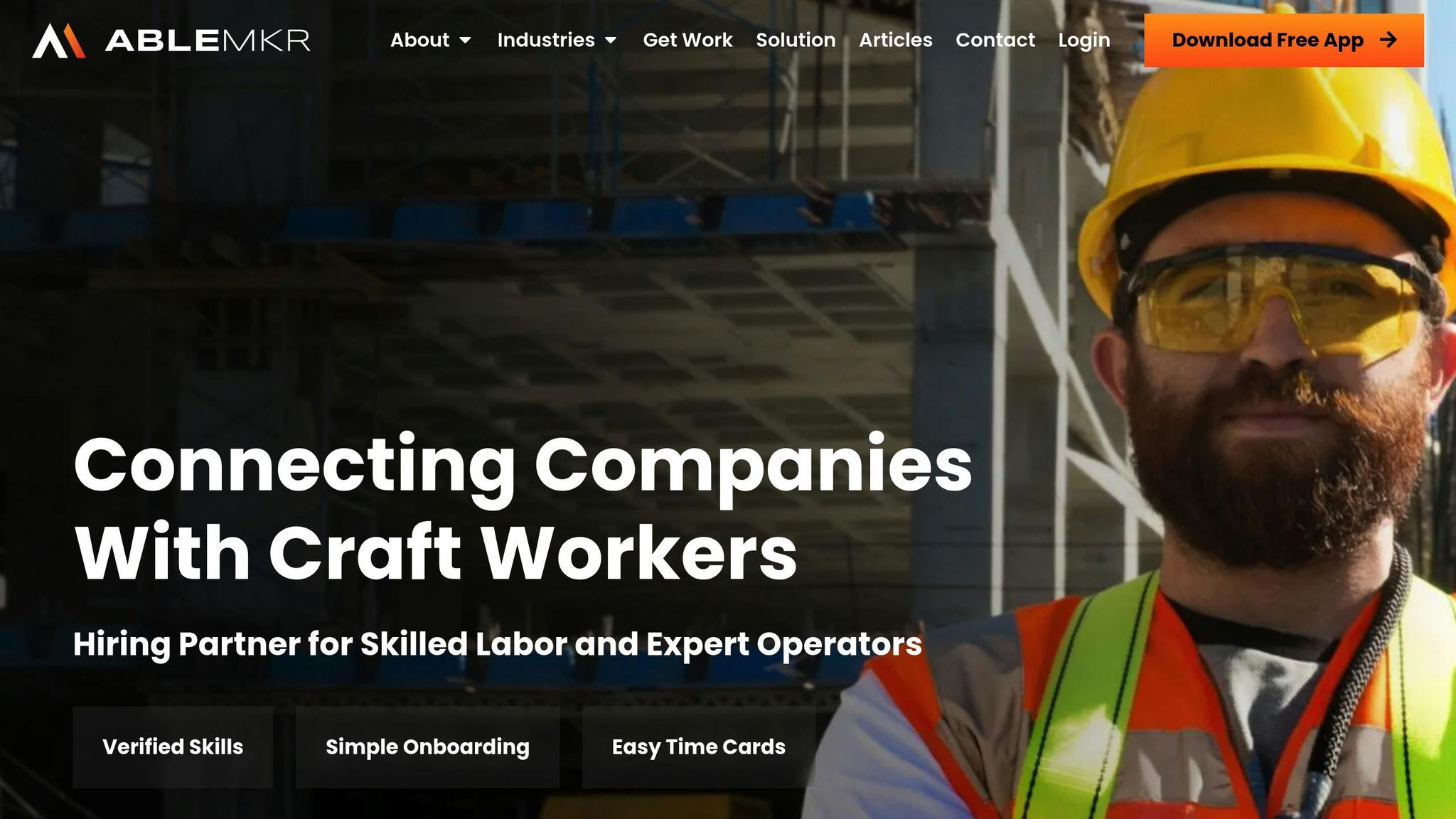
ABLEMKR is a prime example of how AI-powered platforms can transform job matching and workforce management. By combining verified worker profiles with automated job matching, ABLEMKR connects skilled workers to relevant projects based on their skills, certifications, and location preferences. This eliminates much of the manual effort involved in job searching.
The platform also streamlines workforce management with features like optimized scheduling and resource allocation, making operations more efficient. AI-driven tools provide real-time insights into labor costs and project budgets, enhancing transparency and enabling better planning. Administrative tasks such as invoicing and hour tracking are automated, reducing the workload for users.
Through its mobile app, ABLEMKR offers personalized dashboards. Workers can view job opportunities, schedule updates, and earnings summaries, while contractors gain access to candidate recommendations, project status reports, and cost analytics. Additionally, the platform integrates W2 employment and workers’ compensation coverage, with AI systems ensuring compliance and handling documentation automatically.
The Future of AI in Job Matching Platforms
The construction and energy industries are embracing digital transformation, with AI-powered job matching platforms revolutionizing how talent is sourced and workforce planning is managed.
Key Takeaways
AI has reshaped job matching platforms, delivering several major benefits. For instance, automated matching processes now identify candidates 75% faster, giving companies a critical edge when quick project staffing is required.
Predictive hiring tools allow businesses to anticipate labor needs and optimize workforce deployment even before projects kick off. With forecasts suggesting that up to 30% of U.S. work hours could be automated by 2030, these predictive capabilities are becoming essential for maintaining competitiveness.
Job seekers are also benefiting from AI. Personalized job recommendations and real-time updates make the search process more efficient, eliminating the overwhelm of excessive information. For employers and candidates alike, these advancements simplify and accelerate the hiring journey.
AI’s potential for growth in the construction sector is particularly striking, offering innovative ways to address challenges and improve outcomes.
Opportunities for Growth
The construction industry is poised to see significant advancements as AI continues to evolve. By 2029, the market for AI in construction is expected to reach $11.85 billion, driven by innovations in safety and maintenance.
"Worker safety is paramount, and AI is being used to reduce risk and improve safety throughout preconstruction and construction. For example, AI is being used to proactively assess safety hazards in real time via tools that include computer vision for hazard detection, wearable technologies, and proximity warning systems. Looking ahead to 2024, sustainability is likely to emerge as a central focus in the integration of AI within construction. As businesses across industries undertake decarbonization efforts to address climate-change targets, the construction sector must respond." – Wes Collins, Associate Professor, McWhorter School of Building Science, Auburn University, and Maria Fernanda Olmos, Global Principal Digital Integration, Unispace
Automation is transforming construction workflows. According to Boston Consulting Group, up to 30% of construction tasks could be automated by 2025, significantly cutting project timelines and boosting labor efficiency.
Sustainability is becoming a key driver of AI adoption. Construction companies are under mounting pressure to meet climate goals, and AI offers practical tools to help. By analyzing data from IoT devices and sensors, AI can predict material needs and energy consumption, reducing waste and environmental impact.
AI is also reshaping workforce management. Total workforce planning approaches, powered by AI, combine internal data with external market insights, enabling companies to cut planning cycles by 30%. Additionally, AI-driven scheduling systems are reducing absenteeism by 20%.
The shift toward skills-based hiring is another major trend. Instead of matching candidates solely based on job descriptions, AI now evaluates a broader range of skills and certifications. This is especially important in construction, where safety training and specific qualifications are critical.
"The construction sector is experiencing a paradigm shift. Companies are increasingly recognizing the synergy between AI and human skills, which enhances both productivity and sustainability." – Fang Chen, Professor and Executive Director, Data Science Institute, University of Technology Sydney
AI’s role in construction extends well beyond basic job matching. From predictive maintenance to real-time safety monitoring, AI is creating integrated workforce management ecosystems that support projects at every stage – from planning to completion.
FAQs
How does AI help reduce bias in hiring through job matching platforms?
AI plays a key role in making hiring more impartial by focusing on objective factors like a candidate’s skills, qualifications, and experience. This automated process reduces the impact of unconscious biases that might otherwise influence decisions during the screening stage.
On top of that, AI-powered tools help standardize hiring practices by establishing consistent evaluation criteria and structured interview questions. This consistency ensures a fairer approach, leading to more inclusive and balanced hiring outcomes.
How does AI help predict staffing needs and improve workforce planning in industries like construction and energy?
AI is transforming workforce planning in industries like construction and energy by processing vast amounts of historical and real-time data. This includes metrics like employee performance, turnover rates, and project demands. By identifying patterns within this data, AI can predict future staffing needs with impressive precision.
With these insights, AI tools help businesses anticipate workforce requirements, test different scenarios, and pinpoint skill gaps. This forward-thinking method allows companies to manage their teams more effectively, ensuring they can meet project demands while improving overall workforce efficiency.
How does AI improve skill assessment and profile verification in critical industries?
AI is transforming skill assessment and profile verification, especially in industries like construction, energy, and mining, where precision and reliability are critical. Using advanced algorithms, AI can evaluate candidates with greater accuracy and efficiency, ensuring their qualifications align with job requirements. It also tracks real-time performance data to keep skill profiles current, minimizing the risk of resume fraud and confirming that only qualified individuals are verified.
When it comes to identity verification, AI steps up with tools like biometrics and behavioral analysis, offering an added layer of security. This is particularly crucial in fields where safety, compliance, and operational dependability are top priorities. By simplifying these processes, AI not only improves hiring decisions but also supports safer and more efficient workplaces.


